Join me on Friday Oct 23 at 2pm for Congo Week! And some new writing

It’s Congo Week!

It’s Congo Week!

Friends: I consider myself a friend of the Congo and now I get to be a part of an event with Friends of the Congo! The link to the event, about my new book, is here:

Congo Week October 23, 2pm

I’ve also had a few good conversations about the book – with George Galloway on his RT Sputnik show, with Sean Blackmon and Jacquie Luqman on By Any Means Necessary, and with Netfa Freeman on Voices with Vision – I’m on the same program as Mumia Abu Jamal, Margaret Kimberley, and Ann Garrison! 

I also want to share some writing about climate change that I’ve been doing. I reviewed the Green New Deal and Beyond by Stan Cox, who’s been on the podcast and who is always insightful, for the Solutions Journal (below). And in a similar vein I reviewed the film Planet of the Humans, which had some important things in it but which overall I didn’t like. 

My review of Stan Cox for the Solutions Journal:
 

The Green New Deal and Beyond by Stan Cox

By Justin Podur

Volume 11 | Issue 3 | September 2020

The original New Deal was conceived and implemented as a compromise to save the system in a period of enormous upheaval. By the end of that period of upheaval, two world wars had been fought and tens of millions of people had died. Some parts of the world got fascism, others communism: the US got the New Deal.

Might the possibility of mass extinction and the end of organized human life impel a similarly desperate compromise from elites? Bigger changes occurred in 2020 than many could have imagined. Quarantines, airplanes grounded, basic income programs introduced. Surprising successes in containing the coronavirus in some countries have been contrasted with notable failures in the US. And in the midst of the pandemic, the US has seen the largest demonstrations in its history, against racial injustice and police abuse. In this rapidly changing context, Stan Cox’s focus on what needs to be done from an environmental perspective and ignoring considerations of “political feasibility” seems prescient. If these times have shown anything it’s that political “feasibility” is a moving target, and that is a good thing.

When feasibilities open up it is important to separate false solutions from real ones. Stan’s previous work – on rationing, disasters, and air conditioning, and now the Green New Deal – is about using the methods of scientific and historical analysis to discard what’s useless. What’s left is a simple, clear program that could, if followed, save the planet.

The first idea Stan slices away is that we can grow our way out of the climate crisis. In 1972 the Club of Rome published the Limits to Growth, which Stan says went over like a “bowl of prune soup at a potluck”. Stan shows how the authors of the Limits to Growth were right – that an economy dependent on continuous growth will eventually overrun some environmental threshold. Even if the climate crisis is surmounted, there will be new ecological crises unless the growth imperative is checked.

Which leads us to the next idea to be pruned: that the market, without any plan or intervention, can resolve the climate crisis. Stan shows how carbon pricing and the creation of carbon markets are simply a form of rationing – by ability to pay. Such mechanisms have failed where introduced, and (along with carbon taxes) proven politically as well as practically toxic.

Next, Stan helps us discard a series of flawed plans. 100% renewables plans, including the most notable ones developed in California by Marc Jacobson, have hidden dangers: they sidestep the key policy of taking fuels offline, emphasizing the secondary consideration of building renewable capacity. Stan reminds us that we have to reduce fossil fuel use whether or not we can replace all the lost energy output with renewables.

And we probably can’t replace all that output. Back of the envelope calculations show that finding land for solar and wind installations is a serious problem – requiring 3x existing agricultural land for solar installations and 6% of all of the US land surface for wind generation, in a few of the Jacobson scenarios. The amounts of storage capacity – batteries, and therefore lithium – required by 100% renewables plans is enough to fuel a new round of colonialism. With the 2019 lithium coup in Bolivia, it already has. The 100% renewable future needs at least 120% of the world’s cobalt and up to 160%, of the world’s lithium reserves – so that’s not happening either.

Jacobson’s plan, Stan also points out, is a plan for energy apartheid, with different classes of global energy citizens based on current consumption. The 100% renewable world will look like the old one, with 9500W per US person, and 760W per Haitian. Stan dismisses this apartheid plan with simplicity, pointing out that the rich need to consume less, not replace every fossil watt with a renewable watt.  Ultimately, he writes, we need to run an “energy frugal society, not an energy gluttonous one”.

There is more for the dustbin of history here. Forget about biofuels. These will take land out of food crops – feeding cars and starving people. Forget direct air capture, which takes so much energy to do that it cancels out the climate benefit. Forget about Fully Automated Luxury Communism (FALC), which includes no plan for feeding the society of luxury communists and anticipates unlimited nuclear energy. Driving around in electric cars isn’t going to happen either – not when you consider that it takes energy to build the cars and their giant batteries (there’s that lithium again). The cornucopian fantasies are all premised on an idea of ‘decoupling’ – that you can have economic growth without increased resource use. As Stan discusses extensively, you can’t. Nor can you solve the climate crisis by the aggregate of individual choices to ride a bicycle or go vegan (both of which you should do, of course): to solve a problem of this scale, industrial policy, set and enforced by the state, is a must.

But for all the cutting, Stan is not here to generate despair or nihilism. When all the distractions are removed, we are left with a set of ideas based on energy frugality summarized as “cap and cope”.

These begin with ending subsidies to fossil fuels (“supply side suppression”) “locking companies out of public lands, banning fracking, busting pipelines, stopping oil and gas exports, and depriving dirty-fuel companies of investment”. But these are just prerequisites.

The key mechanism is an “impervious cap on the nation’s total supply of fossil fuel” – set it, and then “it ratchets downward by a fixed amount year by year until it liberates us from fossil fuels entirely.” Enforced by a system of government permits in physical quantities “barrels of oil, cubic feet of gas, or tons of coal, not in carbon units or dollars.” Imports and exports of fuels are banned, and importing and exporting goods with carbon footprints will require the surrender of equivalent permits (no moving the problem offshore is allowed in this plan).

That’s the cap. Then there’s the cope, which Stan proposes could take the form of a Victory Plan with a series of public cooperatives, with – of course – rationing and price controls of key goods to ensure a good life for everyone in the transition. And, as every environmentalist has had to do since the 1970s, Stan assures the reader that the future could still be very nice: “Walkable, livable communities will be free of private-vehicle traffic; air, noise, and light pollution; and other dangers. A transformed food system will ensure better nutrition for all. Free neighbourhood public and community clinics will provide preventive medical care, reducing by several sizes the economic and environmental footprint of today’s profit-driven medical industries.”

The resulting book is indispensable for environmentalists. In recent years scientists have opened a discussion about whether the pressure to publish only positive results has damaged the whole scientific enterprise. The analogy to the climate crisis is clear: there has been a proliferation of solutions without enough attention to their fitness for purpose. The Green New Deal and Beyond pares away the distractions and leaves you with climate clarity.
Civilizations 20b: India 1857 pt 2 – the Revolution Defeated

India 1857, part 2

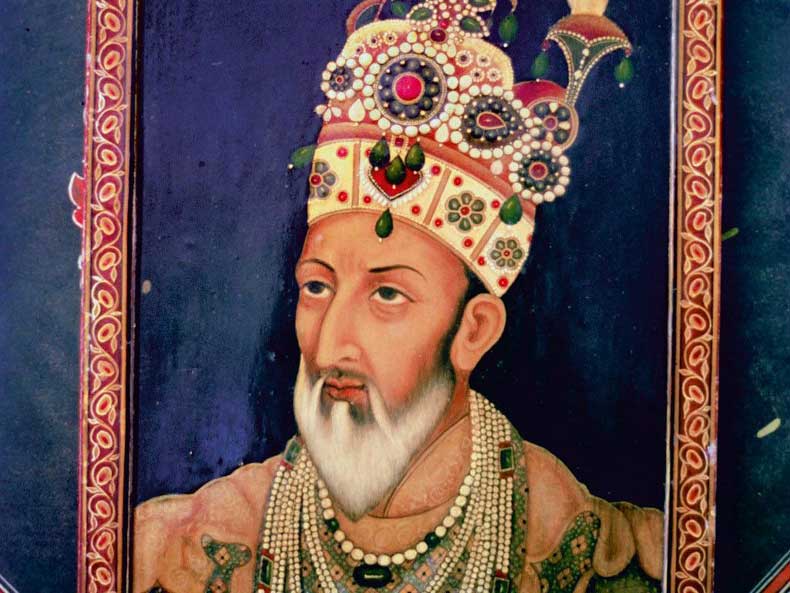
The Delhi Liberated Zone under Bahadur Shah Zafar falls; Tatia Tope and others fight on for another two years; the British kill perhaps 10 million Indian people (7% of the population); the 1857 has some victories even in defeat. But what does it all mean? We conclude our discussion with the concept of a point-of-view in history. I identify six different points of view (RSS, Congress, British imperialist, 1857 line, Subaltern Studies, and Marxist) and show how you end up having to pick one, and why I went with the “1857 line” on the event – for which the key source is Amaresh Mishra’s 2000 page book, War of Civilisations.

At the end of the episode, Dave and I discuss a table that I made about the different points of view I was able to identify in historical scholarship of 1857. The table we are looking at is in the Civilizations Resources Page under episode 20b.

I take full responsibility for this table, which I made up. Here is what I’d say is a representative source for each point of view. You may disagree – and I’m declaring my point of view, after reading all these, is with Misra and the 1857 line.

BJP – Savarkar, The Indian War of Independence

1857 line – Amaresh Misra, War of Civilisations

Marxist – Marx, the Indian War of Independence

Subaltern Studies – Guha, Prose of Counterinsurgency

British Imperialist – Kim Wagner, The Great Fear

Congress- Surendranath Sen, 1857

Civilizations 20a: 1857 – India’s War of Independence, pt1

India’s War of Independence – how and why it started

Are we really doing this? One podcaster with Indian roots and another with British roots, trying to do the history of 1857 India? This is the Civilizations podcast, so yes we are! I’m arguing that 1857 is up there with the other great revolutions of this time – 1848 or 1870 in Europe, or Bolivar’s campaigns in Latin America. Part 1 takes you from the antecedents and context through to the Delhi Liberated Zone under Bahadur Shah Zafar.

AEP 70: Reading Chomsky’s statement to the Assange Trial

Chomsky’s statement was entered into the record of the Assange Trial

On the last day of defense evidence in the Assange Trial (September 30/20), a statement from Chomsky was read into the record. This is a solo episode where I go over Chomsky’s succinct, remarkable statement about power, propaganda, and the importance of Assange’s work.

AEP 69: The Methods of Empire, with Isa Blumi

A survey of imperial methods and tools with Isa Blumi

Isa Blumi is a professor at Stockholm University in Sweden and a scholar of the Empire. We talk about a range of imperial methods, including the creation of a ‘traditional-modern’ or ‘backward-forward’ dichotomy; humanitarianism; debt; depopulating villages; recruiting some classes of colonials to administer the imperial project, and survey the bleak landscape for anti-imperialists today.

Civilizations 18: The Mexican-American War 1846-8

The Mexican-American War 1846-8

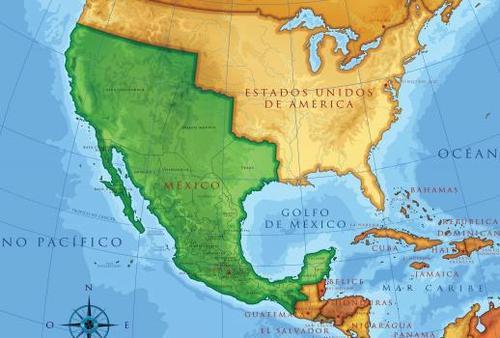
This episode is about how the US became the territorial empire that it is. We cover the Mexican-American War 1846-8, as well as the repeat performance when France invaded under Louis Napoleon. We end talking about US expansionism and its many 19th century wars with Indigenous nations.

3.1% of Humans on 7% of the Planet – A review of Planet of the Humans

Around the 88th minute of Jeff Gibbs and Ozzie Zehner’s April 2020 film Planet of the Humans, there is a quick cut to footage of Indigenous protesters of the Dakota Access Pipeline, showing that the camp was bulldozed by a machine built by one of the corporate sponsors of an Earth Day event – Caterpillar.

If you want to learn about that pipeline, in 2019 Nick Estes, a professor based at the University of New Mexico from the Lower Brule Sioux Tribe, published Our History is the Future: Standing Rock versus the Dakota Access Pipeline, and the Long Tradition of Indigenous Resistance. Those protesters who faced the bulldozers in the seconds- long sequence were the Water Protectors based at the Standing Rock Reservation in North Dakota, whose incredible movement faced the whole might of US corporate power and colonialism in 2016, inspiring people around the world that year. Estes, who runs a podcast called Red Nation, links the resistance of the #NoDAPL moment to the centuries of Indigenous resistance to colonialism. The Red Nation podcast is a remarkable resource weaving liberatory and anti-imperialist politics from many directions. You won’t find reference to it in Planet of the Humans.

Back to it. Around minute 56, Gibbs, the film’s director and narrator, visits a solid waste incinerator plant in L’Anse Michigan, and talks to local activist Catherine Andrews. Gibbs tells her this isn’t just an ordinary town, and Andrews agrees: “It’s Lake Superior,” she says. “It’s our Lake. A very sacred place to many people.” If you look at the maps produced by Sam Hillard you can see that sacred place was stolen from the Chippewa Anishnaabe, who use the name of the lake (Gichi Gami) in the name for their people (Gichigamiwininiwag). To them, no doubt the lake, and the territory, is sacred. Under the leadership of Chief Buffalo, the Chippewa fought to stay in the region when US president Zachary Taylor, veteran of the invasion and occupation of Mexico from 1846-48, tried to remove them west of the Mississipi in 1850, killing hundreds of Indigenous people through deliberate starvation at Sandy Lake (sanitized in US historical memory as the “Sandy Lake Tragedy”).

Let’s start back at the beginning of the film. The first question Gibbs asks in his people-on-the-street interviews is, “How long do humans have left?” Planet of the Humans is based on an apocalyptic politics, a politics of what one group of leftist writers called Catastrophism in a 2012 book. One of the book’s contributors, Eddie Yuen, points out that the environmental movement does not have adherents proportionate to its apocalyptic predictions – catastrophism, it turns out, is not the most politically compelling stance.

Later on in the film, around minute 46 (a point I’ll return to) one of Gibbs’s (uniformly white, uniformly American) expert interviewees, anthropologist Steven Churchill, spells out what this apocalypse means to the filmmakers: “without seeing some sort of major die off in population,” he says, “there’s no turning back.”

On the topic of apocalyptic die-offs: Spain, Portugal, England, and their settler colonies (notably the United States, where Planet of the Humans is exclusively set) committed a series of genocides killing more than 90% of the Indigenous peoples of the Americas. Those genocides are what made land available for the filmmaker to experiment with sustainable living on a homestead in Michigan centuries later. Settler-colonialism is why Okhay Owingeh Pueblo science fiction writer Rebecca Roanhorse noted that Indigenous people have “already survived an apocalypse.” The history of that apocalypse is available to anyone willing to read, whether it’s in Gerald Horne’s books the Dawning of the Apocalypse, and Apocalypse of Settler Colonialism, David Stannard’s American Holocaust, or Roxanne Dunbar Ortiz’s Indigenous People’s History of the United States. Indigenous understandings of the world and the land are available from Leanne Betasamosake Simpson’s As We Have Always Done, Winona LaDuke’s All Our Relations, and many others. Perhaps the most urgent imperative is expanding and restoring the Indigenous land base, as outlined by the late Arthur Manuel in the Reconciliation Manifesto. That action – summarized in the slogan “Land Back” – would be the most efficient way to reverse the destructive processes leading to climate change.

You will find no awareness of this history, indeed no knowledge of any Indigenous or Black or non-US writer on any topic, in Planet of the Humans. Which would be fine. But the film was not called “7% of the Planet and 3.1% of the Humans” (the US landmass and the percentage of humans that are the white Americans who are interviewed for the film). It was called Planet of the Humans.

Executive Producer Michael Moore, who traveled to several countries and met and spoke to numerous non-US humans (even communist humans) in Where to Invade Next and Sicko, should have helped expand the range of humans spoken to for the film. Alas.

From minute 45-52, each one of its experts is interviewed introducing a revolting level of Malthusianism into the film’s core. Richard Heinberg says there are “too many human beings using too much too fast.” Steven Churchill, the worst of them, says “as a global community we really need to start dealing with the issue of population… species hit the population wall a lot and then they crash. I mean, that’s a common story in biology…. it’s the natural order of things… a large percentage of that number is supported by industrial agriculture which is heavily subsidized by oil… without seeing some sort of major die off in population, there’s no turning back.” Nina Jablonski says “population growth continues to be the herd of elephants in the room.” Steven Running is asked if humans are “smart enough to regulate our own presence.” Then Gibbs himself takes the microphone and goes solidly into population bomb Malthusianism, talking about the “population explosion” of the 1800s and the “total human impact” having risen by 200 times – as if the impact of an Indigenous person in the forests of India is in any way comparable to the impact of a Jeff Bezos, an Al Gore, or a Vinod Khosla. “We humans,” he continues, “are poised for a fall from an unimaginable height. Not because of one thing, climate change alone, but all the human-caused changes the planet is suffering from.”

The over-reach here is hair-raising. The population “explosion” Gibbs cites began at the peak of colonialism over Asia and Africa and after the aforementioned apocalypse of settler-colonialism first struck the Indigenous peoples of the Americas. A miniature version of that population “explosion” has recently occurred with the displacement of 37 million people due to US terrorist wars in Asia. The most basic, elementary insights in the field of demographics are 1) that war and displacement cause population increases and 2) that female education and empowerment stabilize birth rates at around 1-2 children per woman (as communist jurisdictions like Kerala and Cuba have shown). But you won’t find any of these basics in Planet of the Humans. Instead, the film gives us a series of white Americans sounding off about “overpopulation” as if none of this knowledge exists. As if Betsy Hartmann hadn’t written Reproductive Rights and Wrongs: The Global Politics of Population Control in 1995. As if Ian Angus and Simon Butler hadn’t written Too Many People? Population, Immigration, and the Environmental Crisis in 2011. This panel of talking heads gives us pure Malthusianism, one of the cruelest ideologies of 19th century colonial England, written to justify the British Empire’s famines in India and Ireland. If not “7% of the planet and 3.1% of the humans”, this film might better be called Planet of the Dehumanized, following reviewers Gert Van Hecken and Vijay Kolinjivadi.

Not every environmental documentary has to do everything, and even in a settler-colonial framework, sincere environmentalists can make some good points. As Max Blumenthal’s investigation at the Greyzone shows, Gibbs and Zehner’s criticisms of the co-optation of the environmental movement by extractive industry and tycoons like Blood, Gore, Branson, Khosla, and Grantham hold up. So, too, do the film’s critiques of the problems with solar and wind energy at scale: intermittency, rare earth mining, the devastation of biofuels, and the destructiveness of corporate infrastructure megaprojects. There is indeed a campaign to corrupt and co-opt the environental movement and it has been successful, including in introducing the very mentality that Gibbs criticizes as “the profit motive”, the “takeover by capitalism” of the movement (mentioned at minute 80).

So yes, as reviewers Van Hecken and Kolinjivadi (and Max Blumenthal) point out, the film was roundly criticized by many environmentalists (including the co-opted) – who argued, mainly, that the intermittency and efficiency problems of green technology were on the way to being solved. But the worst problems with the film are premises shared by the filmmakers and many of their critics.

Talking about “humanity” and its fall from an “unimaginable height”, Gibbs asks: “So why are bankers, industrialists, and environmental leaders only focused on the narrow solution of green technology? Is it the profit motive?”

Whatever the solution is going to be, Gibbs imagines it will come from “bankers, industrialists, and environmental leaders.” Not – notably – from governments. And so, at a stroke, the most powerful tool that could be brought to bear on the problem is excluded. Instead of finding an expert on industrial policy, planning, economic history – someone from any other part of the world where the government plays a different role in planning and directing economic activity – Gibbs talks to a social psychologist named Sheldon Solomon who quotes Camus and suggests that the solution is that we come to “grips with our anxiety about death and life.”

To Gibbs and Zehner, it isn’t a system of rationing, a government-coordinated, egalitarian plan that can get us to environmental stability. It is, at minute 88, “awareness… awareness alone can begin to create the transformation. There is a way out of this… we humans must accept that infinite growth on a finite planet is suicide. We must accept that our human presence is already far beyond sustainability and all that that implies.”

To repeat: after doing an adequate job of showing the destructiveness of capitalist accumulation and philanthropic movement co-optation, the film suggests that the solution is “awareness alone.”

Nonsense. Serious readers can close Youtube at this point and crack open Stan Cox’s Green New Deal and Beyond, and get with a program called “cap and cope.” It goes like this: End subsidies to fossil fuels. Lock companies out of public lands. Ban fracking. Bust pipelines. Stop oil and gas exports. Deprive fossil fuel companies of investment. Put an impervious cap on the total supply of fossil fuel that ratchets down year by year until fossil fuels is zero. Dismantle the US military and its militarized police. Ration the means of survival to ensure everyone gets enough and ensure that the sacrifices that are made are equal. In other words, create a system where human ingenuity is used in the service of the planet and of humans and not in the service of circumventing the weak, industry-compromised regulations of the American oligarchy.

US-centrism means ignoring other examples of epic human effort to overcome seemingly impossible odds. The Soviet Union, after a devastating civil war and several famines, rebuilt its industry and defeated the most formidable military machine ever assembled – that of Nazi Germany – using economic planning. In our time, China has eliminated poverty within its borders by using economic planning. But a US film steeped in settler-colonial premises would not be interested in achievements from those humans on the wrong side of American ideologies.

Fredric Jameson is quoted saying that it is easier to imagine the end of the world than the end of capitalism. Planet of the Humans is a 94 minute unfolding of that idea, a caricature of the failure of imagination.

AEP 68: The Donziger Case and the Assange Trial

The Donziger case and the Assange Trial

Joe Emersberger and I talk about the Steve Donziger case, in which an environmental lawyer who won a landmark settlement against one of the world’s most powerful oil corporations (Chevron) is now disbarred and under house arrest, persecuted by a pro-business judge and the entire US corporate-legal nexus.

In the second half, we talk about the Assange trial, in which the weight of two countries’ judiciaries (the US and UK) are being brought down to try to crush a journalist, for doing journalism, and all the sleazy journalists running for cover claiming that they don’t like his personality.

I referred especially to Debunking All the Assange Smears by Caitlin Johnstone, and Joe’s article Manufacturing Disgrace: Reuters distorts Chevron vs. Donziger.