
Yves Engler is a lifelong Palestine activist – fighting Canada’s complicity in the Gaza genocide – who is running for leadership of Canada’s New Democratic Party. We talk about the platform of policies that Yves is presenting in the run for the nomination, including Land Back, Anticolonization, Anti-Imperialism, and Socialism.
Category: Canada and Empire
On Canadian foreign policy and its subordination to the needs of the Empire, including the “Five Eyes”.
Guest post: Driving Canadian Democracy to Oblivion: The Ideological State of the Canadian Establishment
A short letter to the editor from Anna Zalik
[Friends: You can catch up with what I’ve been doing for the past few weeks at Youtube, where I’ve been posting a series of sit reps on the war. Meanwhile, friend of the Anti-Empire Project, Anna Zalik, sent me this letter to the editor that the Globe and Mail declined, after publishing a long and embarrassing op-ed consisting of advice for the left, which is behind a paywall and only available to hardcore Globe and Mail readers. The op-ed is of what I call the “left’s best friend” genre, in which someone who despises you and your cause gives you advice about how you should be going about your work.]
Driving Canadian Democracy to Oblivion: The Ideological State of the Canadian Establishment
Anna Zalik, Toronto
In a poorly written OpEd published in the Globe and Mail on January 27th, embittered UofT humanities PhD Stephen Marche offers a “painfully clarifying reflection on the ideological state of the Canadian establishment.” In a conflation of facts, weakly organized examples, and cherry-picked polling data, Marche tries and convicts a group of people – various employed by universities- who allegedly postered an Indigo bookstore in downtown Toronto. Studiously avoiding reference to Israel’s genocidal attacks on Palestinians which the Canadian government and Reisman’s Heseg Foundation materially support, nor the destruction of all of Gaza’s universities, Marche’s piece could easily have been written by those in the Ontario government seeking to defund public post-secondary education. Precisely what ‘ideology’ Marche refers to is never clarified, but it is clear that his own is the same old elite populism that maintains the status quo – berating racialized and transgender activists, and defending police violence.
Particularly disturbing, Marche shields himself behind a non-sensical invocation of liberal multiculturalism that “leaves its shoes at the door”. Leaving one’s shoes at the door seems to consist of acquiescence to the new McCarthyism all around us. Indeed, despite a hat-tip to Netanyahu’s fascism, Marche’s piece never uses the words Palestine or Palestinians, nor does he acknowledge that various of his favoured targets, including Naomi Klein and Lesley Wood, are Jewish. If it’s best not to scratch the itch activists purportedly pose, why does Marche do so?
Ultimately, Marche does his part to drive Canadian democracy to oblivion.
The Land Back Party
If we’ll need one in twenty years, maybe we should start sooner than later
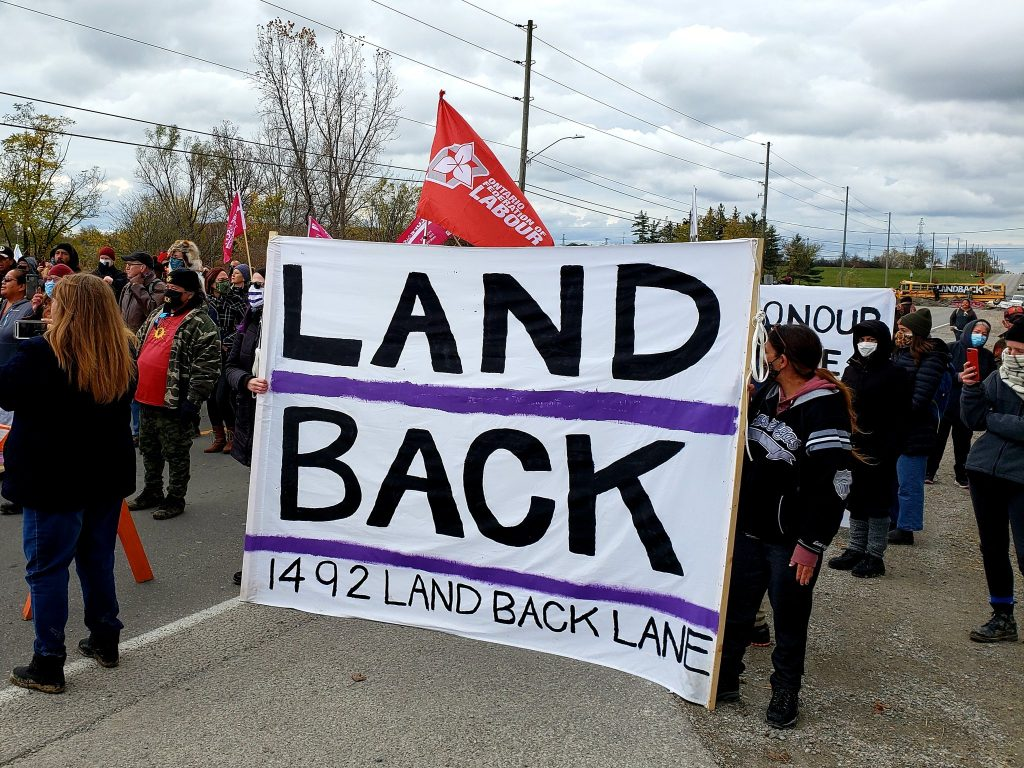
Canada’s political leaders are morally compromised. Months of genocidal bombing, 30,000 killed (15,000 children), 50,000 injured, the destruction of nearly every home, agricultural field, hospital, and school, the murder of journalists and medical personnel, field executions including children are before the International Court of Justice, where South Africa is seeking urgent preventive measures.
How has Canada responded? Most political activity on the matter still consists of each party trying to score points against the others by showing more unconditional support for Israel. South Africa’s case has been dismissed by media figures and ignored at the official level. Canadian media figures have screamed for the deportation of anti-genocide protesters, Ontario’s NDP has kicked out a lone voice (MPP Sarah Jama, now Independent) calling for a ceasefire, Toronto’s school board has agreements with an institution, CIJA, that openly lied about and targeted student protesters at a high school, anti-genocide doctors have been suspended from work. The rot is deep.
While did Canada anomalously vote at the UN General Assembly for a toothless ceasefire resolution, it followed up by joining a small pro-Israel minority asserting Israel’s colonial control over the West Bank.
Canada’s elite is totally morally compromised on the most basic moral issue of all: genocide.
In a context where the majority is pro-peace, if not necessarily pro-Palestine, this is a major disconnect between elite and population and, according to plural political theory, should provide a political opportunity for a party that is uncompromised.
It is necessary to understand why it does not provide such an opportunity in the current context. Why can’t any political party turn this moment of moral collapse to political advantage, by occupying the anti-genocide space?
There are two possible answers: 1. the strength of the pro-Israel lobby, or 2. what is called “settler solidarity”: the deep identification of the elite with Israel’s colonial project and the understanding that it would be hypocritical on some level to be a member of Canada’s political elite while espousing Indigenous rights in Palestine.
There is a strong pro-Israel lobby in Canada that is capable of punishing pro-Israel statement or action, especially by elites. The lobby is well-organized and can send floods of emails to institutions and mount social media campaigns to try to get people removed from elite posts. But the success of the lobby is precisely what needs to be explained, as an equivalent pro-Palestine lobby, equally well-organized, has not been found to have the same success. The success of the pro-Israel lobby is explained by “settler solidarity”. Canada’s elite identifies with Israel and with Israel’s project.
The only way for a party to fully occupy the political vacuum that is the anti-genocide political space in Canada would be for that party to be a party for the return of land to Indigenous Sovereignty. The empty political space in Canada can only be filled, in other words, by a Land Back Party. Canada’s elite cannot support Palestinian freedom because of its structural opposition to First Nations sovereignty; the movement inside Canada for Palestinian freedom has long understood the necessity for First Nations sovereignty.
Indigenous movements in Canada are currently experiencing what has been called a “resurgence”. The Land Back Party would support this unstoppable resurgence and work in constant coordination with it.
The Land Back Party’s program would be ambitious as it would have to achieve several difficult, perhaps unprecedented, and seemingly (though not actually) contradictory objectives:
-
Improve the living standards of everyone living in Canada, including health care, education, water, food, environment, and all other welfare measures
-
Without exploitation of the labor and resources of the Global South (ie., while achieving fair trade arrangements with Global South providers of resources);
-
-
While also transferring land and wealth from Canada to First Nations, expanding their land base and rights;
-
While also defending the land back project from the inevitable attempt to overthrow it.
While difficult, each of these objectives can be done.
Living Standards for all. The most succinct economic program for a left party upon reaching power was articulated by Utsa and Prabhat Patnaik with India in mind. In their book Capital and Imperialism, they imagine such a party introducing a set of
“universal, justifiable economic rights on par with the political rights typically enshrined in a democratic constitution. A minimal set of five such rights, namely the right to employment (or of wage payment if the state fails to provide employment); the right to food at affordable prices; the right to free, quality, public healthcare; the right to free, quality public education up to at least the university level; and the right to old-age pension and disability assistance of an adequate magnitude can be immediately implemented. And for this no more than an additional 10 percent or so of GDP will be required.”
Upon arrival in power, the government would immediately face capital flight and would have to incrementally introduce capital controls. Once those were introduced, trade controls would have to follow especially since, for Canada, a major portion of international trade is mining and military industry (both of which destroy Indigenous land within Canada’s borders and outside them). Were these controls to be introduced, big business in both Canada and the US would likely conduct an “investment strike” and try to shut down industry as part of a campaign of regime change. At that stage, a left government would also have to incrementally introduce nationalization of industries, turning them over to be run by their workers, and economic planning measures (for a Global North example, see the “window guidance” adopted in Japan prior to the Plaza Accord – described in the book and film The Princes of the Yen).
In The Wealth of Some Nations, Zak Cope describes the mechanisms by which trillions of dollars of value are transferred from the Global South to the Global North each year. The challenge for a left party in an imperialist country is improving living standards for all while moving towards a fair trade arrangement in the global economy. Moving Canada from a global exploiter to a country that is neither exploited nor exploiter. An analysis of the mechanisms through which neocolonial exploitation occurs can help understand how to unravel it without plunging the masses who live in Canada into misery. These mechanisms include especially the artificial lowering of prices of commodities and of labor from the Global South and the inflation of prices of services and labor from the Global North. The details of how to engage in fair trade in the global economy can be worked out if it is a priority.
Transfer of land and wealth to First Nations. In the book Unsettling Canada, Arthur Manuel and Ronald Derrickson show that Indigenous peoples control 0.2 percent of the land and settlers, 99.8%. The history of Canada is one of successive bad-faith attempts to “settle” these land claims – meaning, to extinguish them without changing the distribution of land. Rather than striking a committee or writing a new White Paper, the Land Back Party would come to power with a careful study of the history of land theft in Canada using maps like the set of maps at mappinglandtheft.ca, it would immediately stop fighting losing cases to prevent Indigenous people from getting their rights and lands, and begin immediately expanding the Indigenous landbase. Ultimately, it would learn about and adopt Indigenous ways of relating to the land – not the theft of Indigenous knowledge that characterizes the current colonial relation, but a transformation of the way society relates to the land in accordance with Indigenous principles.
Surviving all the overthrow attempts. As the landbase was expanded, strategies for holding the land against violent encroachment by aggrieved settlers and regime change campaigners would also be implemented. A Land Back Party would, on the road to power, have to win enough support to be able to resist even an armed coup attempt or an attempt to roll back gains that were made by First Nations. Returning the land to First Nations is, for its opponents, a most violence-inducing idea. A Land Back Party cannot afford to be naive about this, but with popular support, sovereignty can be defended.
The weakness of communist parties in Five Eyes countries has been a lack of understanding of countries like Canada as “prisons of nations” as Sakai described the US (following the Bolsheviks’ criticism of the Russian tsarist Empire). As organizations that work in colonial settler states that need to be transformed, left parties need to work for this transformation: not simply for a just distribution of the stolen spoils.
Other Land Back Party priorities would serve to permanently differentiate the party from unprincipled parties and serve as a bulwark against co-optation – the other early danger for such a party. These would include:
-
Freedom for Palestine, an end to the occupation, a Palestinian state with equal rights for all. Humanitarian and infrastructural aid to rebuild Palestine and no relations with Israel while occupation, apartheid and genocide continue. To those who ask, why is a foreign policy issue so important for this party? All other parties are pro-Israel and Palestine is evidently an issue of immense importance to Canada. Someone has to be the first anti-genocide party in North America. The party’s constitution will require support for Palestine.
-
Cancelling all governmental partnerships, guarantees, and subsidies for mining and military industries and co-operation with Five Eyes intelligence and US covert and overt military programs. Defense concepts will instead include partnerships with First Nations for defense of sovereign Indigenous land, solidarity and coordination with struggles of oppressed people inside the US, and communal and civil defense against coups and fascist violence.
-
Expansion of welfare state, health care, education including in Indigenous languages, water infrastructure to Indigenous communities. Transition to restorative justice based on First Nations models. Community control over police (see, e.g., The Black Agenda Report proposal). Food sovereignty and state support for agriculture. Economic planning. Unapologetic use of policy tools including taxation, nationalization, capital controls.
The initial activities of this organization will include:
-
Media work – social media and a media infrastructure that belongs to the party so that the party does not require social media to get its message out. Media work will be a high percentage of the work of the organization and will support all other work.
-
Media education and training – the idea of an introductory course for organization members that would be useful anyway – that would develop theoretical knowledge, writing skills, and other media skills so that the work required to join the party is rewarding in itself.
-
-
Movement defense. The party would work with lawyers but the organization will also defend anyone suffering repression for their Palestine- or Indigenous sovereignty- related work through public campaigns. This kind of movement defense casework will help the day to day building of the organization.
-
Support for organized labor in strike actions, political use of the general strike to exert pressure for policy change (ie., a ceasefire at this moment), again primarily through media and public work.
-
Work with school boards, media organizations etc., to get anti-Palestinian racism widely used as a concept. Longer term work would include education on the practicality of the immediate expansion of the First Nations land base.
There are also lessons from other parties – small, left-wing parties and mainstream parties – that the Land Back Party would learn from. These include having robust self correcting mechanisms within the party and organizational structures. The party charter would include democracy, transparency, equality, gender equity, diversity, anti sexual harassment policies, accountability mechanisms for all levels of the organization. Application to the organization would be open to all, but it would require completion of an educational program. The organization would be built with the expectation that it would grow and it would have committees and transparent procedures for handling everything from the aforementioned sexual harassment allegations to funds, budgets, and media infrastructure.
When the time is right, the party would fill out the forms, raise funds, find and prepare candidates, and run for office in elections at provincial and federal levels since it is only through state power that these economic, foreign policy, and land back agendas can be fulfilled. This, too, will require a careful analysis of what opportunities exist within the electoral system in Canada and the legal constraints on how political parties operate, with a view to preventing the Land Back Party from replicating the co-optation or (assisted) self-destruction of previous, similar efforts.
Such a party would have many difficulties getting started (all the problems left-wing people have in organizing at a small scale), greater difficulties achieving power (as repression would increase dramatically), and still greater difficulties governing (in the face of capital flight, coup attempts, and threats of invasion by the US). But all of these could be overcome in time and it would be better to start now than to look around as un-organized activists in twenty years of further rightward drift and wish we had done something like this now.
Corporate Canada and Israel’s flagship Elbit Systems
Canada, the US, the UK, and Israel’s military industrial complexes are fully integrated
In my last article I looked at the material flows of the military-industrial complex with a focus on aluminum and Canada’s status as a major aluminum exporter for the Western military industrial complex despite Canada not having bauxite.
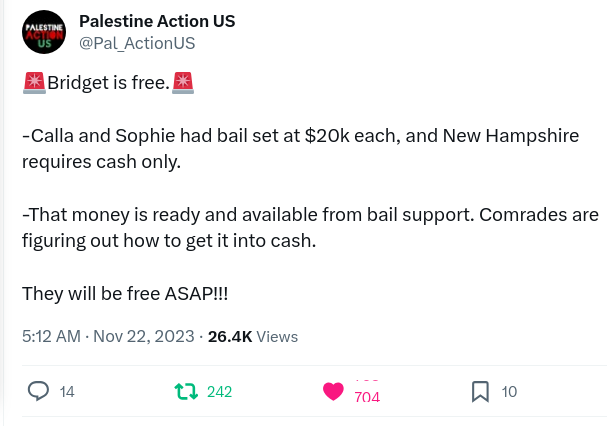
Since then, I spoke to activists from Palestine Action who explained that, while they understood the importance of diverse actions and of understanding all the connections between military industry and Western politics, that a number of activists in an affinity network under the banner of “Palestine Action US”, following the example of the UK-based network, argued that a focus on Elbit Systems, the flagship company of Israel’s military-industrial complex, could have a bigger impact on stopping the current genocide than dispersing efforts across the vast number of corporations and elected politicians who participate and profit from it.
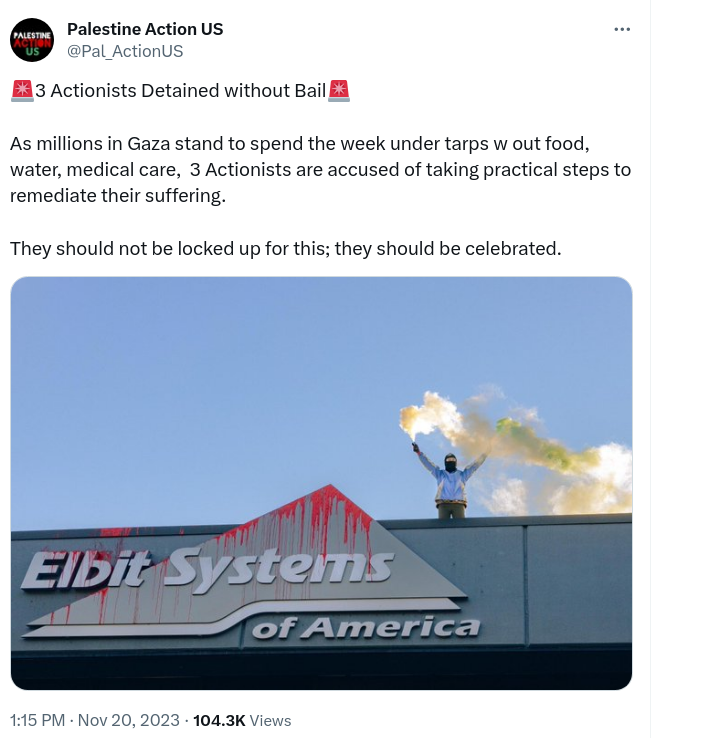
In the words of Palestine Action UK:
Elbit Systems is Israel’s largest arms company, with their broad range of activities generating a broad influence in Israel’s militarised, securitised occupation of Palestine. Elbit supplies the Israeli military with 85% of their drones and 85% of their land-based equipment. The company’s surveillance equipment monitors Palestinians through drone operations, at border points, and across Israel’s apartheid wall. Elbit supplies the IDF with all of its small calibre munitions through subsidiary IMI Systems, while its armed remote-control boats which have attacked Palestinian fishermen. Their Hermes drones have been used for extrajudical killings in foreign countries such as Sudan and operations in Egypt, while enabling the slaughter of Palestinians inside Gaza. They were used extensively in the 2008 and 2014 assaults on Gaza, in which Israel killed 1,417 and 2,202 Palestinians respectively, including four boys killed by a Hermes attack while playing on a beach in Gaza in 2014.
The Palestine Action UK site continues – discussing how Elbit markets its systems as “battle tested” (probably better to call them “genocide tested”):
Elbit’s business model is then to sell these technologies on to fuel imperialism elsewhere. Its drones have not only been deployed by British military and border operations, but are employed by the EU’s militarised border agency Frontex. The same technologies outfitting Israel’s apartheid wall run along the US’ border wall with Mexico, and are used for monitoring of indigenous lands. Elbit drones have been puchased in major volumes by India, in turn deploying them in violent military campaigns perpetuating the repression of Kashmiri populations.
The issue of Modi-India’s relationship with Israel will definitely be explored in a later post. First let’s talk about Canada.
Scotiabank and Elbit
The issue of Canada’s many relationships with Elbit Systems has arisen before. It turns out that Scotiabank’s investment arm is one of Elbit’s largest foreign investors, with some $500M ownership, 5% of the publicly traded company. Back in 2022, a shareholder, Angus Wong, at Scotiabank’s Annual Shareholders Meeting asked bank executives about the investment:
ANGUS WONG: …in 2022, Bloomberg reported that the investment arm of Scotia, 1832 is the largest foreign shareholder of an infamous weapons company, Elbit Systems , owning roughly 5% of the shares, valuing roughly at $500 million. For reference, RBC and TD Bank combined has 3 million worth of shares in the Elbit Systems. So making Scotia’s and 1832 investment pretty big for a bank in size.
Elbit Systems for background has been responsible for countless deaths around the world with its tanks and drones, help build the Trump border wall. The weapons — its weapons has been found in the hands of military junta in Myanmar and until last year, according to MSCI tied to controversial weapons.
Since October, 12,000 members of the organization, I represent (inaudible), formerly some of us signed a petition calling for Scotiabank to divest from Elbit Systems. I delivered the names of the 12,000 people that signed the petition, some of which are customers and shareholders to Julie Walsh earlier today. And I’ve had — I’ve been engaging in dialogue with her and some of the senior team for the past couple of months, and it’s going pretty well. The big question remains from our 12,000 members who signed a petition, why does the third or fourth biggest bank in Canada own so many shares in this weapons company?
I think this week, I started figuring out why, a journalist contacted me, and he believes that one fund manager at Scotia own — at Dynamic Funds — sorry, like Scotia owns Dynamic Funds, has been using middle-class families investments to invest in these companies based on his political views. The full story will come up later this week.
So we believe this type of investment with customers’ money erodes customers trust and has a reputational risk to Scotia shareholders. So my question is ahead of next year’s AGM, will you develop policies to address this reputational risks?
Scotiabank’s Group Head of Global Wealth Management, Glen B. Gowland, responded with the predictable word salad – that the investment in Elbit was simply a matter of getting the best return for customers (let’s return to that in a minute) and anyway Scotiabank was independent of its asset management arm (which means, basically, no one is responsible!)
GLEN B. GOWLAND, GROUP HEAD OF GLOBAL WEALTH MANAGEMENT, THE BANK OF NOVA SCOTIA: Sure. Thanks very much. I appreciate the question. Scotia Global Asset Management is the second largest investment fund company in Canada. We have over $200 billion of investable assets that we manage on behalf of millions of Canadians in over 200 investment mandates. 14 of those investment mandates own Elbit Systems, it’s actually about 0.3% of the overall assets. One thing that’s very important to note is that we,, at Scotia Global Asset Management, have a fiduciary obligation to act in the best interest of the owners of those investment funds. And we take that obligation very, very seriously. Elbit Systems is included in many of the well-known indices around the world.
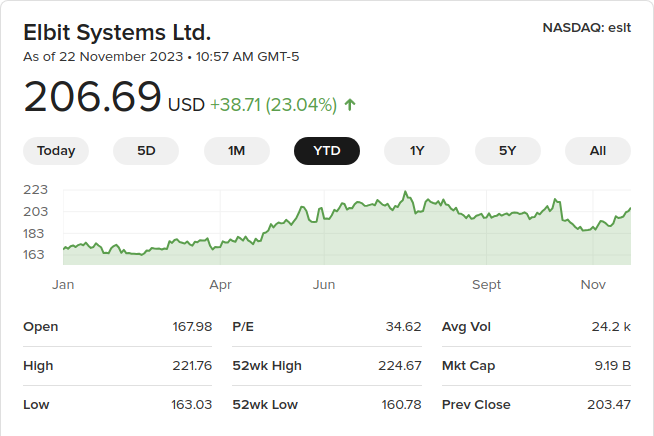
Elbit’s stock price on the NASDAQ seemed to drop for a while after October 7, but then started to climb again after the ground invasion of October 27.
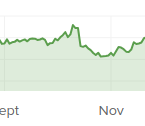
Angus Wong was quoted in a media article later as the campaign manager for the advocacy group SumOfUs, now known as Eko, identifying the principal complaint at that time against Elbit being its production of cluster munitions. Scotiabank spokesperson Heather Armstrong repeated Elbit’s claim that they don’t do cluster munitions any more: “1832 Asset Management does not knowingly invest in companies that directly manufacture cluster munitions”. Perhaps someone will ask Armstrong, if still in that role, whether 1832 Asset Management knowingly invests in companies that commit genocide. Australia’s A Future Fund and Norway’s KLP excluded Elbit because the firm didn’t meet their human rights criteria. Alas, if only Scotiabank had such criteria!
Heather Armstrong repeated Elbit’s claim that they don’t do cluster munitions any more: “1832 Asset Management does not knowingly invest in companies that directly manufacture cluster munitions”. Perhaps someone will ask Armstrong, if still in that role, whether 1832 Asset Management knowingly invests in companies that commit genocide.
Canadian government contracts directly with Elbit
It isn’t just banks. The Canadian government contracts directly with Elbit. From a December 21, 2020 public announcement:
Today, the Honourable Anita Anand, Minister of Public Services and Procurement, and the Minister of Transport, the Honourable Marc Garneau, announced the Government of Canada has awarded a $36.16‑million contract to Elbit Systems Ltd. for the acquisition of a remotely piloted aircraft system (RPAS) or drone.
Another initiative was called the Airspace Coordination Centre Modernization (ASCCM): “In December 2021, Canada signed an $8.6 million(USD) acquisition and in-service support contract with Elbit Systems UK. The contract will deliver the last software required for the complete modernization of CAF’s Airspace Coordination Centres (ASCC). Delivery of these remaining software components is expect by June 2022.” The software in question is called the TORCH-X Battle Management Application (BMA), which apparently provides “situational awareness by constantly displaying a local or recognized air picture, thus enabling effective co-ordination of air assets into complex land and joint battlespace. The system will be operated utilising Elbit Systems’ E-CIXTM open architecture framework that will enable connectivity to the Canadian Armed Forces’ legacy applications and tactical datalinks while also allowing future integration of new applications in support of the Canadian Armed Forces digital transformation plan.”
German subsidiary Rheinmetall in Ottawa and Elbit
Canadian institutions connected to Elbit are as dispersed as Internet nodes. Ottawa-based Rheinmetall Canada (a subsidiary of a German military company) boasts that its “400 employees put their expertise to work in order to deliver solutions that you can trust.” Two such solutions are joint ventures with Elbit, according to the company’s press release for the Canadian Arms Bazaar event (CANSEC, a focus of the World Beyond War campaign) 2022:
-
Night Vision System Modernization (NVSM) project: Rheinmetall is again teaming up with Elbit Systems for the NVSM project, which will address upcoming capability gaps in the current Army’s night vision equipment fleet. As a solution of choice for the Laser Range Finder – Hand Held Imager – Long Range’ program, Rheinmetall will be presenting Elbit’s advanced target locator and intelligence system named AION-C.
-
Joint Fire Modernization (JFM) project: Rheinmetall and Elbit Systems join forces in pursuit of Canada’s Joint Fires Modernization (JFM) project – an initiative that will enable the near real-time sharing of tactical, operational, and strategic fires and effects information through a digital network, delivering an immediate common operating picture.
Newfoundland based Kraken Robotics and Elbit
Last year a breathless press release (Sept 29/22) from Kraken Robotics outlined a new sonar system they developed in partnership with Elbit.
With live demos and sea trials, the Royal Navy are better able to understand the demonstrated technology including software, sensors, and effectors necessary to implement a highly reliable Mine Hunting Capability (MHC).
For these trials, Kraken teamed with Elbit Systems UK to demonstrate the KATFISH High Speed Towed Synthetic Aperture Sonar System integrated to their Seagull 12-meter Uncrewed Surface Vessel (USV).
Beyond the Royal Navy, the KATFISH system has customers in Denmark and Poland.
Montreal’s Top Aces and Elbit
In February 2022, defence contractor Top Aces tested a new system modernizing the F-16. Aviation News reported on Feb 17/22:
Montreal, Quebec-based defence contractor Top Aces undertook the maiden flight of its first Lockheed Martin F-16 Advanced Aggressor Fighter (AAF) – N854TA – outfitted with an Advanced Aggressor Mission System (AAMS) from Arizona’s Phoenix-Mesa Gateway Airport on January 19.
Retrofitted to the former Israeli Air Force jet at the firm’s Mesa F-16 Center of Excellence by M7 Aerospace and Elbit Systems of America, the F-16AAF will be able to replicate the most advanced capabilities of contemporary air-to-air combat opponents.
It certainly looks like Israel’s F-16 inventory of 175 combat aircraft were engaged in some “advanced aggression” in Gaza over the past 7 weeks, killing more 14,000 people, 5,000 of whom were children. The Advanced Aggressor Mission System would appear to be working successfully.
Perhaps you might feel a certain way about your deposits going to a bank, however independent, whose investment arm is the largest foreign investor in the flagship company of Israel’s military-industrial complex.
Completely unrelated, have you ever thought about how hard it is to change banks in Canada? With all the direct deposits and automatic bills, closing fees and transfer fees that have to be paid. The banks make it so difficult because losing depositors hurts them too. It’s probably better to make all the arrangements and transfer the money first, and then close the account once everything is already in place at the new bank. While it’s probably ideal to change to a Credit Union that doesn’t even have an investment arm, it’s still inconvenient. Hard to compare the inconvenience of changing banks with the inconvenience of suffering a genocide.
Anyway I found this guide on a site called moneysense.ca
Step 1: Open an account with the new financial institution
Step 2: Transfer money to your new account – piecemeal or all at once
Step 3: Set up direct deposits and bill payments
Step 4: Close your bank account. There may be closing fees and transfer fees. If you have a credit card, switch it to a no-fee card and keep it dormant.
Step 5: Send your old bank a message saying why you closed your account.
Anti Empire Radio 130: Palestine Action and the focus on Elbit Systems
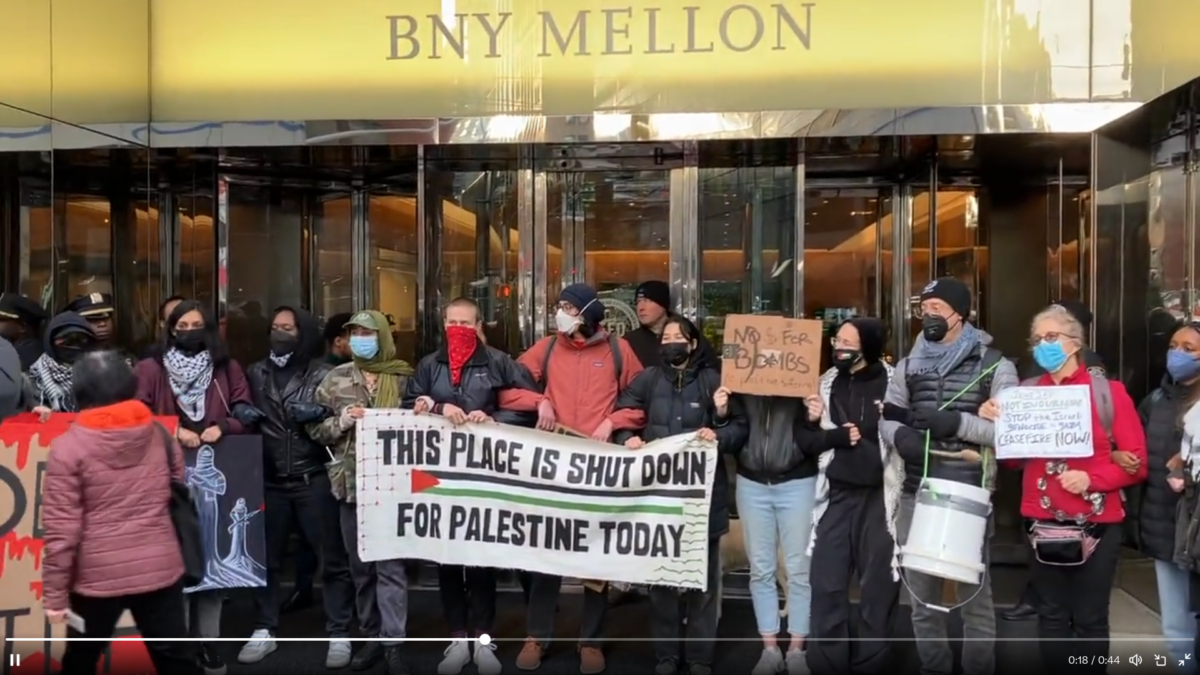
A discussion with Calla and Fergie from Palestine Action US about the theory of direct action and how activists have tried stop the flow of Western weapons that are being deployed against Palestinians in Gaza, instead of, e.g., moral suasion on Western politicians. The Palestine Action UK precedent and the reason for Palestine Action’s focus on Elbit Systems, the flagship corporation of Israel’s military industrial complex.
AER 128: CAUKUZians speak out!

Arama Rata, independent Maori researcher, and Carl Zha of Silk & Steel podcast are both back! Carl reports on his lived experience as a survivor of the Prigozhin coup in Moscow; Arama outlines the anti-AUKUS speaking tour she is on with other journalists and activists; I continue my rant about the sheer plagiarism of Canada’s China panic using David Brophy’s book about Australia’s China panic. We conclude with the possibility of a regular meeting of CAUKUSZians (Canada + AUKUS + new Zealand)
Olivia Chow is right to raise property taxes
And there’s more to it even than addressing a municipal revenue crisis
Of all the cheap propaganda tricks in Canadian media, the cheapest has to be using unflattering photographic angles of politicians you’re trying to discredit. CBC’s recent one of Olivia Chow is incredibly cheap.
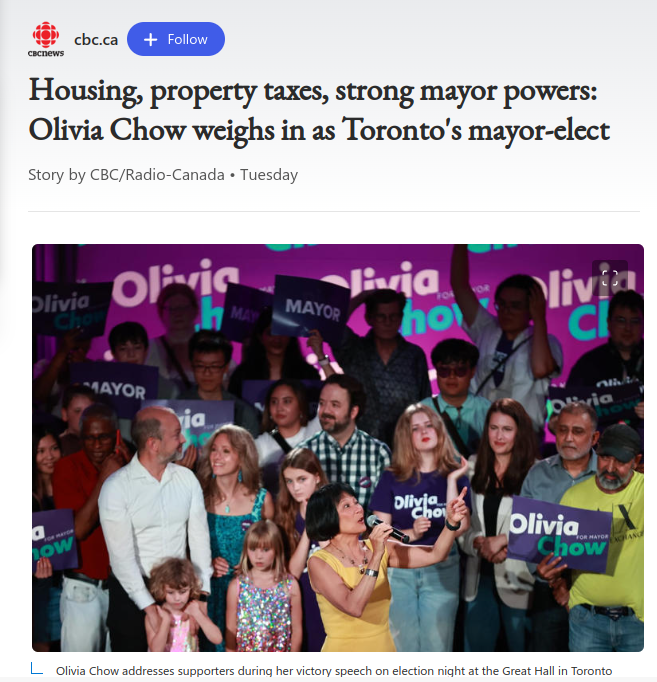
Just wanted you to know, CBC, we see you. We know the trick. We know you had better photos where Olivia Chow was, say, looking at the camera, or smiling, or looking relaxed. But you picked this one. Cheap, CBC!
But that’s not what I’m doing here today. This is another political economy post and I should just face facts that this mailing list is going to have a lot of economic analysis. There’s probably no anti-empire project without economic analysis, so let’s start.
Western politicians campaign on austerity. They promise to keep taxes low and therefore, implicitly, to keep public services on the edge of collapse. This formula goes across political parties and could be a durable feature of Western democracies. Where politicians do talk about expanding public health or education or anything else that’s good, they take pains to explain how they can do this magically without any tax increases or any sacrifice by anyone who’s been accumulating wealth over the decades. So, when Olivia Chow campaigned for mayor of Toronto on a small property tax increase, I knew it would make her media enemies and earn her a full-fledged Canadian freakout. Which is unrolling as predictably as a forest fire after a sustained dry weather spell. So, in this post, I’ll tell you something surprising about property taxes, and why they are important.
It isn’t just the “culture of cheapness” that has led, e.g., to the city’s animal services taking up to 5 days to collect a dead animal or the transit commission more or less proudly announcing simultaneous fare hikes and service cuts.
It is also that low property taxes do not lead to lower housing costs, but to much higher ones.
There’s a bit of data to confirm this: If low property taxes led to the city being an affordable place to live, Toronto, which has low taxes, wouldn’t be one of the least affordable in North America.

To understand this, as often occurs, we need Michael Hudson.
The one city that beats Toronto, the least affordable in North America, is Vancouver, and some years ago Michael Hudson gave a lecture in that city to talk about the real estate crisis. In that lecture, Hudson outlined an argument for raising the land tax. As property values increase, most of the property value increase is taken by the government to pay for services, rather than by those who get that property value increase now. Can you guess who that is? It isn’t even the landlords. It’s the banks.
In Hudson’s analysis, the value of property is set by how much a bank is willing to lend against that property. From the bank’s perspective, the ideal value of a property is one where the bank gets the maximum monthly payment from the mortgage-holder. And the ideal value of all real estate across a city is the one where everyone is paying everything they earn above subsistence to the bank – whether there is an intermediary landlord who is collecting rent, or an intermediary homeowner who is paying a mortgage, most of the money should be captured by the bank in the end. Maximizing the total amount the bank gets in mortgage payments will leave many people unhoused, it’s true, or having to commute from far to work or go to school in the city. Those social costs can be borne by society though – perhaps by the city, with its ever-declining revenue (and its ever-rising police budgets). Hudson’s claim was shocking to the audience, who asked several questions.
Won’t higher property taxes just be passed on to tenants though, as higher rents? When asked this, Hudson argued that the tax law could be written to make that impossible (there are already controls on how much a landlord can raise rents).
What about those who are betting their future on increasing home values? This one is tougher, but Hudson’s brutal answer is that that is a bad bet: betting on increasing home values is betting on increasing debt loads. It’s unsustainable. As Cory Doctorow wrote in a post about this topic, “But asset accumulation isn’t — and can’t be — a path to widespread prosperity. A middle-class that relies on increasing property values as a means to fund their kids’ university tuition, their own retirements, and the next generation’s down-payments sows the seeds of its own destruction.” Doctorow’s point — which I agree with — is that there is more meaningful security in unions and social democracy – “employment-based security” than there is in “asset-based security.”
If Michael Hudson is right, higher property taxes would reduce property values. Banks, realizing that some of what they’re now collecting as mortgage would be taken in taxes, would be willing to lend less against those properties. Is that such a disaster? “Lower property values” sounds bad, while “more people being able to afford living in the city where they work” sounds good — but they’re the same thing.
There is one other thing going on with mortgages that it would be remiss not to mention: that is that interest rates are being hiked and Canadian banks will be collecting a lot more in interest than they’ve been collecting. This, too, will lower the value of real estate as there will be fewer people able to afford these higher payments — lower effective demand. Unlike taxes though, these increases won’t be opposed by the media and they won’t make things more affordable, they’ll just price people out of housing by higher interest payments on lowered property values rather than pricing them out through lower interest payments on higher property values. They’ll also drive the economy into a recession, increase unemployment and misery. When that happens, you can be sure that the Canadian media won’t blame the banks and their games with interest rates and asset inflation: they’ll blame progressive politicians like Olivia Chow and modest property tax increases. Don’t be fooled.
AER 124: China’s use of telepathy and WeChat to control Canadian elections, with Carl Zha

Carl Zha is back and I try to explain to him the hysteria of the accusations by the CSIS leaker in Canada of Chinese electoral interference. He can’t find a word of it in Chinese media which leads to the horrible possibility that Canada doesn’t matter very much to China. I try to explain to him what has been going on in the Canadian media and he reminds us that Australia has been concocting the same story – anonymous intelligence sources using the media to create a scandal around supposed Chinese electoral interference – since 2017. It’s hard to take seriously, so we don’t.
AER 123: The fruit of 5 years of demonizing China in Canada
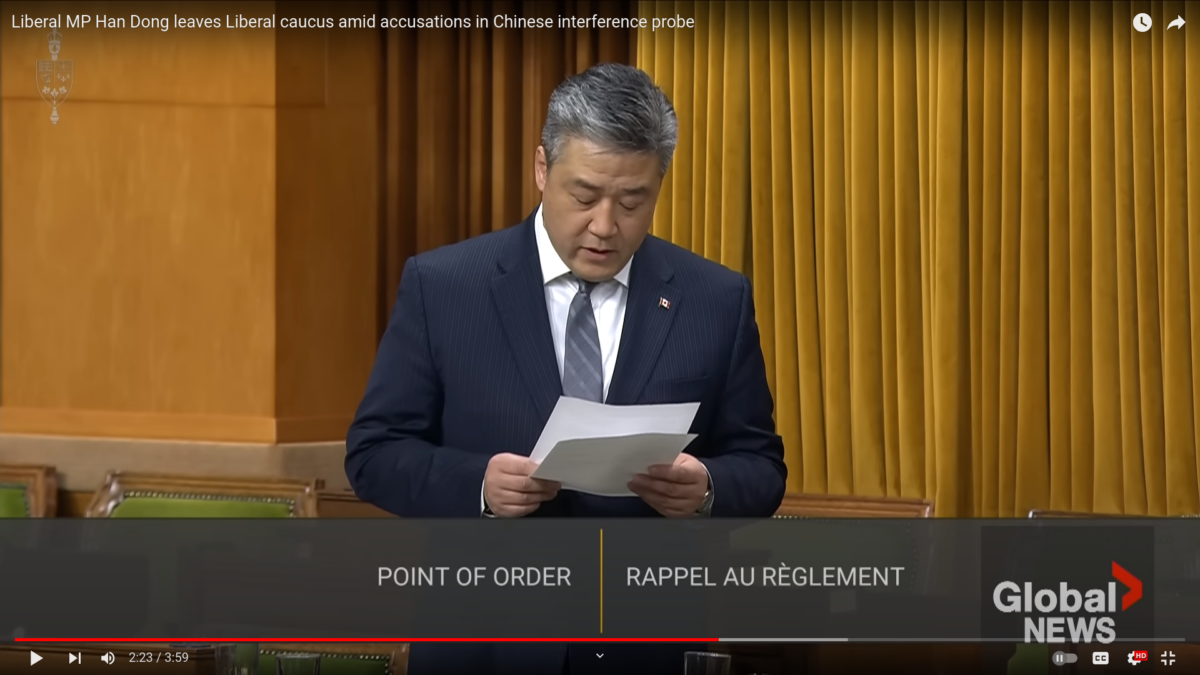
I’m joined by Dock Currie with another episode on the gift that keeps on giving, the CSIS-leaking China panic in Canadian politics. We talk about the recent walk-back from the most ridiculous allegations against Han Dong, the pivot to more aggressive demonization of China in Canadian culture starting in 2018, the Meng Wanzhou case and where things are headed. Dock is an articling student in BC and on twitter at Dock_Currie
Some basics of journalism to evaluate these CSIS stories
Have professional guidelines been followed here?
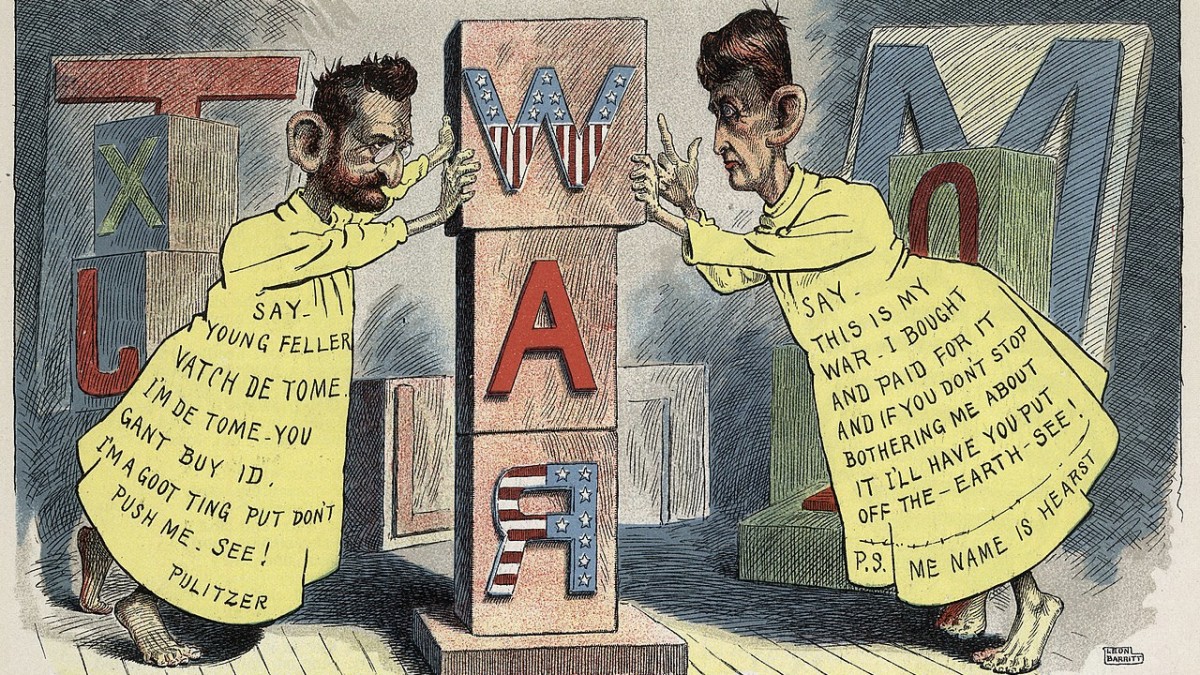
Since the Canadian media engulfed itself in a Sinophobic panic fueled by some probably racist CSIS leaker and credulous reporters (that I have referred to previously as CSIS-GM) a small number of people in independent media have tried to create some kind of response. While we have at least a couple of good pieces in e.g. The Canada Files and in Passage, we are definitely talking about, if not voices in the wilderness, honourable exceptions to a dishonourable unanimity. There is no debate going on here, at least not yet.
On the other hand, there is nothing that upsets a monopolist more than the slightest sign of a crack in their racist wall of anti-China coverage. And so it is that we are treated not only to the unfolding defamation campaign against Chinese-Canadians, but also to several of the most fervent of the campaigners sniveling – because of the lack of credulity in these little pockets of twitter about what CSIS-GM is selling – about how the public doesn’t understand the complexity of journalism.
Like the ungrateful public that refuses to understand how what looks like food prices being driven up by monopoly is actually much more complex, the ungrateful public refuses to understand how what looks like fiction from a racist spy agency is actually the apogee of professional journalism. If they only knew.
Shall we take up the challenge? Shall we pick up the gauntlet thrown down by the Canadian media? Perhaps we can take a look at some foundational resources for journalists, from the place you know all Canadian journalists look for foundational resources – the US.
How does the CSIS-GM reporting of the past few months stack up against, for example, the Society of Professional Journalists’ Code of Ethics? Here are some principles from the code for you to compare with the behavior of the Canadian media in recent weeks. They include:
-
Verify information before releasing it.
-
Consider sources’ motives before promising anonymity.
-
Diligently seek subjects of news coverage to allow them to respond to criticism or allegations of wrongdoing.
-
Provide access to source material when it is relevant and appropriate.
In recent years there have been real journalists and sources who have suffered real persecution by the US and its allies for reporting within the above code of ethics. Wikileaks, after a painstaking process of harm reduction to ensure no danger would come to US spies and military personnel, published whole troves of source documents – the Iraq War Diary, the Afghan War Diary, Cablegate – so that the public, journalists, researchers could do their own analysis and their own verification on the documents directly. The source, Chelsea Manning, was punished severely and the publisher, Julian Assange, is in jail, his life in danger. Edward Snowden, after getting himself to safety, came out in his own name and defended his decision to become a source on the NSA’s universal surveillance program.
Meanwhile the CSIS leaker was given space in the Globe and Mail to defend his honor as well – to defend, that is, his decision to engage in political manipulation and defamation behind a cloak of anonymity. He will continue to be defended by the journalists who published his narratives and by the spy agency that employs him, even as Assange languishes in prison.
Let’s go over now to the Comittee of Concerned Journalists. There we find similar ideas about sources and verification, which is “a consistent method of testing information — a transparent approach to evidence — precisely so that personal and cultural biases would not undermine the accuracy of their work.” How is that working out in Canada? Also in the CCJ principles you will find the idea of publishing in the public interest: “journalists must continually ask what information has most value to citizens and in what form.” The more the CSIS-GM leak material that seems by perfect coincidence to vindicate their approach and assumptions, the more it’s revealed that the goal is narrow political and personal agendas and not what “has most value to citizens”.
A third resource. While I wouldn’t want to imply that Associated Press follows its own ethics, it too has guidelines that are being mocked by the CSIS-GM operation.
“ Under AP’s rules, material from anonymous sources may be used only if: 1. The material is information and not opinion or speculation, and is vital to the report. 2. The information is not available except under the conditions of anonymity imposed by the source. 3. The source is reliable, and in a position to have direct knowledge of the information.”
If the CSIS-GM information has passed these tests, there is no way to know it from the story. It doesn’t look like information (#1 failed) and the source says things that make absolutely no sense (#3 failed). With #1 and #3 failed there’s no way to even think about #2, since some of the leaks sound like pure inventions.
Like any other important endeavour, journalism involves both skill and insight that develop over time and practice. Verification, for example, is a complex method. Seeing with your own eyes is better than hearing from a witness; two witnesses are better than one, but not all that much better if they coordinate their stories before talking to you. Documents are good but can be faked. How much trust you can put into, e.g., a Wikileaks cablegate cable depends on how much you know about what was going on at the time, how well the information fits with what else you know, the nature of the official denial, the motivation of the leaker and of the publisher. How to make a judgment about what is in the public interest and how to balance that with how well you were able to verify and how timely it all is (why now?). Infinite possibilities to do good work emerge from a fairly simple set of principles.
Violating the principles leads to bad work – which is what has happened here. The social damage, as I’ve said before, is just beginning.