Canada Is Waging an All-Front Legal War Against Indigenous People

After mass graves full of Indigenous children have been found, how can Canada justify ongoing land theft?

Canada is developing a new image: one of burning churches, toppling statues, and mass graves. There are thousands more unmarked graves, thousands more Indigenous children killed at residential schools, remaining to be unearthed. There can be no denying that this is Canada, and it has to change. But can Canada transform itself for the better? If the revelation of the mass killing of Indigenous children is to lead to any actual soul-searching and any meaningful change, the first order of business is for Canada to stop its all-front war against First Nations. Much of that war is taking place through the legal system.

Canadian politicians have said as much, adopting a motion in June calling for the government to stop fighting residential school survivors in court. A long-standing demand, it has been repeated by Indigenous advocates who have expressed amazement in the face of these horrific revelations that the Canadian government would nonetheless continue to fight Indigenous survivors of systematic child abuse by the state.

To get a sense of the scope of Canada’s legal war on First Nations, I looked at a Canadian legal database containing decisions (case law) pertaining to First Nations. I also looked at the hearing lists of the Federal Court of Canada for ongoing cases. My initial goal was to identify where Canada could easily settle or abandon cases, bringing about a harmonious solution to these conflicts. Two things surprised me.

The first was the volume and diversity of lawsuits Canada is fighting. Canada is fighting First Nations everywhere, on an astoundingly wide range of issues.

The second thing: Canada is losing.

The Attack on Indigenous Children and Women

In his 1984 essay “‘Pioneering’ in the Nuclear Age,” political theorist Eqbal Ahmad argued that the “four fundamental elements… without which an indigenous community cannot survive” were “land, water, leaders and culture.” Canada fights Indigenous people over land, water, fishing rights, mining projects, freedom of movement, and more. The assault on Indigenous nations is also a war against Indigenous children and women.

In the high-profile case of First Nations Child & Family Caring Society of Canada et al. v. Attorney General of Canada, laid out in detail by Cindy Blackstock, “the First Nations Child and Family Caring Society of Canada and the Assembly of First Nations filed a complaint under the Canadian Human Rights Act alleging” in 2007 “that the Government of Canada had a longstanding pattern of providing less government funding for child welfare services to First Nations children on reserves than is provided to non-Aboriginal children.” The Canadian Human Rights Tribunal (CHRT) found in favor of the First Nations complainants in 2016.

Note that this isn’t about the history of residential schools. It’s about discrimination against Indigenous kids in the present day. “In fact, the problem might be getting worse,” writes Blackstock, compared to “the height of residential school operations.” As evidence, she refers to a 2005 study of three sample provinces showing a wide gap between the percent of First Nations children in child welfare care (10.23 percent) compared to a much lower rate for non-First Nations children (0.67 percent). In 2006, following the Canadian government’s repeated failures to act on the inequity described in this report (which also included comprehensive suggested reforms that had both moral and economic appeal), Blackstock writes, “the Caring Society and the Assembly of First Nations agreed that legal action was required.” The CHRT was very clear in its 2019 decision that the federal government should compensate each victim the maximum amount, which addressed the victims as follows:

“No amount of compensation can ever recover what you have lost, the scars that are left on your souls or the suffering that you have gone through as a result of racism, colonial practices and discrimination.”

In May 2021, Canada, which has spent millions of dollars fighting this case, tried to overturn the CHRT’s ruling.

Canada’s war on Indigenous children is also a war on Indigenous women. The sterilization of Indigenous women, beginning with Canada’s eugenics program around 1900, is another act of genocide, as scholar Karen Stote has argued. Indigenous women who had tubal ligation without their consent as part of this eugenics program have brought a class-action suit against the provinces of Alberta and British Columbia, both of which had Sexual Sterilization Acts in their provincial laws from the 1920s in Alberta and 1930s in British Columbia until the early 1970s, and Saskatchewan, where sexual sterilization legislation was proposed but failed by one vote in 1930. A Senate committee found a case of forced sterilization of an Indigenous woman as recently as 2019.

The Legal-Financial War on First Nations Organizations

As Bob Joseph outlines in his 2018 book 21 Things You May Not Know About the Indian Act, Canada first gave itself the right to decide Indian status in the Gradual Civilization Act of 1857, which created a process by which Indigenous people could give up their Indian status and so become “enfranchised”—which they would have to do if they wanted to attend higher education or become professionals. The apartheid system was updated through the Indian Act of 1876, from which sprang many evils including both the residential schools and the assertion of Canadian control over the way First Nations govern themselves. In 1927, when Indigenous veterans of World War I began to hold meetings with one another to discuss their situation, Canada passed laws forbidding Indigenous people from political organization and from raising funds to hire legal counsel (and from playing billiards, among other things). The Indian Act—which is still in effect today with amendments, despite multiple attempts to repeal it—outlawed traditional governance structures and gave Canada the power to intervene to remove and install Indigenous governance authorities at will—which Canada did continuously, from Six Nations in 1924 to Barriere Lake in 1995. As a result, at any given moment, many First Nations are still embroiled in lawsuits over control of their own governments.

Canada controls the resources available to First Nations, including drinking water. In another national embarrassment, Canada has found itself able to provision drinking water to diamond mines but not First Nations. This battle too has entered the courts, with a class-action suit by Tataskweyak Cree Nation, Curve Lake First Nation, and Neskantaga First Nation demanding that Canada not only compensate their nations, but also work with them to build the necessary water systems.

Canada dribbles out humiliating application processes by which Indigenous people can try to exercise their human right to housing. When combined with the housing crisis on reserves, these application processes have attracted swindlers like consultant Jerry Paulin, who sued Cat Lake First Nation for $1.2 million, claiming that his efforts were the reason the First Nation received federal funds for urgent housing repairs.

Canada uses the threat of withdrawal of these funds to impose stringent financial “transparency” conditions on First Nations—the subject of legal struggle, in which Cold Lake First Nations has argued that the financial transparency provisions violate their rights. Canada has used financial transparency claims to put First Nations finances under third-party management, withholding and misusing the funds in a not-very-transparent way, as the Algonquins of Barriere Lake charged in another lawsuit. An insistence on transparency is astounding for a country that buried massive numbers of Indigenous children in unmarked graves.

Win or lose, the lawsuits themselves impose high costs on First Nations whose finances are, for the most part, controlled by Canada. The result is situations like the one where the Beaver Lake Cree are suing Canada for costs because they ran out of money suing Canada for their land. When First Nations are winning in court, Canada tries to bankrupt them before they get there.

Land and Resources Are the Core of the Struggle

The core issue between Canada and First Nations is land. Most battles are over the land on which the state of Canada sits, all of which was stolen and much of which was swindled through legal processes that couldn’t hold up to scrutiny and are now unraveling. “[I]n simple acreage,” the late Indigenous leader Arthur Manuel wrote in the 2017 book The Reconciliation Manifesto, this was “the biggest land theft in the history of mankind,” reducing Indigenous people from holding 100 percent of the landmass to 0.2 percent. One of the most economically important pieces of land is the Haldimand tract in southern Ontario, which generates billions of dollars in revenue that belongs, by right, to the Six Nations, as Phil Monture has extensively documented. Six Nations submitted ever-more detailed land claims, until Canada simply stopped accepting them. But in July, their sustained resistance led to the cancellation of a planned suburban development (read: settlement) on Six Nations land.

Many of the First Nations court battles are defensive. Namgis, Ahousaht, Dzawada’enuxw, and Gwa’sala-’Nakwaxda’xw First Nations have tried to defend their wild fisheries against encroachment and pollution by settler fish farms. West Moberly, Long Plain, Peguis, Roseau River Anishinabe, Aroland, Ginoogaming, Squamish, Coldwater, Tsleil-Waututh, Aitchelitz, Skowkale, and Shxwha:y Village First Nations challenged dams and pipelines. Canada has a history of “pouring big money” into these court battles to the tune of tens of millions—small money compared to its tens of billions subsidizing and taking over financially unviable pipelines running through Indigenous lands—including that of the Wet’suwet’en, whose resistance sparked mass protests across Canada in 2020. The duty to consult First Nations on such projects is itself the outcome of a legal struggle, won in the 2004 decision in Haida Nation v. British Columbia.

First Nations who were swindled or coerced out of their lands (or water, as with Iskatewizaagegan No. 39 Independent First Nation’s case against Winnipeg and Ontario for illegally taking their water from Shoal Lake for use by the city of Winnipeg starting in 1913) fight for their land back, for compensation, or both. The Specific Claims Tribunal has 132 ongoing cases. In Saskatchewan in May, the tribunal awarded Mosquito Grizzly Bear’s Head Lean Man First Nation $141 million and recognition that they never surrendered their land as Canada had claimed they had in 1905. In June, Heiltsuk First Nation won a part of their land back.

First Nations also fight for their fishing rights in courts and out on the water, as settler fishers have physically attacked and tried to intimidate Mi’kmaw fishers on Canada’s east coast. In June, on the west coast, after the British Columbia Court of Appeals found against Canada, the federal government announced it wouldn’t appeal, dropping a 15-year litigation that restricted Nuu-chah-nulth First Nations fishing quotas.

Decolonization Just Might Be Inevitable

Why does Canada keep fighting (and losing) even as its legitimacy as a state built on theft and genocide crumbles? It’s not merely the habits of centuries. It’s also the absence of any project besides the displacement of First Nations and the plunder of the land. Canada could take the first step to ending all this by declaring a unilateral ceasefire in the legal war. Too few Canadians understand that this would actually be a very good thing. First Nations lived sustainably for thousands of years in these extraordinary northern ecosystems. Then the European empires arrived, bringing smallpox and tuberculosis among other scourges. Local extinctions of beaver and buffalo quickly followed, as well as the total extinction of the passenger pigeon. Today’s settler state has poisoned pristine lakes with mine tailings, denuded the country’s spectacular forests, and gifted the atmosphere some of the world’s highest per capita carbon emissions (seventh in the world in 2018—more than Saudi Arabia, which was 10th, and the U.S., which was 11th). Indigenous visionaries have better ideas, such as those presented by Leanne Betasamosake Simpson and Arthur Manuel, or for that matter the Red Deal and the People’s Agreement of Cochabamba.

Under Indigenous sovereignty, Canadians could truly be guests of the First Nations, capable of fulfilling their obligations to their hosts and their hosts’ lands, rather than the pawns of the settler state’s war against those from whom the land was stolen.

This article was produced by Globetrotter. Justin Podur is a Toronto-based writer and a writing fellow at Globetrotter. You can find him on his website at podur.org and on Twitter @justinpodur. He teaches at York University in the Faculty of Environmental and Urban Change.

New article: Canada is Waging an All-Front Legal War Against Indigenous People

View this email in your browser

Dear friends, here’s my latest article for the IMI’s Globetrotter project. That Canada has many lawsuits fighting First Nations, but I found the details surprisingly hard to dig up. They are shared here.

Canada is Waging an All-Front Legal War Against Indigenous People

By Justin Podur for Globetrotter. August 3, 2021

Canada is developing a new image: one of burning churches, toppling statues, and mass graves. There are thousands more unmarked graves, thousands more Indigenous children killed at residential schools, remaining to be unearthed. There can be no denying that this is Canada, and it has to change. But can Canada transform itself for the better? If the revelation of the mass killing of Indigenous children is to lead to any actual soul-searching and any meaningful change, the first order of business is for Canada to stop its all-front war against First Nations. Much of that war is taking place through the legal system.

Canadian politicians have said as much, adopting a motion in June calling for the government to stop fighting residential school survivors in court. A long-standing demand, it has been repeated by Indigenous advocates who have expressed amazement in the face of these horrific revelations that the Canadian government would nonetheless continue to fight Indigenous survivors of systematic child abuse by the state.

To get a sense of the scope of Canada’s legal war on First Nations, I looked at a Canadian legal database containing decisions (case law) pertaining to First Nations. I also looked at the hearing lists of the Federal Court of Canada for ongoing cases. My initial goal was to identify where Canada could easily settle or abandon cases, bringing about a harmonious solution to these conflicts. Two things surprised me.

The first was the volume and diversity of lawsuits Canada is fighting. Canada is fighting First Nations everywhere, on an astoundingly wide range of issues.

The second thing: Canada is losing.

The Attack on Indigenous Children and Women

In his 1984 essay “‘Pioneering’ in the Nuclear Age,” political theorist Eqbal Ahmad argued that the “four fundamental elements… without which an indigenous community cannot survive” were “land, water, leaders and culture.” Canada fights Indigenous people over land, water, fishing rights, mining projects, freedom of movement, and more. The assault on Indigenous nations is also a war against Indigenous children and women.

In the high-profile case of First Nations Child & Family Caring Society of Canada et al. v. Attorney General of Canada, laid out in detail by Cindy Blackstock, “the First Nations Child and Family Caring Society of Canada and the Assembly of First Nations filed a complaint under the Canadian Human Rights Act alleging” in 2007 “that the Government of Canada had a longstanding pattern of providing less government funding for child welfare services to First Nations children on reserves than is provided to non-Aboriginal children.” The Canadian Human Rights Tribunal (CHRT) found in favor of the First Nations complainants in 2016.

Note that this isn’t about the history of residential schools. It’s about discrimination against Indigenous kids in the present day. “In fact, the problem might be getting worse,” writes Blackstock, compared to “the height of residential school operations.” As evidence, she refers to a 2005 study of three sample provinces showing a wide gap between the percent of First Nations children in child welfare care (10.23 percent) compared to a much lower rate for non-First Nations children (0.67 percent). In 2006, following the Canadian government’s repeated failures to act on the inequity described in this report (which also included comprehensive suggested reforms that had both moral and economic appeal), Blackstock writes, “the Caring Society and the Assembly of First Nations agreed that legal action was required.” The CHRT was very clear in its 2019 decision that the federal government should compensate each victim the maximum amount, which addressed the victims as follows:

“No amount of compensation can ever recover what you have lost, the scars that are left on your souls or the suffering that you have gone through as a result of racism, colonial practices and discrimination.”

In May 2021, Canada, which has spent millions of dollars fighting this case, tried to overturn the CHRT’s ruling.

Canada’s war on Indigenous children is also a war on Indigenous women. The sterilization of Indigenous women, beginning with Canada’s eugenics program around 1900, is another act of genocide, as scholar Karen Stote has argued. Indigenous women who had tubal ligation without their consent as part of this eugenics program have brought a class-action suit against the provinces of Alberta and British Columbia, both of which had Sexual Sterilization Acts in their provincial laws from the 1920s in Alberta and 1930s in British Columbia until the early 1970s, and Saskatchewan, where sexual sterilization legislation was proposed but failed by one vote in 1930. A Senate committee found a case of forced sterilization of an Indigenous woman as recently as 2019.

The Legal-Financial War on First Nations Organizations

As Bob Joseph outlines in his 2018 book 21 Things You May Not Know About the Indian Act, Canada first gave itself the right to decide Indian status in the Gradual Civilization Act of 1857, which created a process by which Indigenous people could give up their Indian status and so become “enfranchised”—which they would have to do if they wanted to attend higher education or become professionals. The apartheid system was updated through the Indian Act of 1876, from which sprang many evils including both the residential schools and the assertion of Canadian control over the way First Nations govern themselves. In 1927, when Indigenous veterans of World War I began to hold meetings with one another to discuss their situation, Canada passed laws forbidding Indigenous people from political organization and from raising funds to hire legal counsel (and from playing billiards, among other things). The Indian Act—which is still in effect today with amendments, despite multiple attempts to repeal it—outlawed traditional governance structures and gave Canada the power to intervene to remove and install Indigenous governance authorities at will—which Canada did continuously, from Six Nations in 1924 to Barriere Lake in 1995. As a result, at any given moment, many First Nations are still embroiled in lawsuits over control of their own governments.

Canada controls the resources available to First Nations, including drinking water. In another national embarrassment, Canada has found itself able to provision drinking water to diamond mines but not First Nations. This battle too has entered the courts, with a class-action suit by Tataskweyak Cree Nation, Curve Lake First Nation, and Neskantaga First Nation demanding that Canada not only compensate their nations, but also work with them to build the necessary water systems.

Canada dribbles out humiliating application processes by which Indigenous people can try to exercise their human right to housing. When combined with the housing crisis on reserves, these application processes have attracted swindlers like consultant Jerry Paulin, who sued Cat Lake First Nation for $1.2 million, claiming that his efforts were the reason the First Nation received federal funds for urgent housing repairs.

Canada uses the threat of withdrawal of these funds to impose stringent financial “transparency” conditions on First Nations—the subject of legal struggle, in which Cold Lake First Nations has argued that the financial transparency provisions violate their rights. Canada has used financial transparency claims to put First Nations finances under third-party management, withholding and misusing the funds in a not-very-transparent way, as the Algonquins of Barriere Lake charged in another lawsuit. An insistence on transparency is astounding for a country that buried massive numbers of Indigenous children in unmarked graves.

Win or lose, the lawsuits themselves impose high costs on First Nations whose finances are, for the most part, controlled by Canada. The result is situations like the one where the Beaver Lake Cree are suing Canada for costs because they ran out of money suing Canada for their land. When First Nations are winning in court, Canada tries to bankrupt them before they get there.

Land and Resources Are the Core of the Struggle

The core issue between Canada and First Nations is land. Most battles are over the land on which the state of Canada sits, all of which was stolen and much of which was swindled through legal processes that couldn’t hold up to scrutiny and are now unraveling. “[I]n simple acreage,” the late Indigenous leader Arthur Manuel wrote in the 2017 book The Reconciliation Manifesto, this was “the biggest land theft in the history of mankind,” reducing Indigenous people from holding 100 percent of the landmass to 0.2 percent. One of the most economically important pieces of land is the Haldimand tract in southern Ontario, which generates billions of dollars in revenue that belongs, by right, to the Six Nations, as Phil Monture has extensively documented. Six Nations submitted ever-more detailed land claims, until Canada simply stopped accepting them. But in July, their sustained resistance led to the cancellation of a planned suburban development (read: settlement) on Six Nations land.

Many of the First Nations court battles are defensive. Namgis, Ahousaht, Dzawada’enuxw, and Gwa’sala-’Nakwaxda’xw First Nations have tried to defend their wild fisheries against encroachment and pollution by settler fish farms. West Moberly, Long Plain, Peguis, Roseau River Anishinabe, Aroland, Ginoogaming, Squamish, Coldwater, Tsleil-Waututh, Aitchelitz, Skowkale, and Shxwha:y Village First Nations challenged dams and pipelines. Canada has a history of “pouring big money” into these court battles to the tune of tens of millions—small money compared to its tens of billions subsidizing and taking over financially unviable pipelines running through Indigenous lands—including that of the Wet’suwet’en, whose resistance sparked mass protests across Canada in 2020. The duty to consult First Nations on such projects is itself the outcome of a legal struggle, won in the 2004 decision in Haida Nation v. British Columbia.

First Nations who were swindled or coerced out of their lands (or water, as with Iskatewizaagegan No. 39 Independent First Nation’s case against Winnipeg and Ontario for illegally taking their water from Shoal Lake for use by the city of Winnipeg starting in 1913) fight for their land back, for compensation, or both. The Specific Claims Tribunal has 132 ongoing cases. In Saskatchewan in May, the tribunal awarded Mosquito Grizzly Bear’s Head Lean Man First Nation $141 million and recognition that they never surrendered their land as Canada had claimed they had in 1905. In June, Heiltsuk First Nation won a part of their land back.

First Nations also fight for their fishing rights in courts and out on the water, as settler fishers have physically attacked and tried to intimidate Mi’kmaw fishers on Canada’s east coast. In June, on the west coast, after the British Columbia Court of Appeals found against Canada, the federal government announced it wouldn’t appeal, dropping a 15-year litigation that restricted Nuu-chah-nulth First Nations fishing quotas.

Decolonization Just Might Be Inevitable

Why does Canada keep fighting (and losing) even as its legitimacy as a state built on theft and genocide crumbles? It’s not merely the habits of centuries. It’s also the absence of any project besides the displacement of First Nations and the plunder of the land. Canada could take the first step to ending all this by declaring a unilateral ceasefire in the legal war. Too few Canadians understand that this would actually be a very good thing. First Nations lived sustainably for thousands of years in these extraordinary northern ecosystems. Then the European empires arrived, bringing smallpox and tuberculosis among other scourges. Local extinctions of beaver and buffalo quickly followed, as well as the total extinction of the passenger pigeon. Today’s settler state has poisoned pristine lakes with mine tailings, denuded the country’s spectacular forests, and gifted the atmosphere some of the world’s highest per capita carbon emissions (seventh in the world in 2018—more than Saudi Arabia, which was 10th, and the U.S., which was 11th). Indigenous visionaries have better ideas, such as those presented by Leanne Betasamosake Simpson and Arthur Manuel, or for that matter the Red Deal and the People’s Agreement of Cochabamba.

Under Indigenous sovereignty, Canadians could truly be guests of the First Nations, capable of fulfilling their obligations to their hosts and their hosts’ lands, rather than the pawns of the settler state’s war against those from whom the land was stolen.

This article was produced by Globetrotter. Justin Podur is a Toronto-based writer and a writing fellow at Globetrotter. You can find him on his website at podur.org and on Twitter @justinpodur. He teaches at York University in the Faculty of Environmental and Urban Change.

Civilizations 38: What is history? And have we been doing Critical Race Theory all along?

The origin story of Civilizations revisited

A year and a half ago I approached my high school history teacher with the idea of launching a podcast with a massively expanded version of the content of the “Modern Western Civilization” course he taught me in high school in the 1990s, to include the whole world and the people’s histories.

We’re just about to reach the 20th century so we thought we would debrief and go over some of what we’ve learned. We read things like EH Carr’s What is History?; Dave discusses the limitations of podcasting and of high school teaching; we talk about where the history we do fits into current debates about Critical Race Theory; and we set up for the next two series to come – the Scramble for Africa, and the Three World Wars (WWI, WWII, and the Cold War). 

AEP 92: Q/A on Extraordinary Threat, our new book on Venezuela

Your Extraordinary Threat questions, answered

Joe and I answer some questions listeners sent in about our new book about Venezuela, Extraordinary Threat, from Monthly Review. Questions include: Was Venezuela “once-prosperous” before Chavez? Has Maduro been true to Chavez’s vision? What’s the COVID vaccination situation? Can we comment on Hong Kong? What is the internal social base of US imperialism in Venezuela? Can all the problems of Venezuela be placed at the feet of US imperialism? And more.

AEP 91: Kung Fu Yoga – US withdraws from Afghanistan and panics about China, with Carl Zha

US withdraws from Afghanistan and panics about China, with Carl Zha

Another episode of Kung Fu Yoga with Carl Zha, where we talk about the Indian and Chinese angles on world events. With the US withdrawing from Afghanistan like thieves in the night, the greatest agent of chaos may be gone (or mostly gone, for now) and country’s neighbours (Iran, Russia, the Central Asian republics, Pakistan, India, and China) will be playing a bigger role in the future, and so, evidently, will the Taliban. We talk about the differences we see between the Taliban of today and the Taliban of 2001 in terms of the movement’s apparent support in rural areas and ability to win many of them over without fighting; in terms of the Taliban’s perhaps independence from Pakistan; and in terms of the Taliban’s diplomatic agenda in the region. With the US panic about China taking up where the US left off, we consider China’s relationship with Pakistan (eg., the China-Pakistan Economic Corridor) and whether that has any insight to offer about what the China-Afghanistan relationship might look like in terms of priorities like infrastructure, the Belt & Road initiative, and China’s concerns with stability and terrorism on the border with Xinjiang. As well as India’s seeming irrelevance to the situation.

Civilizations 37f – Yankee Imperialism pt6 – “The more you burn and kill the more it will please me”: The US assault on the Philippines

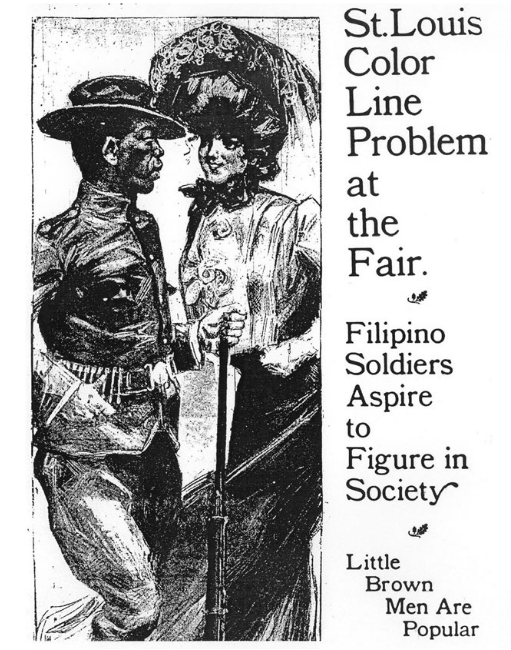
The US takes the Philippines

General Jacob Smith was reprimanded for his order to commit atrocities in the war against the Philippine Republic, but he was not alone in giving such orders. The US war in the Philippines set the stage for more than a century of counterinsurgency, atrocities, and pretexts like the civilizing mission and the responsibility to protect. Using Renato Constantino’s work, also talk about some of the amazing characters on the Filipino side, like Bonifacio and Aguinaldo.

Dan’s new article on Israel’s Antisemitism Ruse: When Racists Claim Victimhood

View this email in your browser

Dear friends, I’m sending along Dan Freeman-Maloy’s latest article, originally published in Spectre. Check out the podcast as well – on Civilizations we’re wrapping up a multipart series on Yankee Imperialism, and on the regular AEP we’ve been covering Palestine, Haiti, and Cuba as always. Dan’s article is his usual historically deep discussion of imperial propaganda, in the case of Israel/Palestine. Dan has also updated his own website, now called The Puzzle, and I expect he’ll have his own mailing list as well before long – at which point you’ll have to join that list to find out about his new work, as opposed to finding it here 🙂 Hope you are all well in these times.

Israel’s Antisemitism Ruse: When Racists Claim Victimhood

By Dan Freeman-Maloy, Originally for Spectre Journal

Bruised-fist grievance politics as an old imperial ruse

Malcolm X was neither the first nor the last to spot this pattern. The fact is that even the worst racists try to appropriate the cause of self-defense, since it is easier to attack from moral high ground.

The pattern is plain. In his book The Reactionary Mind, Corey Robin linked it with “what is truly bizarre about conservatism: a ruling class resting its claim to power upon its sense of victimhood.”2 This is a well-developed ruse. Reinhold Niebuhr, the classical moralist of US power, saw this ruse as a pillar of what he described as “the imperial supremacy of the white races in the contemporary world.” To Niebuhr’s eyes, racism was strongest where it blurred the line between “the will-to-live and the will-to-power.” Where this line blurs, the moral fervor of a fight for survival can be enlisted in support of imperial domination: “So inextricably are the two intertwined, that the one may always be used to justify the other in conscious and unconscious deception.”

This ruse is standard. In the language of the Euro–American far right, the ruse is packaged in the slogans of “white genocide” or “white replacement.” The attempted white-power putsch of January 6, 2021 in Washington, D.C. was motivated by this falsified narrative of self-defense.3 The story, as told by the neo-Nazis of our time, is that Indigenous, African, and Asian people are preparing to do to Europeans what Europeans did to them. It follows that further white violence is necessary for white survival.

This is hateful nonsense – but it is also typical, understandable nonsense. No oppressor, however brutal, has ever conceded the moral high ground without a fight. False victimhood is one of the most common ways that this ground is claimed. As Domenico Losurdo reminds us: “In the USA, the more ruthlessly the erasure of Native Americans from the face of the earth proceeded, the more repugnantly they were depicted. Discriminatory wars and wars of annihilation against colonial populations, whether external or internal to the metropolis, were justified by dehumanizing them; and this was achieved by sheer invention of ‘atrocities’ or by an inflation and one-sided reading of atrocities actually committed.”4 Europe’s classical fascists read from the same script when they attacked Jews as the spearhead of “Judeo-Bolshevist” aggression.5

In other words, the anti-Palestinian smears of 2021 are twisted, but they are not original. In fact, the smears cannot accurately be understood in isolation. They are as imperial in origin as the warplanes that have terrorized Gaza. As Malcolm X insisted, “it’s the same game going all the time.”

Historically, one of Israel’s services to empire was to make the false victimhood of the powerful sound persuasive – to lend the “reverse racism” ruse legitimacy. In a cruel irony, pro-Israel smear campaigns thus played into some of the most dangerous themes of holocaust “revisionism.” One of the main objectives of holocaust “revisionists” is to disavow Western responsibility for Nazi antisemitism by projecting responsibility for it onto the traditional targets of Western hate. For the notorious German revisionist Eric Nolte, the Nazi holocaust, since it was evil, could not have been Western; it must have been an “Asiatic deed.”6 White supremacy emerges from this narrative all but unscathed. Pro-Israel attempts to depict the targets of Israeli racism as the real antisemites play into this game.7

They displace antisemitism onto Palestinians, Black-led social movements, and the Third World, twisting the legacy and reality of antisemitism into a moral mandate for Western power.

In 2021, this ruse is finally losing its social force. The links are just too obvious. In the United States, the most prominent spokesperson for classical white supremacy is Tucker Carlson of Fox News. Like Ayelet Shaked in Israel, Carlson has played around with using the term “fascism” in the first person.8 This April, Carlson made a point of justifying white nationalism in the US by celebrating Israel’s expulsion of Palestinians. It did not take much imagination, since Benjamin Netanyahu had drawn the same parallel. On a 2002 sympathy tour of Texas, Netanyahu argued that a dominant group should expel others with confidence. “You know about this,” he said in Dallas. “This is the reason you have an INS.”9 Extending this parallel in defense of “white replacement” theory, Carlson argued that US white nationalism is as justifiable as Israel’s expulsion of Palestinians.10

At this point, those who fail to see the overlap between “new antisemitism” and “white replacement” sloganry have not been looking closely. In recent years, Israel’s anti-Palestinian racism has become so extreme as to produce startling comparisons in surprising quarters. Even ardent supporters of Israel have compared the politics of Israel’s parliamentary far right to the politics of the Ku Klux Klan and of Nazi Germany. Increasingly, the only way for Israel’s apologists to shut down criticism of Israeli racism is to shut down anti-racism of any kind. The anti-racist scholar David Theo Goldberg warns that wider efforts to do this are underway.11 Historically, however, “new antisemitism” slogans offered a stronger line of attack, in part because Israel kept its anti-Palestinian violence quiet. That era is now over. The power of pro-Israel bullying persists; but we are already witnessing, and must hasten, the collapse of its moral credibility.

The nature and extent of Israeli racism in 2021

One of the worst contemporary contributors to holocaust revisionism is a pro-Israel smear outfit known as the International Holocaust Remembrance Association (IHRA). For the IHRA, anti-racism is antisemitism. So too is basic honest thought. We can start, then, with one of the IHRA’s falsified examples of antisemitism: “Drawing comparisons of contemporary Israeli policy to that of the Nazis.”12 For the IHRA, an early purveyor of the scourge of “new antisemitism” was Israel’s founding prime minister, David Ben-Gurion.

Traditionally, Israel’s main political parties were Labor and Likud. Ben-Gurion led the Labor Party; the forerunner of the Likud Party was a certain Vladimir Jabotinsky. Ben-Gurion often likened Jabotinsky’s politics to fascism and called him “Vladimir Hitler.”13 Now, this should not obscure the fact that it was Ben-Gurion who organized the main expulsions of Palestinians in 1948. But to highlight the utter incoherence of IHRA revisionism, let us turn from Labor to Likud. Not even Yitzhak Shamir’s Likud Party was sufficiently anti-Palestinian to escape the IHRA definition of antisemitism. The right wing of the Israeli Knesset, or parliament, of 2021, celebrates a racist doctrine known as Kahanism. Within Shamir’s Likud Party, right-wing Zionists compared Kahanism to Nazism as a matter of course.

Historically grounded anti-racists can interpret the lineage of Kahanism in various ways. Meir Kahane, after whom Kahanism is named, was an anti-Black, white-backlash activist in the United States before he moved to organizing Israeli hate squads to attack Palestinians. Word for word, his program replicates Puritan doctrines of anti-Indigenous hate. In Israel, however, memories of Nazism overshadow other anti-Black and anti-Indigenous histories, so Israelis more often compare Kahanism with Nazi antisemitism. Whatever parallel one chooses, Kahanist racism is second to none.

In 2019, then Israeli prime minister Benjamin Netanyahu brought Kahanism into Israel’s governing mainstream. Old comparisons with the Ku Klux Klan and Nazi Germany immediately spread among hardline supporters of Israel.14 In the United States, Batya Ungar-Sargon, the opinion editor of the Forward, warned that “Israel’s equivalent of the KKK” had entered government.15 In Israel, Rabbi Benny Lau – “a pillar of religious Zionism,” as the New York Times stressed – repeated the old comparison of Kahanist with Nazi politics. Rabbi Lau reminded Israelis that even Likud under Shamir made this comparison, and he urged that “the public review the comparison MK Michael Eitan made in the 1980s between the Nuremberg Laws and those Kahane sought to enact.”16

Eitan, a Likud MK under Shamir, had simply detailed the similarity between the Nazis’ Nuremberg Laws and the Kahanist program. To get a feel for this parallel, one can track Kahane’s rhetoric. In 1985, Kahane delivered the following speech in Haifa. First, he attacked Palestinian citizens of Israel as “roaches,” sanctifying genocidal violence: “We shall either cut their throats or throw them out.” Then he decreed that he would massacre Palestinians as soon as he had control of the Israeli army: “they will come to me, bow to me, lick my feet, and I will be merciful and will allow them to leave. Whoever does not leave will be slaughtered.”17 Time and again, Kahane signed his name to words like these. In books that Kahanist hate networks still proudly distribute, Kahane urged genocide, or in his words, “total extermination.”18

These politics have swept into the Israeli mainstream. In April 2021, MK Itamar Ben-Gvir took the occasion of his first speech to the Knesset to praise Kahane by name.19 Ben-Gvir was elected by Israeli voters who knew that he attended a wedding where “dancing participants stabbed a picture of Ali Dawabshe[h], a Palestinian toddler who had been killed in a settler firebombing attack.”20 What followed, like a train that is never late, was a move from rhetoric to action. Ben-Gvir’s Klanist squads punctuated his speech with firebombing attacks on Palestinians in Jerusalem. “We’re burning Arabs today,” read one Israeli headline, reporting the April 2021 work of Ben-Gvir’s pogromchiks.21 In their turn, Israeli state forces raided al-Aqsa Mosque and bombarded the Gaza Strip. Ben-Gvir has established himself as a central figure in Israeli media coverage and debates.

Most strikingly, where Ayelet Shaked and Tucker Carlson have played around with identifying with fascism, Kahanists have played around with identifying with Nazism. Jewish Israeli writers have long documented the identification of a settler fringe with Nazi politics.22 In 2018, Israel’s leading daily newspaper, Yedioth Ahronoth, reported the scene when the grandfather of Ali Dawabsheh, the Palestinian toddler murdered by Ben-Gvir’s constituents, attended a court date for one of the smiling suspects: “‘Where is Ali? Burned! No more Ali! Dead, burned! On the grill, on fire!’ were the jubilant jeers that welcomed Hussein Dawabsheh this week as he was heading into the Lod District Court.” Startled, Yedioth argued that “‘Ali is burned, on the grill’ is a sort of Jewish reclaiming of the furnace.”23 Then came the Kahanist lynchings of spring 2021. “We are no longer Jews today,” wrote one Israeli Telegram user: “Today we are Nazis.”24 Ben-Gvir resists the Nazi label, but it seems that not all of his constituents do.25

Yet the real horror this spring was how the firebombs of Ben-Gvir’s Otzma Yehudit were followed by the artillery shells of the Israel Defense [sic] Forces (IDF). At the level of language, this can be tracked with Kahanism into Israel’s mainstream. How, Kahane once asked, could he be faulted for saying that “the Arabs in our midst are a spreading cancer”? Kahane wrote that it was enough to “quote Binyamin Netanyahu, who warned the Galilee Arabs of the danger of their becoming part of the ‘cancer of the intifada.’”26 These hateful tropes now align with the politics of the IDF command. The “centrist” Moshe Ya’alon announced as much in 2002 during his tenure as IDF chief of staff. He told the press that Kahane and Netanyahu had been right about Palestinian politics: “I maintain it is a cancer,” he said. He then summarized the IDF command’s disagreement with Kahanism: “Some will say it is necessary to amputate organs. But at the moment, I am applying chemotherapy.”27

Once again, the trope of “self-defense” is limitless in application. We can read it in the original US attack on “merciless Indian savages.” We can read it in the original fascist attack on democracy as “a war of the hand against the brain.”28 More recently, we read it from the killer behind the white nationalist massacre of 2019 in El Paso, Texas, who “maintained that his attack was a preemptive action against Hispanic invaders and that ‘they are the instigators, not me.’”29

How is anti-Palestinian racism any different? Israel’s current “defense” minister, Benny Gantz, oversaw the killing of 2,251 Palestinians in Gaza in 2014. He has advertised his killings as a point of pride.30 On May 11, 2021, Gantz even sent a video message to Palestinians in Gaza, boasting about “the last time that we met on Eid al-Fitr” and threatening: “Gaza will burn.”

Once upon a time, US diplomats could celebrate Israel’s false victimhood. In 1976, Daniel Patrick Moynihan took the occasion of the bicentennial of US independence to praise Israel as the loveliest symbol of Western power on earth. “In its mortal peril,” Moynihan said, Israel “has become a metaphor for the condition of democracy in the world today.”31 Now as then, Israel does embody the false moralism of its most powerful sponsors. But as the hatreds of Ben-Gvir and Gantz are exposed for the world to see, what was once a point of imperial strength has increasingly become a liability.

The “new antisemitism” as reverse-racism misdirection

The actual history of antisemitism is also a history of racism.

Classical antisemitism presumed an anti-Black and imperial worldview. For the proto-Nazi antisemite Houston Stewart Chamberlain, “the Jew” was “a cross between negro and white man,” a “Semite” who emerged “from the deserts of Arabia” to infiltrate Western civilization.32The whole point was to attack European Jews as racial fifth columnists. Spinning off of the standard attack on Jews as “Asiatic,” France’s Louis-Ferdinand Céline urged white supremacist attacks on European Jews precisely because they were “Negroid Jews.”33 In Germany, meanwhile, the Journal of Racial and Social Biology focused on anti-Black racism for decades before adding anti-Jewish racism to its pages in 1935.34 In other words, actual antisemitism is multi-issue hatred, targeting Jews as allies of the imagined barbarians at the gates of Western civilization. It is to this heritage that the enemy Sieg Heiled in Charlottesville with chants of, “Jews will not replace us.”35

The phrase “new antisemitism” – in sharp contrast – refers to anti-racism. It is a classical example of what Frantz Fanon called “verbal mystification,” the wordsmithery with which racism lies its way into virtue.36 It is also a declaration of war on anti-racist memory. In Germany, the attempt to rewrite the history of antisemitism to Western advantage led to the revisionism of Eric Nolte, who argued that Nazi violence was not a Western but an “Asiatic deed.”37 The “new antisemitism” ruse is subtler. But as Peter Novick has shown in his study The Holocaust in American Life, it has nothing to do with principled anti-Nazi memory.38 And it pushes in Nolte’s direction. Even admirers of the ruse stress that its political function is to “dramatize the ideology of the West.”39

As anti-Palestinian racism consumes Israeli politics, the “new antisemitism” ruse is radicalizing. Netanyahu was so single-minded in his anti-Palestinian hate that he embraced holocaust revisionism of the crudest sort. It was a spectacular disgrace. Netanyahu literally fabricated evidence in an attempt to shift blame for the Nazi holocaust from Germany onto the Palestinians, earning neo-Nazi praise and a dishonorable mention in Federico Finchelstein’s Brief History of Fascist Lies.40 But this is an extreme example. More often, “new antisemitism” means something roughly equivalent to “reverse racism.”

This line of attack can be dated to the US legitimacy crisis of the late 1960s. White-backlash specialists like Daniel Patrick Moynihan led the way, attacking affirmative action as antisemitic.41 The basic outlines of this verbal mystification are as follows. While actual antisemitism attacks Jews as non-Western outsiders, “new antisemitism” theory flips the script. It represents Jews as timelessly white and Western, then attacks challenges to white or Western power as anti-Jewish. Generations of anti-racists have exposed this for what it is: a bullying product of what one US Jewish leader denounced as “[t]he white (including, God help us, the Jewish) backlash.”42

The line was that “anti-whitism” was the real problem, and that “anti-Semitism” was just one form that this problem took. I am quoting Nathan Glazer, Moynihan’s longtime collaborator. Glazer blamed racial justice movements: “In every black neighborhood of every city, there have arisen spokesmen who have been intemperate in their attacks on whites, on the ‘power structure,’ on policemen, teachers, social workers, landlords, businessmen, and – where these are Jews – on Jews.”43 In this story, the US “power structure” had to suppress an “anti-whitism” that was persecuting police.44

It was in this context that Kahane learned his first lines. He pushed forward with the “white replacement” logic detectable in the work of Moynihan and Glazer. His story was that Black migration to northern US cities from the former Confederacy was racially invasive. This is how the story sounded: “‘People used to sit on stoops and benches at all times of the day and night,’ said Allan Mallenbaum, a childhood friend of Kahane. ‘Nobody was afraid of crime. You never saw a Black face.’”45 Kahane thus preached composite white power as a matter of self-defense. Significantly, Kahane presented his program in celebration of racial whiteness. He said: “The Jew is the weakest link in the white chain and the black militant knows that few non-Jews are concerned with the Jew’s plight. The Jew has always been more liberal than other white ethnic groups. So now most Jewish neighborhoods are integrated and the militant blacks there practice terror.”46

This story was tailored to fit the needs of the dominant US culture. This is plain in Glazer’s denunciation of Black anti-police racism.47 But more than this, Novick shows that US patriots saw their own pioneer history in European Jewish settlement in Palestine. Just before the Palestine expulsions of 1948, the editor of the Boston Herald could liken the dispossession of the Palestinians to the “conquest of the Indians and the inevitable giving way of a backward people before a more modern and practical one.”48 The doctrine of “anti-whitism” as “new antisemitism” was thus versatile. It offered a means of celebrating both anti-Black racism and the pioneer mystique.

The pseudo-religious flair of Israeli racism should not obscure how closely it was modeled on the US example. For its part, US white supremacy also focused on a pseudo-Biblical disparagement of Black people as descendants of Ham.49 But it was the anti-Indigenous example of the United States that cut deepest in Palestine. Roxanne Dunbar-Ortiz records how the Puritans pioneered anti-Indigenous demonization in the literal sense. No sooner had English settlers arrived in North America than they “identified the Indigenous population as inherently children of Satan and ‘servants of the devil’ who deserved to be killed.”50

The result was a distinctive colonial theology. First in New England and then in Palestine, settlers seized upon a line from the Book of Samuel: Now go, attack Amalek . . . Spare no one, but kill alike men and women, infants and sucklings, oxen and sheep, camels and asses!”51 While this line is inherently troubling, most religious traditions navigate such lines with extreme caution. The association of “Amalek” with living people is opportunistic viciousness. This settler reading of scripture is foreign to traditional Jewish thought, as is Zionism more generally.52 Yet its transposition from New England to Palestine came easily. One reason is that Protestant white supremacy was framed around the claim that Protestant Christendom was itself the Israel of which the Bible spoke. By 1871, the US magazine Living Age could still celebrate anti-Indigenous violence with this theme: “As the Israelites slew the Amalekites, so did the Pilgrims slay the Pequot.”53

In turn, the post-1948 Israel – a settler knock-off par excellence – absorbed US settler theology almost as readily as it absorbed US weapons. By 1956, David Ben-Gurion could refer to the Palestinians whom his militias had expelled into the Gaza Strip as “hosts of Amalek.”54 This was violent enough from Ben-Gurion. But when Kahane arrived from New York, he helped Israelis sharpen this theme with the worst exterminism imaginable. If Palestinians are Amalekites, Kahane preached, then Palestinian adults and children should alike be killed as “Hamans, large and small,” by hate squads confident in the knowledge that “the All Mighty decrees that they be cruel.”55

At first glance, it seems ludicrous to claim that opposition to anti-Palestinian cruelty shows insensitivity to the oppression of European Jews. Here too, however, the template had already been drawn. Anglo–American power was second to none in spinning cruelty as compassion. And it had developed a powerful tradition of moral misdirection. This point is flagged by Gerald Horne, one of the leading anti-racist historians in the United States. How, Horne asks, was it possible to whitewash the anti-Black and anti-Indigenous violence endemic to US history? The racism was barely concealed. How could it be brushed aside in celebration of US liberty? Horne proposes that one “explanation for this abject hypocrisy is that too many could not see beyond the deliverance of poorer Europeans from the barbarism they endured on their home continent to a sympathy with those victimized in the process.”56 This ruse is a classical feature of settler moralism.

It starts with a truth. Europeans did endure barbarism on their home continent, from English sweatshops to the starving Irish countryside. The ruse then moves to a falsehood: that this justifies violence against Black and Indigenous people in order to deliver Europeans from oppression. Moving from the truth to the falsehood is the work of racist moralism, and making the move sound persuasive is the work of verbal mystification.

Two early examples illustrate how this worked. The first is British. One of the worst outbursts of anti-Black violence from Britain was the massacre of Jamaican laborers in punishment for their rebellion of 1865. The killings were horrific.57 Covering for them, distinguished Englishmen alleged that to oppose anti-Black violence was to show disrespect for the English poor. “Carlyle and Ruskin, Kingsley, and Dickens all insisted that it was not worth considering the injustices perpetrated against Jamaican ‘n*****s’ as long as English working men continued to groan under the oppression of the factory system.”’58 The second example is American. In the US, leaders presented the westward assault on Indigenous life as a quest to secure land for the European poor. In the words of another conservative historian, “the concept of America as asylum for the ‘huddled masses yearning to breathe free’ was made to serve this muscular version of the national destiny.”59

In this historical light, the moralizing logic of Western support for Israel snaps into focus. Imperial moralists were already whitewashing colonial violence by presenting it as a way to help Europeans escape “the barbarism they endured on their home continent.” Then, as Aimé Césaire described it, along came the Nazis and inflicted upon Europe the “crowning barbarism” of modern Western history.60 The spectacular viciousness of Nazi racism helped push white supremacy into a legitimacy crisis on a planetary scale.61 As racism’s legitimacy crisis deepened in the 1960s, US moralists found in Palestine a means of twisting Nazi horrors into colonial frames of reference.62

Within a US frame, the story of Palestine became a tale of colonial redemption, featuring Palestinians as new “Amalekites” and European Jews as new “huddled masses yearning to breathe free.” It was a powerful allegory for Western virtue. Construing Israel as a moral force vindicated the entire logic of settler colonialism. Justice once more demanded the brutalization of Indigenous people by settlers yearning to breathe free. The opportunistic benefits were plain. Since the entire Third World supported the Palestinians, anti-colonialism could itself be attacked as a “new antisemitism,” affirming Western tolerance against the foil of Afro-Asian bigotry.63

Such deception is traditional colonial fare. As Aimé Césaire warned, when it comes to colonialism, “the commonest curse is to be the dupe in good faith of a collective hypocrisy that cleverly misrepresents problems, the better to legitimize the hateful solutions provided for them.”64 But the “new antisemitism” ruse has now been in use for half a century. Where once it seemed clever, it now seems bizarre. A white liberalism that hides its own deceptive moralizing behind Israeli racism is increasingly not hiding at all. Phyllis Chesler once celebrated the symbolism of Israel by declaring on behalf of the United States: “we are all Israelis.”65 At this stage, such a message can only further plunge US power into a deepening legitimacy crisis.

A McCarthyism in crisis versus the Palestinian freedom struggle

After the neo-Nazi rally of 2017 in Charlottesville, Catherine Squires reflected on the gaslighting lies with which we are constantly flooded. One is pushed to doubt oneself, Squires wrote, “when each new headline or tweet makes one want to rub her eyes to test if it’s just a trick of the light . . . Was it just my imagination that they were marching with tiki torches and making Nazi salutes?”66

Charlottesville, at least, was hard to whitewash. The slogans of “white replacement” fooled no one. Squires continued: “I don’t know if it was scarier when racism was insisting it didn’t exist anymore or when the racists held the tiki torches high to spotlight their faces and they proclaimed their faith in the full glare of CNN cameras.”67 The same question arises in Palestine, as Israel openly embraces the politics of hate. After Charlottesville, it was impossible to deny the racism of the Trump White House. The bogus tale of Israeli self-defense will take more work to dislodge.

But these things always take time. By the 1960s, it was still possible for US racists to attack anti-Klan activists on the old grounds. “This is how they psycho you,” Malcolm X warned, time and again. “You say, ‘Well, I don’t want to be a Ku Klux Klan in reverse.’”68 In the years ahead, pro-Israel smears of antisemitism will stand exposed as more of the same. The anti-Palestinian tropes will sound just like it sounds when we hear Tucker Carlson agree that racism is, of course, a terrible problem, a problem of “anti-white racism, which is now the only acceptable form of racism in the West,” etc., etc.69 Carlson, Netanyahu, and the rest are singing in harmony. Amid the Kahanist carnage of May 2021 in “mixed cities,” Israeli president Reuvin Rivlin accused Palestinian citizens of Israel of antisemitic aggression.70 In US Congress, Marjorie Taylor Greene spoke of “an Islamic invasion into our government offices.”71 In Britain, the notorious Islamophobe Tommy Robinson meanwhile celebrated Israeli atrocities to the noise of chants including, “may your village burn.”72

These types deserve each other.

Meanwhile, the plain fact is that the Palestinian freedom struggle stands on the frontlines of the international struggle against the rising politics of hate. So the lies will continue to come. But the lies are losing their capacity to deceive, and those who continue to reproduce them will only help people of conscience to distinguish friend from foe. The people of Palestine have shown the world what bravery means – it should take more than stale smears to make anyone else flinch. McCarthyisms can only last for so long. It is time to make this one collapse.

AEP 90: Cuba demonstrations and Cuba blockade, with Reed Lindsay

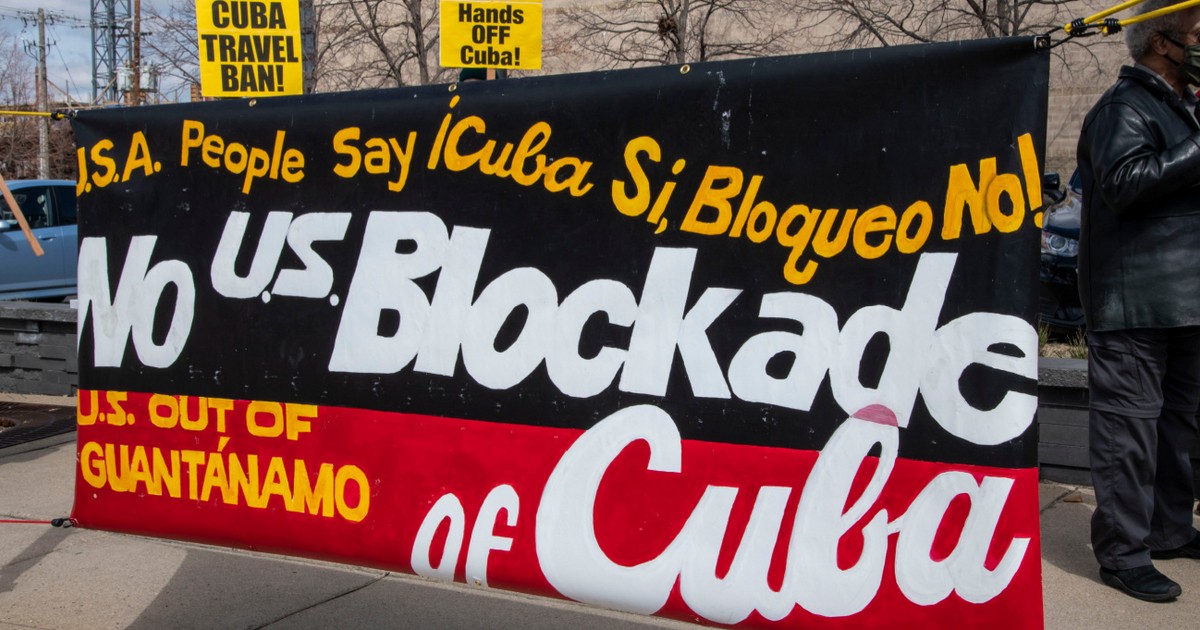
The US embargo on Cuba is the problem

Joe Emersberger and I talk to Reed Lindsay, journalist and filmmaker with Belly of the Beast, a media organization focusing on Cuba and Cuba-US relations. Among their films is a 3-part series called the War on Cuba available on YouTube. Reed was at the recent demonstrations and counter-demonstrations in Havana and talks about how the scarcities and difficulties of life have everything to do with the 60-year, ever-intensifying economic blockade against Cuba imposed by the United States. 

AEP 89: Haiti Assassination Aftermath – Cherizier: Hero or Villain? With Kim Ives

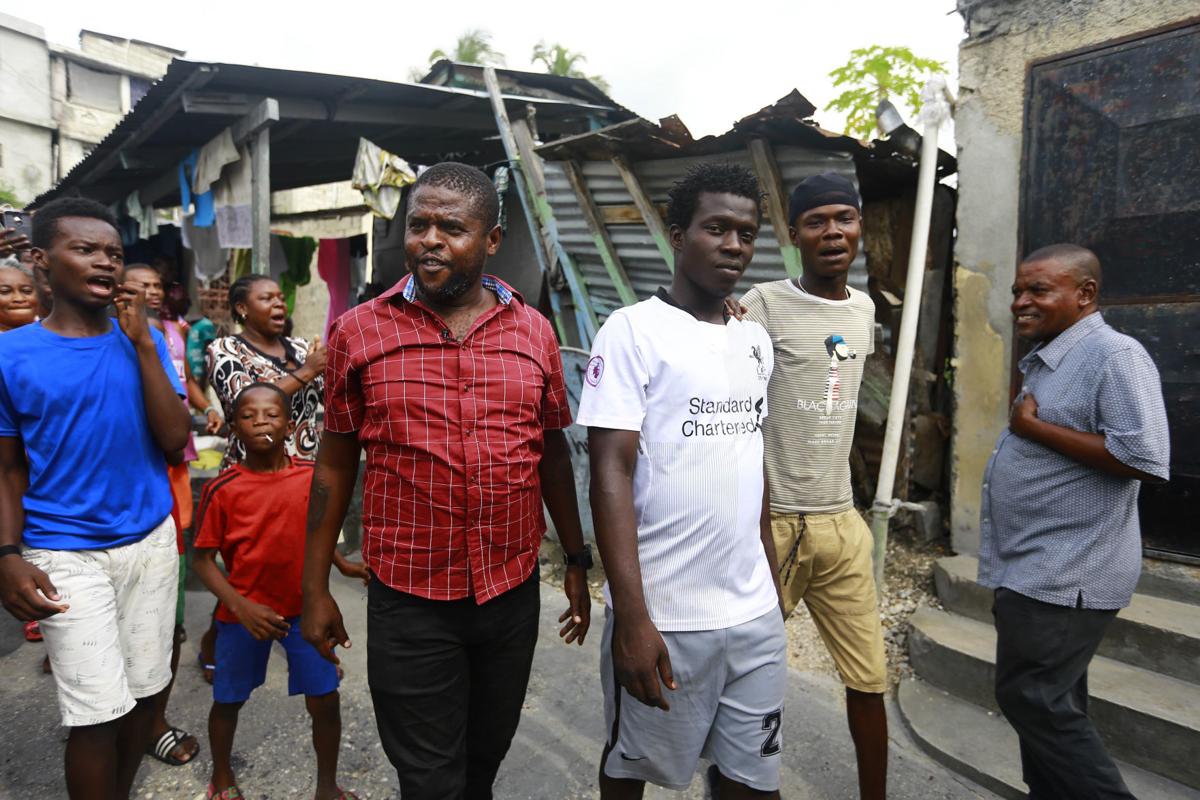
Among other things we discuss Jimmy “Barbecue” Cherizier with Kim Ives

Kim Ives from Haiti Liberte joins me and Joe Emersberger to analyze Haiti two days after the assassination of President Jovenal Moise by Colombian and Haitian-American mercenaries. We talk about the new details that have emerged about their Nissan vehicles (from whose dealership?), the class antagonisms inside Haiti, and US interests in re-occupying the country. Kim talks about his meeting with Jimmy “Barbecue” Cherizier, the former police officer who announced a revolution from the poor neighbourhoods. We also spend some time debriefing Kim’s recent appearance on Democracy Now! and the ideological differences within the solidarity movement, which we try to unpack.

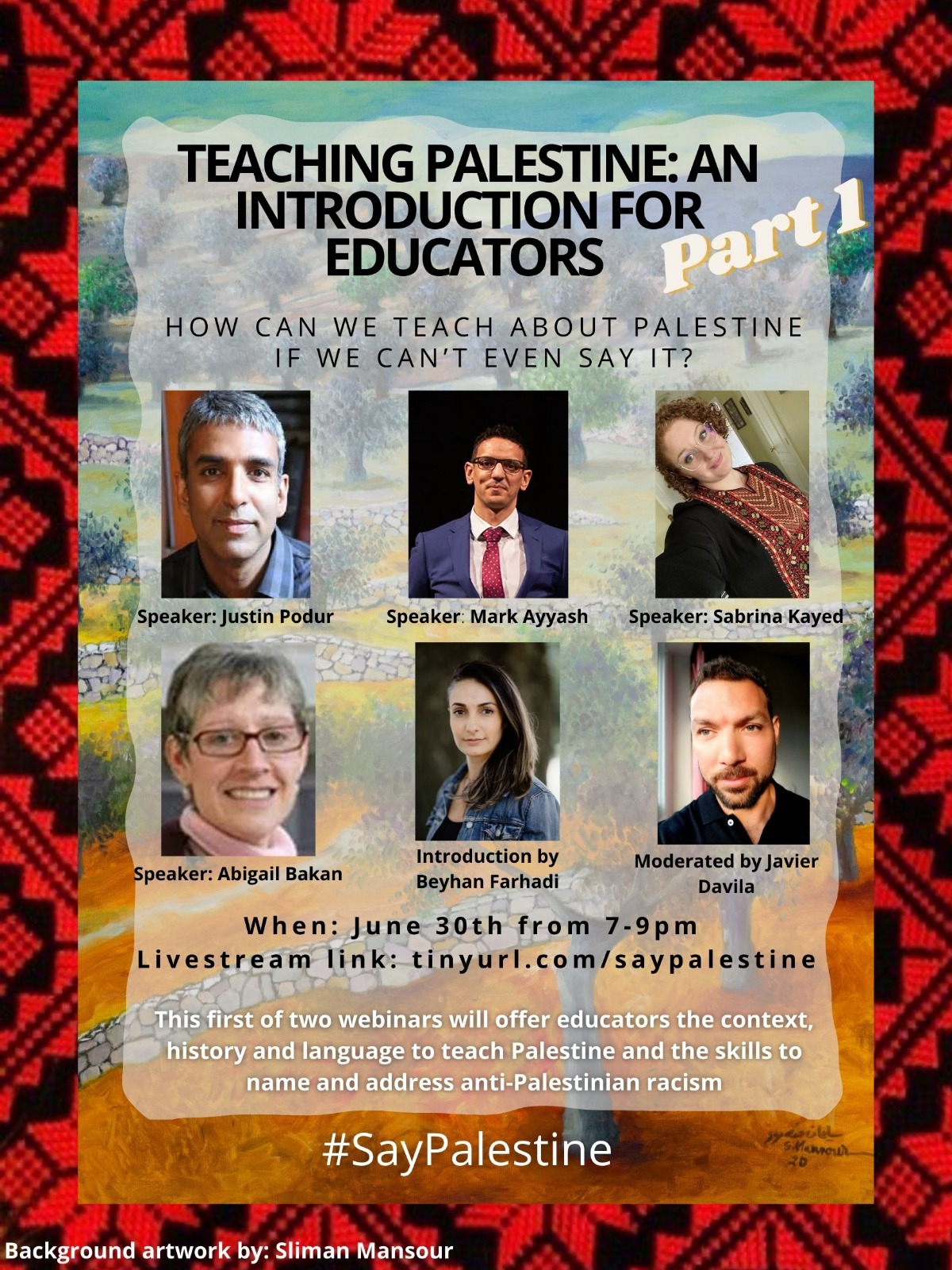
AEP 88: My comments at the Teaching Palestine / Say Palestine event June 30, 2021

Say Palestine!

On June 30, 2021, I was honored to be among the speakers on a panel for educators called “Say Palestine”. The entire panel, which was moderated by the wonderful Javier Davila (who I address directly at the beginning of the talk), is available on YouTube. I talk about the dilemmas faced by educators who want to teach about Palestine and who want to #SayPalestine.