Why you should subscribe to Dan Freeman-Maloy’s anti-racist substack

View this email in your browser

The holidays are approaching

With the holidays approaching, I suspect you must be thinking, “what encyclopedically researched anti-racist newsletters are there that I could subscribe to?” Well, you are in luck. Dan Freeman-Maloy’s substack, Check the Liner Notes, has come out with another newsletter and will be writing regularly. Support his work by subscribing. Maybe gift a subscription to a loved one (who loves to read long, well researched newsletters).

In other news, Dave Power and I are continuing our Scramble for Africa series, please check that out as we’re 10 episodes in with much more to come. And on Africa, I had an 8,000 word article about Rwanda (reviewing a new book about Rwanda) in Covert Action Magazine (in case your appetite for long-reads hasn’t been sated by Dan’s newsletter).

But here’s a sample from Dan’s latest: https://freemanmaloy.substack.com/p/what-does-the-white-mans-burden-mean

What does “the White Man’s Burden” Mean? by Dan Freeman-Maloy

December 1, 2021

The phrase “the White Man’s Burden” is, syllable for syllable, probably the most iconic thing ever written in the English-language history of racism. But what does it mean?

In short, it means gaslighting. The concept of gaslighting has moved into discussions of empire and racial myth from the field of relationship psychology. Fittingly, the term is adapted from a play, Gas Light, set in late Victorian England. The British Empire in the late decades of Queen Victoria’s reign (1837–1901) was a powerhouse of gaslighting the likes of which the world has rarely seen. One of its gifts to the world was the slogan, “White Man’s Burden.”

In 1955, in his inimitable Discourse on Colonialism, Aimé Césaire warned against getting too caught up in changes in imperial surface language, in his time or in ours. “Don’t let the subtleties of vocabulary, the new terminology, frighten you,” he said; “be reassured! At the start of the journey it may seem a bit difficult, but once you get there, you’ll see, you will find all your baggage again. Nothing will be missing, not even the famous white man’s burden” (p. 60).

Guidance of that sort seems to me too invaluable for us to forget.

For now, I reproduce the below as a follow-up to my last research note, “On Swastikas & Research Method.” In coming posts, I will dig deeper into the racially coded imperial myths that German wordsmiths tried to keep “unbewusst” (unconcious), that English wordsmiths tried to keep “inductive” (see my last note), and which Kipling boldly celebrated as “the lies I tell.”

Taking up the “White Man’s Burden” in Dixie

We can start with the Ku Klux Klan.

The single most accomplished Klan publicist of all time, Thomas Dixon, was a big Kipling fan. Dixon spent the early years of the twentieth century promoting Klan hatreds in a series of popular books. He entitled the first of these books in a double homage to Kipling, The Leopard’s Spots: A Romance of the White Man’s Burden (1902). While Dixon’s subtitle declared the selflessness of white-power politics, his title echoed one of Kipling’s tales of anti-Black racism.

These lies carried power and prestige. After the abolition of slavery in the United States, the terror squads of the Klan did not work in isolation. Their violence was the cutting edge of the white backlash. But it had wider support. The horror of lynchings, then, was inseparable from the wider U.S. assault on Black people after emancipation. This assault on Black life now stands exposed as “one of the most stupendous efforts the world ever saw to discredit human beings, an effort involving universities, history, science, social life and religion” (p. 55). Dixon helped to push it forward, doing his utmost to boost the worst white supremacists’ morale and reputation.

Dixon’s title, The Leopard’s Spots, took its cue from one of Kipling’s children’s stories, “How the Leopard got its spots” (1901). For twelve decades, this story has served as a tool of racist acculturation for any teachers or parents willing to resort to it.

The moral of the story is that dark skin is an irremediable, even a contagious, human fault. Kipling seized upon a phrase that was translated as follows in the King James Bible: “Can the Ethiopian change his skin, or the leopard change his spots? then may ye also do good, that are accustomed to do evil.” Kipling used this imagery to instill a hateful sense of anti-Blackness in the minds of all children who could be made to read along or listen.

Once upon a time, Kipling begins, “everybody started fair.” We will return to this word, fair. Then came darkness. Kipling taught (teaches?) children that darkness came to the leopard when “the Ethiopian put five fingers together . . . and pressed them all over the Leopard, and wherever the five fingers touched they left little black marks.” This is from Kipling’s Just So Stories. My copy, reprinted in 2000 by Penguin, features a leopard’s tail dangling provocatively across the cover.

You can see above how our cultural mainstream continues to gaslight. And in Klan terms, you can see why Dixon appreciated Kipling. The bogeyman of “race-mixing” or “miscegenation” was a favourite lynchers’ theme. Kipling’s story played it up.

Once again, however, the full title of Dixon’s book was The Leopard’s Spots: A Romance of the White Man’s Burden. And where Kipling really excelled was in the transition from the theme of the title of Dixon’s book to the theme of its subtitle, that is, from anti-Blackness to romantic white innocence.

This brings us back to the word “fair.” Modern English investors owed an enormous proportion of their wealth to the exploitation of Africans.1 English dictionary-writers were thus eager to make the virtues of whiteness a matter of definition. Little wonder that in standard imperial English, “fair” was a moral as well as a physical description. “Light as opposed to dark,” the Oxford English Dictionary explained, was one of the word’s meanings. But for the OED, to be fair was not only to be free of physical spots – “Clean, unsoiled, unstained” – but also to be clean in “character, conduct, reputation: Free from moral stain, spotless, unblemished.”2 This story was told by generations of well-financed experts in barrels of Oxbridge and Ivy League ink.

Now, Kipling celebrated the English racialist as a “Puzzler” in tribute to this history of deception. But here we encounter a mild contradiction. On the one hand, Kipling celebrated racial mastery as the property of Englishmen above all others. He never tired of this theme: “the English – ah, the English! – they are quite a race apart.” On the other hand, Kipling layered Englishness into a wider white supremacy. Racism is always a pack of lies – but its contradictions are not random.

Kipling’s supreme lie was that white-power politics are a generous service to non-Europeans targeted by empire. This is the key point. The equation of whiteness with selflessness, and of imperialism with charity, was the central theme of Kipling’s gaslighting. But for a moment, let us pick apart the more basic theme, “whiteness” . . .

. . . or not. In his classic bit about the “Romanian cracker” (timestamp 45:11), Chris Rock expressed a hilarious dismissal of the niceties internal to whiteness; “we don’t got time to dice white people up into little groups.” The point is as fair as it is funny, and I ask those impatient with the dicing to please skip the next section.

Details on Kipling’s supreme lie – white-power-as-charity – can be found below, under the heading “Don’t run. We are your friends.” But for those with the patience, let us first look for a moment at the specifically English or Anglo-Saxonist racism around which white nationalism really did develop.

White nationalism and the “Anglo-Saxon’s burden”

Paul Martin, Jr., featured in the photo above, modelled the “White Man’s Burden” with a sense of heritage. It was autumn 2004, and this Canadian prime minister was visiting Haiti to confirm Canada’s support for the overthrow of Haiti’s elected government and the repression of Haiti’s main mass-based political party. Enter the Globe and Mail, the principal newspaper of central Canadian capital.

Kipling could not have written it better. The Globe did not mention the name of the girl featured in its photo, whom it identified only as “a resident of the Timkatec orphanage in Port-au-Prince, Haiti.” But it found a way to present Martin’s cynical power politics as charity. Proud, prime ministerial fingers are shown directing a Haitian forearm to wave a Canadian flag for the camera.

“Bigre, mes chers collèges (comme on dit), je vous ôte mon chapeau (mon chapeau d’anthropophage, bien entendu).”

With Martin, all ambiguity is removed. This is not Johnny-come-lately whiteness but the thing itself, in all of its vintage prestige. But let us step back for a moment. Just who and what is “white”?

In earlier centuries, some claimed that Englishmen possessed this title almost alone. “The number of purely white people in the world is proportionably very small,” Benjamin Franklin wrote from Pennsylvania, in the days when it still fell under British rule. Franklin continued:

All Africa is black or tawny; Asia chiefly tawny; America (exclusive of the newcomers) wholly so. And in Europe, the Spaniards, Italians, French, Russians, and Swedes are generally of what we call a swarthy complexion; as are the Germans also, the Saxons only excepted, who, with the English, make the principal body of white people on the face of the earth. I could wish their numbers were increased.3

So for this racial storyteller, some of the Germans – the “Saxons,” i.e., those from Saxony – made the cut, as did the English, who according to modern racial lore were “Anglo-Saxons.” But that was about it.

The question of whether any very poor person could be considered fully white lingered for centuries. By the late nineteenth century, a leading French racialist, Gustave Le Bon, could also crudely gender his standard racist tropes. Le Bon wrote that even among the “superior races” of his imagination, “as among the Parisians, there are a large number of women whose brains are closer in size to those of gorillas than to the most developed male brains.” It was old wine in new bottles.

That is the basic story of racism: the recasting of old oppressive hierarchies in new naturalized forms. “The vulgar, primitive, over-simple racism,” observed Frantz Fanon, “purported to find in biology – the Scriptures having proved insufficient – the material basis of the doctrine.”4 Ergo, European Christendom was the best, and its rich better than its poor, and its men better than its women, etc., etc. Own enough universities and such self-serving prattle can be made to sound pretty. Plus ça change.

Meanwhile, the U.S. led the way toward white nationalism. Toward the end of Benjamin Franklin’s life, the U.S. break with Britain meant that British nationality was no longer in play. Congress invited all “free white persons” to become U.S. nationals. A whiteness including various European nationalities emerged, defined against an Indigenous and Black foil. Generations of racialist experts argued that to include more white people was to broaden the basis for white racial power over others. John Van Evrie, a Canadian-born white supremacist, was especially enthusiastic about this point.

After abolition, Van Evrie cheered on Klan violence from New York. He summarized his argument in an 1870 book entitled, White Supremacy and Negro Subordination: Or, Negroes a Subordinate Race, and (So-Called) Slavery its Normal Condition. What Orwell never really taught us was that slavery = freedom is above all a white lie, even if English patriots prefer to call it a red one.

For Van Evrie, “can’t we all just get along” was a battle cry for white-power hatreds. He wrote: “The Englishman believes that the English are alone truly Christian and civilized; the Frenchman honestly believes that La Belle France is at the head of modern civilization; even the advanced and liberal American Democrat thinks, and perhaps correctly, that the Americans alone are truly civilized.”5 Van Evrie’s message was that all white-on-white rivalry or violence was wasted energy, better poured into the unified violence of anti-Black and imperial politics.

So anti-Black and imperial violence defined the “White Man’s Burden.” But whiteness needed first to be made in order to be used as a weapon. In Kipling’s work, readers will thus find a dual commitment to white power and to Anglo-Saxon power. This logic was explicit. It was spelled out in Kipling’s day by the most influential U.S. racial theorist of the period, William Z. Ripley.

Visiting Britain in 1908, Ripley told his hosts that Kipling’s “burden” should really be split into two, especially in North America. Yes, Ripley insisted, it was great for the British to plunder India, for the Klan to gallop across Dixie, and for the U.S. army to devastate the Philippines. But white nationalism needed special attention. Ripley said:

You have your ‘white man’s burden’ to bear in India; we have ours to bear with the American negro and the Filipinos. But an even greater responsibility with us and with your Canadian fellow-citizens is that of the ‘Anglo-Saxon’s burden’ – to so nourish, uplift and inspire all these immigrant peoples of Europe, that in due course of time . . . the torch of Anglo-Saxon civilization and ideals, born by our fathers from England to America, shall yet burn as bright and clear in the New World, as your fires have continued to illuminate the old.6

Like all white supremacist theory, this was nonsense, but it was nonsense with a logic. Ripley was spelling out a program that combined the primacy of British conservative social norms – and the English language – with the pan-European demographic and striking force sought by Van Evrie.

Those who do not care about Canada should now really skip to the next section. But strictly speaking, while Ripley bracketed Canada together with the U.S., the situation here was a little different. In this case, there was no break with the British Empire: a specifically British dominance endured. Until the 1940s, there was not even a specifically Canadian citizenship. Canadians were officially classed as British imperial subjects. Relatedly, in celebration of this imperial connection, British Protestant sectarian groups like the Orange Order (do sample some Fenian-blood–lust) retained power at the expense of white nationalism as such. Not until after World War II was Canada’s British imperial connection painted over.

This brings us to Paul Martin, Sr., father to the twenty-first century Canadian prime minister. In 1946, it was Martin, Sr. who introduced the Citizenship Act for Canada. Thenceforth, Martin declared with white ecumenism, Canadians would be more than British nationals. Martin said: “No matter where we come from or what our origins, French, English, Scandinavian, Scottish, Ukrainian, Irish or whatever else, one thing at least we can all be, and that is Canadians.”7 In this telling, the story of British or dual British–French nationality gave way to a story of composite Canadian whiteness.

In a master stroke of hypocrisy, this record was then removed from the field of popular education and debate. Organized confusion is the upshot. “The truth,” one candid historian wrote as early as 1981, “is that we are a very confused people. We have invented for ourselves a false national identity to conform with the historical myth of Canadian nationalism which we have created from very little hard evidence.”8

Granted, layers of multiculturalist paint have since been applied to the old Canadian social structure. But specialists agree that the appearance is altogether misleading. It now falls to a few academics to joke at the expense of those of us who were kept in the dark about Canada’s imperial foundations. One quips: “To paraphrase Kipling, ‘What should they know of Canada who only Canada know?’”

It will take work to free these quips from specialists and develop a popular anti-racist discussion grounded in the historical record – as distinct from amnesiac national branding. What is meanwhile plain is that the strongest local traditions of gaslighting could not have developed in a few decades, or even in a few generations. They are as vintage as a Rosedale wine cellar. As C.L.R. James warned: “That calm confidence in its capacity to deceive is a mark of the mature ruling class.”

“Don’t run. We are your friends”

Finally, we return to Rudyard Kipling. So long as his mockery remains obscure, the roots of contemporary racist gaslighting are likewise hidden.

Hollywood put Kipling’s politics to film in its 1996 spoof, Mars Attacks! The film features a Martian invasion of earth. The invaders claim with a poker face that they come in peace. It is the plainest lie. But the confusion it causes on the part of earthlings is too convenient for the Martians to abandon. So even as the invaders raid and kill, they stick to the script. In one scene, satirized Martian shock troops storm a US street, firing their weapons while professing their innocence: “Don’t run. We are your friends.”

Eight decades before the spoof, Kipling’s take on this story was played out in India. It was then, in 1919, that the British Brigadier-General Reginald Dyer fired 1,650 rounds of live ammunition – by his own estimate – at Indian demonstrators who had dared to gather in public in their own country against British wishes. To think that British rule in India was ending, Dyer explained, was to be guilty, and the sentence against the crowd was open massacre. “I fired and continued to fire,” he boasted. “If more troops had been at hand the casualties would have been greater in proportion.”

Crucially, Dyer maintained that this massacre was an act of friendship to India – as British rule always was – and that Indians “ought to be thankful to me for doing it.” Kipling could only nod at his pupil’s wisdom: “He did his duty as he saw it.”9 The tradition of Kipling and Dyer was a tradition in which first-person compassion was asserted as an article of faith, all facts be damned.

What was empire, so the story went, if not a gift to those it conquered? Kipling joked about this ruse in an early poem entitled “Et Dona Ferentes,” from the proverb, “Beware Greeks bearing gifts.” Kipling made it clear to his readers that even the fiercest exploitation and hate should be made to sound kind, or at least kept quiet. In the idealized racist of Kipling’s poetry, “the hard, pent rage ate inward,” before striking out with sharp violence and then disappearing without a harsh word. Such was the mastery of the imperial figure whom Kipling idealized as the Puzzler: “When his lips are schooled to meekness, when his back is bowed to blows – / Well the keen aas-vogels know it – well the waiting jackal knows.”

In sum, Kipling’s “The White Man’s Burden” was an ode to the waiting jackal.

Kipling was a product of the British imperial community that ruled India, which had been wrapping the gift of empire in Dyer’s manner for generations. Empowered by its Atlantic exploits, Britain first broke through resistance to its advance in India in the eighteenth century. What followed was the plainest plunder. In the words of one English historian, “No eighteenth-century nabob, as the plunderers of India were called, pretended that he laboured for the benefit of the Indians. He laboured in order to become a millionaire.”10 Over time, the means became more subtle, but the profits continued to flow. By 1932, a British author could forget Kipling’s script and spell it out in dollars and cents. “It has been computed,” he wrote, “that every fifth man in Great Britain is dependent, either directly or indirectly, on our Indian connection for his livelihood.”

The Big Lie that British rule was a gift to India was a fateful and world-destructive joke. Never has wealth flowed from one country to another as wealth flowed from India to Britain during the colonial period. The scope of what happened is suggested by statistics published by the Organization for Economic Cooperation and Development (OECD). In 1700, on the eve of British expansion, India contributed nearly a quarter of the world’s Gross Domestic Product (GDP) against three percent for Britain. By 1870 India’s share had been cut in half while Britain’s had tripled. By late Victorian times, Indians were dying of famine while British wealth poured into universities that celebrated white fairness as an article of faith.

Kipling argued that the lessons of British India generalized: white power the world over should be wrapped as a gift from Europe to the rest of the world. This was the meaning of his poem, “The White Man’s Burden.” Kipling coached his readers to stick to the script, à la Mars Attacks! Proclaim white-power selflessness, Kipling told his readers; whatever the facts, say it again and again: “By open speech and simple, / An Hundred times made plain, / To seek another’s profit, / And work another’s gain.”

In the Canadian North-West as in India, colonized people were reeling from famines that the British authorities had ruthlessly exploited. Pretend, Kipling mocked, that empire comes to the colonized with no attacks and no malice, just bundles of food and medicine: “Take up the White Man’s burden – / The savage wars of peace – / Fill full the mouth of famine / And bid the sickness cease.”

Kipling aimed to define colonial oppression out of existence – white power equals charity equals white power – and in this way to make anti-colonial resistance to oppression a logical impossibility. One can resist oppression. But one cannot resist charity. To resist charity is not resistance at all: it is ingratitude, insolence. In anti-colonial resistance, Kipling therefore coached, racists should refuse to see anything but “The blame of those ye better, / The hate of these ye guard.”

But why would the bearers of empire’s gifts be blamed in the first place? Why would racists receive anything but thanks for, say, the friendship they would show in Jallianwala Bagh, or in Canadian residential schools? Kipling answered with six syllables of carefully crafted hate. He declared that colonized people were “Half-devil and half-child.” The phrase is sharpened to purpose like a knife’s edge. On the one hand, it restates the case for imperial tutelage: if colonized people are racially immature, so the story goes, then they must, in empire’s manner, be taught a lesson. On the other hand, the charge of demonic immaturity makes room for righteous hate even within empire’s educational mission. The result is a self-righteousness fitted to a cruelty both pious and profitable.

By the early twentieth century, Britain’s Lord Cromer could only smile. Cromer sat on an enormous family fortune from the trade in enslaved Africans. Then, without returning a dime, he helped to lead the Scramble for Africa. And after all of this, he felt confident demanding not only the continued European exploitation of Africans, but also their thanks. “Even the Central African savage,” Cromer quipped, “may eventually learn to chant a hymn in honour of Astraea Redux, as represented by the British official who denies him gin but gives him justice.” The mockery is astounding.

After Dyer, pushing Anglo-Indian friendship to its classical conclusions; after Cromer, marketing false humanitarianism as profitable (see the link immediately above); and after Kipling, with his pride in the “waiting jackal” – after all of this, the politeness of the powerful has lost all benefit of the doubt. Hateful words can be terrible. But silence can say just as much. All this time later, there is every reason to make Kipling’s warning the baseline for decent thought and action: “oh, beware my country, when my country grows polite!

Canada in Haiti: A retraction

I conclude with a retraction.

Some time ago, I wrote that Canadian policy in Haiti combined professed good intentions with oppressive policies. I began one article, now a decade old: “Over the course of the past decade, Canada’s leading officials and most prestigious commentators have learned how to approach Haiti in the spirit of cynical power politics and racist condescension (or worse) while maintaining a posture of national self-flattery.”

At the time, I did not know the precedents. But the claim that this dates to the first decade of this century is wrong. It is much older. In fact, empire’s twenty-first century arguments on Haiti were anticipated even by that distant imperial icon, Henry Dundas, whose legacy has loomed so large in the public architecture of Toronto.

Notwithstanding the error, that brief article does unpack the context for the ghastly Haiti photo featured above. You can refer to the article here.

1

The exploitation of Africans and their overseas descendants was a fulcrum of English and then British economic development throughout the modern period. The details are poorly publicized but well documented. Eric Williams, who went on to serve as the first prime minister of Trinidad and Tobago, established this point as early as 1944 in a landmark study available here <https://archive.org/details/capitalismslaver0000unse>. A fuller review of the record can now be found in Joseph E. Inikori, Africans and the Industrial Revolution in England: A Study in International Trade and Economic Development (Cambridge: Cambridge University Press, 2002).

2

Henry Bradley, A New English Dictionary on Historical Principles, Vol. IV, edited by James A.H. Murray (Oxford: Clarendon Press, 1901), 26.

3

As quoted in Matthew Frye Jacobson, Whiteness of a Different Color: European Immigrants and the Alchemy of Race (Harvard, Ma.: Harvard University Press, 1998), 40.

4

Frantz Fanon, “Racism and culture,” in Toward the African Revolution, translated by Haakon Chevalier (New York: Grove Press, 1967), 36.

5

J.H. Van Evrie, White Supremacy and Negro Subordination: Or, Negroes a Subordinate Race and (So-Called) Slavery its Normal Condition (New York: Van Evrie, Horton & Co., 1870), 67.

6

William Z. Ripley, “The European population of the United States,” Journal of the Royal Anthropological Institute of Great Britain and Ireland (38 (1908), 240.

7

As quoted in Sunera Thobani, Exalted Subjects: Studies in the Making of Race and Nation in Canada (Toronto: University of Toronto Press, 2007), 89.

8

John E. Flint, “Reflexions on British Imperial and Canadian History,” Canadian Journal of African Studies 15, no. 1 (1981), 53.

9

As quoted in Derek Sayer, “British reaction to the Amritsar massacre, 1919–1920,” Past & Present 131 (1991), 146 & 158.

10

A.J.P. Taylor, “Conquerors and profiteers,” in Essays in English History (Harmondsworth: Penguin, 1976), 30.
AEP 100: Debriefing the Indian Farmers’ Victory with Navyug Gill

Debriefing the Indian Farmers’ Victory

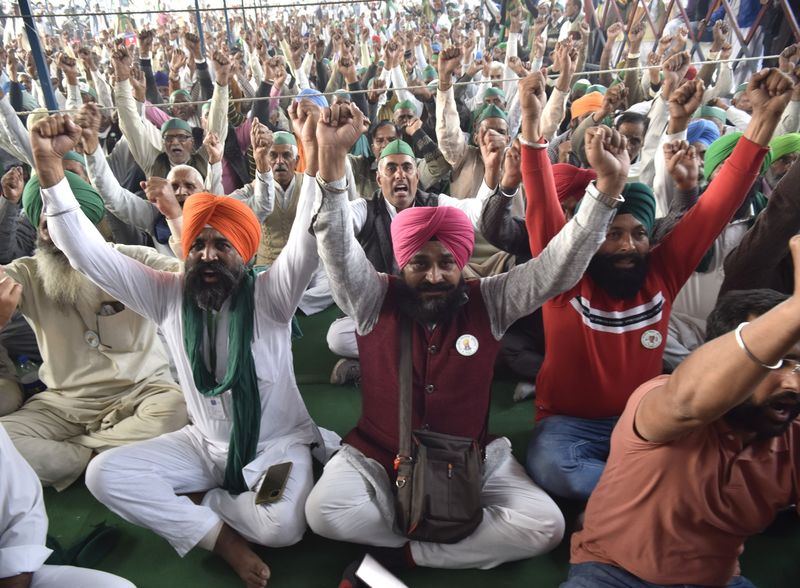
I’m joined by Navyug Gill from William Paterson University to talk about the historic victory of the Indian Farmers who, after demonstrating for a whole year at the cost of 750 lives, succeeded in forcing the repeal of three laws that would have immiserated agriculture in India, done away with the government procurement system, and subjected the entire agricultural system to new levels of instability and volatility. Instead, the farmers stopped the seemingly unstoppable Modi juggernaut. We talk about how they did it and what might come next.

Scramble for Africa 9a: South Africa pt1 – Frontier Wars and Settler-Colonialism

South Africa pt1 – the Frontier Wars and Settler-Colonialism

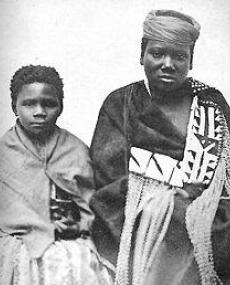
The wealthiest and most powerful state in Africa is South Africa, and its fate has been pivotal to the whole continent. This was no less true during the Scramble for Africa, which is why this series will have multiple episodes on South Africa. In this one, the so called “frontier wars” between the Europeans and the Xhosa; the Cattle Killing Movement; how the Cape Colony fell into British hands, the Boers and the British Empire, the Dutch East India Company, Canada and other analogies…

The New Deal, Racism, and War

View this email in your browser

Why do they call it a Green New Deal? What was the New Deal?

[Last year I was lucky enough to be invited by Harpreet Kaur Paul and Dalia Gebrial to submit a discussion on the international dimensions of the Green New Deal, and I thought I’d use it as a way to discuss the original New Deal, and its historical (imperialist) context. My punch line was we might do better to think in terms of Green Five Year Plans than Green New Deals. In any case, The Ecologist Magazine republished the essay, which had originally appeared in an edited collection published by the Rosa Luxemburg Stiftung. In case you missed it, here’s the essay — Justin]

https://theecologist.org/2021/oct/04/new-deal-racism-and-war

The original New Deal, and its champion, Franklin D. Roosevelt, are credited with saving the US economy from the Great Depression – and perhaps preventing the country from adopting ‘socialism’.

The New Deal is the inspiration behind the contemporary call for a Green New Deal. But its history is remains contested. The story is told in Stan Cox’s recent book The Green New Deal and Beyond.

Planning

In 1932, US unemployment was at 24 percent. The New Deal started by designating $3.3 billion for public works, an amount larger than the entire federal budget just three years before.

Roosevelt created new agencies to try to steer private industry into a gentle, voluntary form of economic planning.

In 1935, the Supreme Court struck down one of these initiatives – the National Recovery Act. But that same year, the New Dealers started a Works Progress Administration (WPA) that hired eight million unemployed Americans to build public infrastructure.

The New Deal also took place in a time of unremitting white terror towards black people in the US south. The New Deal programmes helped cement racial inequalities. Federal relief agencies paid locally prevailing wages, allowing lower wages in the US south.

Black sharecroppers’ government benefits were kept by their white landlords. White plantation owners would receive federal compensation for cotton extracted from land, and then turn around and evict the black tenants that worked the land anyway.

Social Security did not cover farm workers or domestic workers – the occupations that employed two thirds of black workers.

Spending

The Federal Housing Administration (FHA) required banks to perpetuate segregation: “If a neighbourhood is to retain stability, it is necessary that properties shall continue to be occupied by the same social and racial classes,” the FHA underwriting manual instructed.

Despite this, the New Deal faced elite opposition, and so Roosevelt reduced stimulus funds by 25 percent between 1936-8. Unemployment went back up to 19 percent.

In the end, the New Deal was not the answer to the Depression. That answer came in the form of a war: first supplying Europe, then sending the US military to world war two (WWII).

According to Patrick Renshaw the US spent $321 billion on WWII, more than its total spending from 1790-1940. Unemployment fell to 1.2 percent.

Imperialism

The New Deal took place in the age of imperialism. India, Africa and much of southeast Asia were colonies. The Philippines and Cuba were US possessions. Other lands that the US had taken – Puerto Rico and Hawaii – still are.

In the Arab world, the British sponsored the House of Saud, dismantled and subordinated the economies of the Levant and Egypt.

By the time of the New Deal, the US empire was pushing the British empire out of the fossil fuel-rich Middle East.

In 1945, Roosevelt met the Saudi king at Great Bitter Lake in the Suez canal, moving Saudi Arabia into the US’ system.

What economists Jonathan Nitzan and Shimshon Bichler call the “weapondollar-petrodollar” global economy was established.

Stimulus

The Saudi dictatorship would ensure that the price of oil would favour the US, which would get back what it paid for the oil in weapons sales.

The hundreds of billions of dollars of sales of military hardware would be conducted in US dollars, the reserve currency of all the world, which enabled the US to print money and accumulate wealth at the expense of every other country.

While ending fascism was necessary, it paved the way for a US economy built on conflict. It is an empire based on endless war and fossil fuels. Climate change is just one of its life-destroying consequences.

Underpinning this system is a regime of permanent US warfare that has killed millions in the decades since the New Deal, including the dropping of nuclear bombs on Japan, the high-tech destruction and aerial bombardment of Korea, Vietnam, Grenada, Panama, Iraq, Yugoslavia, Afghanistan, Palestine, Lebanon, Libya, Syria, Yemen and other countries, covert operations in every country in the world, and the imminent threat of nuclear catastrophe.

In making the US the wealthiest society in human history, the stimulus of the New Deal played a much smaller role than the stimulus of WWII.

Protection

The long-term wealth of the US was guaranteed not by either stimulus, but by the consolidation of a global empire with the US at its centre.

Given this context, can the New Deal be divested of its racist and imperialist baggage and reinvented to save the world from climate catastrophe?

At the end of The Green New Deal and Beyond, Cox suggests a series of ways that a Green New Deal could include justice for the financially and energy-impoverished peoples of the world.

This starts not with greening the US military, as Elizabeth Warren suggested on the US campaign trail, but with disarming and dismantling it, as well as the militarized police in the US, both of which are disastrous fossil fuel consumers while also being implicated in persistent human rights abuses.

Protecting and expanding Indigenous land bases, as discussed in documents like Red Nation’s Red Deal or the work of the late Arthur Manuel, will not only redress some of the horrors of colonialism, but also reduce carbon emissions from land use.

Constraints

In some places – like Haiti or the Democratic Republic of Congo – the use of energy will actually have to increase for there to be any economic justice.

If we are going to have to discard baggage one way or another, internationalists might find more interesting experiences and tools from a study of the Five Year Plans of communist China and the Soviet Union and of India when it was socialist, some of whose experiences have been discussed in Salvatore Engel di Mauro’s new book, Socialist States and the Environment.

These countries’ economies and polities have had many flaws, and their planning processes have had many errors, all of which have been amplified by Western propaganda as efficiently as the West’s colonial genocides and massacres have been minimised by the same.

But it may be productive to study how vast, poor countries devastated by imperialism tried to plan for development within severe constraints – including the hostile US empire.

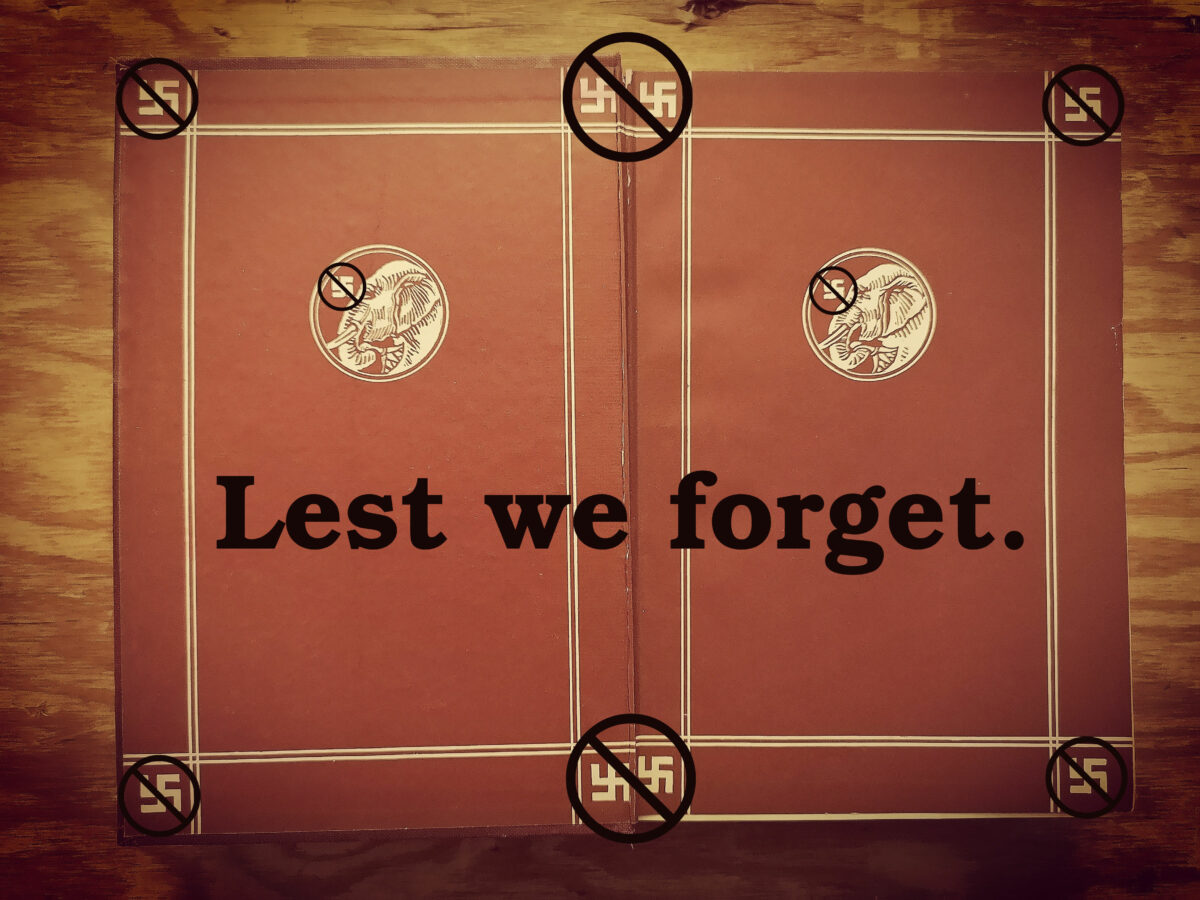
Lin3r Notes 1: On the racist who wrote “Lest We Forget”

Lest We Forget – penned by Kipling

Episode 1 of Dan Freeman Maloy’s series Lin3r Notes. Frequent guest and collaborator Dan Freeman-Maloy (@lin3rnotes on twitter) has a new substack, “Check the Liner Notes” (https://freemanmaloy.substack.com/), and will be podcasting on related topics here on AEP. This episode is about the Canadian / British imperial WWI commemoration, Remembrance Day, and some of the literary objects around it: the poem, In Flanders Fields, the various versions of O Canada, and of course the phrase Lest We Forget, penned by the racist writer Rudyard Kipling. Dan’s newsletter and podcasts will be unraveling how British imperial racists used language – from deception disguised as “plain-speaking”, to co-optation of compassion towards in-group morality, and everything else – to fulfill their objective of, well, world domination. Having taught racism for so long, is a redirection against racism possible for our education system?

Scramble for Africa 8: Belgium Steals Congo

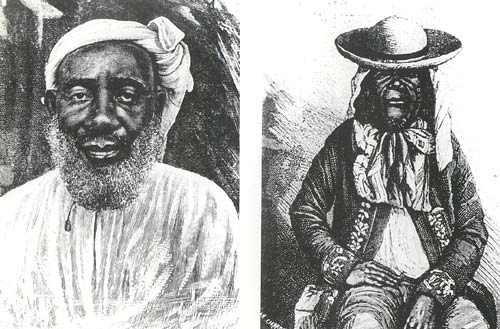
Tippu Tip and Msiri – their rise and fall

This one is about the precolonial African powers in the Congo – Zanzibar’s representative Tippu Tip, Msiri of Katanga, and a few others (but mainly these two). We talk about their rise in the context of growing European power, and their eventual fall to Belgium – although as you’ll see it wasn’t exactly Belgium, but Leopold II and his British and German allies that made the theft of Congo possible. Another key piece – the centre of the board – falls in the Scramble for Africa.

Article: sanctions as a weapon targeting development

View this email in your browser

Sanctions as a weapon targeting development

[What follows is a short article which I wrote for a US sociology of development newsletter – specifically, SECTORS: Newsletter of the American Sociological Assocation’s Sociology of Development section. I was asked to write it by Jeb Sprague, whose writing many of you probably know. This article appeared in the Fall 2020 edition and it occurred to me that it might be of interest to some on this mailing list as well.]

The United Nations is currently sanctioning groups in Somalia, the Democratic Republic of Congo, Sudan, Libya, Guinea-Bissau, the Central African Republic, South Sudan, Mali. Sanctions in Non-African countries include Iraq, Yemen, the Islamic State and al-Qaeda, the Taliban, Lebanon, and North Korea. The Security Council states that “since 1966, the Security Council has established 30 sanctions regimes, in Southern Rhodesia, South Africa, the former Yugoslavia (2), Haiti, Iraq (2), Angola, Rwanda, Sierra Leone, Somalia and Eritrea, Eritrea and Ethiopia, Liberia (3), DRC, Côte d’Ivoire, Sudan, Lebanon, DPRK, Iran, Libya (2), Guinea-Bissau, CAR, Yemen, South Sudan and Mali, as well as against ISIL (Da’esh) and Al-Qaida and the Taliban.” None of the sanctioned countries are developed countries to begin with – sanctions devastate their capacities for future development.

The UN says that “sanctions measures, under Article 41, encompass a broad range of enforcement options that do not involve the use of armed force.” The deadliness of UN sanctions, however, cannot be disputed. The sanctions regime imposed on Iraq after the US bombing of the country in 1990/1 was acknowledged to have killed 500,000 children by 1996, when Madeline Albright famously told 60 Minutes that she thought the price was worth it. Guttman et al. (2019) found that a UN sanctions episode lowered a country’s average life expectancy by 1.2-1.4 years, reduced the targeted countries GDP by 25%, increasing poverty and income inequality. The main mechanisms for this reduction: child mortality, cholera deaths, and decreased resources for public health spending. These aggregate statistics disguise some very grim specifics.

The list of countries under unilateral sanction by the US (or the US plus any coalition it can build for the purpose of punishing a regime) is much longer than the UN list – which countries the US sanctions as well. In addition, the US Treasury site lists financial sanctions details for the Balkans, Belarus, Burundi, the Chinese military, Cuba, Nicaragua, Syria, and Zimbabwe. Up until 2012, when Guttman et al. (2019) study period ended, unilateral US sanctions were less deadly than UN sanctions (shortening life expectancy in the targeted country by an average of 0.4-0.5). The deadlier sanctions are UN sanctions.

It is one of many paradoxes of today’s world order that the United Nations, the body responsible (through its Security Council) for the deadliest sanctions also produces the most eloquent reports (through its Office of the High Commissioner for Human Rights) on the ill effects of proliferating unilateral sanctions. The Special Rapporteur on Unilateral Economic Measures, Idriss Jazairy, has produced five reports on the matter to date. The latest (a report to the General Assembly presented July 5, 2019) specifies violations of human rights stemming from these sanctions regimes:

  • US sanctions against Iran violate UN Security Council resolutions, deprive Iranians of relief, have been complied with “unduly” by the European Union such trade has virtually collapsed between Europe and Iran. Sanctions have devastated Iran’s food security (Hejazi and Emamgholipur 2020), its health system and ability to deal with the COVID-19 pandemic (Takian et al. 2020), even its long-term scientific capacity (Butler 2019).

  • US sanctions against Cuba have “shattered” the normalizing relations that began in 2017, violate agreements between the US and Europe, and “exert a massive toll on the Cuban economy.”

  • US sanctions against Venezuela have played, in the colorful UN prose, “a non-negligible role in crippling the economy.” The rapporteur cites Weisbrot and Sachs (2019), who showed that tens of thousands of Venezuelans have died as a result of these sanctions, and millions have been displaced.

  • US sanctions against Russia, the rapporteur complains, “have unintended effects, including boosting the domestic (indigenous) capabilities of Russian industries and the agricultural sector to the detriment of Europe.” And also, sanctions have caused price increases that hurt workers.

  • Israel’s blockade against Gaza “constitutes collective punishment of the people of Gaza, contrary to article 33 of the Geneva Convention.”

  • The US and EU sanctions against Syria, openly proclaimed as being part of a strategy of “isolating the Assad regime”, “is a crude admission of disregard for the principles of the Charter of the United Nations, human rights and humanitarian law.” They have a “catastrophic impact on the Syrian economy and population.”

  • The US-UK-Saudi blockade on Yemen has the rapporteur noting “with concern that the flow of essential foodstuffs and other commodities into Yemen continues to be restricted de facto, even though the naval blockade was lifted after the UN Verification and Inspection Mechanism for Yemen was set up.” This is a particularly euphemistic, given the genocidal nature of the assault on Yemen (e.g. Bachman 2019).

Sanctions against Russia and China are part of a broader US strategy: with these sanctions, the US hopes to isolate targeted countries from potential sources of military aid (e.g., Russia’s aid to Syria) or investment (e.g., China’s investments in Cuba, Venezuela, Iran, or various targeted African countries). These sorts of US strategies can never be isolated from questions of international development. Sanctions regimes represent the most profound weaponization of development: targeted economic isolation to punish populations by inflicting mass mortality through starvation and preventable disease, all the while destroying future economic prospects.

References

Bachman, J. S. (2019). A ‘synchronised attack’ on life: The Saudi-led coalition’s ‘hidden and holistic’ genocide in Yemen and the shared responsibility of the US and UK. Third World Quarterly, 40(2), 298–316. https://doi.org/10.1080/01436597.2018.1539910

Butler, D. (2019). How US sanctions are crippling science in Iran. Nature, 574(7776), 13–15.

Gutmann, J., Neuenkirch, M., & Neumeier, F. (2020). Sanctioned to Death? The Impact of Economic Sanctions on Life Expectancy and its Gender Gap. The Journal of Development Studies, 0(0), 1–24. https://doi.org/10.1080/00220388.2020.1746277

Hejazi, J., & Emamgholipour, S. (2020). The Effects of the Re-imposition of US Sanctions on Food Security in Iran. International Journal of Health Policy and Management, 0. https://doi.org/10.34172/ijhpm.2020.207

OHCHR | Reports. (n.d.-a). Retrieved November 18, 2020, from https://www.ohchr.org/EN/Issues/UCM/Pages/Reports.aspx

Takian, A., Raoofi, A., & Kazempour-Ardebili, S. (2020). COVID-19 battle during the toughest sanctions against Iran. Lancet (London, England), 395(10229), 1035–1036. https://doi.org/10.1016/S0140-6736(20)30668-1

Weisbrot, M., & Sachs, J. (2019). Punishing Civilians: U.S. Sanctions on Venezuela. Challenge, 62(5), 299–321. https://doi.org/10.1080/05775132.2019.1638094

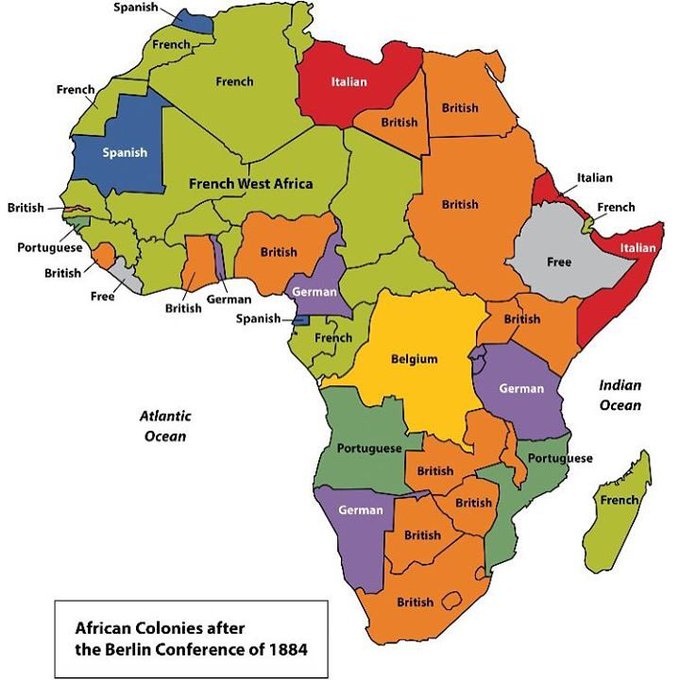
Scramble for Africa 7: The Continent Carved Up at the Berlin Conference 1884

The Berlin Conference 1884

After six episodes of preparation we are ready to talk about the famous Berlin Conference of 1884 where Africa was actually carved up. Along the way you meet some of the most legendary villains – Stanley and Leopold (though you still haven’t met Rhodes), also Livingstone and Brazza. We end in Berlin itself and at the Berlin Conference 1884. 

200 Years of Anglo-American Invasions of Afghanistan

View this email in your browser

A destroyed Afghanistan has been an imperialist priority for 200 years

As the British before them, US imperial propaganda treats itself as the victim and those they invaded and occupied as the criminal

[Hello friends and welcome to new subscribers. I am assuming that most of the new subscribers got here via the two twitter threads about Afghanistan – the one about the long imperial history and the other on How to Write About Afghanistan. If you’ve looked around a bit on the site, you’ve seen I write about a lot of stuff besides Afghanistan. But I wanted the first email to you all to be about Afghanistan and it’s basically an expansion of the first twitter thread. Now that the US is out of Afghanistan (for now), it’s a good time to revisit the imperialist history. I’ll send out some other recent writing in the coming weeks, but for now… here goes. -Justin]

On August 18th, shortly after the Taliban took Kabul, former British Prime Minister Theresa May stood up in the British House of Commons and asked: “Where is global Britain on the streets of Kabul?” The rhetorical question, as well as the concept of “global Britain” itself, sounds like pandering to a bygone era of imperial glories. But a survey of what it looked like when “global Britain” first showed up on the streets of Kabul, and the nearly two centuries since, could help clear up some muddled thinking about Afghanistan today.

Imperialist designs on Afghanistan

While they were about halfway into their 180 years of plundering $45 trillion from India, the British always knew that an alliance of neighbouring states – the Persian Empire, the Sikh Empire, Afghanistan – could pry their claws off of their prize.

As the British completed the destruction of their rivals and the absorption of territory, Afghanistan came under their hungry gaze. Initially the plan was to install a friendly monarch on the throne and turn him into a pensioner, along the Indian pattern.

The opportunity came in the form of an exiled monarch, Shah Shuja, who the British hoped to install on the throne in Kabul. After elaborate preparation, the British invaded from India in a momentous year for imperialism – 1839. That very same year, they launched the first Opium War on China and began what that country calls its ‘Century of Humiliation’. The army the British sent into Afghanistan consisted mostly of Indian troops, who were treated according to a strict racist hierarchy. “Rather strangely”, writes Farrukh Husain, author of Afghanistan in the Age of Empires, “the British Indian army operated an apartheid system for provision of food. British soldiers received more food rations than Indian troops and the camp followers received less still.” When food ran low, all of it went to the white soldiers while the native troops starved.

British forces raped, slaughtered, and looted their way through Afghanistan. They kidnapped the wives of their allies. They blew Afghans out of cannons (a move they made more famous in 1857 India). They destroyed the economies of the cities they seized. One British agent, a Kashmiri named Mohan Lal, wrote: “I heard both the men and the women saying that the English enriched the grain and grass sellers…while they reduced the Chiefs to poverty, and killed the poor by starvation.” Upon occupying Kabul, the British raised taxes on the locals – unleashing an army of collectors on Afghans, who had to borrow the money to pay the taxes, and then proceeded to lose their houses and other assets, in a standard pattern repeated throughout the colonized world.

Even centuries ago, the imperialists were interested in Afghan minerals. One held the “opinion that a good geologist would be very useful in Afghanistan as the country is said to abound in minerals of every description.”

But after abusing both their allies and their enemies, the British lost control of Kabul and were driven into retreat. The king they put on the throne, Shah Shuja, was assassinated in 1842.

A less vindictive power might have ended it there, but “teaching the natives a lesson” through extreme violence has also always been a pattern of the imperialists. After their loss the British re-grouped and created an “Army of Revenge” against the Afghans for having the temerity to drive them out. The British destroyed Ghazni, an important city which has never recovered: “Ghazni was lost in the darkness of the night to be forgotten by history.” They also looted the gates at the 800-year old tomb of Mahmood of Ghazni and brought the gates back to the Agra Fort. After Indian independence, the Indian government created an official inscription stating that the gates are “lying here either as a war trophy of the British campaign of 1842, or as a sad reminder of the historic lies of the East India Co.”

The Army of Revenge sought to destroy the agricultural and ecological basis of life in Afghanistan: “Our way of destroying the country is very simple, merely cutting a ring through the bark of every tree. This ruins the country completely as the trees die directly and the inhabitants live principally on dried fruit and flour made from the dried mulberry.” There was no other purpose to this army than destruction: “every house was destroyed, every tree barked or cut down”. Neville Chamberlain reported of a village where all males over puberty were bayoneted, the women were raped and their goods plundered: “This is one of the most beautiful valleys in Affghanistan, but we left it a scene of desolation;” At one fort that the British destroyed, Reverend Allen described the scene: “One woman was the only live thing in the fort. She was sitting, the picture of despair, with her father, brother, husband and children lying dead around her.”

Still the imperial bloodlust was unsatisfied. Upon reaching the capital the British debated whether to destroy Kabul or not (one British commander said “not one stone should have been left standing upon another”), and also whether or not to kidnap the king’s child and bring him up as a Christian in London (which they did to Prince Duleep Singh after the Anglo-Sikh wars). The British finally settled for destroying the most spectacular building in Kabul, the Char Chatta market, described by Farrukh Husain as “the greatest covered bazaar of all Central Asia, a veritable regional trade centre if not world trade centre from whence Afghan lapis, dried fruits and rugs went to far off lands on the silk road.” In his own book about the 1839-1842 war, William Dalrymple described it as “superb structure with its painted wooden vaulting and intricate tilework, said by some to be the single most beautiful building in Afghanistan… originally built during the reign of Shah Jahan and renowned not just as one of the supreme wonders of Mughal architecture but as one of the greatest buildings in all Central Asia.”

The dynamiting of Char Chatta bazaar was part of a general carnage enacted by the British in Kabul: “the city was pillaged, and fired in a hundred different places. Numbers of the European soldiers… and crowds of sepoys and followers from both camps, poured in, through many unwalled spaces, and with little interference from the troops on duty, who indeed, to a certain extent aided and abetted, the work of plunder and destruction was carried on, and the few remaining inhabitants were exposed to outrage.” “Outrage” itself was a euphemism for rape, murder, indiscriminate killing, enslaving and trading of women, burning of wounded people alive. “Many a hiding mother hen and newborn infant died. But such things like these you know must be at every famous victorie.” Murder and loot went together: “All day the sack went on, and great booty did the captors get, rich dresses, shawls, carpets, silks, horse trappings, arms, emblazoned Korans, etc”

The engineered demolition of the most magnificent building in Central Asia was not an accident or a crime of passion. Imperialists always try to destroy the cultural heritage of their targets. The same way that Iraq’s National Museum was looted immediately after the US occupation began in 2003, the destruction of Afghanistan’s culture has been an objective of the imperialists for centuries.

On their way back to their base in their Indian colony, the British destroyed other cities, including Jalalabad, which they left “a smoking mass of ruins”. When the British left Afghanistan, one officer writes in 1843: “The work of retribution was now deemed accomplished, and, indeed, it was severe…nor will years repair the damage and evils inflicted”. Another writer, Roebuck, summarized it: “Ghuznee, Cabul, Istalif and Jalalabad have shared a common doom; havoc and desolation have marked the path of our conquered armies, and as fell a revenge has been inflicted on our foes as the warmest advocate of retaliation could desire.”

One British Minister of Parliament, William Hutt, lamented the loss of business opportunities: “We had destroyed every town which could afford us a market, and centuries would elapse before Affghanistan recovered from the misery and desolation in which it had been plunged.”

Having failed to subjugate Afghans, the British imperialists decided the country was to be a buffer zone and dedicated themselves to ensuring it would remain divided, undeveloped, and ideally controlled by compliant rulers. But even this arrangement could not be accomplished without additional wars.

Modernization efforts clash with imperialist designs

The decades after the 1839-1842 war on Afghanistan were decisive in the history of imperialism.

On the North American continent, the United States took all of northern Mexico in the Mexican American war of 1846-8 and followed it with a series of wars and genocides against Indigenous nations. Most of what is now Canada was stolen from First Nations at the same time.

Having devastated Afghanistan, the British next put an end to the Sikh Empire in 1849. In 1852, the British took more territory in Burma. I’ve already mentioned the war of 1857, during which the British faced a powerful challenge to their rule in India. Diminished as a “mutiny”, the uprising was multi-religious, multi-caste, across much of the country, and nearly succeeded in ousting the British, who suppressed it by killing millions. In the decades that followed, documented by Mike Davis in Late Victorian Holocausts, imperialists broke down China’s and India’s sophisticated agricultural systems and tens of millions of Asians died in the resulting famines.

Enjoying years of calm left behind after the mass slaughter of 1857, the British decided in the 1870s to try again to annex Afghanistan. The propaganda of “avenging” the losses of the first round was revved up, including a famous painting of a lone survivor of the 1842 retreat. The horrible cliche of invincible savage Afghans is less the product of multiple wars and more the product of multiple rounds of war propaganda.

In the Second Anglo-Afghan War in 1878-9, Britain imposed the humiliating treaty of Gandamak on Afghanistan, which gave Britain control over Afghanistan’s foreign policy (this was a time when successive humiliating treaties were also foisted on China and Indigenous nations in North America). In 1893, Mortimer Durand – whose father had helped destroy Afghanistan in the 1839-1842 war – went to Kabul and imposed a division of the Pashtun lands into the British India side and the Afghanistan side, seeding a century of conflict with the stroke of a pen.

The British invaded Afghanistan again in 1897 to suppress what they called the Malakand Uprising, with the same vindictive imperial purpose. Winston Churchill was there, and what he told a friend was representative: “After today we begin to burn villages. Every one. And all who resist will be killed without quarter. The Mohmands need a lesson, and there is no doubt we are a very cruel people.”

On the Afghan side, though, the drive to modernize (chronicled in Pankaj Mishra’s From the Ruins of Empire) was strong – inspired by Turkey, Japan, and the Russian Revolution, the courts of the Afghan monarchs debated ideas and envisioned building a state capable of withstanding imperial pressure. In February 1919, the young king Amanullah Khan took the throne. The new Soviet Union, itself desperately fighting off an invasion by the imperialists, quickly extended recognition to the new monarch. A short war with the British followed in May, which ended with Afghanistan winning foreign policy independence. Having just slaughtered 1,000 Indians at Jallianwalla Bagh in Amritsar in April, The British may have been concerned about the morale and reliability of their Indian troops – these were the men who, after all, fought the British Empire’s wars.

Afghan history has had many twists and turns since Amanullah won its independence in 1919. One under-appreciated theme: it has been a century of nationalists struggling to modernize their country in the face of imperialism. If it is rarely understood this way, it could be, among other reasons, because many of the nationalists killed each other.

In 1929, Amanullah was overthrown in a British backed regime-change operation and a series of short-lived rulers followed, until king Zahir Shah, who ruled from 1933-1973. Zahir Shah was also a modernizer, who tried to develop the country under growing pressure from the new US empire.

When the CIA overthrew neighbouring Iran’s elected government and installed the pro-US Shah in 1953, the US gained its own independent military foothold in the region. Taking over the British imperial role, the US injected a new ideology of “development”, as well as “democracy and human rights”, to compete with the socialism and independent national development desired in the colonies. US Historian Nick Cullather wrote in 2002: “The confrontation between colonizer and colonized, rich and poor, was with a rhetorical gesture replaced by a world order in which all nations were either developed or developing.” And in this scheme, Afghanistan “suddenly became ‘underdeveloped’”. Daud Khan, the king’s cousin, said succinctly: “Afghanistan is a backward country. We must do something about it or die as a nation.”

And much was done about it, with help from both Cold War blocs. The USSR built highways linking Kabul to the Central Asian Republics, including the engineering feat of cutting the 2.67km Salang Tunnel through the Hindu Kush mountains in 1964. Germany and Japan built factories and radio towers.

The flagship US project was the Helmand Valley Authority, which historian Arnold Toynbee described as “a piece of America inserted into the Afghan landscape.” Through the Helmand Valley Authority, which ran from 1946-1979, America engaged Morrison-Knudson – builders of Hoover Dam and the San Francisco Bay Bridge, active all over the world – to build a network of dams. Agricultural fields – which now grow opium – in Helmand were improved and made capable of multicropping. In Afghanistan in this period, Cullather notes, the Cold War was “fought with money and technicians instead of spies and bombs.”

In fact the spies and bombs were well on their way. From 1964-1973, there was a famous “democratic opening”, during which the US exercised influence over pro-US Afghan politicians to try to exclude the left. In 1973, Daud Khan, another modernizer, took over in a coup. There is evidence in the Wikileaks Kissinger Cables that the US were themselves planning a coup that year to counter the growing influence of left-wing politics. The first mujahadeen uprising occurred against Daud’s modernizing efforts in 1975 – led by Ahmad Shah Masoud of the Panjshir Valley, it failed to win any popular support and was easily crushed. In 1977, Pakistani Prime Minister Zulfiqar Ali Bhutto was overthrown by General Zia ul-Haq. Bhutto had offered a degree of support to the mujahadeen: Zia-ul-Haq radically stepped that support up. In 1978, Daud himself was overthrown by the left-wing, and Muhammad Taraki became president. A co-founder of what was called the Saur Revolution was Hafizullah Amin. Taraki was president from April 1978-September 1979. He was killed (maybe by Amin). Then Amin took over from September 1979-December 1979.

During the Taraki/Amin year and a half, there was a land reform, which was very popular with farmers and very unpopular with landlords. A number of these disaffected elites went to Pakistan to organize a revolt. The US supported these exiles, in a pattern familiar across the world of the US supporting right-wing insurgencies against left-wing governments. With an open border with Pakistan and virtually unlimited financial resources and weapons from the US, Saudi Arabia, and China, the mujahadeen quickly became a viable threat to the Afghan government, which asked the USSR for military support in 1979. When Soviet troops arrived, the Afghan leader who had invited them, Hafizullah Amin, was himself killed in still-unclear circumstances. Babrak Karmal – a former student leader and parliamentarian with a stronger relationship to Moscow – took over leadership.

The controversial post-1979 period

History is always contentious, but historical consensus on interpretations, or even facts, of an ongoing civil war is impossible. How to interpret the history of the past forty years? The standard interpretation argues that reformers from Amanullah to Zahir Shah, Daud, Taraki, Amin, and Karmal all tried to do too much too fast, failing to respect the deep conservatism of the Afghan people. But that is too shallow of an analysis. Every reform faces a conservative backlash and if the backlash succeeds, the reform itself can always be blamed for provoking it.

What we can say is: From 1979-1987, Afghanistan became the epicenter of a US-supported insurgency against the Afghan government and its Russian ally. The war devastated the country but the government’s modernization efforts continued. From when the Soviets arrived in 1979 until the end, the mujahadeen never again would pose a strong enough military threat to overthrow the government. Media commentators of all viewpoints in the 1980s admonished readers that “there was no military solution in Afghanistan” for either side. Yet Afghan’s government did fall: its demise was negotiated by Gorbechev and then Yeltsin. Hoping to appease the US, the Russian leaders agreed to abandon their allies in Afghanistan – and kept their word. Meanwhile the US, having made the same agreement, blithely continued to support the overthrow of the Afghan government and reject the reconciliation efforts of Afghanistan’s last modernizer, Mohammad Najibullah, who had succeeded Karmal in 1986. Even when Soviet troops withdrew in 1989, Najibullah’s government held on until 1992, when airlifts from Russia were halted altogether.

From 1992-2021: what the imperialists built

So it was in 1992 the US-sponsored insurgents finally toppled the Afghan government and proceeded to cleanse the country of communism and the idea of modernizing, nationalist reforms.

The mujahadeen then applied their skills in state destruction on the whole of the country. While some warlords were content to contain their depredations to their own base areas, two warlords in particular wanted control of Kabul and couldn’t agree – one was Gulbuddin Hekmatyar and the other was Burnuhuddin Rabbani (and Ahmad Shah Massoud). Hekmatyar was kicked out and proceeded to shell Kabul from outside. The 1992-1996 war destroyed much of what little development had survived the previous decade.

Into this context were born the Taliban, a group of young men raised entirely during war and by the Islamists with no influence from nationalism or communism (which had been cleansed from public memory). They repudiated the atrocities and chaos of the warlords and promised to bring them to an end. Starting in the refugee camps of Pakistan where they grew up, they took Kandahar, advancing quickly from 1994-1996 until they took Kabul. From 1996 to 2001, the Taliban ruled most of Afghanistan from Kabul (though several warlords continued to control northern areas and maintained an anti-Taliban alliance). In 2001, the US invaded, re-organized the warlords, and overthrew the Taliban, who retreated to Pakistan.

The US imposed their own candidate, Hamid Karzai as president under an Afghan-American viceroy, Zalmay Khalilzad. For the next 20 years, Karzai and then his successor, Ghani, ruled over the warlords; the US, through Khalilzad, ruled over Karzai and Ghani. Called ‘indirect rule’ in the 19th century, this arrangement would have been familiar to the British imperialists of that era. So, too, would the US’s geopolitical imperative: having lost its Iranian bases in 1979, the US had gained a covert new foothold in Pakistan that same year, but didn’t get the full power conferred by military occupation and multiple bases in Afghanistan until 2001.

For the next 20 years, the US treated Afghanistan as a video gameworld for practicing drone warfare, protected the opium trade, and committed continuous atrocities, including hunting Afghans for sport, while making it a playground for private contractors and NGOs. US bombs and night raids, which probably killed hundreds of thousands of Afghans, and the indifference to these deaths shown by the US-sponsored government, made support for the Taliban inevitable.

The 1996-2001 Taliban destroyed Afghanistan’s cultural heritage, massacred minorities, and subjugated women as severely as the mujahadeen. Will they be worse, better, or the same as the US-backed mujahadeen? It is too soon to tell, but here are two anecdotes.

First, the mujahadeen and the CIA turned Afghanistan into the world’s leading opium producer from the 1980s. The Taliban taxed opium but discouraged production, and in 2000 – whether for reasons of market manipulation or earnest principle – reduced opium production in Afghanistan to nearly zero. In 2001 they were overthrown and opium cultivation returned to even higher levels than before under US protection.

Second, like the mujahadeen among whom they grew up, the Taliban built almost nothing, but they did complete one infrastructure project. Cullather reported it in 2002: “During its five years in power, the Taliban government invested in the dams and finished one project begun but not completed by the Americans: linking the Kajakai Dam’s hydroelectric plant to the city of Kandahar. Work was finished in early 2001, just a few months before American bombers destroyed the plant.”

Justin Podur is a Toronto-based writer and co-host of the Civilizations historical podcast. You can find him on his website at podur.org and on Twitter @justinpodur.

A destroyed Afghanistan has been an imperialist priority for 200 years

As the British before them, US imperial propaganda treats itself as the victim and those they invaded and occupied as the criminal

On August 18th, shortly after the Taliban took Kabul, former British Prime Minister Theresa May stood up in the British House of Commons and asked: “Where is global Britain on the streets of Kabul?” The rhetorical question, as well as the concept of “global Britain” itself, sounds like pandering to a bygone era of imperial glories. But a survey of what it looked like when “global Britain” first showed up on the streets of Kabul, and the nearly two centuries since, could help clear up some muddled thinking about Afghanistan today.

Imperialist designs on Afghanistan

While they were about halfway into their 180 years of plundering $45 trillion from India, the British always knew that an alliance of neighbouring states – the Persian Empire, the Sikh Empire, Afghanistan – could pry their claws off of their prize.

As the British completed the destruction of their rivals and the absorption of territory, Afghanistan came under their hungry gaze. Initially the plan was to install a friendly monarch on the throne and turn him into a pensioner, along the Indian pattern.

The opportunity came in the form of an exiled monarch, Shah Shuja, who the British hoped to install on the throne in Kabul. After elaborate preparation, the British invaded from India in a momentous year for imperialism – 1839. That very same year, they launched the first Opium War on China and began what that country calls its ‘Century of Humiliation’. The army the British sent into Afghanistan consisted mostly of Indian troops, who were treated according to a strict racist hierarchy. “Rather strangely”, writes Farrukh Husain, author of Afghanistan in the Age of Empires, “the British Indian army operated an apartheid system for provision of food. British soldiers received more food rations than Indian troops and the camp followers received less still.” When food ran low, all of it went to the white soldiers while the native troops starved.

British forces raped, slaughtered, and looted their way through Afghanistan. They kidnapped the wives of their allies. They blew Afghans out of cannons (a move they made more famous in 1857 India). They destroyed the economies of the cities they seized. One British agent, a Kashmiri named Mohan Lal, wrote: “I heard both the men and the women saying that the English enriched the grain and grass sellers…while they reduced the Chiefs to poverty, and killed the poor by starvation.” Upon occupying Kabul, the British raised taxes on the locals – unleashing an army of collectors on Afghans, who had to borrow the money to pay the taxes, and then proceeded to lose their houses and other assets, in a standard pattern repeated throughout the colonized world.

Even centuries ago, the imperialists were interested in Afghan minerals. One held the “opinion that a good geologist would be very useful in Afghanistan as the country is said to abound in minerals of every description.”

But after abusing both their allies and their enemies, the British lost control of Kabul and were driven into retreat. The king they put on the throne, Shah Shuja, was assassinated in 1842.

A less vindictive power might have ended it there, but “teaching the natives a lesson” through extreme violence has also always been a pattern of the imperialists. After their loss the British re-grouped and created an “Army of Revenge” against the Afghans for having the temerity to drive them out. The British destroyed Ghazni, an important city which has never recovered: “Ghazni was lost in the darkness of the night to be forgotten by history.” They also looted the gates at the 800-year old tomb of Mahmood of Ghazni and brought the gates back to the Agra Fort. After Indian independence, the Indian government created an official inscription stating that the gates are “lying here either as a war trophy of the British campaign of 1842, or as a sad reminder of the historic lies of the East India Co.”

The Army of Revenge sought to destroy the agricultural and ecological basis of life in Afghanistan: “Our way of destroying the country is very simple, merely cutting a ring through the bark of every tree. This ruins the country completely as the trees die directly and the inhabitants live principally on dried fruit and flour made from the dried mulberry.” There was no other purpose to this army than destruction: “every house was destroyed, every tree barked or cut down”. Neville Chamberlain reported of a village where all males over puberty were bayoneted, the women were raped and their goods plundered: “This is one of the most beautiful valleys in Affghanistan, but we left it a scene of desolation;” At one fort that the British destroyed, Reverend Allen described the scene: “One woman was the only live thing in the fort. She was sitting, the picture of despair, with her father, brother, husband and children lying dead around her.”

Still the imperial bloodlust was unsatisfied. Upon reaching the capital the British debated whether to destroy Kabul or not (one British commander said “not one stone should have been left standing upon another”), and also whether or not to kidnap the king’s child and bring him up as a Christian in London (which they did to Prince Duleep Singh after the Anglo-Sikh wars). The British finally settled for destroying the most spectacular building in Kabul, the Char Chatta market, described by Farrukh Husain as “the greatest covered bazaar of all Central Asia, a veritable regional trade centre if not world trade centre from whence Afghan lapis, dried fruits and rugs went to far off lands on the silk road.” In his own book about the 1839-1842 war, William Dalrymple described it as “superb structure with its painted wooden vaulting and intricate tilework, said by some to be the single most beautiful building in Afghanistan… originally built during the reign of Shah Jahan and renowned not just as one of the supreme wonders of Mughal architecture but as one of the greatest buildings in all Central Asia.”

The dynamiting of Char Chatta bazaar was part of a general carnage enacted by the British in Kabul: “the city was pillaged, and fired in a hundred different places. Numbers of the European soldiers… and crowds of sepoys and followers from both camps, poured in, through many unwalled spaces, and with little interference from the troops on duty, who indeed, to a certain extent aided and abetted, the work of plunder and destruction was carried on, and the few remaining inhabitants were exposed to outrage.” “Outrage” itself was a euphemism for rape, murder, indiscriminate killing, enslaving and trading of women, burning of wounded people alive. “Many a hiding mother hen and newborn infant died. But such things like these you know must be at every famous victorie.” Murder and loot went together: “All day the sack went on, and great booty did the captors get, rich dresses, shawls, carpets, silks, horse trappings, arms, emblazoned Korans, etc”

The engineered demolition of the most magnificent building in Central Asia was not an accident or a crime of passion. Imperialists always try to destroy the cultural heritage of their targets. The same way that Iraq’s National Museum was looted immediately after the US occupation began in 2003, the destruction of Afghanistan’s culture has been an objective of the imperialists for centuries.

On their way back to their base in their Indian colony, the British destroyed other cities, including Jalalabad, which they left “a smoking mass of ruins”. When the British left Afghanistan, one officer writes in 1843: “The work of retribution was now deemed accomplished, and, indeed, it was severe…nor will years repair the damage and evils inflicted”. Another writer, Roebuck, summarized it: “Ghuznee, Cabul, Istalif and Jalalabad have shared a common doom; havoc and desolation have marked the path of our conquered armies, and as fell a revenge has been inflicted on our foes as the warmest advocate of retaliation could desire.”

One British Minister of Parliament, William Hutt, lamented the loss of business opportunities: “We had destroyed every town which could afford us a market, and centuries would elapse before Affghanistan recovered from the misery and desolation in which it had been plunged.”

Having failed to subjugate Afghans, the British imperialists decided the country was to be a buffer zone and dedicated themselves to ensuring it would remain divided, undeveloped, and ideally controlled by compliant rulers. But even this arrangement could not be accomplished without additional wars.

Modernization efforts clash with imperialist designs

The decades after the 1839-1842 war on Afghanistan were decisive in the history of imperialism.

On the North American continent, the United States took all of northern Mexico in the Mexican American war of 1846-8 and followed it with a series of wars and genocides against Indigenous nations. Most of what is now Canada was stolen from First Nations at the same time.

Having devastated Afghanistan, the British next put an end to the Sikh Empire in 1849. In 1852, the British took more territory in Burma. I’ve already mentioned the war of 1857, during which the British faced a powerful challenge to their rule in India. Diminished as a “mutiny”, the uprising was multi-religious, multi-caste, across much of the country, and nearly succeeded in ousting the British, who suppressed it by killing millions. In the decades that followed, documented by Mike Davis in Late Victorian Holocausts, imperialists broke down China’s and India’s sophisticated agricultural systems and tens of millions of Asians died in the resulting famines.

Enjoying years of calm left behind after the mass slaughter of 1857, the British decided in the 1870s to try again to annex Afghanistan. The propaganda of “avenging” the losses of the first round was revved up, including a famous painting of a lone survivor of the 1842 retreat. The horrible cliche of invincible savage Afghans is less the product of multiple wars and more the product of multiple rounds of war propaganda.

In the Second Anglo-Afghan War in 1878-9, Britain imposed the humiliating treaty of Gandamak on Afghanistan, which gave Britain control over Afghanistan’s foreign policy (this was a time when successive humiliating treaties were also foisted on China and Indigenous nations in North America). In 1893, Mortimer Durand – whose father had helped destroy Afghanistan in the 1839-1842 war – went to Kabul and imposed a division of the Pashtun lands into the British India side and the Afghanistan side, seeding a century of conflict with the stroke of a pen.

The British invaded Afghanistan again in 1897 to suppress what they called the Malakand Uprising, with the same vindictive imperial purpose. Winston Churchill was there, and what he told a friend was representative: “After today we begin to burn villages. Every one. And all who resist will be killed without quarter. The Mohmands need a lesson, and there is no doubt we are a very cruel people.”

On the Afghan side, though, the drive to modernize (chronicled in Pankaj Mishra’s From the Ruins of Empire) was strong – inspired by Turkey, Japan, and the Russian Revolution, the courts of the Afghan monarchs debated ideas and envisioned building a state capable of withstanding imperial pressure. In February 1919, the young king Amanullah Khan took the throne. The new Soviet Union, itself desperately fighting off an invasion by the imperialists, quickly extended recognition to the new monarch. A short war with the British followed in May, which ended with Afghanistan winning foreign policy independence. Having just slaughtered 1,000 Indians at Jallianwalla Bagh in Amritsar in April, The British may have been concerned about the morale and reliability of their Indian troops – these were the men who, after all, fought the British Empire’s wars.

Afghan history has had many twists and turns since Amanullah won its independence in 1919. One under-appreciated theme: it has been a century of nationalists struggling to modernize their country in the face of imperialism. If it is rarely understood this way, it could be, among other reasons, because many of the nationalists killed each other.

In 1929, Amanullah was overthrown in a British backed regime-change operation and a series of short-lived rulers followed, until king Zahir Shah, who ruled from 1933-1973. Zahir Shah was also a modernizer, who tried to develop the country under growing pressure from the new US empire.

When the CIA overthrew neighbouring Iran’s elected government and installed the pro-US Shah in 1953, the US gained its own independent military foothold in the region. Taking over the British imperial role, the US injected a new ideology of “development”, as well as “democracy and human rights”, to compete with the socialism and independent national development desired in the colonies. US Historian Nick Cullather wrote in 2002: “The confrontation between colonizer and colonized, rich and poor, was with a rhetorical gesture replaced by a world order in which all nations were either developed or developing.” And in this scheme, Afghanistan “suddenly became ‘underdeveloped’”. Daud Khan, the king’s cousin, said succinctly: “Afghanistan is a backward country. We must do something about it or die as a nation.”

And much was done about it, with help from both Cold War blocs. The USSR built highways linking Kabul to the Central Asian Republics, including the engineering feat of cutting the 2.67km Salang Tunnel through the Hindu Kush mountains in 1964. Germany and Japan built factories and radio towers.

The flagship US project was the Helmand Valley Authority, which historian Arnold Toynbee described as “a piece of America inserted into the Afghan landscape.” Through the Helmand Valley Authority, which ran from 1946-1979, America engaged Morrison-Knudson – builders of Hoover Dam and the San Francisco Bay Bridge, active all over the world – to build a network of dams. Agricultural fields – which now grow opium – in Helmand were improved and made capable of multicropping. In Afghanistan in this period, Cullather notes, the Cold War was “fought with money and technicians instead of spies and bombs.”

In fact the spies and bombs were well on their way. From 1964-1973, there was a famous “democratic opening”, during which the US exercised influence over pro-US Afghan politicians to try to exclude the left. In 1973, Daud Khan, another modernizer, took over in a coup. There is evidence in the Wikileaks Kissinger Cables that the US were themselves planning a coup that year to counter the growing influence of left-wing politics. The first mujahadeen uprising occurred against Daud’s modernizing efforts in 1975 – led by Ahmad Shah Masoud of the Panjshir Valley, it failed to win any popular support and was easily crushed. In 1977, Pakistani Prime Minister Zulfiqar Ali Bhutto was overthrown by General Zia ul-Haq. Bhutto had offered a degree of support to the mujahadeen: Zia-ul-Haq radically stepped that support up. In 1978, Daud himself was overthrown by the left-wing, and Muhammad Taraki became president. A co-founder of what was called the Saur Revolution was Hafizullah Amin. Taraki was president from April 1978-September 1979. He was killed (maybe by Amin). Then Amin took over from September 1979-December 1979.

During the Taraki/Amin year and a half, there was a land reform, which was very popular with farmers and very unpopular with landlords. A number of these disaffected elites went to Pakistan to organize a revolt. The US supported these exiles, in a pattern familiar across the world of the US supporting right-wing insurgencies against left-wing governments. With an open border with Pakistan and virtually unlimited financial resources and weapons from the US, Saudi Arabia, and China, the mujahadeen quickly became a viable threat to the Afghan government, which asked the USSR for military support in 1979. When Soviet troops arrived, the Afghan leader who had invited them, Hafizullah Amin, was himself killed in still-unclear circumstances. Babrak Karmal – a former student leader and parliamentarian with a stronger relationship to Moscow – took over leadership.

The controversial post-1979 period

History is always contentious, but historical consensus on interpretations, or even facts, of an ongoing civil war is impossible. How to interpret the history of the past forty years? The standard interpretation argues that reformers from Amanullah to Zahir Shah, Daud, Taraki, Amin, and Karmal all tried to do too much too fast, failing to respect the deep conservatism of the Afghan people. But that is too shallow of an analysis. Every reform faces a conservative backlash and if the backlash succeeds, the reform itself can always be blamed for provoking it.

What we can say is: From 1979-1987, Afghanistan became the epicenter of a US-supported insurgency against the Afghan government and its Russian ally. The war devastated the country but the government’s modernization efforts continued. From when the Soviets arrived in 1979 until the end, the mujahadeen never again would pose a strong enough military threat to overthrow the government. Media commentators of all viewpoints in the 1980s admonished readers that “there was no military solution in Afghanistan” for either side. Yet Afghan’s government did fall: its demise was negotiated by Gorbechev and then Yeltsin. Hoping to appease the US, the Russian leaders agreed to abandon their allies in Afghanistan – and kept their word. Meanwhile the US, having made the same agreement, blithely continued to support the overthrow of the Afghan government and reject the reconciliation efforts of Afghanistan’s last modernizer, Mohammad Najibullah, who had succeeded Karmal in 1986. Even when Soviet troops withdrew in 1989, Najibullah’s government held on until 1992, when airlifts from Russia were halted altogether.

From 1992-2021: what the imperialists built

So it was in 1992 the US-sponsored insurgents finally toppled the Afghan government and proceeded to cleanse the country of communism and the idea of modernizing, nationalist reforms.

The mujahadeen then applied their skills in state destruction on the whole of the country. While some warlords were content to contain their depredations to their own base areas, two warlords in particular wanted control of Kabul and couldn’t agree – one was Gulbuddin Hekmatyar and the other was Burnuhuddin Rabbani (and Ahmad Shah Massoud). Hekmatyar was kicked out and proceeded to shell Kabul from outside. The 1992-1996 war destroyed much of what little development had survived the previous decade.

Into this context were born the Taliban, a group of young men raised entirely during war and by the Islamists with no influence from nationalism or communism (which had been cleansed from public memory). They repudiated the atrocities and chaos of the warlords and promised to bring them to an end. Starting in the refugee camps of Pakistan where they grew up, they took Kandahar, advancing quickly from 1994-1996 until they took Kabul. From 1996 to 2001, the Taliban ruled most of Afghanistan from Kabul (though several warlords continued to control northern areas and maintained an anti-Taliban alliance). In 2001, the US invaded, re-organized the warlords, and overthrew the Taliban, who retreated to Pakistan.

The US imposed their own candidate, Hamid Karzai as president under an Afghan-American viceroy, Zalmay Khalilzad. For the next 20 years, Karzai and then his successor, Ghani, ruled over the warlords; the US, through Khalilzad, ruled over Karzai and Ghani. Called ‘indirect rule’ in the 19th century, this arrangement would have been familiar to the British imperialists of that era. So, too, would the US’s geopolitical imperative: having lost its Iranian bases in 1979, the US had gained a covert new foothold in Pakistan that same year, but didn’t get the full power conferred by military occupation and multiple bases in Afghanistan until 2001.

For the next 20 years, the US treated Afghanistan as a video gameworld for practicing drone warfare, protected the opium trade, and committed continuous atrocities, including hunting Afghans for sport, while making it a playground for private contractors and NGOs. US bombs and night raids, which probably killed hundreds of thousands of Afghans, and the indifference to these deaths shown by the US-sponsored government, made support for the Taliban inevitable.

The 1996-2001 Taliban destroyed Afghanistan’s cultural heritage, massacred minorities, and subjugated women as severely as the mujahadeen. Will they be worse, better, or the same as the US-backed mujahadeen? It is too soon to tell, but here are two anecdotes.

First, the mujahadeen and the CIA turned Afghanistan into the world’s leading opium producer from the 1980s. The Taliban taxed opium but discouraged production, and in 2000 – whether for reasons of market manipulation or earnest principle – reduced opium production in Afghanistan to nearly zero. In 2001 they were overthrown and opium cultivation returned to even higher levels than before under US protection.

Second, like the mujahadeen among whom they grew up, the Taliban built almost nothing, but they did complete one infrastructure project. Cullather reported it in 2002: “During its five years in power, the Taliban government invested in the dams and finished one project begun but not completed by the Americans: linking the Kajakai Dam’s hydroelectric plant to the city of Kandahar. Work was finished in early 2001, just a few months before American bombers destroyed the plant.”