Let’s debate “modernization”
Dear Anti-Empire friends,
I’ve decided that I’m going to send you something on the 30th of every month. Instead of just sending articles as they come out, I am going to try for 2022 to send something – an article, a quick review, or in this case, a transcript, once a month, on the 30th.
For the first Anti-Empire 30th of 2022, here is a conversation I had on the now renamed Anti-Empire Radio (to distinguish it from the Civilizations Series historical podcasts) on January 13, 2022. I invited Vijay Prashad to join me after some twitter controversy about the word “modernization”. I hoped to settle the question in the conversation. The transcript is a bonus for you all (newsletter subscribers).
Hope you are doing well and following the Scramble for Africa series, which I have learned a hell of a lot researching and which we’re about half way through. Watch for the latest, the Zionists and the Scramble for Africa, which should be coming out any day now.
Now the transcript of Anti-Empire Radio Episode 101.
Interviewing Vijay Prashad about the question of “What Should the Left do About China?”
Transcript of the Anti-Empire Project’s Anti-Empire Radio Episode 101, recorded January 13, 2022.
Justin Podur: Well, Vijay Prashad, welcome. Here we are.
Vijay Prashad: Thanks. Great to be with you, Justin.
Justin Podur: For the listeners who don’t know, Vijay is the director of the Tri Continental Institute for Social Research, author of many, many books. The most recent would be Washington Bullets, which had a blurb from Evo Morales, which I know Vijay is proud of because you see the blurb everywhere.
For no particular reason, I just wanted to talk to you today on January 13th. I just thought I’d invite you out of the blue and, just for a chat, but I wanted to talk to you specifically about an idea that I’ve been having – just spontaneously – about modernization. What do you think of the idea? Because I think the idea of modernization — there’s a critique, I think, a very legitimate critique Indigenous movements. The indigenous movements that say, we don’t want your stupid modernization, we don’t want you to stick your your mines and your poisoned water and your dams all over our territory and call that modernization. We don’t want you to assimilate our children and impose, the English language or French language, your colonial languages on us. We don’t want that kind of modernization. On the other hand, you have China or Cuba, when they when they have like a universal literacy program or China’s attempt to lift — successful attempt to lift hundreds of millions of people out of poverty. They would use the term modernization for building infrastructure and building out education. So how do you think about this idea of modernization in different contexts?
Vijay Prashad: Well, it’s a tough discussion to enter into because the terms are easily misconstrued. I know there’s a critique to be made of what is known as modernization theory. Rostow and other American political scientists after World War Two in the height of the Cold War made the argument against communism, saying that societies need to be moved from tradition to modernity. That’s modernization theory. there are roots in the sociology of Talcott Parsons. There are roots in in in various forms of positivist sociology. Going back to 19th century Germany, where where the idea was, you move from Gemeinschaft or community to Gesellschaft, which is civil society and the journey between Gemeinschaft and Gesellschaft, tradition to modernity is something that has to happen to bring us into this contemporary world, which is alienating and as its own isolation and problems and so on. There’s a tradition in European social thought. There’s a tradition in political thinking in general about this great transition.
Justin Podur: And how about how about in communist theory? Do communists adopt that stage theory of like barbarism, or whatever, tribalism and then states and then advanced civilizations? Is that a debate? How would you define the debate within the communist literature?
Vijay Prashad: It actually doesn’t map onto this at all, because you see, this theory suggests that somehow modernity which becomes coterminous to capitalism is the big break from an older history, from the past. But in fact, many of the people who make the claim for modernity do it in a very constrained way. its modernity generally for Europeans where they are able to transcend their culture because that’s part of of the idea is that you have to be able to break out of your community, you have to become an individual as it were. And that has to do with capitalism, with market relations, with the way you enter the market, as an individual with your merit and so on. This is there very much in Max Weber and others. That’s one whole tradition of thinking.
But at the same time, they say that the so-called quote unquote barbarians, those who had been colonized, they don’t have the cultural wherewithal to break from their tradition and become modern. And there are many accounts in the 1950s of anthropologists and sociologists who travel to India, travel to Nigeria. They write books about the blockage of modernity because these cultures are an impediment. Now that’s interesting because in fact, they’re reproducing colonial thought. In the colonial times colonial leaders would come to these parts of the world – Asia, Africa, Latin America, into Eastern Europe even. And they would say things like, “Look, these people cannot be made into modern. The most we can do is we can sort of train them to live in the modern world. They can’t become modern, but they can live in the modern world. We’ll extract resources.”
Justin Podur: As it happens, they can live as our slaves more or less.
Vijay Prashad: Yeah, exactly. they have a different standard of living. In 1984, when the Union Carbide factory exploded in Bhopal, in India, an American executive said, “Look, Indians have a different idea of life. their their notion of human life is different. Three thousand Indians dying in an explosion, well, they think they’ll be born again and so on. We don’t need to worry about it so much.” But if one American dies, that’s horrendous. And by the way, this calculation is seen in wars that the United States conducts. If a US soldier is killed, that’s an abomination. If five hundred civilians are killed, well, we’re sorry you died, but you have a different attitude to life. So that colonial thinking is very much there. Modernization theory in this theory that capitalism can come to these parts of the world. But let’s face it, they don’t need to be paid too much in India. those workers, they can live in wretched conditions and caste hierarchies can be reproduced to help maintain capitalist structures. We’ll have these oppressed castes do that occupation and so on. This was mapped onto Indian reality. I’m giving you the Indian example because I know that best of all.
In the communist tradition, the idea was you have to break radically from the social hierarchies of the past. It’s not that you go from community to individualism, you go from social hierarchy to social equality. You don’t go to individualism, you go to a social world where people don’t are not tormented by the wretched hierarchies of the past. Hierarchies reinforced by religion, by race, by caste, by patriarchy and so on. So the communist transition period goes from social hierarchy, the wretchedness of those hierarchies to social equality. So actually, it’s quite different.
Now the thing is that maybe we suffer from a problem of language. What do we call that communist transition from social hierarchy to social equality? Well, we call it to some extent modernization. Why should we allow the capitalist groups to basically take over and monopolize the concept of modernity? We say it’s a form of modernization, socialist modernization. Why? Because part of the modernization is improving the basic conditions of people’s lives. You’ve got to improve things like literacy levels. You’ve got to improve things like access to running water so that because of the nature of patriarchy, women spend hours going to collect water. Their leisure time is reduced, their capacity to study is reduced. The capacity to engage other people is reduced. So all of that is part of socialist modernization and —
Justin Podur: — Literacy, right? In a lot of communist revolutions, there is a program to make sure that girls and women learn to read at the same rates as men, and there’s often a lot of resistance to that in rural areas. We’ve been talking about Afghanistan for a while and that that whole thing that came up, Anand Gopal wrote this article called the other Afghan Women (https://www.newyorker.com/magazine/2021/09/13/the-other-afghan-women), where he was talking about why women accepted the Taliban over the American constant bombing and and destruction of their villages. And they thought at least the Taliban could put an end to this. But he goes back to the 70s in this village and and in the village, he says, the communists sent these teachers and then the people slit all the teachers throats and then the communists got mad and arrested them all. And they were never seen again.
[Transcriber’s note: the exact quote in Gopal’s article is: “When the authorities began forcing girls to attend classes at gunpoint, a rebellion erupted, led by armed men calling themselves the mujahideen. In their first operation, they kidnapped all the schoolteachers in the valley, many of whom supported girls’ education, and slit their throats. The next day, the government arrested tribal elders and landlords on the suspicion that they were bankrolling the mujahideen. These community leaders were never seen again.”]
And it’s like: There was repression, but it wasn’t repression because we were trying to force you to send your kids to school. It was repression because you murdered the teachers. What’s the punishment for murder in any country?
Vijay Prashad: Well, also, that story is not it’s not accurate how it’s told. I spend a lot of time talking to Anahita Ratezbad who ran some of those literacy programs in Afghanistan. After the Saur Revolution in April 1978, one of the key features of the new revolutionary government was “we’ve got to educate the public.” Education levels were abysmally low, both for men and women. So fifteen thousand communists and sympathizers and teachers went out into rural areas extremely bravely because they had to confront the landlords. They had to confront conservative men, to confront conservative religious leaders, and eventually they had to confront the mujahideen funded by the Pakistanis, the Saudis and the United States who came across the border from Pakistan and attacked them. These were very brave people. Fifteen thousand of them and thousands of them either lost their lives or were kidnapped and never seen again. many were kidnapped and God knows what happened to them. Were they taken to Pakistan where they were forced to do whatever. I don’t know. We don’t know. These are brave people. What were they doing wrong? they were out there trying to bring literacy and education in the countryside, and they were confronted, not by the people. That’s why I said that the story is wrong. They were not confronted by the people. They were confronted by landlords, by religious clerics, by conservative figures who said, “We don’t want education for our serfs.”
Because let’s face it, in rural Afghanistan, in the nineteen sixties and seventies, land relations were appalling, and most of the landless workers had to work as serfs. They were indebted, born slaves and so on. And when the communists and the teachers and others came to the countryside to conduct literacy classes amongst the bond slaves and so on, landlords didn’t want that. This was a great threat to them, to what they saw as their property. So which side are you going to stand on there? Are you going to stand with the landlords and with the mullahs? With the conservatives or with these people who want education? I’m not saying stand with the teachers. I’m saying stand with the people who want education, the born slaves and so on. That’s why I I reject the characterization that “the people rejected the teachers.” Not true. There’s a class struggle in the countryside and the teachers came on the side of one class against another and they were killed because they did that. Now is this modernization to my mind? Yes, but it’s also the advance of society. Are you against that?
Justin Podur: I want to add two more examples. One is from Fanshen, which is this documentary of the Chinese revolution in a village. It’s a book. It’s a big book by William Hinton, and I gathered later that William Hinton’s daughter lived in China and speaks fluent Chinese and participated in the government — anyway, Hinton wrote this thing. It’s the way people pressed for land reform during the Chinese revolution, and he talks quite a bit about the conditions before the revolution, where as a peasant, you have to go to the bathroom on the the landlord’s toilet because he is not just entitled to your labor and your time, but he’s also entitled to your bowel movements because that becomes night soil, which is his right. If you’re working for him, that’s his right.
So landlords hate land reform. What do you call that? Do you call that changes in that condition modernization? That’s one.
Another example I wanted to add was the U.S. after the Civil War, the Reconstruction. That was when public education arrived in the U.S., especially in the South. But most of the public education in the U.S. starts after slavery is abolished after the Civil War, and again, people were dragged kicking and screaming to education because the elite, the southern elite and the racist elites despised it. And it was Black people who wanted education and demanded education.
And last, I just wanted to make an utter contrast – and I think you will agree – with what Canada does and did with Indigenous children. That has nothing to do with modernization. It has nothing to do with education. They were kidnapping these children and taking them to these places where they died in huge numbers and burying them in unmarked graves. And they were they were doing that with some kind of religious justification. But ultimately they said, we are doing this to “kill the Indian in the child.” We are doing this to get “a final solution to the Indian problem.” That’s fascism. That’s the opposite of socialist or communist modernity, like the opposite in the sense that like these people are fighting to the death all over the world, these two projects.
Vijay Prashad: I’m really glad you brought up Bill Hinton’s Fanshen. I recommend to people another book, Ten Mile Inn In by Isabel Crook and David Crook. In fact, I met Isabel in Beijing just a few years ago. There were a group of Americans like William Hinton and others. Many of them studied at the Putney School in Vermont as children. And they went to China. They were all socialists in one way or the other. Many of them worked in Chinese media. So did Isabel Crook. But Ten Mile Inn is as good a book as Fanshen. I met William Hinton toward the end of his life.
All of them were struck by the way in which the Chinese revolution, the people involved in the Chinese revolution, were angry with the cultural practices of the past, from foot binding to deference to landlords. You know when when the Chinese revolution succeeds and Mao is there at Tiananmen Square, the phrase he uses is captivating. He says China has stood up. the idea of standing up is important. When Thomas Sankara takes power in Upper Volta in a coup d’etat in 1983, one of the first things Sankara does is it changes the name of the country. He says Upper Volta, it’s a colonial name. We don’t live north of the Volta River. We are the land of upright people. Burkina Faso, the land of upright people.
And then Mao says, China stands up. It stood up because the idea of being hunched in front of a landlord, of compulsory hunching. When a landlord comes by, you have to bow down. You have to bow your head, your eyes have to be averted.
Your family is from Kerala. There were hideous cultural practices that the landlords and Brahmins enforced. People had to look down. Their shadow couldn’t touch a Brahmin. They couldn’t open an umbrella on the road. They couldn’t walk on the main road. That to walk on side roads. Women couldn’t wear a top. They had to have their breasts exposed and so on. This wretched kind of culture that we inherited.
In 10 Mile Inn, Isabel and David Crook, right, with great feeling of the anger of the peasantry as they come into some authority and they say, we’re not going to tolerate this anymore. We are going to transform our culture. Now, what do you call this? You call this the advance of a society. This is a people saying we are going to reject it and it’s a class struggle. It’s about a certain class that has been suffocated, saying, we want to breathe. That’s why I like that phrase a lot, land of upright people in Sankara’s thing, or Mao’s thing, stand up straight.
Justin Podur: I think that’s a great thing because historically speaking, because he didn’t just say, Chinese people have stood up. He said China has stood up and he’s referring to stood up after the so-called century of humiliation, the long century of humiliation that starts with the Opium War, opium wars, the destruction of the Summer Palace, basically sponsoring both sides of the of the Taiping Rebellion, the famines that they imposed.
Late Victorian Holocausts by Mike Davis has a little bit of this. We’re talking about tens of millions of Chinese people who died, just like Indian people who died from these famines at around the same time during this century, wars and destruction. And that is actually when Hong Kong became a colony of Britain.
What happened in Hong Kong a couple of years ago because of the security law that China was imposing, which is like pretty much the same type of law that many countries in the world have. The repression that went on when China was repressing the movement against that law, which again was far less than you’d see in the U.S. during the George Floyd rebellion. Or, normal (police) violence in the U.S., not even during an uprising.
With Hong Kong, there’s there’s a little bit too much colonial nostalgia for how great things were under the British that I see when people are talking about Hong Kong. I don’t know if you detect that kind of vibe.
Vijay Prashad: Well, the first thing I want to say because you’ve raised it in this way, Justin, is that in India, when India wins its independence and the partition takes place in India, is then created as a republic in in 1947. In 1950 we have a constitution and become a republic. Eleven years later, Prime Minister Jawaharlal Nehru tells the Indian military to get ready. They line up in western India and they march into three parts of India to militarily seize them back into Indian territory. And that’s the areas of Goa, Daman and Diu, which were Portuguese colonies. So the Indian government in 1961 walks into Goa and liberates Goa from Portuguese rule.
Justin Podur: Were there tanks?
Vijay Prashad: There might have been tanks. This is in 1961. This is two years after the People’s Liberation Army for the second time enter into the province of Tibet. The first time was in 1959. the Potala Palace is is now under civilian rule, no longer under the rule of the Lamas in 1959. But in India, this happens in 1961 and by the way, nobody talks about it. It’s interesting. The Chinese government in 1961, 62, 63 did not walk into Hong Kong. They waited till 1997 when effectively the lease ran out. I mean, the Chinese government actually followed the terms of the lease that had been there with the British government. They followed the terms of the lease.
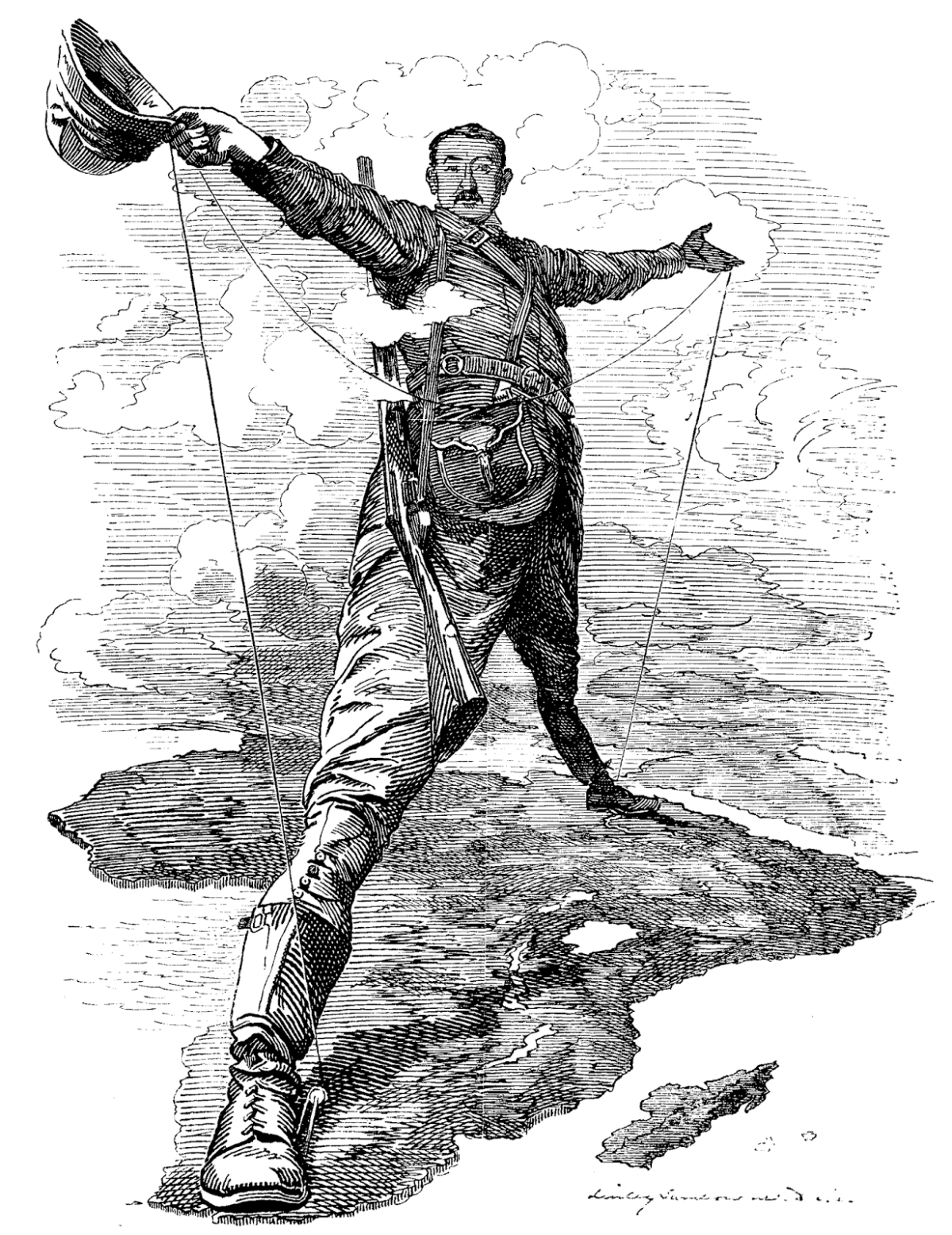
The last governor general of Hong Kong, Chris Patten, who by the way, oversaw the colony without any democratic rights, is now a regular guest on the British Broadcasting Corporation, BBC, a regular guest complaining about the lack of democracy in Hong Kong. BBC is one of the lead journalistic houses, just as it reported appallingly on Zimbabwe. Lots of colonial nostalgia for what was previously Rhodesia. Lots of nostalgia in the same room.
Justin Podur: Who’s that named after, Rhodesia?
Vijay Prashad: Exactly. Who is that named after? There’s a question. Even the Wikipedia entry is not bad. Go check out who is Rhodesia named after. Well, in Hong Kong 1997, that’s when the so-called lease expires in Hong Kong comes back to territorial control of the Chinese government, which it had been before the lease.
Justin Podur: The lease was one of the unequal treaties. Again, something to look up for listeners look up the unequal treaties.
Vijay Prashad: But they still honored it.. The Indian government didn’t honor anything, just walked into Goa and took it back. And the people of Goa, there were people who were upset and moved to Portugal. So it’s not the case that in Goa people were all thrilled. It’s also the case when the lease expired in 1997, there were lots of people in Hong Kong who didn’t want to leave Britain. They wanted to be part of Britain. That happens in all colonies. When the colonial situation takes place, people collaborate with the colonial leaders, then they want to go with them. That happens all the time.
Justin Podur: It’s also the colonial education system, honestly, a system that’s designed not for modernisation, but to prepare people to be what the colony, what the colonizer needs them to be.
Vijay Prashad: I don’t disparage the people that say, OK, I’m going off to England now. You go, that’s fine. The issue is Britain wants to maintain Hong Kong as a permanent colony. That’s the real issue. One good thing you can say is that when the Portuguese dictatorship was confronted with the Indian takeover of Goa, they couldn’t react. They might have tried, but they couldn’t because a big country like India decided to come in. It’s so interesting. On the African continent on the other hand, at the same time, the Portuguese were brutal in Guinea-Bissau. when Amilcar Cabral and his comrades first began, they began as a nonviolent movement. They experienced massacres in Mozambique. This is all in the nineteen sixties, just after India walked into Goa. No European or US power came out there and put pressure on Lisbon not to behave like that. And the government, the Portuguese government treated Angola, Mozambique, they treated the people there as simply less than human. They animalized labour and I’m being very deliberate in my use of words, they did not treat people as human beings. And there was no criticism of the Portuguese colonial experience, which only ended because the people of Mozambique, Angola, Guinea-Bissau threw them out in 1974.
Justin Podur: Yeah. Nineteen seventy four. Angola was a colony until nineteen seventy four.
Vijay Prashad: And it’s because the people of Africa overthrew the colonial yoke in these countries that the people in Portugal overthrew their dictatorship. troops who went to fight in Angola, fight in Mozambique came back totally desolate, and they were part of the struggle to overthrow the Salazar dictatorship.
Justin Podur: So would you say, then, that Africa helped Portugal to modernize?
Vijay Prashad: I would say that it was the African national liberation movements that brought democracy to Portugal and the Portuguese should every day get on their knees and rather than thank Salazar and the dictatorship or even the first democratic government that came, they should thank the people of Mozambique, Angola, Guinea-Bissau and so on for in fact, giving Portugal democracy. They would never have had democracy, so easily as they did because of the struggles in this part of the world.
Justin Podur: A couple of other things I’d like to talk about. One is, you use the term, the hybrid war, the U.S. hybrid war on China. A hybrid war is not what you would think of the U.S. having done in Iraq. Like, they’re not just going to invade, but there’s proxies, there’s information war, there’s financial war. There’s lawfare, right? I covered a year of the kidnapping of the Chinese executive Meng Wanzhou from Huawei in Canada.
But Xinjiang, which borders Afghanistan. This northwestern part of China. The ethnicity is Uyghur, and they have a culture, it’s Muslim. Most of the Uyghur people are Muslim. There was a fairly strong separatist movement, a violent separatist movement. A lot of veterans of Syria, the attempt to overthrow Syria, there are still a lot of Uyghur, I militants in Syria now, but a lot of them coming back. They were and people who fought in Afghanistan as well veterans, of the Afghan so-called jihad in the eighties, coming back to Xinjiang and trying to establish kind of independent so-called East Turkestan on that model on like a Saudi model, with those kinds of practices and principles.
There’s a guy on Twitter that I follow, Maitreya Bhakal, and he says, compare the different approaches to a terrorist attack. Because there were fairly big and fairly brutal attacks by this East Turkestan Movement and the Chinese responded with this whole program where they arrested people and they put them in these re-education camps. It’s like that Maoist policy of like you, you sit people down and you criticize them and so on, like there’s a whole history of this in Chinese history. But his point was, maybe that re-education is bad. Not saying it’s good. But compare that policy to the U.S. policy, and it is clearly the least the lesser evil. Like if the U.S. is attacked by terrorists, they go and bomb the country, they bomb children, they bomb women, they bomb indiscriminately. They use cluster bombs, they leave bombs that are going to be there for generations. They destroyed Afghanistan. They occupied it for 20 years. They killed a million people in Iraq, supposedly all to fight terrorism. China has these re-education camps in Xinjiang where people learn job skills and and Mandarin language, and there’s a lot of monitoring, there’s a lot of surveillance. They watch what people do on the internet, the way, the FBI, other people watch what you do on the internet. If you watch too many jihadi videos, you will get a visit from the Secret Service in Canada or in the U.S.
So the thing in Xinjiang is I think it’s fair to say there’s a state, there’s repression, there’s things that they’ve done as a result of trying to repress this campaign of separatism and and some of these organized attacks.
My problem here is the the people in the the U.S. that have the take on it where we should boycott things that are produced there. We should boycott investment. And the ultimate goal of that is the U.S. strategy of creating economic hardship, unemployment and basically using trying to create a pool of resentful people with no opportunities that may then join this kind of separatist movement. So that’s also part of a hybrid war. That’s also part of the U.S. strategy ultimately to break up the countries that rival them, that’s their long term idea.
Vijay Prashad: Let’s go back a little bit. There were some serious problems in Xinjiang and in other provinces in China where there were large numbers of minority peoples. In 1978, when China had a reform era open up under Deng Xiaoping, there was an understanding that China had to grow the economy. It had to increase productivity. It had to increase its scientific and technological know-how and so on because there was impending stagnation. Because after a point, you can’t keep redistributing whatever surplus you have, you have to produce a surplus. That was in 1978. By the early to mid 1990s there was a recognition that a lot of disparities had crept in. One of the great disparities was the disparity in areas far from the Pacific coastal region. Not only Xinjiang, but Kunming and other provinces were not getting the kind of benefits that the Pacific provinces were getting. That was one problem. Secondly, there seemed to be an increase in poverty among minority peoples. That was an issue on the table and had been, to be fair, an issue on the table in the 1950s, when the Dalai Lama was the chairperson of the National Minorities Commission in Beijing. They had already discussed disparities of minorities and so on, but there was really no agenda to pick that up. This was not taken that seriously, in fact, until the early 2000s when, again, this came on the table. There was a suggestion. We’ve got to look west, we’ve got to develop western provinces and so on.
At that time, there were grievances in Xinjiang. No question about it. There were lots of grievances. And it turned out, unfortunately, that because of the war in Afghanistan, because of the really quite horrendous groups that had developed in Central Asia, including the Islamic Movement of Uzbekistan, a brutal group, many of these young, disgruntled, people from Xinjiang went off to Central Asia and then they went into the kind of jihad international, cutting their teeth in Libya. I mean, I met many of these people in Syria. Now the headquarters of their movement is in Idlib. It’s not in Xinjiang. It’s not even in in Central Asia, it’s not in Afghanistan, it’s in Idlib, Syria. That’s the headquarters. I met them on the border of the Turkey and Syria. They had been involved in various attacks. They’d been part of ISIS. Some of them had been in various al-Qaida groups, Jabhat al-Nusra in its earlier iteration. These men mainly came back to Central Asia. They got into Xinjiang. They conducted terror activities. But I also want to say that they were produced by a problem, which was this kind of neglect of the region, the kind of increasing levels of disparity. When Xi Jinping comes to office in 2013 he develops this theory of One Belt, One Road, and that eventually gets called the Belt and Road.
And they push hard on trying to eliminate as many disparities as possible and particularly to eliminate disparities that are faced by minority people. So the poverty, the abolition of extreme poverty, Xi Jinping and others are on record. China has lifted 800 million people out of poverty since 1949. The last hundred million were the hardest to to find the way out, largely because many of them were ethnic minorities where they had been neglected and face it, there are some problems. There are social hierarchies in China that had to be confronted. Mao wrote about this in the early years: we’ve got to stop Han chauvinism. This is a lot like Lenin’s writings against greater Russian chauvinism. You’ve got to confront the fact that there are these chauvinisms and so on. So Xi Jinping put a lot of emphasis on trying to get rid of disparities between the majority population and the minorities. And this is where Xinjiang becomes in a sense. ground zero, so does Kunming, so do other provinces. So what you see actually is a combination of various things. Poverty alleviation. Re-education of people who have been seduced into some of these terroristic kind of Islamic groups. It’s a combination of all these things happening in Xinjiang now.
Now what’s partly frustrating is that the the the the kind of communication that comes from Washington, D.C. and other places about what’s happening in Xinjiang is unwilling to entertain these complexities. It’s unwilling to entertain the issue of minorities who are fighting themselves to get out of poverty, fighting themselves to improve their conditions.
Justin Podur: It’s not just unwilling to entertain —
Vijay Prashad: — I mean, one of the interesting features, just just let me finish this one interesting feature of this, Justin, is the question of mechanization. There was a statement made about slave labor in southern Xinjiang in the cotton belt. I would like to see John Deere come out and make a public statement about the number of heavy machinery it has sold the government and private companies in southern Xinjiang. John Deere has made a lot of money selling heavy machinery in that part of the world. If you have heavy machinery in the cotton production, what slave labor? I talked to a professor in Urumqi on this issue. She has written a PhD on this. She says, look, there are great problems. For the laborers, there are lots of problems, just as there are problems for workers all across the world. But it doesn’t come to the level of slavery or anything like that. There are struggles that must be taken seriously, but it’s different than saying, it’s slavery, it’s genocide. These are very difficult words. And in fact, rather than elucidate, they shut off discussion.
Justin Podur: Yeah, and that’s what I was going to say. You were very euphemistic when you said there on the literature coming out of Washington is unwilling to confront the complexities. The literature coming out of Washington comes from one Christian Evangelical End Times guy named Adrian Zenz. And it’s not just unwilling to confront the complexities, it’s willing to make up stuff out of whole cloth, the information is so bad that it’s hard to — that’s that’s one of the biggest problems is like it’s really hard to believe any claim that the U.S. makes out about what’s what’s going on in any — I mean, that’s true for Iran, it’s true for Yemen, it’s true for Venezuela or Cuba. But it’s also very true for China.
Vijay Prashad: And well, the sad part of it is that, they manipulate the reality where there are bits and pieces of truth. There are bits and pieces of truth which are put under heavy concepts that make you feel like something horrible is transpiring. But the bits and pieces of truth: There have been neglect of minority people. Nobody’s denying that in Beijing. In fact, there are documents written about this that directed people in the poverty alleviation campaign to focus on the question of minority disparity. So they take that, little bits and pieces of the disparity literature, or they take bits and pieces of the fact that, the Chinese government is going after people who have been influenced by this ideology. The kind of jihadist ideology. This is the 20th anniversary of Guantanamo’s being set up. I’m not saying that there’s a perfect way to deal with the fact of some sort of ideology that is committed to mass murder or whatever. I don’t know if there’s a perfect way to do it.
But certainly this is not as bad as going in a wholesale bombing a country into extinction. Even what the Russians did in Chechnya. You’re not seeing that in Xinjiang. I mean, what the Americans did in Iraq, what the Russians did in Chechnya, what the British did during colonial times where they just said, we’re going to go and bomb the savages. You don’t see that happening in Xinjiang. Whatever you see, maybe it may trouble your appetite. It may be a problem. But it doesn’t rise to the level of the kind of terrible violence that we saw in Iraq. That I saw in Iraq. I saw how almost every family in Baghdad was marked by the killing marked by the trauma of that war, which I don’t even know if it’s over yet, Justin. That’s the thing or the kind of behavior of the dirty wars in Central America in the 1980s. None of this rises to that standard.
Justin Podur: And the cultural genocide accusations also don’t hold up, there’s language, there’s signage, there’s language education in Uyghur. The accusation seems to be that if you’re learning Mandarin as a second language, that’s cultural genocide. Meanwhile, again, in Canada, Indigenous Nations have been demanding education in their own languages for at least two generations. And it’s like, “Oh, we’re in the wealthiest country in the world, we can’t find the money for it.” But China, where the per capita income is far lower, they do. They find resources to keep the language not just alive, but to make sure that every kid has an education in their own language.
Vijay Prashad: I mean, the behavior of the Indian government in Kashmir is far worse than anything that I’ve seen in some of these provinces. And by the way, you use the phrase cultural genocide. In international law literature, there is no such phrase. There is a there is a convention against genocide. Genocide should not be minimized. That’s where you kill people. You know where you come in to do a genocide, genocide, that’s the killing of an entire people. There’s been a long debate in the UN about the term cultural genocide. It’s rejected. Article Two of the Convention on Genocide actually, it talks about how it’s it’s a crime to take children away from their families and put them somewhere else and educate them. That’s the experience of Canada.
Justin Podur: They said that because of Canada. It is not an abstract thing. They put that in there because of Canada.
Vijay Prashad: That’s Article two of the Genocide Convention. The term cultural genocide has been rejected over the years. In fact, closest it came into the various U.N. things was when there was a deliberation about the UN Declaration on the Rights of Indigenous people. There was a discussion about whether the term cultural genocide should be brought in. And this is in 1994. In Article Seven, I really I remember this as if it was yesterday this debate, because I have long had strong feelings about how people’s culture is taken away from them. The term was not adopted because again, lots of countries felt let’s not minimize the concept genocide. That means the killing of people. Taking away of your culture, this is now entering a complicated area because you see, you could then argue — the Indian government, a rightwing Indian government could argue anti Brahminism is cultural genocide. You can’t commit genocide against Brahmins. Brahmins should be allowed to exercise their culture. For God’s sake, I want to obliterate Brahmin culture.
Justin Podur: Brahmin culture is like, you can’t look this person in the eye and you can’t eat with them and you can’t.
Vijay Prashad: Yeah, why can’t somebody turn around and say patriarchy is my culture? No, patriarchy is not your culture. We are going to fight patriarchy and bring it out from the ground. Root out all the root of it. And so that’s the reason why there was hesitancy because people knew what will happen is and remember, this is 1994. This debate has been going from the 1948 convention on Genocide till the nineties, right through the period of the nineteen sixties, when new cultural forms were appearing, people were talking about women’s rights, gay rights, people talking about the rights of minorities and so on. All of that was on the table now. Why couldn’t the white supremacist government in South Africa, the apartheid government say, Oh my God, our culture is apartheid.
Justin Podur: They did! And the Peculiar Institution, in the U.S. South. That was one of their main arguments, right?
Vijay Prashad: So this is the reason why the term cultural genocide did not become law because there was great hesitancy, because you and I know, other people know, people who suffer from the other side of culture know that there are some things that we have to rip out root and branch. Root and branch. In Tibet, for instance, when the Lamas were in charge, the wretched feudal conditions for the serfs must be recognized and put on the table. Whatever you feel about the role of the Dalai Lama in the world, the wretched way in which the Lamas ran Tibet has to be put on the table now. I don’t believe that of all cultural artifacts or heritages of course. I was very upset when I saw the Bamiyan Buddhas get blown up by the Taliban. We don’t want to destroy museums. But the social relations of hierarchy, Justin, social relations of hierarchy. We are not zoo animals, OK? We don’t want to have that preserved, we want to destroy it. Call it modernization, call it whatever you want. But if you start calling that cultural genocide, you will drift immediately to the Right because you will then give an opening to Mr. Narendra Modi to say caste is our culture, and therefore any attempt to get rid of caste is the genocide of our culture. God forbid you take that position.
Justin Podur: The last thing is, again, something I’ve observed, it seems to be your turn. Because every few months it seems to me there’s an article about tankies or campists. And it’s in left publication. There’s a left publication, the most recent one was like, there’s this debate on the left wing of the Democratic Party, what to do about China? How do we formulate a policy about China within sort of like as an internal to the U.S. debate? What kind of position should the U.S. left take on China? Rhetorically, I suppose. And the problem is that there’s all these tankies and all these campists, and they keep trying to push this anti imperialism, and it’s divisive. It’s dividing the left wing of the Democratic Party. It’s dividing the Democratic Socialists of America. And this article concludes with this thing where they say, during the last Cold War, the U.S. monopolized freedom and and the USSR monopolized the discourse of peace. And, it seems like we can’t have both. And, I don’t know what we’re going to do about China.
And the other the other pattern that I notice is, they go after individuals, too. So I remember during the Syria, when Syria was big, they went after Rania Khalek in a big way and they were like, Rania Khalek is an Assadist. And it’s like never really about the individual. They target people, they hope, I think, that the tankies will disassociate from this because we don’t want to get criticized the way Rania is getting criticized, because that’s really nasty. And now it looks like it’s it’s your turn. So, congratulations, I guess.
Vijay Prashad: I suppose. I mean, the striking thing, Justin, is that in the one paragraph where I appear in this article, there are two different places where the journalist essentially puts words into my mouth. Once he says, this is sort of what he must be saying. And he says, Well, it may be somewhere around here. I mean, that to me, is outrageous. If you’re not clear… I spoke to the journalist. If the journalist is not clear about what I said to him, he had my phone number. He could have called me till the very last moment to say, Can you clarify?
Justin Podur: He could have literally said what he wrote. He could have said, Hey, it sounds like you’re saying that destruction of indigenous people’s cultures is good. Is that what you’re saying, Vijay? Because it doesn’t sound like something you would say.
Vijay Prashad: Thirty years plus of writing over 30 books, thousands of articles in which I’ve been very clear about my opinions on British rule in India, on the the the massacre of native people, genocide of native people in the Americas. Very clear in all the stuff that I’ve written to then suggest that my analogy, I was suggesting that I believed it was OK to conduct the genocide of native people. I find that not only to be disingenuous. That’s libel. And I’ve written a letter to the editors of The Nation. I hope they publish it. Unfortunately, in the United States, libel laws are very weak. They actually protect the person who makes the libelous statement. So there’s no point going on that road. But I have written to The Nation and I know this is libel. The the journalist has libeled me. And I have nothing to feel embarrassed about or ashamed of. I have strong opinions. I will not bow from those opinions. Honestly, I don’t care what your position is on China, but I do hope that people are against the war that is being built up against China because that’s extinction.
Justin Podur: But the facts also matter, right? Because they can make a claim that anybody is committing genocide. And then if you say, “Well, I don’t think the facts hold up that claim” you become a genocide denier, which is like a Holocaust denier, which is like the worst thing you can be, so…
Vijay Prashad: Some of this is a carryover from Syria. I mean, I find that many of the people —
Justin Podur: Still mad at you, they’re still —
Vijay Prashad: Angry with me for whatever reporting I did from inside Syria, including Qalamoun and from northern Syria, in the Turkish border and so on. They still hate me for my reporting in Syria. Some of them still hate me for my reporting in Libya. These are just people who have an axe to grind. And I get it. I’m sorry, you don’t like what I say, and I’m sorry that you’re upset that people read me. That’s what really is bothersome to people. I’m sorry about all that. Go and write your own stories, tell your own stories. Why are you so obsessed with me? Why do you constantly harass people who maybe refer to me or or tweet something that — these people are obsessive. Then I wonder, are they real? And that’s a serious question, given revelations about the troll farms in India.
Justin Podur: There’s also the — there’s right there in the congressional record, there’s like hundreds of millions of dollars for media who attack China and and, try to attack China’s favorable impression in the world. A law was passed for like $300 million a year for that. It’s just it’s a lot of money to leave on the table if you’re a media operation. It’s it’s the thing about these kind of Cold War literature fights, right? Like Louis Allday has said this. He’s like, we know now in the seventies that there were all kinds of shenanigans where the state was involved in funding these kinds of Cold War anti-communist programs. We’ll only know that the details of today’s programs 30 years from now. But he idea that they’ve stopped? The idea that this just ended in the seventies strikes me as kind of unlikely. So, keeping the U.S. left clean of tankies, trying to drive anti-imperialism out of U.S. politics at every turn, I think is a is a very important agenda item for them. And so anybody like you who who writes a lot and develops even a modest following, not to understate your following.
Vijay Prashad: All I would say to the U.S. government and its various acolytes and so on is good luck. I mean, good luck with what you’re trying to do. Basically, history is against you. Most people around the world looking at these matters understand that. The United States government comes at them with guns and with terrible deals on paper. The Cubans come with doctors. The Chinese come with doctors and with various kinds of aid and sometimes with bad deals as well, OK? Those are there, but they also come with other things. They don’t come and bomb them. Know when is the last time the Chinese government has bombed a country on the African continent? Or when is the last time the Cubans have gone and destabilized a government? Let’s grow up, guys. History is against you. History is against imperialism. You have to face it. And all these people who are basically hand wringing liberal imperialists, they need to get with the program. You think we’ve got to make a choice between — what was it, peace and and freedom? You’ve got to make a choice, but I don’t believe so. I believe in peace and freedom. You’re hand-wringing over what choice you’re going to make. I believe in peace and freedom, and we are going to win. And that’s it.
Justin Podur: Vijay Prashad, thank you for joining me today.
Vijay Prashad: Thanks a lot.