Is China socialist?

Reading Ali Kadri’s 2021 book China’s Path to Development

In 2021, when China’s Path to Development: Against Neoliberalism was published, Ali Kadri was teaching at the National University of Singapore, which seems to me an interesting vantage point in East Asia from which to study world events. I had read Kadri’s 2019 book, Imperialism with Reference to Syria, which deserves (and might get) a newsletter on its own. I was very interested to see what a writer focused on US imperialism in the Middle East would have to say about China. With these two books, Kadri has made definitive statements on two of the burning questions of imperialism. In recent years, Syria and China have both preoccupied my mind and forced me to change some of my own views.
Let’s stick to the China book though, which tackles an important and divisive question for leftists: is the apparent US-China rivalry really a rivalry between two different systems? Or is it an essentially fake rivalry where Chinese elites, integrated into the capitalist system, are trying to get a slightly better share for themselves under US hegemony? The more I learned about China’s history with the imperialists, from the Opium Wars, the suppression of the Boxer Rebellion, to the 1911 revolution and beyond, the more the question was settled for me.

The question is settled for Kadri too, who is not one for halfway declarations or mealy-mouthed conclusions: China is socialist, and it is because of its socialist policies that it has had the developmental achievements that it has.

Neoliberalism as waste accumulation

For Kadri, the socialist approach is one where a state “holds ultimate control of production and property relations” and can make “autonomous” macroeconomic policies, regulating “macro-prices and its trade and capital accounts in ways that recirculate much of the social surplus for the benefit of society”. The alternative in this world is neoliberalism, which Kadri emphasizes is fundamentally about turning life — the living earth, human lives, other species, nature – to waste. The most devastating passages in Kadri’s books are about this ruthless, cold, calculating waste. “The destruction of the labourer along with the labour power he houses in his very being becomes itself an industry of destruction or waste.” Kadri’s descriptions of how capitalists operate are not for the faint of heart: “In the new factory of the world, living labour produces dead labourers with dead labour.” The death is ivsited upon the developing world by the imperialists, and it is subject to a simple, brutal equation, in inverse proportion to the “power that the aggressed masses exercise in self-defence.”

Kadri’s critique of eurocentric analysis

Kadri unleashes a harsh critique not only on the imperialist system but also on those intellectuals who justify it. “The western left,” Kadri writes, “was the cultural manifestation of the imperialist right and its weapons.” This western left “fought capital’s battles by inculpating the regimentation that the developing world deploys to fend off imperialism as ‘state capitalist’ practice. While contributing to imperialism’s… ideological edifice, it magnified the partial errors in the practice of Southern socialism to discredit it.” By doing so, “the western left turned Marxism into a white supremacist ideology.” According to Kadri, this means misrepresenting Marx himself, who “has been transformed into a liberal obsessed with the western machine and its voting system.” His conclusion: “the ideas propagated by western universities and other ideological apparatuses do more harm in a single day than all the peoples of the developing world pulling rank to keep imperialism at bay do in a century.” To Kadri, the bias towards critiquing global south states’ attempts at self-defence is at the root of much of the western left’s animus towards China especially.

China after the Nixon rapprochement

The debate on the western left about whether China is socialist or not is based on analysis of what happened after China and the US reconciled in 1971 (including joint foreign policy projects like supporting the mujahadeen in Afghanistan 1978-1991), when Deng Xiaoping opened an era of market reforms after 1978, and when China joined the WTO in 2005. Do these changes not indicate that China has embraced capitalism, and neoliberalism? No, Kadri says, because the Chinese state continues to not only grow the economy but also to redistribute wealth. Kadri sees no discontinuity between the planning-driven economic growth of the Mao era (6% until 1977) and the market-reform era post-1980. The growth in the latter period “had roots in the social and productive infrastructure built under Mao.”

What are the actual policies that China uses, and could these be adopted by other countries? Kadri cites investment policy, including state ownership and management of the “inter-industrial input-output relations at social prices, which respect the value of direct producers while guaranteeing growth in industrial investment”; the use of “state-owned development banks” to “create the credit space into which the economy grows”, “entrapping the moneyed value chain within the national economy” through regulation. On the employment side, China includes “planning schemes correlating employment with existing spare capacity”. In agriculture, China engaged in a land reform which “enabled the working class to own wealth”, and slowed rural-urban migration through “government transfers from an industrial sphere benefiting from agricultural surplus and labour” to “re-capitalise” rural areas. China exerted control over agricultural prices, pumped new technology into the rural sector, and equalized wages.

It is these policies, and China’s ability to enact them, that make China socialist. By merely existing in this form, China causes panic to imperialists. “China hinders two operations of imperialism, the concentration and centralisation of capital.” For this reason, “US-led imperialism intensifies its offensive against China.” That ever-intensifying offensive means China has to always think about self-defence. “If China is to survive, it has to finance the national front as well as working classes far afield. It must fight back, and it is better to fight with a working class free of want as well as supersonic missiles.”

As I said at the top, Kadri’s ideas have applicability well beyond analyzing China. The idea that imperialism’s main product is waste has implications for environmental analysis, for example. Without Kadri, you might conclude that there are certain errors in the way we make things that could be changed with better or different technologies. With Kadri, you see that every techological choice in our system is designed to produce waste, and death. To whatever degree China has been able to win some policy freedom from this system, and help others do so, space is provided for policies that produce something other than death.
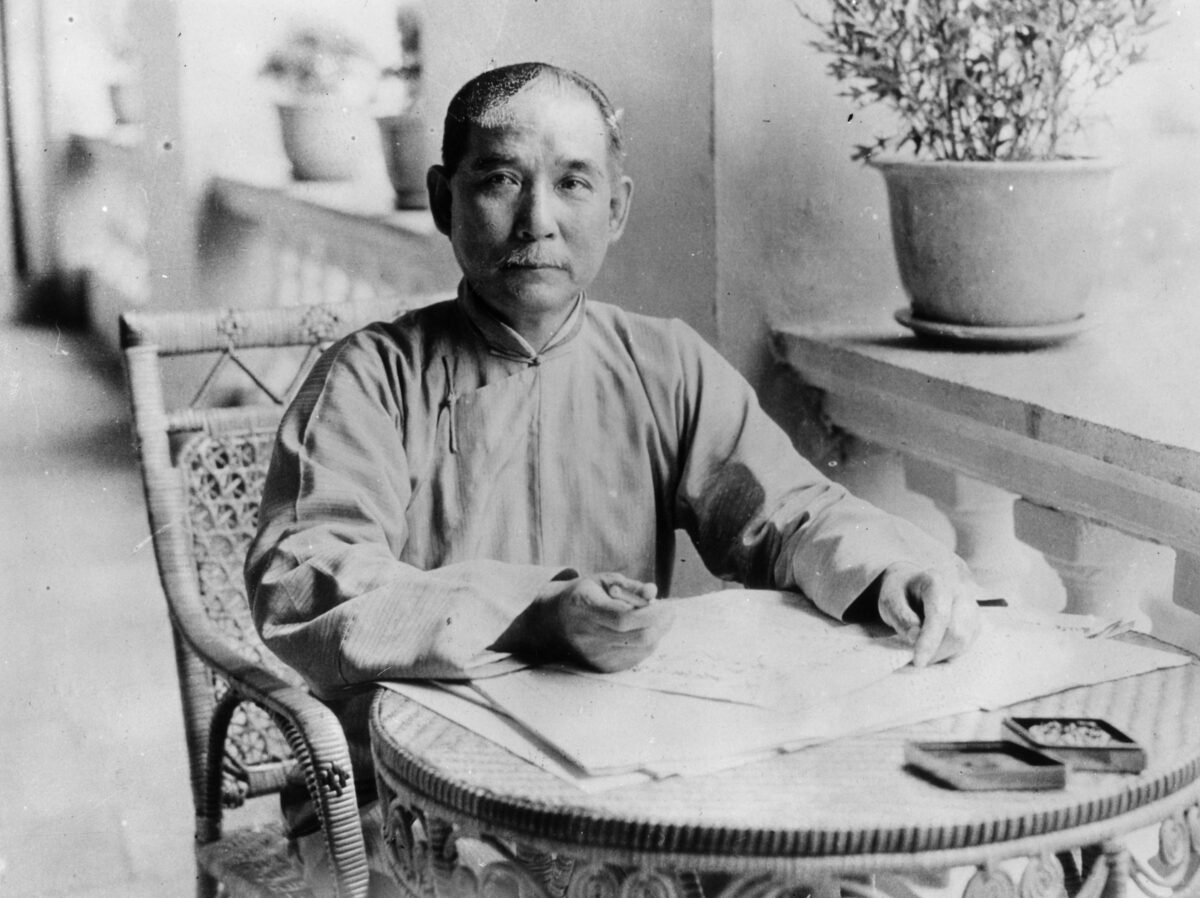
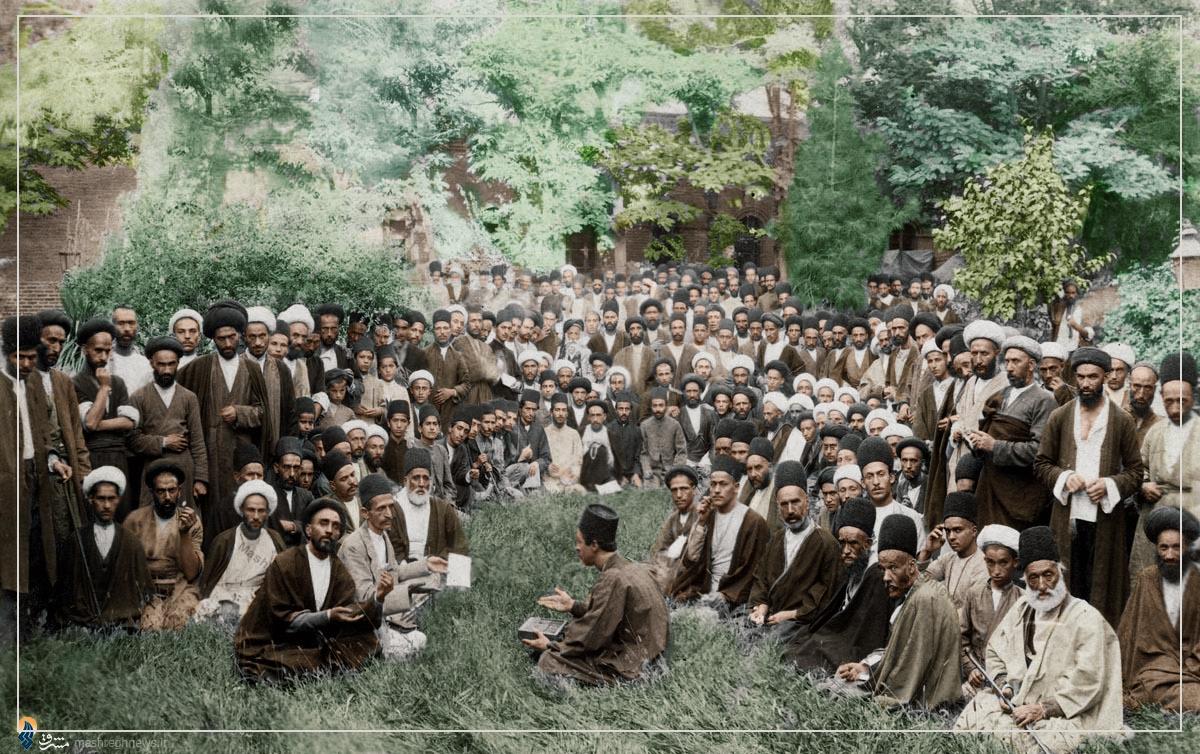
World War Civ 17a: The 1911 Chinese Revolution pt1

The Qing dynasty desperately tries a reform to stay in power while secret societies plot against them; intellectuals debate how to modernize China while Western imperialists keep pressuring China after crushing the Boxer Rebellion. Sun Yat Sen leads a movement for a republic and a revolutionary moment sparks in 1911. Part 1 of 2.

The last time the US tried to destroy China’s economy

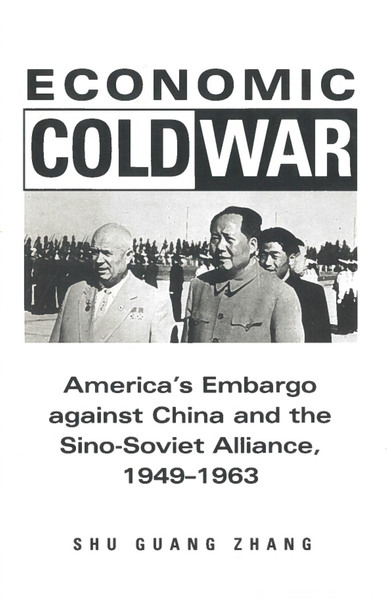
Reading Shu Guang Zhang (2001). Economic Cold War: America’s Embargo against China and the Sino-Soviet Alliance 1949-1963.

Shu Guang Zhang is a US-based academic of Chinese origin – when he wrote the book, a specialist in US history at the University of Maryland. The book is from 2001, when US-China relations looked pretty different than they do now (and different from how they looked during the period he’s writing about). For those reasons it deserves special attention, because you can see how much of what is happening now with the ever-expanding (and perhaps ever-less-effective) US sanctions regime already happened before.

From 1839 until the Chinese revolution succeeded in 1949, China was colonized and partitioned. At that time, the US policy towards China was called the “Open Door”: whatever other imperialists forced China to accept, the US also wanted. There would be no favored imperialist in China.

In the Chinese civil war that pit the Guomindang (Nationalists) against the Communist Party of China, the US bet on the Guomindang against the Communists until the very end.

But when the Communists won the US didn’t see a viable military option against China. Instead, they would have to wield the “economic weapon”, which they hoped would work just as well. In the State Department’s 1948 Policy Planning Staff assessment, China would be “plagued” by an “implacable population pressure” dragging their standard of living downward. Even if they got Russian help, Russia would see them as “a vast poor house, responsibility for which is to be avoided.” They would be desperate for trade and therefore vulnerable to the economic weapon. China was headed rapidly for economic disaster, and would soon come begging to the US. And when they did, the US would say no. Lewis Clark from the US embassy to China wrote to Secretary of State Dean Acheson in 1949: “How fatal for us to permit ourselves to be enticed into assisting the Communists in their desperate need only to discover too late that they wanted our help solely during the interim and until they could get along without us.”

The US had already set up a system of export controls against the Soviet Union: since 1947, the goal was to use export control to deprive the USSR of advanced technology. The US created List 1A of goods with military potential and List 1B of goods with indirect military potential. Anyone trying to send these goods to Russia would need licenses from the Department of Commerce – and the US worked closely with its Western to make sure this embargo held.

Wouldn’t that just drive China and the USSR together? That didn’t worry the US all that much in 1949. Edmund Clubb, US consul-general in Beijing, said if China went to Russia they would quickly “learn how profitless was dealing with the USSR.” Sanctions would force the Chinese to “learn the hard way that they cannot get along without the West.” The US consul-general in Shanghai figured it would “suit our purposes” if the “catastrophic economic situation here would prove a costly drain on Soviet economy, and Chinese Nationalism should make it a thankless task.” Meanwhile the US could “sit with dignity on the sidelines, not necessarily needling Communists, but denying them many things they want badly.”

When China intervened in the US war on Korea in 1950, US officials felt they couldn’t trade with enemies lest the materials they sent be used to “kill our boys.” “The massive Chinese aggression”, they told the British, “confirmed our anxieties and removed our hopes.” In December the US put all trade under control: “we license no goods whatever for export to Communist China, we prohibit our ships and planes from calling at its ports… and we have frozen Communist Chinese assets within the United States.” Truman also set out to “enlist the cooperation and support of other nations” in taking “such measures as are feasible to prevent the flow to countries supporting Communist imperialist aggression of those materials, goods, funds and services which would serve materially to aid their ability to carry on such aggression.”

The CIA suggested a naval blockade and “a campaign of aerial and naval bombardment against selected ports, industrial capacity and storage bases” to “create unemployment and unrest, hinder industrial production and development, and create serious administrative problems”. These ideas were dismissed as infeasible. The US also realized it couldn’t impose a total embargo against China because it would put too much pressure on its allies. Negotiating the multilateral embargo against China proved difficult, with Britain – doing business through its Hong Kong colony (which only became part of China in 1997) – finding itself unable to leave so much money on the table. Worse, Britain feared, too much of this and China might take Hong Kong back even earlier! The result was a Hong Kong compromise, which rendered the whole sanctions regime rather leaky. What a predicament: sanctions needed to pressure China clashed with Britain’s need to make money through its Hong Kong colony and risked an early decolonization.

On the Chinese side, Mao and the Communists realized they would need to rely on Soviet help “for the interim” as they tried to build their own industrial base. The Soviets of course had immense worries of their own, and the result was a tense relationship in which resentments built over time. The story of these resentments and how they grew into the deadly Sino-Soviet split is told in Economic Cold War, as are the economic planning measures that China took in this period. To focus on the sanctions, I won’t summarize either of those right now, as interesting as both are.

Back to the sanctions: China had to develop trade routes and networks with the Soviet Bloc and any other countries that refused to join the US sanctions regime. China also had to try to recover the assets and trade goods that the US stole: imports China had already paid for in hard currency that weren’t going to come, goods China had already sent away for which the payments would never come. Because the dollar was already the currency of international transactions, China also had to resort to trade in barter. This, too, caused resentment since China didn’t feel the USSR was giving them good terms on barter deals. It did, however, start China’s long experience in how to do substantial trade with third countries without using the US dollar.

By 1953, the US made a special assessment that concluded that China had made “rapid progress in economic reconstruction” and that the sanctions “have not appreciably affected the Chinese Communist regime’s ability to consolidate its political position.” Worse, China was exploiting sanctions “in domestic propaganda as an additional indication of the implacable hostility of the West.” How dare they! US allies, including even UK, France, Canada, etc., were increasingly less keen on a total embargo. But in the face of this assessment, Secretary of State Dulles made the perverse strategic calculation that “the best way to get a separation between the Soviet Union and Communist China is to keep pressure on Communist China and make its way difficult so long as it is in partnership with Soviet Russia.” The logic is flawed: pressuring two countries is far more likely to drive them together than apart, which is what happened repeatedly in the course of US-China-Russia relations.

When the Sino-Soviet split finally did happen at the end of the 1950s, the US of course didn’t help, but the agency for the split can only be located in China and Russia – this wasn’t a split engineered or masterminded by the US, but an accumulation of difficult issues between the two countries. A momentous event, but I don’t think an inevitable one or one that the US can count on to repeat itself. The US was eventually able to take advantage of the split, much to the benefit if its imperialist plans! These years too are a story for another time, and not this newsletter. Instead, let’s draw some lessons.

Studying this last episode of US-led economic warfare on China, what can we learn about what’s happening now? A few notes suggest themselves.

  • The US evaluated military and economic options and decided on the economic weapon because the military options seemed infeasible against China.

  • The US had difficulties cajoling its allies into taking economic and financial losses for the sake of punishing China.

  • China was able to develop and progress relying on its internal resources and on using trade methods that the US couldn’t reach (barter, trade with the Soviet Bloc, and the use of Hong Kong).

  • The Russia-China relationship fell apart on its own steam, and has dynamics independent of US desires or actions.

Which of these seem to still hold today? Which of these are subtly (or not subtly) different today? Here are some differences between that time and this one:

  • The US does not have the technological or economic advantages it had then.

  • The US doesn’t appear to have a viable military option but it might do it anyway (it might be an illusion but US Cold War planners seemed to have a slightly higher sense of self-preservation? Is that an illusion on my part?)

  • Russia and China seem to be getting along well – better perhaps even than they did in the early 1950s before the Sino-Soviet split!

That is it for now. I’ll be coming back to this book to talk about the split, the famine of 1958, and other things raised by it. Have a good weekend.

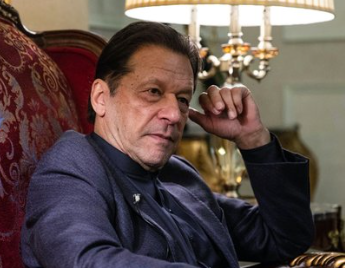
AER 127: Has Imran Khan lost the battle with Pakistan’s Army?

On May 9 2023 ousted president Imran Khan was detained by the Pakistan army, who were forced immediately to release him. But in the month since, the crackdown on protesters (and their families) has been so widespread, reaching 10,000 arrests, that Imran Khan’s movement appears exhausted. The repression may have worked, but how long can the army rule like this? Waqas Ahmed returns for an update on Pakistan.

Strunk and White is a bunch of humbug and so is George Orwell

Anglo-Saxon words aren’t better than Latin ones, shorter isn’t better than longer, monosyllables aren’t better than polysyllables…

Despite spending most of my life writing, I have never won any awards or accolades for writing and have no reason to think that I am an especially good writer.

I say this not because I’m fishing for you all to tell me that I am actually not a bad writer etc., but to tell you that despite writing being an obsession of mine in which I read many how-to write guides, produce the occasional one or two myself as well as try to deconstruct writing I consider good (or bad) to reverse-engineer results, reaching the exalted heights of the greatest writers… hasn’t happened for me yet.

Worse than that, though, is the fact that not all writing advice that is out there is good.

Which brings me to today’s topic.

In the past, I have been bamboozled by a mainstream of writing advice that has been propagating through these how-to-write guides for decades. So bamboozled that I even recommended two of the best-known ones to students. I regret those recommendations, because I have discovered there is a hidden racist thread in that writing advice that does not stand up to scientific scrutiny.

Some decades ago, I found out that apparently everyone interested in improving their English writing should read two things: a short book called The Elements of Style by Strunk and White, and an essay called “Politics and the English Language” by George Orwell. I did so. I passed the references on to my students. I edited work that writers trusted to me with Orwell and Strunk & White in my mind. And I edited my own work that way. The result? Wasted years during which my writing suffered, especially when I wrote for academic audiences who have no interest in Strunk, White, or Orwell. I wasn’t getting rejections because I was a bad student of writing, but because I was too good a student of Strunk & White and of Orwell.

Strunk and White, Orwell, and their predecessors produce writing advice in short, simple rules – modeling, of course, the advice they give writers. You may have seen them. Here are a few from E.B. White (of Strunk & White): Use active voice instead of passive. Use the positive form instead of the negative. Omit needless words.

Orwell will tell you to avoid dying metaphors, operators like “militate against”, pretentious diction (science words, adjectives, old words, foreign words). He says:

“(i) Never use a metaphor, simile or other figure of speech which you are used to seeing in print. (ii) Never use a long word where a short one will do. (iii) If it is possible to cut a word out, always cut it out. (iv) Never use the passive where you can use the active. (v) Never use a foreign phrase, a scientific word or a jargon word if you can think of an everyday English equivalent. (vi) Break any of these rules sooner than say anything barbarous.”

If you are a sincere student who reads these essays and tries to implement them as I did, your writing will suffer. So will your readers. Because these pieces of advice, presented as universal truths about the english language, are audience dependent at best, and useless at worst. They aren’t even guidelines that are good in most situations but bad in others. They are just White preferences (and Orwell preferences). What they like to see. The style they like to write in.

Telling writers to write short simple sentences with monosyllabic words is older than Orwell or White, who probably got their material from American businessman Robert Gunning’s 1944 book, The Technique of Clear Writing. He has 10 principles: 1. Keep sentences short. 2. Prefer the simple to the complex. 3. Prefer the familiar word. 4. Avoid unnecessary words. 5. Put action in your verbs. 6. Write like you talk. 7. Use terms your reader can picture. 8. Tie in with your reader’s experience. 9. Make full use of variety. 10. Write to express not impress.

Gunning provides a list of 3000 words writers should stick to and includes a quantitative set of “readability yardsticks” for writers to use. He recommends writing to what he calls a “sixth-grade level” and recommends a “fog index”, a formula that combines sentence length and percentage of polysyllabic words (similar to the Flesch Readability Score and other such indices). Charles Kay Ogden, author of a book called Uncontrolled Breeding, or Fecundity versus Civilization (1916), provided a list of 850 “Basic English” words to stick to for readability.

Gunning also cites Herbert Spencer’s book The Philosophy of Style, which explained that “a reader brings to your writing limited mental power.” Spencer spread philosophies beyond those of writing style: he was big on measuring skulls to determine intelligence and wrote pieces of English prose like this one: “The forces which are working out the great scheme of perfect happiness, taking no account of incidental suffering, exterminate such sections of mankind as stand in their way. … Be he human or be he brute – the hindrance must be got rid of.”

Since we’re talking about Herbert Spencer, it’s time to return to what I mentioned earlier: a racist strain running through too much of this English prose advice. It has to do with a 19th century obsession with the idea that pure Anglo-Saxon England was conquered by the Normans in medieval times and in addition to corrupting the pure vigorous Anglo-Saxon blood, the Normans corrupted the vigorous Anglo-Saxon language. This idea of getting back Anglo-Saxon racial purity through the use of short sentences filled with single-syllable words is explicit in the likes of Herbert Spencer and reproduced by White and Orwell etc., without acknowledging where the racialist passion for monosyllables comes from.

University of Chicago academic John Williams, in the 1995 writing book Style: Towards Clarity and Grace, talks about the Norman conquest and its effects on English – thankfully, without the racial nostalgia. Williams’s analysis is that because medieval English lacked words for translating and doing business and government, these words were imported from Latin and French. 16th century Renaissance scholars brought in Greek and Latin for classical texts. The result is that 80% of daily words come from Anglo-Saxon, while in more technical fields, there are more French- and Latin-origin words. The result: Depending on what you’re writing about, it could simply be impossible to choose the single-syllable Anglo-Saxon word, which might not exist. As Williams quotes “there ys many wordes in Latyn that we have no propre Englysh accordynge thereto”.

In addition to racialist nostalgia, these style guides bring to the writer the advice given to every sales force: pander. But pandering ignores one of the main reasons that readers read: to learn new things, including new words! When I read, I look for writing that has as much new (to me) material in it as I can handle without getting overwhelmed. New words, new ideas, new combinations. I don’t pick up a book looking to read the same 850 words in the shortest possible sentences.

Anyway you can do propaganda in small words and short sentences just as well as you can in big words and long sentences (maybe better). Orwell inverts this reality in his “Politics and the English Language”, arguing that “plain english” is inherently less deceptive. “Bad writers… are nearly always haunted by the notion that Latin or Greek words are grander than Saxon ones,” he says. But this isn’t true. It took Trump’s mastery of plain english for liberals to take notice, but they eventually did.

If you’re not pandering and you’re not trying to recapture teutonic vigor the better to help your superior race rule the whole world, then all of the White-Orwell rules go out the window. Short words aren’t better than long ones. Short sentences aren’t better than long ones. Anglo-Saxon words aren’t better than Latin ones. Language is an infinitely creative system endowed to us by miraculous accidents of evolution over millions of years. How degrading to confine ourselves to 850 short words!

No, writing is a relationship between people. A social relation. To be meaningful, advice about writing is advice about this relation. You can be cynical about it and follow University of Chicago writing centre director Larry McEnerney, who tells graduate students

that the writer’s job is to solve a problem for the people with power in their field. You can follow Virginia Tufte and reverse-engineer hundreds of sentences to see what makes them good. The way I think about writing now is as a research phase where you find the resources you need, a first draft phase where, as McEnerney advises, you actually use the writing of the first draft to figure out what you think, and a revision phase where you rewrite the whole thing with your reader in mind.

Instead of thinking of writers as pretentious Latins who don’t use enough simple vigorous Anglo-Saxon words, think about writers as working to reach specific readers with their language. Then you will understand more about how propaganda works than Orwell wanted you to. When the New York Times says that a missile “finds” cafe patrons watching soccer, that’s not because they’re too stupid to use the active voice: it’s because they are connecting with NYT readers, who want to know what is happening in Israel/Palestine in a way that is palatable to their pro-apartheid commitments. Thinking of this as bad writing by stupid writers leads to feelings of smug superiority. That’s fine where Orwell lives but it’s a luxury we (ie., the anti-apartheid side in this case) cannot afford. Time to dump Strunk, White, and Orwell.

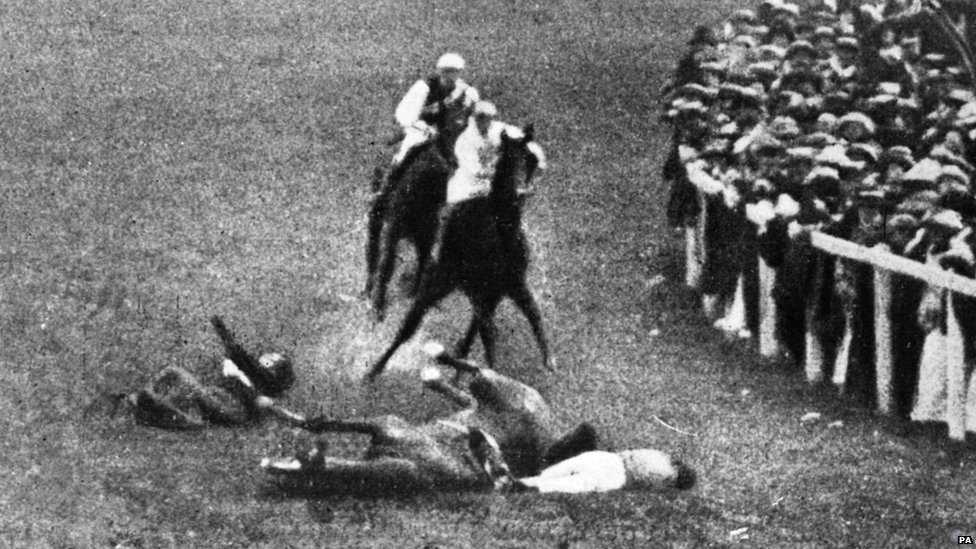
World War Civ 15: Sufragettes and Pacifists

“Deeds Not Words!” was the slogan of the militant sufragettes who fought for the vote. We get into some of their dramatic acts and some of the reasonings of their leaders – which are not always discussed in their full detail today. Also the (non-socialist) part of the pacifist movement – a crowd the socialists were not impressed with. Could an alliance have prevented the Great War? This and other questions in this episode.

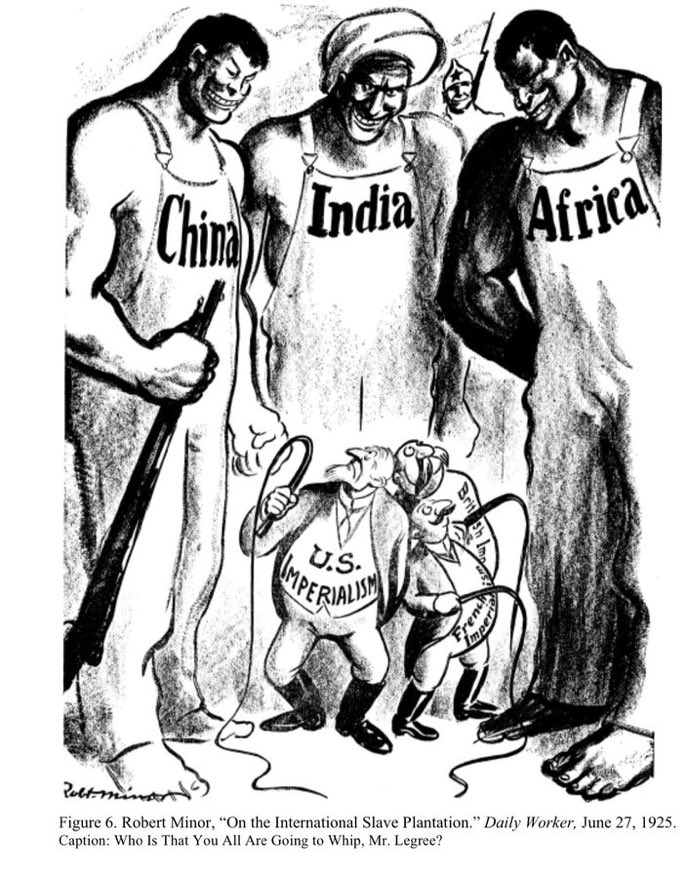
AER 126: Multipolarity? Schmultipolarity! A debate with Sam Gindin

Sam Gindin and Justin Podur, moderated with fairness and balance by Nora Barrows-Friedman, debate the proposition that the world is becoming multipolar as US hegemony declines. We clash over capitalism, colonialism, and the history of the past few centuries; as well as over the meaning of the Russia/Ukraine war and the relative power of Chinese billionaires. If you listen through to the end, leave a review on the podcast app saying who won.

The Mexican Revolution pt4: Schemes of the Great Powers

While the Mexican Revolutionaries fought for the land, the Great Powers tried to pick the winner. Germany and Britain, Japan and of course the US, all schemed and intrigued. We talk about the Kaiser’s offer of Arizona, Texas, and New Mexico to Carranza and why Carranza didn’t want them; why Japan thought German proposals “simply insane”; why Britain mostly just wanted the oil; and how Wilson’s sending Pershing in to catch Pancho Villa led to Pancho Villa’s force growing from 500 to 10,000 men. The short coda to end our series on the Mexican Revolution.

AER 125: Maori Sovereignty or Death!

The New Zealand Parliament Protest inspired by Canada’s Trucker Convoy and with similarly hard-to-read politics; the continuing urgency of Maori sovereignty; An in-depth discussion of Donna Awatere’s extraordinary 1984 text, Maori Sovereignty; the connection between Chile and New Zealand; and a history of the Maori struggle since colonialism. With Simon Barber, Gabriella Brayne, and Arama Rata.