A hundred years ago one writer identified antiwar work as a difficult and lengthy business
It feels intolerable to realize how many of our neighbors are genocidal racists. How many others are indifferent and unmoved. How commerce and trade and normal relations can go on while genocide is ongoing. Our minds are repelled. We’re emotional wrecks alternating between panic, guilt, rage, and helplessness.
From this place we write our laments.
The world has failed.
We have allowed this to happen.
We are cowards.
These are our human reactions.
The lament is necessary to feel the futility of appeals to our elites who are more rotten than we could have imagined; to feel the futility of appeals to laws that are on the books but that depend on these same rotten, racist elites for enforcement. When we tell ourselves that we have allowed this to happen because we are cowards, we are challenging our own courage.
How could we not? We share the world with people in Yemen who have said that they will support Gaza even if the sky falls; we share the world with Aaron Bushnell and a growing number of political prisoners. The people of Lebanon had their villages destroyed, thousands killed. The people of Palestine are struggling against a whole West bent on exterminating them. Are we doing enough? It’s a good question, a just question.
But, my anti-genocide friends, we have to focus!
We have to accept the reality we are in. We can’t afford illusions about power we don’t have. We aren’t allowing this to happen: we lack the power to stop it.
We aren’t allowing this to happen: we lack the power to stop it.
The genocide is indeed facilitated by mass Western racism and mass global cowardice. The genocidals have indeed created a world system of legal impotence and racist indifference to their use of unlimited violence. Everything is permitted to them. They repeat lies that even they don’t believe as a way to signal their affiliation to one another, and to show us that they can say and do what they want and there’s nothing we can do about it. It’s incorrect to believe them. But it’s equally incorrect to believe that we can stop them with a shrug.
Many of us do have courage (see Palestine Action) but a small number of extremely courageous acts cannot turn this around. If millions reached that level of consciousness and of action, the genocide would quickly end. The actionists are at one extreme of courage. Risk-free support for fundraisers, awareness-raising, and boycotting are at the other with demonstrating in the middle, we need all of this. Not a few people doing everything, but more people doing more. Focus on that equation: More people all the time, each with a bit more courage all the time.
About 100 years ago one anti-war writer wrote that “the struggle against a centralized state’s powerful terrorist military organization is a difficult and lengthy business.” At the time, that writer argued that leaders of the movement needed to “express themselves in favor of the defeat of their own governments”, to “set up an international apparatus for the purpose of carrying on propaganda”, “organize the publication of illegal literature on the necessity of starting revolutionary activities.” He concluded “we cannot tell whether a powerful revolutionary movement will develop immediately after this war or during it,” but the only worthy thing to do was to “work in this direction.”*
In the Thorn and the Carnation, Yahya Sinwar’s characters organize for struggle while going in and out of prison, under surveillance and torture. These characters have a matter-of-fact attitude about all of it. They debate strategy and principle, they take risks at times and act with caution at others. What you won’t see them doing is lament the indifference of the world or call themselves cowards.
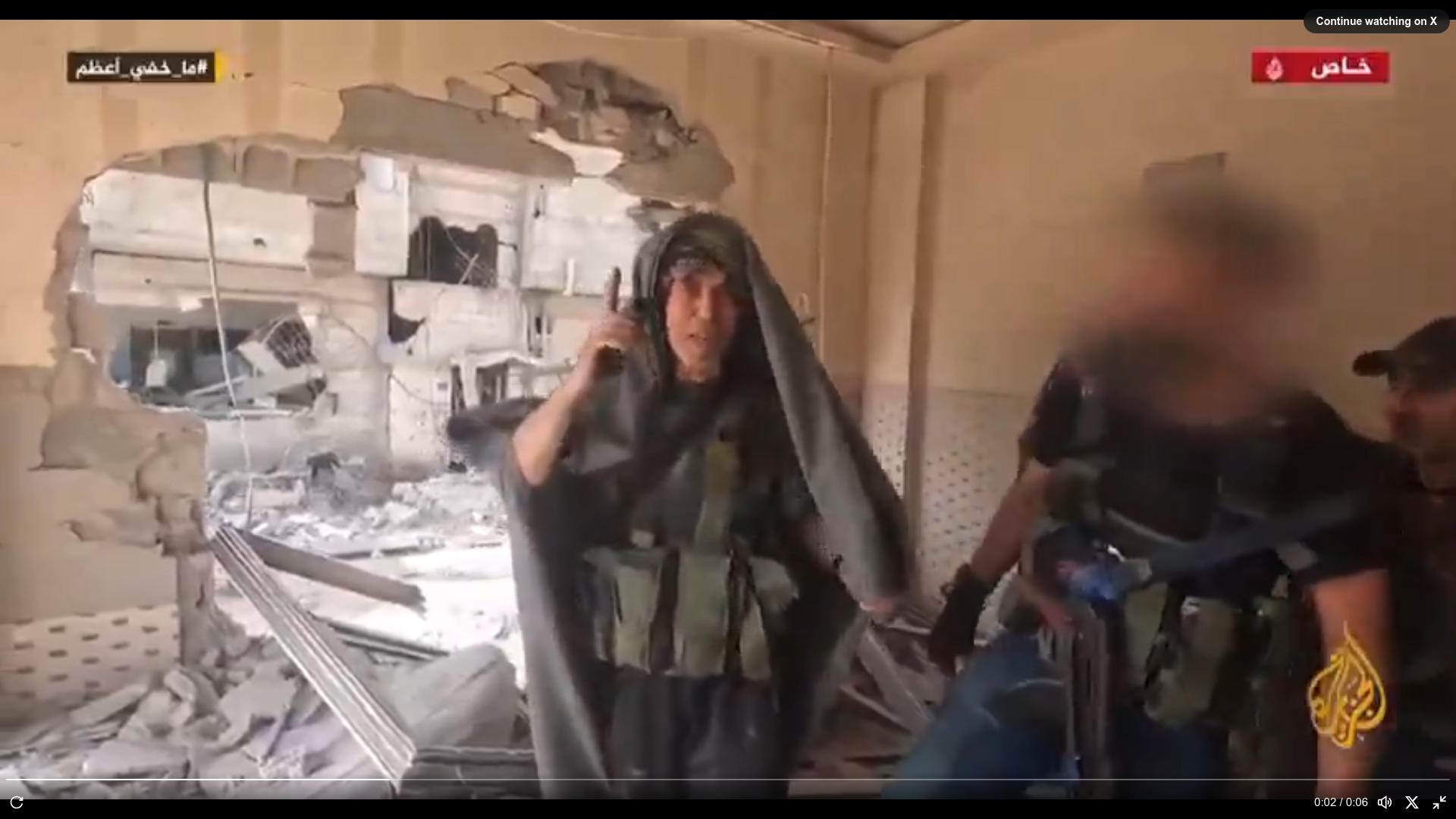
Sinwar tells the camera that every bloodied hand knocks at the door of freedom
We have the world we have. Take a moment to lament it. Then take back your anti-genocide focus.
Another instalment of fiction about justice after the genocide
[Dear readers: The genocide has started again and I will be returning to reporting on it. But here is a story I’d been working on earlier that I need to get out there first. After writing the Hodeidah Tribunal, I wondered about what justice would entail for the media incitements that have been so visible throughout this genocide. This story deals with the less clear-cut cases of media figures who laundered the genocide by claiming either balance or even anti-genocide credentials while returning the debate to genocider talking points…]
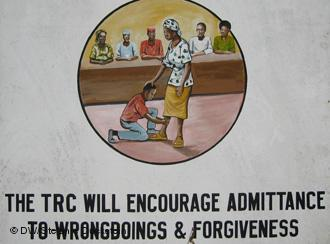
Graphic from South Africa’s TRC
Towards the end of the revolution, the National Revolutionary Authority of North America (NRA-NA) issued a declaration, called the Declaration to Social Media (DSM), that outlined some of the genocidal crimes they would punish upon arrival in power. The DSM was a warning to media figures and social media users to stop their incitement to genocide, for there would be consequences for these incitements. Written in a moment of revolutionary enthusiasm, its legal consequences had to be developed by a number of legally trained revolutionaries after the victory. Sushil was a veteran revolutionary lawyer, and had been defense counsel for many of the NRA revolutionaries since the early days. He was trusted, known, and he knew the law. The leadership collective had invited him to help them develop the document.
The initial DSM had been a very simple list of crimes.
DECLARATION TO MEDIA AND SOCIAL MEDIA ON INCITEMENT TO GENOCIDE
The National Revolutionary Authority declares the following to be crimes that will be punishable by law:
SECTION 1: INCITEMENT TO GENOCIDE
The following acts on social media or media will be considered punishable incitement to genocide:
1.1 – Atrocity Propaganda. Posting or stating lies about atrocity crimes, by the victims, while the genocide against them goes on, will be punishable.
1.2 – Willful or Pretended Ignorance. Media figures or officials who pretend to be, or speak publicly while actually unaware of well-documented and ongoing genocidal crimes or statements, are considered offenders and will be punished.
1.3 – Excusing Genocide. Labeling the victims as “terrorists” or any use of the doctrine that genocide, civilian murder, or destruction of civilian infrastructure is justified because “terorists” are “embedded among civilians”, will be punishable.
When Sushil had begun to study the declaration, he fretted as he tended to do, because Sections 1.1 through 1.3, while precise, encompassed so many acts by so many social media influencers, NGO actors, politicians, and media spokespeople, that it would be impossible to punish them all except by turning the entire revolutionary bureaucracy towards the sole purpose of punishing the complicit. What to do?
Sushil knew that the worst actors could be deported to the Hodeidah Tribunal, but the sentences there were long and even capital punishment was possible under those clauses. Back here, though, the NRA-AN (pronounced “niraan”) had the challenging task of separating the worst actors from the mere social participants, the big genociders from the small.
Having studied it more carefully than most, Sushil had never been fooled by Rwanda’s post-genocide Gacaca court system (1), but the system’s stated principles made sense. People accused of participation in genocide were compelled to face the community and tell their truth, which would be corroborated or disputed by community members at the trial.
Gacaca had been designed for a country of a thousand villages. Sushil had to adapt it for the online community. Instead of an outdoor meeting at picnic tables in a field in the village, the DSM trials would have to take place online, publicly, on the web. The South African Truth and Reconciliation Commission (TRC) had been televised. The DSM trials would be livestreamed. But like Gacaca and the South African TRC, physical custody of the offenders was necessary.
For today’s trial, the offender was brought into a studio in his usual suit and made to sit in a witness box with a camera before him.
Gorman had been a television commentator his whole career, and he’d be allowed to tell his truth in his own element: live to the web. He sat with his chin forward, in a posture familiar to his millions of online viewers.
Gorman’s arrest hadn’t been difficult to effect. NRA agents had an easy time apprehending most of the people they wanted for these trials. Anonymity is hard enough to achieve for anyone: The life of a social media influencer is fundamentally incompatible with good security practices. Gorman was no man of action either. The agents had come to his door, and walked him into custody. He’d been interrogated and debriefed by one of the Hodeidah Tribunal prosecutors, who’d evidently gotten whatever she needed from him. He’d asked if he could be suited and appropriately powdered for his DSM trial, and Sushil had granted the request.
Now Gorman sat looking comfortable – imperious even – in the box, and it was Sushil’s turn. No stranger to grandstanding in the courtroom, Sushil was nonetheless uncomfortable and nervous. Precedents were being set, and this hybrid between a court and a television program was halfway between his world and Gorman’s. That was, after all, why Sushil had designed the trial to work the way that it was going to.
“Mr. Gorman, you are here today before us to tell your truth, after which we will decide whether you will be deported to Hodeidah for the trial of major media genociders or whether you will be able to be reintegrated into the community. Do you understand the process and what is at stake here?’
“I do,” Gorman said, “– and I’d just like to say that –”
Sushil held his hand up and Gorman’s microphone was immediately cut. “No, Mr. Gorman, not yet. When it comes time you will be able to speak freely about your truth, but not before. Thank you for telling us all that you understand the process and its possible outcomes. Now please, in a single yes or no answer, will you answer all of our questions truthfully?”
Gorman moved his mouth without sound several times before finally squeezing out, “yes.”
Sushil was the closest thing to a judge at these proceedings, Gorman the defendant. Both looked to the jury: a group of anti-genocide media figures, including many who had been harangued on Gorman’s show, some of whom had been arrested, had devices seized, homes raided, deported for their media work. A couple of journalists who had survived the genocide in Gaza and Lebanon were present as well, and a few who had simply entered a lottery for the chance to be in the audience during any DSM trial. Some thirty in all, they radiated an expectant and contemptuous energy in Gorman’s direction, reminding Sushil again of the care he needed to take to give this trial the gravity it deserved, despite the somewhat ridiculous figure Gorman cut.
Sushil began abruptly: “First of all, Mr. Gorman, I have to ask: do you condemn the genocide?”
Gorman had been expecting this one. “I have always maintained that Israel was excessive in its response, and I have held Israeli officials accountable and asked them what they thought was a proportional response.”
Sushil replied: “But do you condemn the genocide? Do you condemn Israel?”
“I don’t agree that it was a genocide,” Gorman said. “I think it was self-defense, but I think at times, it was disproportionate.”
Sushil got his pen, made a note of the exact time, wrote it down, and wrote next to the timestamp: 1.3. Excusing Genocide.
“So you don’t condemn Israel then,” Sushil said.
“You’re not going to get me to make a blanket condemnation, I think any state would have to defend itself after a horrendous terrorist attack like the one of October 7th.”
Sushil looked at the time again, wrote it down, and next to it: 1.1. Atrocity Propaganda.
Sushil said: “I’m glad you said that, actually. In your program you repeated lies about October 7th, for which there was no evidence, even implying that you had yourself seen videos of rapes or beheadings, allegations for which no evidence existed. Do you admit that you were lying?”
Gorman said: “I never lied. I said there were atrocities recorded on GoPros and reports of rapes.”
Sushil wrote the timestamp again next to his 1.1. Atrocity Propaganda.
He said: “So you don’t admit these were lies and you continue to claim there was evidence for these atrocities even though you haven’t seen them yourself? Or do you claim to have seen them yourself.”
Gorman said: “Now hang on, because now you’re not letting me respond –”
Sushil interrupted. “– It’s a simple question,” he said. Sushil looked at the audience, and as he suspected, some were enjoying watching Gorman on the receiving end of constant interruption and harangue. “… and it sounds like you’re not going to answer it. So, you’re refusing to admit you lied and you’re avoiding answering the fact that you repeatedly said things that suggested you’d seen evidence you in fact never saw.”
Gorman replied: “I never lied, you’re not going to get me to say I lied no matter how much you interrupt me.”
Sushil paced toward the audience, then turned back on Gorman. “Another question, then. On your show, one of your guests told you about the murder of Hind Rajab, a little girl who was killed with her family in a car while crying for help, and the medics who came to rescue her also were murdered. The same guest told you about a mother who was killed trying to save her son. The guest had just seen videos of these murders. Do you remember?”
Gorman said: “I said I hadn’t seen those particular videos.”
Sushil said: “Have you seen them now?”
Gorman said nothing.
Sushil wrote the time, and wrote down: 1.2. Pretended Ignorance. He continued the questioning until he had accumulated a long record of admitted violations of most of the articles of the DSM.
“I believe we have heard enough,” he said. “Mr. Gorman, your incitement to genocide has been so thoroughgoing, so systematic, and so influential, to such a large audience over the whole period of the genocide, that it shocks the conscience of this court and of the world. You have engaged in atrocity propaganda, in willful ignorance, and of excusing genocide, right here in this court before us and before the livestream audience watching these proceedings. I see no choice,” Sushil said, “but to have you remanded to the Hodeidah Tribunal for a full trial as one of the principal defendants in the media trial.”
“But wait!” Gorman said. “I gave voice to many of you people on my show. I put hard questions to Israeli officials on my show. I have been much more even handed than so many in the media. How could you punish me?”
“I would leave that for the Hodeidah judges to decide,” Sushil said, “but for the benefit of those listening now and for the court’s records, I will say that your phony debate format was transparently stacked in favor of the genociders, and even when the anti-genocide side got a zinger or two in, your own genocidal bias and the destructive effect of your program were apparent to all right-thinking people.” Sushil turned to the NRA agents. “Take him away to get him ready for deportation.” Looking at the cameras, he said: “This session is over for now.”
In the back offices of the studio, he found one of the trial lawyers from the Hodeidah Tribunal waiting for him. He put his hand to his chest and bowed modestly, and she slid a file to him across the table.
“This file,” Wardah said, “is a challenge.”
Sushil sat down with a sinking feeling. He knew who she meant before even looking. As he rifled through the gathered transcripts, his ambivalence only grew.
“My inclination was to just leave this one alone,” he said.
“Ours too. But then…”
“What changed?” Sushil asked.
“He turned himself in.”
It was another debater. To Sushil’s reading, the energetic Ghassan had developed a following over years with a skill of being quick on his feet and a knack for sounding principled even while being slippery when it mattered. He was proud of himself for being pilloried by all sides – that, to Ghassan, was a sign that he was on the right track. Both pro- and anti-genocide people thought he was wrong – to Ghassan, this indicated that he was a teller of uncomfortable truths. Everyone on the anti-genocide coalition had watched him: some enjoying his one-liners, others in disgust of his half-truths, and still others watched him as a bellwether: his positions indicated where public opinion was headed, what it was safe to say out loud at any given moment.
But things started to change for Ghassan when the tide of the war turned decisively. He was on tour with his book, a memoir of his hardest-hitting debates and the importance of free speech, when an audience member asked him if he regretted repeating genocidal talking points. He had answered with his usual speed and vigor, but the disgust and disappointment in her face had stayed with him. He was never a man used to adulation, he just didn’t bring that out in people, but his self image included the belief that he was a man of principle. The questioner had shaken him. Then it happened again, at the next venue. And again. One evening the audience seemed to be full of people who hated him. One had asked: “Why aren’t you on trial?” And the next time, almost no one was there.
He was a decisive man, and so he decided to resolve this problem the same way he’d lived his life: through a public debate. He had turned himself in to the revolutionary authorities and thrown himself on their justice. He wanted to have his day in court. He would speak his truth.
Sushil said, “it sounds like you don’t want him, and we don’t want him. He’s a good debater and fast on his feet, comfortable in the online environment and likely to question our credibility. Will it hurt our cause for him to be tried?”
Wardah gave an unworried look. “I have confidence in the system we have set up. Ghassan wants to speak? Let him speak.”
The cameras and bright lights on him once again, Sushil called Ghassan to the stand.
Ghassan strode confidently forward, unescorted by court officials. The audience reaction was mixed. Some applauded, others watched in cold silence. Opponents of the genocide uniformly hated Gorman, but opinion on Ghassan had always been divided.
He knew how to play to the crowd though. Sushil sat down without a further word and Ghassan walked slowly to the exact right spot for visibility to the most people and the camera.
“Have a seat, Ghassan.” Sushil said. “The court is to decide on what to do with you.”
Ghassan cleared his throat. “That is why I asked to be here today. To start with, I’d like to clarify that I’ve been vocally against this genocide from the very beginning. I’ve always been pro-Palestine!”
Sushil paused for a moment. “While your own crimes were not nearly on the level of Mr. Gorman, you also have engaged in atrocity propaganda. You’ve minimized the genocide by comparing it to situations that are not comparable. You’ve campaigned electorally for genocide perpetrators, arguing that voters set the genocide aside since both sides were genociders.”
Ghassan, composed, replied: “It’s morally consistent to oppose barbarism, war, and occupation no matter who does it. The fact that you and your court are now allied with some unsavory powers isn’t going to silence me.”
Sushil said: “Thank you for mentioning that. As you know, this court has several options short of remanding suspects to Hodeidah for trial. According to the Hodeidah authorities, your case falls below the threshold for the major media criminals, people like Gorman or people who actually provided targets for assassination.”
“Well I’m glad to hear that at least you understand that,” Ghassan said.
Sushil replied: “But you contributed in your own way to the vilification of the resistance and to the perpetuation of falsehoods.”
“I disagree,” Ghassan said.
Sushil continued as if Ghassan hadn’t spoken. “You built a following taking pro-Palestine positions, but you also smeared the movement alleging that Muslims en masse were anti-Semitic.”
“That’s just dealing with uncomfortable truths,” Ghassan said.
“You’ve also never addressed the facts of the Resistance’s conduct of the war, and have deferred to the accounts presented by the pro-genocide forces of what happened.”
“That is how you win debates, sir,” Ghassan said. “You show that your opponent’s logic is incorrect even if what they’re saying is true.”
“No, Ghassan. The facts matter,” Sushil said. “I won’t rebut you point by point. Go ahead and take ten minutes and say everything that you want to say.”
Ghassan looked solemnly at the camera, and at the crowd, and entered into the record a passionate defense of himself and his conduct during the genocide. Knowing that his reactions were being filmed, Sushil practiced keeping his face neutral and willed himself to not shake his head involuntarily with every point.
“Is that all?” Sushil said, when Ghassan stopped.
“Not quite,” Ghassan said, and went on for another ten minutes. “Now I’m finished,” he said.
“Let’s take a break and let the jury deliberate,” Sushil said.
When they returned, Sushil said only: “Let’s hear from the jury.”
The head of the jury stood up, one of the journalists from Gaza who had managed to survive the genocide, and cleared her throat: “For justice to be served, the punishment has to fit the crime. In your case, the jury believes that most of the infractions you have committed have been committed in the search for attention. And so, the punishment is a five-year period of cancellation. You will not be allowed on any live streams, prerecorded videos, television appearances, posts, or opinion columns. No one in the world will know your opinion for a period of five years. The jury recommends that you spend that time reading and learning things you don’t know.” She sat down, composed.
“But,” Ghassan said, appealing to Sushil, “if the goal is for me to learn, I learn best through the cut-and-thrust of intellectual debate.”
“Not this time,” Sushil said. “This time you’re going to have to be humble and learn by listening, not talking.”
“You know,” Ghassan thrust back, working himself into the quick-witted, quick-replying mode that everyone knew so well, “this government’s detractors will say that you’ve set up another totalitarian system and that the so-called revolution is just imitating the anti-freedom policies of your Chinese, Russian, and Iranian sponsors.”
“They might say that,” Sushil said. “But that won’t stop justice.”
Ghassan switched to a pleading mode: “But… five years. Surely that’s excessive? Disproportionate?”
Sushil looked to the audience. “Should we revisit in a year?” The court staff arranged a poll to the livestream, and the audience voted by a majority to meet with Ghassan in a year’s time. “Spend a year. Read. Write. Contribute something to society that isn’t your opinion. And we’ll talk to you then and see whether you have something worth listening to and maybe we’ll shorten your sentence. Until then, though, Ghassan, you are cancelled.”
The bailiffs didn’t touch Ghassan, but walked on either side of him out of the studio. “This isn’t the last you’ve heard from me!” he said.
“It literally is,” Sushil said. And thought: At least for a year.
Notes
To understand why Sushil feels this way, it’s unfortunately necessary to read a great deal. The book America’s Wars on Democracy in Rwanda and the DR Congo covers the main points. To get into it here would be a distraction.
When America sends the National Endowment for Democracy, the National Democratic Institute, and the International Republican Institute abroad, they are teaching the rest of the world the best political system invented so far, the worst one except for all the others as Churchill said, the system at the end of history as Fukuyama declared, the system that peoples around the globe fought and bled for, multiparty democracy.
Ideally, two-party democracy, so that people have a choice, but not too much choice.
Never mind that rather undemocratic means can be used to keep other parties out of the game; or that begging rich people for campaign money is the principal activity of American politicians; or that politicians do not do what they promised; or that decisions like investment, pricing, money supply, energy and military planning are either jointly private-public or entirely private matters outside of democratic control.
There’s a jest in the East that in the Chinese system you can change the policy but not the party, while in America you can change the party but not policy.
This is another thing the genocide should have taught us. After an American election season where both parties promised enthusiastically to continue the genocide of Palestinians, while in other Western countries parties compete to show the most fealty to the genocidal state, Western electorates have never been more helpless. Given the opportunity to change the party, they’ll change the party. But it makes no difference.
In the Global South, elections often matter. They’re high stakes affairs for several reasons. First, a real alternative might get into office and engage in actual wealth redistribution, land reform, or measures towards economic sovereignty. Second, if voters dare to vote for such an alternative the country will face US-backed coups, sanctions, and sabotage.
In the West, though, democracies are more mature. The most important policies won’t be changed through something as capricious as the public will. Americans who want Medicare For All, for their police to kill fewer of them each year, or simply an end to the genocide, can’t vote those in. The notion of asking the public to vote on regime change, covert wars, or overt ones, in Eastern Europe or West Asia – is even more ridiculous.
Analytical energy is being wasted on what the Biden administration is trying to do before Trump comes in, or how Trump might want to take on the deep state but for now he has to bide his time, or in Canada how hapless the liberal leader is and how prime ministerial the conservative candidate looked in the latest podcast video with an immensely popular, totally conventional pro-Israel commentator who is of course portrayed as an outsider and maverick.
In the West, these frothy shows known as elections are of tremendous value to the corporate interests and owners of private fortunes that decide whether the masses of the Global South will have peace or genocide, whether the masses of the Global North will have public health care and education or crumbling infrastructure. To name a few of these benefits:
Elections channel nearly all the mass energy for change into the false hope of change, stabilizing corporate rule and hiding it behind the scenes.
The media / social media spectacle employs otherwise idle journalists, professionals, and political operators, while circulating and laundering billions of dollars.
It’s a huge distraction and diversion of attention, pre-empting the possibility of large numbers of people working – or even strategizing about what it would actually take – to change policies.
The belief that established Western political parties offer meaningful differences in policy from one another has taken different forms.
Advocates of lesser-evilism admit that the differences between what parties do in power are actually very small, but argue that these small differences matter and so it’s important to go and vote for the lesser evil.
Advocates of strategic voting argue that you need not like a party or candidate but that you should vote for them anyway to fulfill some broader strategic objective, which is usually blocking the party you don’t like from coming to power.
I propose subsuming these variants and coining the word, partyism, for any form of the belief that Western political parties are meaningfully different on important policy matters. Partyism can never be disproven, since we could never know what the loser would have done had the winner not won. We could only ever speculate. But circumstantial evidence against partyism is presented every time a party betrays their electoral promises – something that does happen from time to time, though notably, neither Harris nor Trump were willing even to make a promise to end the genocide that they could later renege on.
Instead of falling into the partyist trap, look at a country’s billionaires, the statements by the chambers of commerce, the policies advocated for the country in America’s business newspapers (regardless of which country you’re in). Political scientists Martin Gilens and Benjamin Page have done a big study twenty years ago and another ten years ago to show that politicians listen to the rich, not to you.
In his novel, The Thorn and the Carnation, Yahya Sinwar’s character Ibrahim challenged his cousin Mahmoud, who said the Palestinians had to surrender lest they be wiped out entirely.
In his novel, The Thorn and the Carnation, Yahya Sinwar’s character Ibrahim challenged his cousin Mahmoud, who said the Palestinians had to surrender lest they be wiped out entirely. Ibrahim said no, they cannot wipe us out, because they are governed by many equations. Mahmoud’s defeatism was always on the wrong track because the Israelis don’t accept surrender. After 2024 it seems Ibrahim was also mistaken about the equations.
Israelis were probably surprised as everyone else that they have been permitted to run this open-ended genocide. In the past, they’ve behaved as if constrained by things that didn’t turn out to constrain them in 2024. Let’s make a list so we can go into 2025 without illusions about the world we live in.
We can divide our list into non-constraints and partial constraints that may just not have reached an effective level.
Non-constraints first. Israelis are not constrained by any of the following:
Israeli society. The Western conscience. Israeli society began this year irredeemably genocidal and racist and has descended into worse condition every single day. They are actively demonstrating in favor of starvation and masses of them watch footage of Palestinians dying for pleasure. Western elites support all this with equal racist enthusiasm.
Hostage families. The families of the Israeli captives that actually want a prisoner exchange have been crushed by the weight of Israeli society and have no leverage over their government. There are also families of Israeli captives that campaign against a prisoner exchange. Israel’s plan is to kill all the hostages in order to continue the genocide. They will not be stopped by the captives’ families.
The American Jewish Diaspora. In 2024, there were some high-profile protests by Jewish Americans against what Israel is doing. But the majority of the Jewish diaspora supports Israel including while Israel is conducting genocide. https://www.ajc.org/news/survey2024. Predictions made by, e.g., Norman Finkelstein in his 2011 book A Farewell to Israel, that there would be a split between Israel and the Jewish diaspora, have proven incorrect.
Widespread information and Western public opinion. I’m old enough to remember when millions marched against the forthcoming invasion of Iraq in February 2003. The New York Times labeled us the “second superpower”, global public opinion. I had the feeling at the time that it was some kind of taunt, but was naive enough at the time to believe that the cost of the war would be too high and that if the US had wanted to invade and occupy Iraq they would have done it 12 years before in 1991. It seems I’ve been fooled by this type of delay many times now (believing for example that if HTS couldn’t take Syria in 2019 they couldn’t do it in 2024; or that if Israel couldn’t succeed in Lebanon in 2006 that they wouldn’t try in 2024…) In any case 2024 has shown yet again that global public opinion is no superpower.
American voting. The American electoral system worked to effectively exclude any third anti-genocide party and ensured that all candidates of both parties were genocidal. Pro-genocide forces boast openly about how anti-genocide voters have no option and how America will support Israel no matter what. The Israeli leader gets more standing ovations than any American could dream of. There will be no voting out the genociders.
American activism. Professional pro-genocide organizations have devoted enormous resources over decades to making anti-genocide organizing on campuses and elsewhere exceptionally difficult. The student encampments that brought hope of a new movement were dismantled by immense police violence in 2024. The election revealed the worthlessness of trying to pressure politicians through protest or petition. America’s genocide is well insulated from the mechanisms of civic action and activism.
The Arab street. It was believed, out of fear that the masses might revolt and destabilize them, that Arab regimes like Egypt, Jordan, Saudi Arabia and others wouldn’t dare support Israel while Israel was genociding the Palestinians. There were some demonstrations in Jordan at various times in 2023 and 2024 in solidarity, but these were crushed and their organizers jailed. In Egypt, the people live in fear of the regime. Israel might just try to overthrow Egypt in 2025, to try to displace the Palestinians into the Sinai desert for Israel to kill there in an Israeli-reoccupied Sinai peninsula – or try the equivalent in the West Bank, removing a supportive regime in favor of direct occupation and ethnic cleansing. Even the Palestinian Authority has continued faithfully with its security cooperation with Israel, killing West Bank resistance members even as their fellow Palestinians are being genocided. The only Arab government overthrown with great fanfare in 2024 was Syria – the last neighbour that opposed Israel. In 2024, the Arab street has done more for Israel than against it.
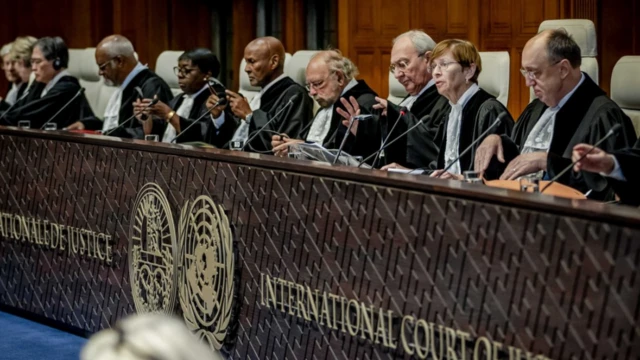
International law. In 2024 the ICC issued arrest warrants for Netanyahu and Gallant and the ICJ declared the occupation illegal. Having ordered provisional measures and been ignored, the ICJ promised to take years to rule on whether Israel is committing genocide and they have fulfilled their promise to do nothing legally for a long time. The Security Council issued a ceasefire resolution that wasn’t even vetoed by the US. All were ignored. International law has been exposed as an illusion.
ICJ, duly ignored in 2024
International diplomacy and BRICS. A couple of countries have cut ties with Israel. Most – including big powers who could have made a big difference like China and Russia – continue to interact with Israel as if it’s not committing genocide (Turkey also could have made a difference and it did – helping Israel and destroying Syria). On the official level, the countries of the world have taken the position either that genocide is not a big deal or that it’s actually fine. It turns out that if you’re Israel, committing genocide won’t make you a pariah state – business will continue as usual.
None of the above have had any effect in halting the genocide.
What about partial constraints? The following probably still operate but, so far, below the threshold needed to stop genocide.
The balance of terror. At the beginning of 2024, Iran’s president Raisi, Hamas’s leaders Ismail Haniyeh and Yahya Sinwar, Hezbollah’s General Secretary Hassan Nasrallah and the organization’s senior commanders all were alive. Israel killed them all. Even though they failed to occupy Lebanon through war, the Israelis have crept forward during the ceasefire and made a separate peace with Lebanon. They removed Assad, occupied Syria and destroyed the state and its arsenal, and probably used a nuclear weapon on an undefended target in Tartus. Iran still exists and Yemen continues to fight Israel but both are threatened with annihilation in 2025. If there was a balance of terror and deterrence going into 2024, it has been broken.
Military casualties. In previous Israeli wars on Gaza and Lebanon, Israel stopped well short of the casualty numbers they have already suffered in 2023-4. In 2024 they successfully added the religious orthodox to the recruiting pool and censored their actual casualty numbers effectively while likely suffering tens of thousands of wounded and thousands killed. Israel was believed to be a society that would disintegrate if military casualties reached a certain threshold. Perhaps Israeli society is in fact disintegrating, or perhaps the threshold is higher than previously believed. At the level that the Palestinian resistance can inflict them, military casualties have not so far been sufficient to stop Israel’s genocide.
Civilian casualties. Before 2024, many observers believed that Israel would balk at attacking Lebanon because of Hizbollah’s capacity to hit targets in Israel with rockets, drones, and missiles (as promised in a famous speech by Nasrallah in 2012). In 2024 Israel attacked Lebanon, slaughtering Lebanon’s civilians, destroying infrastructure, and absorbing the standoff attacks by Hizbollah. Israel sought a ceasefire after taking hundreds of military casualties in a short period of time, but continued genocide every single day of 2024, including days it was being bombed by Palestinian Resistance rockets from Gaza, by Hizbollah, by Ansrarallah in Yemen, by Iraqi resistance groups, and the two nights that it was bombed by Iran.
Economic attrition. Ansarallah in Yemen successfully imposed a major set of costs on Israel through its blockade of ships bound from Israel through the Red Sea. Hundreds of thousands of reservists were taken out of the work force to go and kill children in Gaza. The tourism industry died. Major investors have withdrawn. But the US will provide any amount of funds needed to keep Israel going and to keep the bombs falling on the children. Arab neighbours have created a land bridge so that Israelis can keep eating while they starve the Palestinians. Turkey keeps providing fuel while Israel plunges the Palestinians into darkness and cold. International shipping has assumed the extra costs of traveling around Africa to avoid the Red Sea blockade. Israel is suffering economically, but that suffering has not made Israel reconsider its genocide.
What are we left with? Palestinian and allied armed resistance, legal under international law. The potential of unarmed resistance of the kind that Palestine Action is engaged in. The accumulation of pressures that haven’t yet reached the required level – military actions, economic pressure, and activism at a higher threshold.
Since nothing has worked yet and the genocide goes on, it is impossible to say how well anything is working. Whenever the genocide does end, some of the things that didn’t yet get it done in 2024 will have played a role.
What’s certain is that against this enemy there’s no room for wasted effort.
We’re reclaiming the word. Here’s what it means now.
The word “tankie” was coined by British Trotskyists for use against leftists who did not oppose the USSR intervention in Hungary in 1956 and resurrected after 2011 by pro-regime change leftists who used it to mock leftists who opposed the destruction of the Syrian state.
But the self-definition of “tankie” can be derived from Lenin’s advice to the socialists in WWI. When most of the socialists of Germany, Russia, and France were lining up with their own governments, Lenin advocated what was called at the time revolutionary defeatism. He wrote: “During a reactionary war a revolutionary class cannot but desire the defeat of its government.” He wanted socialists, rather than celebrating their countries’ achievements in overt or covert war, to take up the struggle in their own countries: “one cannot be a sincere opponent of a civil (i.e., class) truce without arousing hatred of one’s own government and bourgeoisie!”
In my view, this is no different from what Chomsky has advocated for decades. As he was wont to do, he repeated this message constantly in the hopes that it would stick (it didn’t):
“…One of the most elementary moral truisms is that you are responsible for the anticipated consequences of your own actions. It is fine to talk about the crimes of Genghis Khan, but there isn’t much that you can do about them. If Soviet intellectuals chose to devote their energies to crimes of the U.S., which they could do nothing about, that is their business. We honor those who recognized that the first duty is to concentrate on your own country. And it is interesting that no one ever asks for an explanation, because in the case of official enemies, truisms are indeed truisms. It is when truisms are applied to ourselves that they become contentious, or even outrageous. But they remain truisms. In fact, the truisms hold far more for us than they did for Soviet dissidents, for the simple reason that we are in free societies, do not face repression, and can have a substantial influence on government policy*.”
This idea – that we’re supposed to think about the effects of our work and therefore focus on the crimes of Western imperialists, not the crimes of their enemies – is one Western tankies take seriously.
If you’re wondering why the small group of us on social media around my podcast (the Anti-Empire Project) and Sina’s (The East is a Podcast) affectionately call each other “tankies” and the politics behind it, read on.
For the purposes of this post, a tankie is someone who doesn’t want the destruction of states that are currently targeted by the US.
Tankies are glad that Stalin defeated Hitler in WWII and that the Red Army stopped the Holocaust. Tankies didn’t want Syria, Libya, Yugoslavia, or Iraq destroyed. Tankies don’t often get what they want, as you can see. Tankies don’t want Cuba, Venezuela, Iran, Russia, or China destroyed.
There are other causes on which tankies and other kinds of leftists agree, like wanting a Free Palestine. But on the question of regime change in Syria and other countries, we split.
There are three main premises to being a “tankie”.
The US Empire, and the British Empire that it took over, which could be called the Anglo-American Empire, is the only empire today. To tankies, Russia, China, and Iran – the only countries really ever accused of also being imperialists – are not.
The Anglo-American Empire is uniquely genocidal and destructive. There are other bad things that happen in the world, but in almost every international political situation, with brief and occasional anomalies that quickly revert to pattern (like when they supported Stalin in WW2 or fought their own ISIS creations briefly in Syria and Iraq), victory for the Anglo-American imperialists will lead to more death and destruction than defeat.
No matter how much imperial propaganda you have managed to cut through, you are more propagandized than you think. It’s a safer assumption that every single claim made by the imperialists is a lie and work from there.
A few points about the reasoning behind these premises:
Premise 1: There’s only one empire. The hundred-year long debate about imperialism goes back to when Lenin used the concept, which he’d read in Hobson, to explain the origins of the First World War. The Great Powers – England, France, Germany, Japan, the US, Austria-Hungary (not really in the game any more) – had divided the whole world up into colonies from which they drained resources and which they used as captive markets. The whole world being divided up, the game had become zero-sum and the only way these powers could advance was by taking colonies from one another. The strongest powers would take the most, but relative strength would change and the only way to truly test strength was to go to war, hence imperialist war was inevitable. So argued Lenin about a century ago. But another way of looking at World War I (and WWII, and the Cold War) is as a war successfully waged by the Anglo-American Empire to subordinate potential rivals into a global system. Today Germany and Japan host US bases, the Five Eyes and France are subordinate to the US. The Western elite is disciplined, willing to subordinate local interests for US or Israel’s interests, and 100% behind Israel’s holocaust in Gaza.
Another definition of imperialism that I like, that you don’t have to listen to a 100+ hour history podcast to get a handle on, is arrived at by studying value transfer, for example through Jason Hickel et al.’s work, “Imperialist appropriation in the world economy: Drain from the global South through unequal exchange, 1990–2015”. The imperial countries are the ones receiving the value transfer, the colonized are those whose wealth is drained by trillions every year. The Global North / the Golden Billion / the Combined West, is the metropole. The Global South is the colony.
What of China, with its dealmaking in Africa, Pakistan, and elsewhere? If you’re not willing to listen to 50+ hours about the genocidal insanity that the West brought to Africa during the Scramble, you should at least know that China isn’t in Africa chopping children’s hands off or killing ⅓ of all Congolese: they’re building roads and custom phone networks and buying minerals. That’s not what the West did – or does – in Africa.
What of Iran, which exercised influence in Syria until recently and exercises influence in its neighbouring country, Iraq? Historically Persia was incorporated into the Anglo-American global empire as a “semi-periphery”, like China, then became a firm member of the Global South, complete with at least one CIA overthrow in 1953, and is now back in the Global South as a sanctioned country whose economy is targeted for destruction. Not looking for colonies, not draining anybody’s wealth, not imperialist.
Russia? The USSR supported anti-imperialist struggles, notably Cuba and Vietnam, while it lasted from 1917-1991. The post-Soviet Russian Federation has shrunk from the USSR borders, with former members of the USSR increasingly hoisting the US flag over military bases that encroach on Russia and US-sponsored covert operations trying to regime change Russia and break it up (notably starting with Chechnya). Like Iran, Russia had some brief influence in Syria, but it gave that up. The war between Russia and Ukraine is akin to a Western-sponsored civil war, which the US explicitly says it is using to try to destroy Russia. As an economy, Russia spent decades recovering from the destruction wrought by the end of the USSR and the privatization of the USSR’s assets (what author Austin Murphy called the Triumph of Evil). Russia isn’t draining the Global South. It’s not imperialist.
Premise 2. The Anglo-American Empire is uniquely genocidal. The Spanish, Portuguese, and Dutch empires are the only empires that could compete with the sheer horrors of the Anglo-Americans, but the scope and scale of the Anglo-American genocides is worse and only the Anglo-American Empire is effectively threatening to end human civilization either through environmental collapse or nuclear war (or both). The worst things in human history were the genocides of the Americas, the enslavement of Africans, and the colonization of Africa and Asia. All were conducted by the Anglo-Americans – where others like France, Belgium, and Germany, eagerly participated, they did so in a system organized by the Anglo-Americans. The German Nazis were sponsored by the Anglo-Americans until WWII started, then these Allies briefly fought the Nazis, then as soon as the war ended the Allies rehabilitated the Nazis and brought them into the heights of Western research, industry, and military coordination through Operation Paperclip. In all the major post-WW2 holocausts, the US was either doing them directly or deeply involved. The Rwandan genocide could not have occurred if the US had not organized the war and invasion of Rwanda the way it had. In the DR Congo, millions died in a war in which abusive local militias faced truly genocidal invaders from Rwanda. The abusive militias were bad; the genocidal invaders were qualitatively worse. As you would expect, the Americans supported the genocidal invaders. The ongoing Gaza holocaust by Israel could not be conducted without daily airlifts of weapons from the US and fuel and food sent daily to Israel by allies organized by the US.
Opposing the Anglo-American empire is opposing genocide. Tactically supporting any western-led regime change campaign is supporting the most genocidal system that has ever existed, and it’s beneath contempt.
Principles vs Campism: Regime changers claim to be loyal to higher principles than anti-imperialist “campists”. Campists, they claim, support authoritarianism, just not if the Anglo-Americans are doing it. Whereas regime changers, with their exalted principles, are against authoritarianism regardless of who’s doing it. Let’s leave aside the fact that “authoritarianism” is itself a term only ever applied to official enemies. Based on Premise 2, it is true that the authoritarianism of targeted regimes is the lesser evil.
Regime changer principles applied to the real world amount to endorsements of the greater evil – dismemberment of countries and genocides of populations. Politics isn’t about abstractions, but how principles are applied on the ground. And they are applied unevenly. Regime changers can perform the mental operations necessary to oppose Iran on women’s rights principle and endorse HTS removing all female judges from their jobs in Syria in practice. The regime changers’ claim to higher principles is empty.
Premise 3. You’re more propagandized than you even think. Leftists who have come to understand that the US empire is a force for evil in the world but then think that all the people the US are trying to destroy are also evil, have half-emancipated their own minds and given imperial propagandists a loophole to win them back: by lying about the targets, they win potential anti-imperialists back to pro-imperialism or useless nihilism.
The lies are voluminous, systematic, repetitive, mutually contradictory, uninterrupted, flexible, and intense. You watched them do it throughout this genocide in Gaza. Lies about beheaded babies, mass rape, human shields, Palestinians bombing themselves, and tireless ceasefire efforts. But after watching the whole campaign of lies about Gaza, and the genocide continue through it all, regime changers have nonetheless readily accepted fantastical stories about Syria under Assad and the virtues of those occupying, partitioning, and destroying Syria now. Regime changers criticize Venezuela’s economic policies, or Cuba’s, or Iran’s, as if these countries aren’t being sanctioned by the US with the open purpose of destroying their economy.
If you’ve broken the grip on your mind that tells you that the West is uniquely benevolent, or benevolent at all, congratulations. But your work isn’t done. You have to look at what else the West is telling you (to hate all its enemies on its schedule) and break those grips too. Believe nothing they tell you about official enemies. Make that your default stance and change it only if there is overwhelming evidence.
The regime change left exists to wreck antiwar work – and for no other reason
I’m not here to own liberals in online debates. I don’t want to talk to regime changers at all.
But the regime change leftists do want to talk to us. That’s all they want to do, in fact.
Why? Because their only value in the world is their value to imperialists and they provide this value by disorganizing and disorienting antiwar potential.
Imperialists don’t care what pro-Palestine leftists think. It doesn’t matter whether these leftists are tankies or regime changers. Leftists are in no position to materially help the assassins and mercenaries assembled at various border points preparing to destroy imperial targets. Regime change leftists’ only value is in harassing and disrupting any potential antiwar movement. As Jean Bricmont wrote a decade ago in his article about the “Wishful Thinking Left” (also about Syria):
“the main defect of… the humanitarian interventionist Left… is: to whom are they talking? The rebels in Syria want as many sophisticated weapons as possible… Those rebels want Western governments to provide them with such weapons – they couldn’t care less what the Western Left thinks. And those Western governments hardly know that the wishful thinking Left even exists. And if they did, why would they listen to people with no serious popular support, and so no means of pressuring governments? The best proof of that is given by the cause to which so many signatories have devoted a good part of their lives: Palestine. Which Western government pays any attention to the demands of the “Palestine solidarity movement”?
The main effect of the regime change left is to undermine antiwar work. It
“weakens and confuses what is left of antiwar sentiments, by stressing that “our” priority must be empty gestures of solidarity with a rebellion that is already militarily supported by the West. Once this mindset is acquired, it becomes psychologically difficult to oppose U.S. intervention in the internal affairs of Syria, since intervention is precisely what the revolutionaries that we must “support” want.”
Bricmont continues: regime changers
“will probably say that “we” must denounce both U.S. imperialism and the oppressive regimes against which the “people” revolt. But that only shows the depth of their delusions: why claim doing two things at once, when one is not capable of doing either, even partly?”
Regime change leftists will lie, scream, use identity politics, hijack left-wing rhetoric, and smear us relentlessly. What they won’t do is set out what it is they want to achieve, nor their strategy. Because what they want to achieve is screwing anti-imperialists up and their strategy is simply to wreck everything we try to do.
On the other hand, I can tell you exactly what we want: An end to these genocides and regime change wars, a world where sovereign Global South countries keep the fruits of their own labours, where Indigenous peoples take care of their own lands. I can tell you our strategy too. It is to try to develop a constituency inside the West that is strong enough to stop imperialism.
I admit, it’s not going all that well. While we let regime changers pretend they’re on our side (but with some nuance), it will keep not going well.
The best we can do now is try to find our friends, exclude our enemies, and avoid distractions.
Americans in the War on Terror… tankies oppose this.
Israelis in Occupied Palestine… tankies oppose this.
Note:
*Watching the way this genocide has unfolded, I am no longer so sure that we “can have a substantial influence on government policy” and still working out what that means… but let’s leave that for future exploration.
The international order appeared to be one thing, but it’s something else. Better learn its rules.
Racial Aristocracy: Nearly every polity in Asia, Africa, and the Americas was destroyed at least once by European colonialists who built an ideological edifice to rationalize their rule. Europeans, led by Anglo-America, taught this ideology – racism – to themselves and their colonial subjects. In their world view, the earth belongs naturally to the superior races, who needn’t respect law, truth, or life when dealing with their inferiors.
Sovereign States: Over a long struggle, many colonized peoples expelled their colonizers and tried to build states strong enough to defend themselves. Postcolonial states joined international covenants and institutions like the UN in the hopes that it could protect their futures from new waves of depredations. In the international order they thought they were building, concepts like sovereignty, territorial integrity, and international law were enshrined as an answer to colonialism.
But the former colonizers still have most of the power and their plan is to roll things all the way back. Better learn the rules they plan to impose.
“Grand Racial Aristocracy”
At the beginning of the 20th century a group of conspirators from Britain, the US, Canada, and South Africa, the Anglo-American Establishment as described by Carroll Quigley, advanced a plan for the world domination of their “master race”. The ringleader of the project was Alfred Milner, whose proteges, called “Milner’s Kindergarten”, filled all the important positions of England at the height of imperialism. Milner described himself as “an Imperialist and not a Little Englander, because I am a British Race Patriot.”
The geopolitical concept of these men was to embroil the Eurasian continent in perpetual war, explained by imperialist theorists Alfred Thayer Mahan and Halford Mackinder; the economic concept was to plunder the resources of colonized Africa (one of them, Schreiner, wrote in 1923 that “all white nations have regarded Africans mainly as a means of producing or procuring wealth.”), Oceania, Asia, and the Americas using colonial methods, explained best by anti-imperialists Lenin and Hobson. Racial conspirators were more public about it then than they are now. Hitler imbibed their concepts so well that his famous book was a love letter to them.
The most direct statement of their vision for the world was articulated by racialist Jan Smuts at a speech in Kimberly before the Great War. Smuts would later become a WWI strategist for Britain and still later one of the leaders of apartheid South Africa. Before all that, he celebrated colonialism: “as the new world is the home of popular democracy, so the mission of the Newer World – if I may use the term – is a grand racial aristocracy.” They believed in progress in history: If popular democracy was a high stage of civilization, racial aristocracy was an even higher stage.
And a racial aristocracy is exactly what they built. It is the world order we live in. Understood properly, it’s not a world of double standards. There’s no hypocrisy at all: the supreme good is upholding the racial hierarchy, and any other ethical frameworks are secondary.
Dan Freeman-Maloy described Anglo racial theorist John Buchan’s work in an article in Race & Class called “Remembering Balfour”. Dan describes how Buchan wrote a series of adventure novels starring the character Richard Hannay. In the novel Greenmantle, Hannay says the British are ‘the only race that can produce men capable of getting inside the skin of remote peoples.’ The book sold 34,000 copies in 1916. In another book, one of Buchan’s characters says: “I define Imperialism as the closer organic connection under one Crown of a number of autonomous nations of the same blood, who can spare something of their vitality for the administration of vast tracts inhabited by lower races, – a racial aristocracy considered in their relation to the subject peoples, a democracy in their relation to each other.” He also said: “Remember, our democracy is a white man’s democracy, and we are not moved by any foolish Rousseauism about the rights of man.”
Today there are people working for the dismantling of a postcolonial state like Syria on the basis of authoritarianism or human rights violations – criticisms that can apply to any state. Whether by support for partition, Turkish conquest goals, Israel’s expansionism, Takfiri sectarianism, or American theft of resources, the end result is good work for the racial aristocracy.
Genocide
Genocide is a tool of the racial aristocracy and they use it without hesitation or conscience. When committing genocide in Africa, German racial aristocrat von Trotha gave a signed extermination order. He said at the outset of the war with the Africans he was genociding that their ‘uprising is and remains the beginning of a racial struggle’. Chief of the German General Staff Schlieffen, who came up with the plan to invade France through Belgium, wrote of von Trotha that ‘He wants to exterminate the whole nation or drive it out of the country. In this, we can only agree with him … Once racial war breaks out it can only finish with the annihilation of one of the parties.’ Other German theorists laid down all the elements of Western genocidal thinking – applied vigorously now by the Israelis – at the end of the 19th century. Friedrich Ratzel made a geographical theory about the “struggle for existence” of the races and the search for “Lebensraum” – and founded the German colonial society.
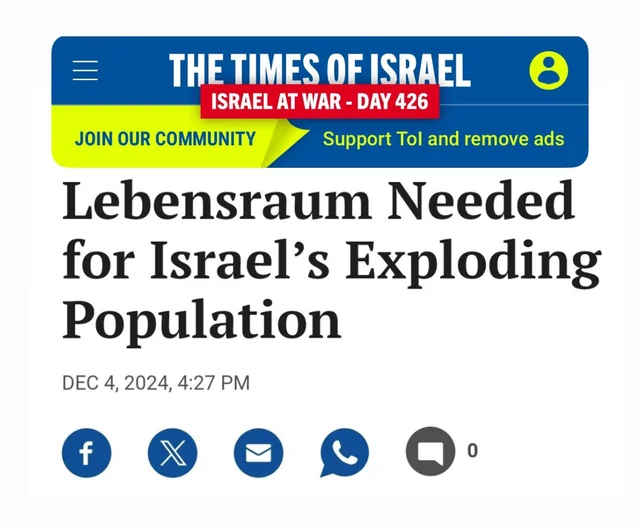
Lebensraum talk isn’t out of fashion in this world
Ratzel believed that inferior races must be actively destroyed by superior races – his successful examples: North America, New Zealand, Australia – and South Brazil.
In 1912 a German named Rohrbach wrote a book called German World Policies, which made arguments you could read in pro-Israel twitter, the WSJ, or an Israeli news site: “It is not right either among nations or among individuals that people who can create nothing should have a claim to preservation. No false philanthropy or race-theory can prove to reasonable people that the preservation of any tribe of nomadic South African Kaffirs … is more important for the future of mankind than the expansion of the great European nations, or the white race as a whole. Should the German people renounce the chance of growing stronger and of securing elbow room for their sons and daughters, because … some tribe of Negroes … has lived its useless existence on a strip of land where ten thousand German families may have a flourishing existence and thus strengthen the very sap of our people?”
In 1907, he published German Colonial Commerce: ‘In order to secure the peaceful White settlement against the bad, culturally inept and predatory native tribe, it is possible that its actual eradication may become necessary under certain conditions.’
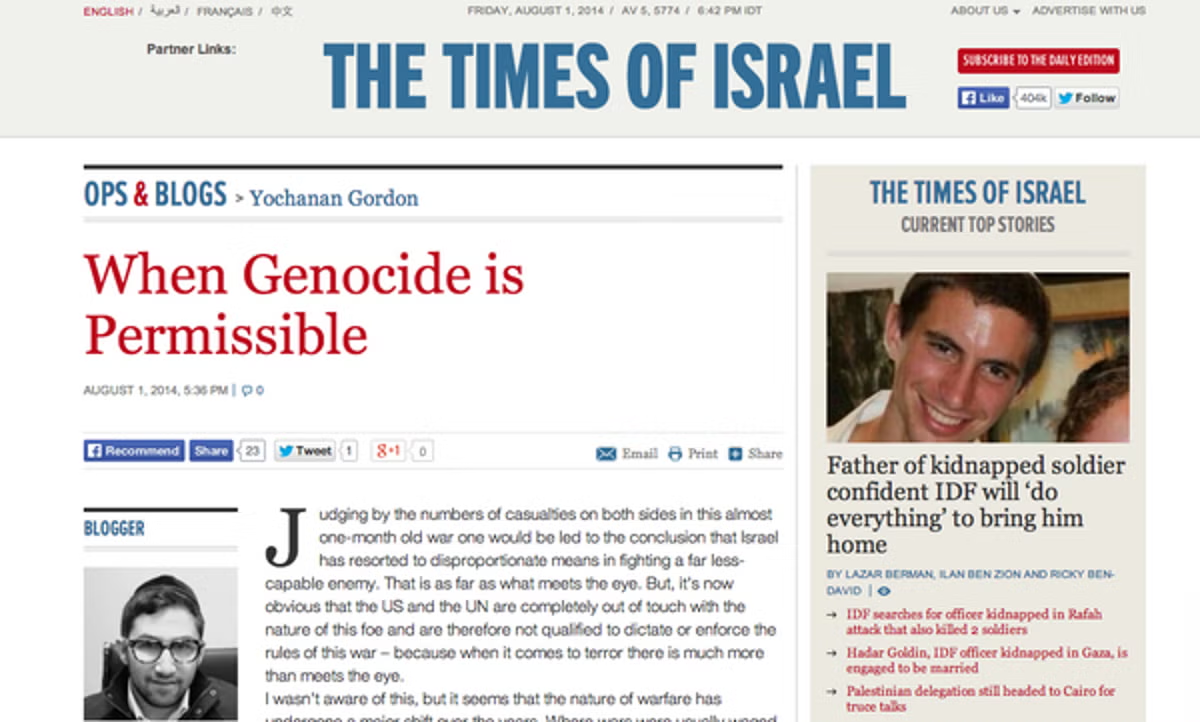
We’re ruled by people who think genocide is permissible
Law
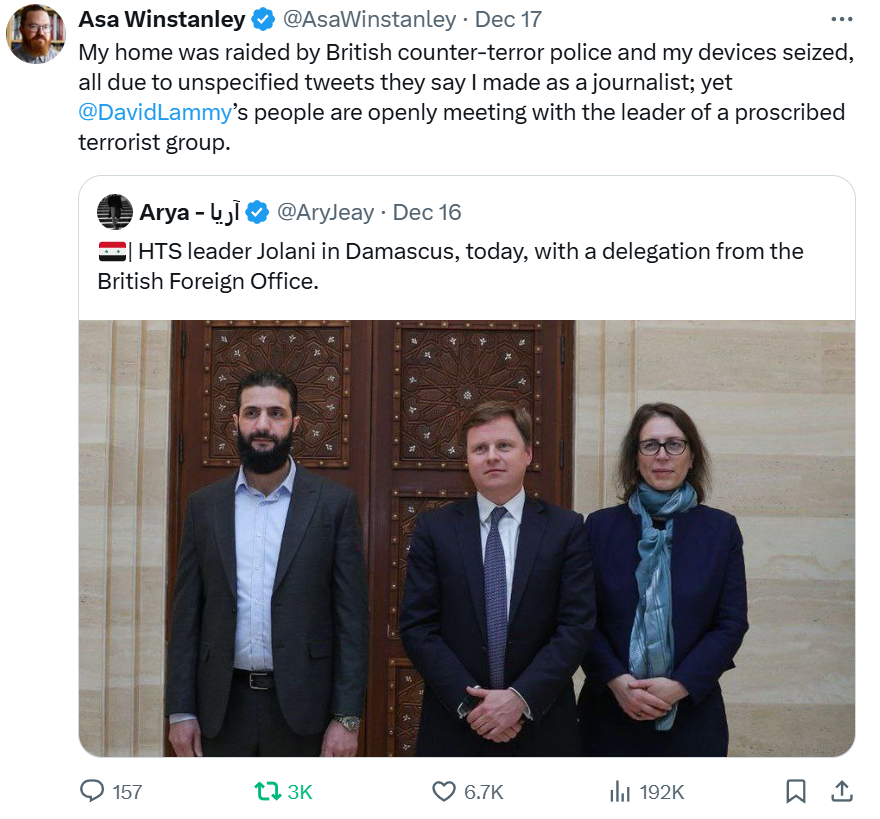
Apparently this is a world of international law, international courts, and a genocide convention, a United Nations Security Council that can pass resolutions that stop countries in their tracks. All are set aside if the racial aristocrats want to commit a genocide or violate the law. Anti-terrorist police are used to seize the electronic devices of ordinary journalists like Asa Winstanley while UK officials meet with the leader of an organization on their own terrorist list.
Sovereignty and territorial integrity is suspended…
… if the racial aristocrats want to redraw the map of Syria and invoke conquest to do it.
While the colonized make strategies for state building, colonizers make plans to grab
Criminal law does not apply to our racial aristocrats: it is they who define crime and dish out punishments. By definition they cannot be criminals.
Crimes on the books? Torture? Murder? Rape? All are permissible if committed by the right people and in the cause of upholding the actual world order of racism and genocide. So no, the law does not apply to all. It is just another instrument in the hands of our rulers.
Truth
The law is a marvelous tool indeed, but it’s the power over the truth that the racial aristocrats especially appreciate: what is true is what they say it is. They define “terrorism”, they define “racism” and “antisemitism”, teaching these things from childhood school textbooks to legacy and social media.
They tell lies to test our loyalty to them. The atrocity propaganda they use to justify the genocide, the lies about “human shields” they repeat after every massacre in this genocide: it is not up to us to judge their truth or falsity, it is up to them to judge us based on how intensely we express that we believe them.
Professionalism and its standards for truth are secondary to racialist loyalty. Journalistic, academic, or scientific methods for finding truth are useful but so is overriding them to uphold racial rule. Debunking lies is allowed, but only when it’s too late to make a difference. Interfering with any aspect of an ongoing genocide is a crime, whether it is through trying to boycott, trying to debunk atrocity propaganda, or trying to stop the flow of weapons.
Shiny Objects
It’s been a grand year for the grand racial aristocracy. They’ve genocided Palestine and destroyed Syria. The Israelis have targeted Iran for destruction; the Americans are aiming at Russia and then China. While it’s true that the West’s rivals are building hypersonic weapons and miraculous technologies, corridors and win-win business relationships, what do these matter when the Anglo-Americans “get into the skin of remote peoples”? Racial aristocrats convince the very people they’re destroying to do their fighting and their building for them. Iranian strategy is patient and thoughtful, Russian arms are fearsome, and the Chinese economy is without rival now. None of that will matter if they can be regime-changed and convinced to self-destruct or intimidated into retreat and self-sabotage.
Russia and China have said that they want to replace the US-centric world with a multipolar one of win-win deals, shared prosperity, common security, the UN charter, and international law. To the Anglo-Americans, these things are nothing but shiny objects to fool the stupid lower orders of the world. To them, we are dirt: the only rules left are those imposed on us by those who believe they rule by racial right.
As for those who work to destroy postcolonial states: they serve the racial aristocracy very well.
Can resisting the genocidal US Empire be a stain on your human rights record?
By a slave owner’s reading of history, Abraham Lincoln butchered 260,000 to 400,000 of his “own people” in the South to keep the Confederate States from seceding from the USA. [1] Lincoln was actually a perpetrator of genocide against the indigenous peoples of North America like the all the US presidents who established the USA. He also wanted to expel the Black population to Haiti after the Civil War. But taken in isolation, his military victory over the Confederate States – even if you know that the plight of slaves was not actually Lincoln’s priority – cannot be used by any reasonable person to depict him as a monster. There is no “freedom” to establish a giant confederation of slave owners that anyone should respect. Waging a civil war to prevent it was fully justified. That does not mean that Lincoln’s side never acted immorally in the way it fought the war. But an honest assessment of Lincoln’s human rights record must take into account that he was on the right side of the US Civil War.
Waging war to defend against the world’s greatest evil is justified
President Bashar al-Assad of Syria also fought, but in his case ultimately lost, a civil war that he was fully justified in waging. Since 2011 until his ouster weeks ago, Assad fought to prevent his country from being conquered and partitioned by the greatest evil in the world today: the US Empire. Assad fought armed rebels backed by the US and its top clients in the region: Turkey, Israel and Saudi Arabia. The case for depicting Assad as a monster is based on the premise that Assad had no right to defend his country against the US and its allies. Sometimes Assad’s detractors denied the significance of the US role in the war. Always absurd, their denial became downright farcical once the US occupied part of Syria in 2014.
With the help of Russia and other allies (Iran and Hezbollah), Assad was able to achieve a stalemate in the war for years. But it was a stalemate that allowed the US and its proxies to occupy resource-rich areas of the country. The US occupation magnified the impact of sanctions that Washington used to ruthlessly bleed Syria economically. Neither Assad nor his foreign allies were willing to take the enormous risks required to kick the US out of Syria, or to stop Israel’s constant bombing of Syria. The economic bleeding eventually paid off dramatically for the US-backed rebels. Assad was overthrown mere days after rebels launched an offensive to break the 2020 stalemate that had been negotiated by Russia and Iran with Turkey.
The civil war to oust Assad was a US project executed for the benefit of Israel. The genocidal Zionst state has already bombed hundreds of sites in Syria to destroy any military capacity for the new government. At the same time Israel has done this, Syria’s new government has clearly signalled its submissiveness towards Israel, but expressed hatred for Israeli enemies: Iran and Hezbollah. Israel is occupying Syrian villages, issuing deportation orders to Syrian citizens, and bringing in Jewish settlers. Israel now has better military options for attacking Lebanon and for cutting off armed support to Hezbollah. So those hailing Assad’s ouster on “human rights” grounds must ignore that his ouster has provided the Israelis state with greater power and impunity to crush the human rights of Syrians, Palestinians and Lebanese.
When we declare the US Empire to be the world’s greatest evil, our case is overwhelming. Before October 7, 2023 one could point to countless military coups the US has sponsored in the Americas; its slaughter of millions in Indochina during the 1960s and 70s; the millions of deaths it caused in Iraq since 1990; economic policies that consigned hundreds of millions to misery and premature death; its sponsorship of Israeli atrocities for several decades. The case was already irrefutable, but today it is even more stunningly so.
The US government has sponsored a Holocaust in Gaza since October 7, 2023. Its horrors have been live-streamed around the world so continuously that even outfits with proven track record of subservience to the US have been forced into damage control. In November, the ICC issued arrest warrants for Netanyahu and his former defense minister Yoav Gallant. Days ago, Amnesty International belatedly concluded that Israel is guilty of genocide in Gaza. But both the ICC and Amnesty international, still insisted on parroting the genocidal Israeli (and US) take on the Palestinian armed resistance of October 7. [2]
Imperialists have always posed as a “human rights” crusaders
The character assassination of targeted leaders for their “human rights” records was conceived by Western imperialists, avant la lettre, in the 19th century to justify the destruction of states and the colonization of the post-destruction territories. When the Scramble for Africa was happening at full speed in 1884, the Times of London carried campaigns about every single individual African leader and how they each “must go”: Tippu Tip of Eastern Congo had to go, Msiri of Katanga had to go, Cetshwayo of the Zulus had to go, Mwanga of Buganda, Kabarega of Bunyoro, Arap Samoei, Bai Bureh, Yaa Asentewaa, Abd el Kader of Algeria had to go, Sadok Bey of Tunis had to go, Sultan Ahmadou, Samori Toure, King Benanzin – had to go, of course Queen Ranavalona had to go, she was a Mad Queen, Mkwawa of the Hehe, Samuel Maherero, Hendrik Witbooi – had to go, Queen Liliuokalani of Hawaii had to go. This is not an exhaustive list. Every single one of these leaders had the equivalent of their human rights record pilloried in the Western press, notably the Times. The Belgians claimed that they colonized Congo to protect the Congolese from slavery. Then they killed 10 million of them over about 20 years, chopping off their hands for trophy photographs if they didn’t collect rubber fast enough.
The imperialist game of targeted leaders that “must go” is older than the specific doctrine of human rights and democracy. But that doctrine also was conceived and built as an engine of imperialism. When Africa was decolonizing itself in the 1960s, Africans looked naturally to the communist countries as models. Economic equality and economic development – tangibles like caloric intake, health and education, and infrastructure – these were the kinds of things that were rapidly improving in postcolonial communist nations. In the kind of neocolonial relationships that the US was trying to impose on the newly decolonized countries – in which the West would continue to control investment, finance, intellectual property, and elite education – Third World nations tilting to the West would not be getting economic equality or development. They would instead be getting unequal exchange and impoverishment while enriching the West.
What the West could offer, especially to communist, nationalist, or developmentalist states that were trying to protect themselves from Western economic penetration, was “human rights and democracy”, a methodology for measuring “authoritarianism” and even a framework for overthrowing these developmentalist regimes – the “color revolution”. Another benefit of campaigning for human rights and democracy is that the open (to foreign penetration) multiparty electoral political and media systems that the US promotes render developmentalist states unprotected from US campaigns against them. US agents can freely use local media (and now social media) to generate political influence inside almost any country in the world. Any state that constrains US media, tech, or political agents like NED, IRI, and NDI gets labelled as authoritarian.
This is all outlined in, among other works, Nicholas Guilhot’s The Democracy Makers, Jessica Whyte’s The Morals of the Market, and James Peck’s Ideal Illusions. Our own book, Extraordinary Threat, shows the working of this (so far failed) methodology on Venezuela and previous books by one of us, Haiti’s New Dictatorship, and America’s Wars on Democracy in Rwanda and the DR Congo shows the working of this (successful) methodology to Haiti, Rwanda, and the DR Congo. Yugoslavia is another well-documented case.
Closer to Syria, in the Arab world, the “human rights and democracy” campaign was run to overthrow Saddam Hussein in Iraq and Muammar Gaddafi in Libya, leaving generational destruction in their wake and countries that show no sign of regaining the sovereignty or developmental level they had under dictators they were told “must go’. As already noted, Bashar al-Assad in Syria was targeted with incredible ferocity and held out for a long time, but ultimately left in 2024. Syria’s development prospects had already been destroyed by Israeli bombing, US sanctions, and US and Turkish occupation and outright asset stripping before the overthrow.
How bad was Assad’s human rights record?
But what if we put all these important considerations aside? Put aside Assad’s right to defend his government from being overthrown by the US Empire. Put aside western imperialism’s long track record of lying about enemies and pretending to be human rights crusaders as they murder and plunder. Let’s simply try to assess how bad Assad’s government was.
He first took office in 2000. There are two questions:
How badly did he violate human rights between 2000-2011, before the civil war began?
How badly did he violate human rights in the way he fought the civil war from 2011-2024?
“How badly” can only be answered comparatively.
So, we review what is known about Assad’s human rights and democracy record, compared to two states: Saudi Arabia and the USA. These two comparators have prisons, the death penalty, and torture. They commit genocide (the US all over the world and notably Gaza right now, Saudi Arabia in Yemen from 2014 on), but face no threat, nor even any rhetoric, of being overthrown by anyone.
The main index of human rights violations / authoritarianism / tyranny would be numbers killed and imprisoned. The main index of dictatorship / democracy is elections.
How does Syria under Bashar al-Assad, from 2000-2011 compare?
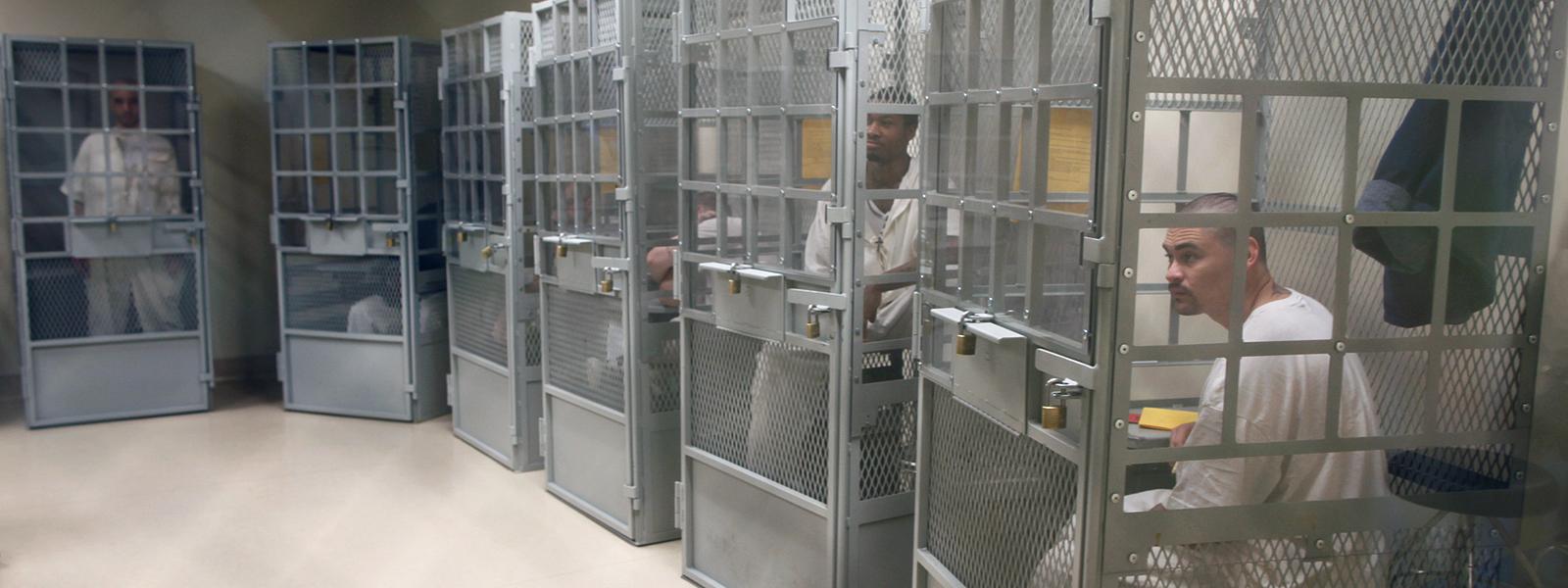
Prisons. Consider the prison population data shown below which is taken from the Institute for Crime & Justice Policy Research (ICPR), a research outfit funded in part by the UK government.
During the 2000s both the USA and Saudi Arabia had vastly larger prison populations than Syria. Adjusted for population, Syria’s imprisoned about half as many people as Saudi Arabia, and only one tenth as many as the USA.
Group therapy in San Quentin prison, 2012
Elections. Saudi Arabia doesn’t even bother holding sham elections at the national level.
In the USA, the Republican and Democratic parties can be considered two factions of the same party that serves US elites, not the general public. Some have branded them the Uniparty. There are certainly significant differences between Democrat and Republican voters. African Americans are far more likely to vote Democrat than Republican for example (80 percent voted for Harris in 2024, and 90 percent for Biden in 2020). Majorities of Democrat voters and independents said last year that the US should stop arming Israel. Democrat voters ( as well as independents) are twice as likely as Republican voters to say that the US should stop weapons sales to Israel. However, we know for certain neither party would ever cut off weapons sales to Israel simply because most voters want that. In fact, the Democratic party’s willingness to defy their voting base (and disregard trying to appeal to independents) by arming Israel probably cost them the presidential election in November. But what does “losing” really mean when Uniparty always wins?
Alternatives to the Uniparty are very effectively marginalized: everything from the winner-take-all allocation of electoral votes, to the lawsuits to deny alternative ballot access, to the exorbitant cost of media access, to the dependence on private donors all work to ensure that the Uniparty consistently gets over 96 percent of the vote.
In fact, as shown below, the Uniparty in the USA, has sometimes been more dominant in elections than Assad had been in Syria.
ELECTION RESULTS
Saudi Arabia – no national level elections
USA percentage of vote won by the Uniparty [3]
2000…96.3%
2004…99.0%
2008…98.6%
SYRIA percentage of vote won by Assad [4]
2000…97.0%
2007…97.0%
2014…88.7%
2021…95.1%
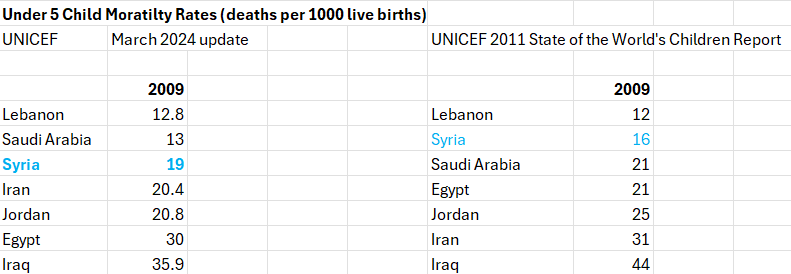
Services. A broader view of human rights in Syria before the civil war would look at access to basic services like health care and food. One way to capture that is through child mortality data. As of 2011, UNICEF’s data for 2009 (the most recent available at the time) showed Syria had a very low child mortality rate compared to many nearby countries. It was significantly lower than Saudi Arabia’s and Jordan’s in 2009 according to UNICEF’s 2011 data.
But UNICEF often revises its data retroactively. As with other UN agencies, these revisions often look like they have been driven by pressure from powerful western donors. UNICEF revised by 2009 so that as of 2024 it is claiming that Saudi Arabia’s child mortality rate was actually much better than Syria’s in 2009. Regardless, in neither data set does Syria stand out as a country with a poor child mortality rate compared to its neighbors, many of them dictatorships that were not hit with US-orchestrated destabilization campaigns.
We can’t really use human rights data from 2011-2024 to compare Syria to the USA and Saudi Arabia since neither of those two countries were fighting a civil war. But we do have a long-running war in the neighbourhood that we can use for comparison. Let’s compare Assad’s conduct of the Syria war to the way Israel (with the unconditional and essential backing of the US) has waged war since October of 2023.
Comparing Syria’s civil war to the Holocaust in Gaza
Deaths. According to the New York Times, fourteen years of civil war in Syria caused as many as 620,000 deaths in a country whose population in 2011 was 22 million. These deaths were inflicted by both the Syrian government and the armed opposition. The NYT cited various counts of war-related deaths, not cluster sampling methods that have been used to estimate the death rates before and after a war. Cluster sampling captures deaths from the war that might not otherwise be reported as war-related: the deaths caused by damaged health and sanitation systems for example. In Iraq, cluster sampling methods produced vastly higher estimates of the death toll from the US invasion of Iraq in 2003 (and the subsequent occupation) than did direct counts produced by sources such as Iraq Body Count.
So to compare the NYT’s count for Syria civil war we will use similar direct counts available from Gaza’s health ministry. In Gaza, with a population of only 2.2 million people before the Israeli rampage since October 7, there were 43,000 deaths tallied by Gaza’s health ministry in 13 months – Ralph Nader and others have argued this is a drastic underestimate. Unlike the NYT’s figure for Syria where the government and rebels share responsibility for the deaths, all of the victims of the war on Gaza were killed by Israel.
So the share of Gaza’s population killed by Israel in only 13 months is 1.95 percent. In 14 years of civil war in Syria, all sides together killed 2.8 percent of the population (about 0.2 percent per year on average). According to the lowest estimates of Israeli killing (which could be off by a factor of 5) Israel is therefore killing Gaza’s population at a rate about nine times faster than all actors in the war in Syria killed Syrians.
The Syria numbers used in the comparison above include deaths on all sides, combatants as well as civilians. The anti-Assad Syrian Observatory for Human Rights, seems to claim that Assad is responsible for 219,223 civilian deaths by March of 2024. [5] Given that the death toll in Gaza has overwhelmingly been of Palestinian civilians, a better comparison with the Gaza health ministry data would be the number of civilians Assad has been accused of killing since 2011. In that comparison Israel has been killing Gaza’s population at a rate about 16 times faster than Assad did to Syrians. [6]
Displacement. By 2014, three years of Syria’s Civil War had displaced 9.5 million people, 43% of the pre-war population of 22 million. By 2024, 14 million were displaced, 63.6% of the population. The responsibility for displacement is shared by both sides of the war. In Gaza, 90 percent of the population had been displaced after a year of war, entirely by Israel.
Hospital Destruction. In 2021, nine years into Syria’s civil war Aljazeera reported that “in northwest Syria, [not all of Syria] for example, the UN has said that 50 percent of health facilities are no longer functioning.” In Gaza, after only a year of war, less than half of its hospitals were functional, and those that were “only partly so” according to Doctors with Borders.
In conclusion:
Syria under Assad incarcerated a fraction of the numbers the US incarcerates.
Its record on women’s rights is a century ahead of Saudi Arabia’s.
Its conduct during the 2011-2024 civil war destroyed a fraction of the buildings and infrastructure Israel destroyed in Gaza and Lebanon.
Assad’s government did not target children and medical facilities with anything like the intensity Israel did, nor did it impose starvation and siege conditions.
There were disputes about the fairness of Syria’s elections, but unlike Saudi Arabia, it held some. If Republicans and Democrats are counted together, as they should be, the duopoly achieves vote tallies that would make any authoritarian or dictator blush.
The 2011 protests in Syria were suppressed with violence, as were protests in Saudi Arabia. When Palestinians in Gaza protested against Israel in 2018, Israeli snipers killed hundreds of them and injured thousands. American police also kill protesters. Several of the leaders of the Ferguson and George Floyd uprisings in the US were killed by police after the fact. And of course US police kill around 1000 Americans a year, every year.
According to any measure of human rights or democracy, the ousted Syrian regime had more legitimacy than the completely secure genocidal governments of the US, Israel, and Saudi Arabia. Trotskyists believe in permanent revolution and anarchists believe that all tyrannies must fall. For Westerners who belong to those political tendencies, it is necessary to prioritize. On the basis of human rights and democracy, among these four governments (US, Saudi Arabia, Israel, and Syria), overthrowing Syria ought to have been the fourth priority.
So why was there such an intense campaign to overthrow Syria?
Syria was overthrown because the US is devoted to neutralizing and destroying independent countries; it was prioritized by the US and Israel for overthrow because Arab states are prioritized for destruction. We’ve written about this in the past and will write more. For our purposes here, we will conclude by talking about the role the Western campaign to overthrow Syria played in Western politics.
2011 was the year of the Arab Spring: grassroots movements arose in Tunisia, Egypt, Bahrain, Libya, Syria – but not in Saudi Arabia, UAE, or Qatar. The demands of protesters varied from economic and developmentalist demands to demands for multiparty elections. In Egypt and Bahrain the spring was crushed. In Tunisia the president left the country and reforms did follow. With Libya and Syria, the US got involved quickly (some have argued that they sprung the spring in the first place) and turned springs into civil wars. Libya was an immediate success for the US, the government overthrown, Gaddafi publicly murdered. But Syria turned into a 13-year war.
As the Syria war went on, campaigners for the overthrow of Syria targeted the Palestine solidarity movement in the West for destruction. Sectarianism played a role. But their main rhetorical tool was “human rights and democracy.”
That movement was always fighting an extremely uphill battle. All mainstream Western political parties and mainstream media outlets are pro-Israel and racist against Palestinians. Even in this weak movement, 2011 was not a particularly strong year. The year before, Israel had murdered activists trying to get into Gaza by sea in the Freedom Flotilla, waylaying the boats and sending the message that the siege would never be broken nonviolently. Antiwar mobilizations during Israel’s Gaza wars (2006, 2008/9), as well as attempts to get into Gaza, were ongoing. Campus movements were updating the models of struggle developed for solidarity with anti-apartheid activists in the 1980s. Social media was becoming important – for better and worse.
Those of us who knew about US-backed regime change operations and opposed agitation in the West for the overthrow of other countries, found ourselves to be a minority in the Palestine movement. For the most part, we were simply shouted down by the “human rights and democracy” wielding regime changers. We tried both holding debates and holding our tongues but the split left the antiwar coalition degraded even relative to its weak pre-2011 state.
When Israel and the West opted for genocide in Gaza after October 2023, many of the same people on both sides of the decade-old split found themselves mobilizing to try to stop the genocide alongside younger activists unfamiliar with the old debate. The focus on the genocide led us to naively believe that the fracture over Syria had been transcended. It hadn’t. Once again, “human rights and democracy” is being wielded not against the genociders, but against the now-ousted Syrian government. Even now, with Assad gone, regime changers are primarily focused on blaming the current chaos on Assad.
Antiwar, Palestine solidarity efforts have not thus far been a powerful force in the West. We will never influence events if we can be divided at will by regime changers wielding the fraudulent weapon of human rights.
NOTES
[1] Britannica gives a low value for the death toll in the South of 260,000 (and 620,000 combined for North and South) but notes that other researchers have estimated a combined North-South death toll of 752,000 to 851,000.
[2] Amnesty said in its report that “On 7 October 2023 Hamas and other armed groups indiscriminately fired rockets into southern Israel and carried out deliberate mass killings and hostage-taking there, killing 1,200 people, including over 800 civilians, and abducted 223 civilians and captured 27 soldiers”. This is false. Palestinians overran at least eight military bases on that day according to a UN report. The Electronic Intifada showed that Israeli forces likely killed hundreds of its own people in its response to the raids, in fact, likely killing many in an effort to prevent more hostages from being taken.
And the ICC issued an arrest warrant for Hamas leader Ibrahim Al-Masri at the same time it issued warrants for Netanyahu and Gallant. The resistance to Israel’s genocide was considered as bad as genocide itself. And the ICC neglected to issue warrants for Israel’s full partners in genocide, several western governments, most especially its benefactors in Washington.
[5] A March 2024 SOHR article listed 164,223 civilian deaths overwhelmingly caused by Assad or his allies. The article later added “These statistics, documented by the Syrian Observatory for Human Rights, do not include the following:
Over 55,000 civilians who were killed under torture in the detention centers and prisons of Bashar al-Assad’s regime…”
[6] Assuming the Gaza Health ministry numbers for 13 months are 70% civilian deaths then 1.33% of the population had been killed. According to SOHR, over a 13 year period the civilians Assad killed equaled 1% of the pre-war population of 22 million (an average of 0.077 percent of the population per year). If Nader is correct, Israel is killing Palestinians at a rate more like 80x the rate that the Syrian government’s enemies claim Assad killed Syrians.
The primary responsibility for the disastrous situation in Syria is Turkey’s decision to invade with its proxy force HTS, which was trained, armed, gathered, and launched from Turkey-controlled Idlib. The strategists, trainers, armers, and financiers include the US and Israel, who with Turkey are reaping the benefits of Syria’s downfall.
The responsibility for the crime lies with the US, Israel, and Turkey. Nonetheless, anti-imperialists are looking for lessons to learn and what went wrong. Because Syria, throughout the civil war period 2011-2024, had been held up by an alliance of Lebanese Hizbollah, Iran, and Russia (who entered the conflict in that chronological order) analysts who are sympathetic to each of these groups are presenting slightly different explanations of what went wrong for the alliance.
Russia-focused analysts: I have seen analysts focused on Russia emphasize the following points: Russia offered in 2018 to rebuild Assad’s army from its rotten foundations up, but Assad refused. In the 2024 campaign to defend Syria, Russia’s air force quickly went to work when the Turkish / HTS invasion began but couldn’t defend the country if the SAA would not fight. By the Arab League (which had recently let him back in) and the Emirates specifically, Assad had been promised normalization with the West and the lifting of sanctions if he broke out of his alliance with Iran and Yemen and exited the axis. He began to do just this, and Russia reached a point where they could do nothing more for him. I’ve also seen analysts pointing to an orientalist argument about Why Arabs Lose Wars. The same analysts cited admiringly an article about Russia’s intervention in Syria and how it was effective because it was based on a careful reading by Russia of the history and politics of the region. In fact, Russia’s reading was the reason the intervention failed, why in 2024 Syria is in the exact situation it would have been in 2015 had Russia never intervened.
The gap Russia-focused analysts presentation – the Israel loophole: Russia gave the coalition to destroy Syria an Israel loophole. Russia’s explicit position was that they would protect Syria from Islamic State-type invaders from Idlib but not from Israel’s bombing campaign. A decade of unanswered bombing from Israel attritted Syria’s capacities. Israel’s freedom of action in Syria also helped them to decapitate Hizbollah in September 2024, as they developed intelligence assets on the Hizbollah leadership by following the latter’s activities in Syria. Russia told Syria that they would support them against one enemy but not the other. Knowing that is the case, the offer to rebuild the Syrian army in 2018 cannot have fully been believed. A rebuilt Syrian army would not be acceptable to Israel any more than Russia helping Syria defend itself from Israeli bombing would be. Russia’s receptivity to Israel guaranteed Syria’s degradation over time. There may have been good reasons for Russia to make these choices, but the result was the degradation of Syria’s ability to defend itself over the entire decade of Russian support. Russia seems to believe that Israel has legitimate security interests in the region including killing its Iranian and Syrian allies. Russia’s leaders must know that Turkey, the US, and Israel are all working together in West Asia as they are in Ukraine – but for their own diplomatic reasons, they behave as if they are facing separate entities.
In 2015, Russia put a shield up over Syria, but the shield had an Israel loophole through which Israeli bombs attrited the Syrian state.
Iran-focused analysts: Iran-focused analysts emphasize Assad’s seemingly successful approach to the Arab League including the Gulf states last year. The price of this reintegration into the Arab world was that Assad distance himself from Iran and Yemen (notably asking the Yemeni ambassador to leave at the request of the Saudis). Iran and its allies, including Hizbollah and Iraqi resistance groups, were ready to defend Syria, but Assad didn’t want them. Iran also recognized that for them to defend Assad was playing into anti-Shia sentiment in Syria, giving the impression that Syria’s was a sectarian conflict, an impression neither Assad nor Iran wanted to give.
The gap in the Iran-focused analysts presentation: Since the assassination of president Raisi in a helicopter crash in May 2024, Iran has presented political divisions about their approach to the West. The new president, Pezeshkian, has said publicly that his priority is to convince the West that Iran doesn’t want war. The chronology shows that Assad was moving away from Iran for a long time, but Assad must also have considered in light of Pezeshkian’s statements whether asking Iran to come to his aid in another round of bloody civil war might provoke further divisions inside Iran and further difficulties for that country, strengthening the arguments of the faction that wanted to wash its hands of any conflicts with the West.
Hizbollah-focused analysts: Hizbollah focused analysts look to several key moments of the war as lost opportunities. In 2020, when the military architect of the Axis of Resistance concept, Iranian General Qassem Soleimani, was assassinated in Iraq by Trump’s order, then Secretary-General of Hizbollah (and the strategic and charismatic leader of the Axis of Resistance) said that the only appropriate revenge for Soleimani’s death would be the removal of all US presence from the region including bases in Iraq and Jordan and the Israeli occupation of Palestine. In an interview with Rania Khalek yesterday, Elijah Magnier said that Hizbollah had placed a substantial amount of its missile force in Syria around the Israeli-occupied Golan Heights, hoping that Israel would refrain from bombing civilian sites if they placed their missile forces away from them (Israel didn’t).
When Nasrallah ordered the opening of the support front in October 2023, these missile forces were disallowed from engaging Israel by order of Assad, who feared Israeli retaliation. Also – knowing he didn’t have Russian support – Assad refused to retaliate for Israel’s weekly bombings of Damascus, airports and roads, granting Israel impunity to degrade Syria over time. When Hizbollah, along with Iraqi, Iranian and Syrian forces were ready to end the war by destroying HTS and taking back Idlib in 2019, Russia came up with the Astana formula to “freeze” the conflict and leave Idlib to Turkey. That diplomacy culminated in Turkey’s return to war in 2024 and the final disaster yesterday.
Gap in Hizbollah-focused analysis: The Hizbollah-focused analysts I have seen emphasized that armed struggle alone offers a deterrent. Diplomacy with the West (and Turkey) is pointless. Watching Israel destroy Syria’s military arsenal in total and occupy its lands now that Syria has a pro-Israel regime, it is hard to argue that they’re wrong. But the ability to take the offensive is resource-dependent. Russia’s choice of diplomacy instead of finishing off HTS could well have been motivated by wanting to maintain good relations with Turkey, but it could also have been based on a sober assessment of whether the Syria-Iran-Russia-Hizbollah alliance could actually win the war if Turkey and the US had intervened directly on behalf of HTS (which they threatened to do at the time). Perhaps the war would come anyway, but on less favorable terms – which seems to have been what happened. So maybe there’s not much to impeach in the Hizbollah-focused analysis.
Does this provide much in the way of lessons?
Russia: Don’t give Israel a loophole. Don’t freeze a conflict if you can avoid it.
Syria: You can never make Israel feel so secure that it won’t attack its neighbors. Not retaliating gives Israel impunity to more depravity, and when Israel feels secure, it attacks.
Iran: The West will betray all agreements.
Everybody: Blame the sanctioners and the occupiers, not the sanctioned and occupied.
[On that note, in my next article Joe Emersberger and I will assess Assad’s human rights record and argue against the idea that Assad’s human rights record is the root cause of Syria’s downfall.]
I’ll conclude by addressing some questions about Assad that I have seen arise: Was it cowardly for Assad to order the SAA to stand down or for Assad to go into quiet exile without even a statement? What difference would a statement have made at this point? Would giving the West another lynching of another Arab leader to broadcast around the world, giving Hillary Clinton another cackle about a murder, have been less cowardly?
Should Assad have met with Erdogan instead of snubbing him? The notion that Erdogan did all this because he felt snubbed implies, at the very least, that Erdogan was not someone with whom a meeting would have been productive.
Did Assad do enough to alleviate the suffering of his people? An hour a day of electricity, soaring prices, unpaid soldiers, all made the situation in Syria intolerable and the state fragile. But were these the outcomes of Assad’s decisions? The US occupies all of Syria’s oil and wheat fields: Syria is cut off from its own food and energy. The Turks dismantled Aleppo’s factories and trucked them off, whole, to Turkey at the beginning of the war: Syria’s industrial base was literally stolen. The US imposed the worst sanctions regime since the others on Syria, the Caesar sanctions, preventing Syria from being able to rebuild its economy.
Two days before Syria fell, I wrote that “Syria and its allies will attempt to reorganize and turn the tide.” The tide wasn’t turned. Syria is destroyed. The stronger side triumphed over the weaker. The geographical hub that made the Axis of Resistance possible as we knew it, is gone, like the main leaders who built it (Nasrallah and Soleimani). Israel will keep genociding, Palestinians will keep resisting, the victorious imperialists will keep marching on, with Lebanon, Iraq, Yemen, Iran, and indeed Russia in their crosshairs.
So, perhaps there’s not too much to be learned from all this. But do take this away from the above: the criminals are to blame, not those who tried to stop them.
Syria’s new government’s soldiers focusing on the most urgent security task while Israel destroys Syria’s arsenal and occupies its lands: burning Hafez al-Assad’s tomb.
After years of equivocation, Turkey colludes with the US and Israel to join the genocide coalition, attacking Syria at a crucial moment
This report analyzes the Syria situation using the usual chronological approach taken here at the AEP.
Historical background from colonialism to 2000
Before it fell under 20th century Anglo-American colonialism, Syria was the core of the Levant, encompassing (today’s) Syria, Lebanon, Jordan and Palestine, the site of multireligious, multicultural cities between which people traveled and traded freely. In the countryside, peasants and herders tended an agricultural and pastoral landscape of olive and orange trees, pasture, forest, and drylands. This region was under the control of the Ottoman Empire for hundreds of years (perhaps Erdogan’s dream is to take some of it back. He’s been accused of “neo-Ottoman” fantasies). England seized Palestine from Turkey during WWI. After that war, the rest of the Ottoman Empire was carved up and this region partitioned into English and French colonies. England kept Palestine, Jordan, Iraq, and Egypt, and gave France Syria and Lebanon.
After WW2, these colonies were further carved up and given nominal independence. Palestine was partitioned and given to the Israeli colonizers. Lebanon was carved off from Syria and given a special sectarian structure to ensure France would be able to continue to interfere through a neocolonial relationship (they’re still at it). Syria got its independence from France in 1946. In the final year of its mission civilisatrice, France bombed Damascus at the same time as Syria’s prime minister was speaking at the first meeting of the United Nations in the US.
After independence, Syria, like Iraq and Egypt, had a nationalist, developmentalist ideology and an alliance with the USSR. Egypt under Anwar Sadat switched to the Western camp after 1973. But Syria and Iraq maintained alliances and military cooperation with the USSR until its collapse. When Yeltsin announced to the US that Russia was going to abandon all of its allies – Afghanistan, Iraq, Yugoslavia – the US took the opportunity to destroy all of these states (intensified attempts were made on Cuba too, but it hangs on). Under Putin, Russia’s foreign policy changed from Yeltsin’s. Russia’s decision to support Syria has been persistent, even as it has tried to maintain good relations with two major powers seeking Syria’s destruction – Israel and Turkey.
From the military history perspective: in every one of Israel’s major wars – 1948, 1967, 1973, 1982, 2006, and all the Gaza wars – Syria was on the side of the resistance to Israel.
In the Zionist colonizing ideology, all of Greater Syria (plus part of Turkey, Iraq, Egypt, and the Arabian peninsula) is part of the colonizer’s dream of Greater Israel.
In practice, postcolonial Syria has been a major check on US/Israel’s ambitions, as Patrick Higgins documented in his article “Gunning for Damascus”, and has paid a heavy price in lives and in economic destruction.
In the 1967 war that Israel has been trying to repeat ever since, Syria lost the Golan Heights, a strategic position from which it has been impossible to dislodge Israel (and from which, indeed, it should have been impossible for Israel to dislodge Syria). In the 1973 war, Syria fought well but Egypt’s leader Anwar Sadat had a treacherous plan to abandon the fight against Israel and US imperialism in the region. Throughout Lebanon’s civil war that began in the 1970s, the Israeli intervention and occupation from 1982-2000, Syria supported the opposition to Israel. After Israel’s withdrawal from Lebanon in 2000, and even after the withdrawal of Syrian troops from Lebanon in 2005, Syria remained a supporter of Hizbollah.
Iraq’s destruction has also had an impact on Syria. Bush Sr. destroyed Iraq in 1990/1 and Clinton sharpened the sanctions weapon on that country; Bush Jr. invaded and occupied Iraq in 2003 as part of a broader project of recolonizing the whole region. The destruction of the Iraqi state made way for the current dispensation in Syria’s neighbouring country: the establishment of al-Qaeda and then the Islamic State there, the stationing of a large number of US bases there, and a renewed alliance between Iran and resistance organizations in Iraq who fight al-Qaeda and are also part of the so-called Axis of Resistance.
From 2006-2019
Israel’s 2006 war in Lebanon has numerous echoes in 2024.
With the Americans in Iraq, the West Bank reoccupied, the post-2005 withdrawal period of intensified Gaza genocide just beginning, and Syrian troops having left Lebanon in 2005, Israel invaded Lebanon in 2006 intending to repeat the 1982 occupation and destroy Hizbollah.
They were unable to do so: they were, as Matt Matthews’s now-famous paper argued, “caught unprepared”. When the Israeli military retreated, the Americans tried to help them win through peace what they couldn’t win in war, by engineering an agreement between Israel and Lebanon that made the Lebanese Army responsible for the disarming of Hizbollah and the United Nations responsible to ensure Israel’s safety by patrolling south Lebanon for Hizbollah presence. That was the basis of UN Resolution 1701, back when wars ended with UN resolutions. Having a UN Resolution that ends a war seems like a relic of a lost civilization now.
Once they’d engineered a deal to leave the UN and the Lebanese state holding the bag, the US and Israel moved on to try to destroy Syria (sound familiar?). If a friendly regime could be installed there, Israel could take what it felt like in Lebanon and continue its genocide of Palestinians without distraction. The uprising, documented, e.g., in Tim Anderson’s book, The Dirty War on Syria, a series of essays by William van Wagenen, and elsewhere, was duly produced through careful adherence to the US color-revolution playbook: the sponsorship of local opposition from political training through to arming and equipping forces for a coup; the amplification of their narratives back and forth from Western media and back to make them look larger and better supported than they were; the use of violence and of “false-flag” operations; an attempt to force an unfavorable political deal on the regime that would later be violated by the opposition…
When the regime didn’t fall after a few sharp blows, the US, with Turkish help, decided to plunge the country into destruction through fomenting a civil war, the resurrection of al-Qaeda, then the Islamic State, the sponsorship of Syrian Kurdish organizations to fight the Islamic State that the US had sponsored in the first place.
This kind of pressure had been enough to destroy the Libyan state, which has never recovered. It brought Syria to the brink of destruction before Syria was saved by Hizbollah and Iran. From Lebanon, Nasrallah explained patiently and repeatedly the existential nature of the battle for Syria and why Hizbollah had to intervene; he also warned against those he called takfiris, those who decided their ideology gave them the right to label other Muslims as unbelievers, stirring up sectarian conflict that only served imperialists.
The US redoubled its efforts and nearly destroyed Syria again, before Russia intervened in 2015 and turned the tide decisively in Syria’s favor. The Syrian government would not fall. But nor was it able to recover the territory carved out of it by the Americans and their proxy forces.
From 2019-2023
Russia’s solution to the Syrian conflict was to push the Turkey- and American-backed al-Qaeda forces into the northwest corner of the country in Idlib, where they were allowed to do what they wanted. This was called “freezing” the conflict. The American-sponsored Syrian Democratic Forces (SDF) were also left in place, also “frozen”. And the US occupation also reaches the joint border with Jordan and Iraq. The “frozen” conflict left Syria destroyed, its economy unable to recover because of starvation-level sanctions, as written up by Charles Glass in May 2023, its state unable to access its own energy resources (as these are occupied by US proxies). The first time Aleppo was held by Turkey’s takfiris, its entire advanced industrial base was dismantled and trucked off to Turkey (Aleppo is Syria’s main industrial city). In addition, Israel bombs Syria at will, knowing that devastated Syria does not have the ability to exercise its right to self-defense.
After October 2023
When Israel began the current genocide in October 2023, it did so counting on the knowledge that broken, partitioned Syria could not oppose it the way it had done before 2011. When Israel began its war on Lebanon in September 2024, it used intelligence it had been developing since 2012 on Hizbollah commanders who’d gone to save Syria. It also had perhaps hoped that the destruction of Syria and the frequent bombing of the supply routes from Syria to Lebanon had left Hizbollah short of resources: this proved not to be the case.
But, as in 2006, frustrated after an unsuccessful invasion of Lebanon, the US and Israel have once again turned, with Turkish help, to the plan of destroying Syria. The US and Israel have reached the same conclusion in 2024 as they did in 2006: that destroying Syria through a Turkish-sponsored war would help them isolate Lebanon, which would help them isolate Palestine. The specific goal is to cut Palestine off from its demographically, scientifically, and (potentially) economically largest ally: Iran. (This is also a repeat – in the early decades when Palestine’s biggest ally was Egypt, successful efforts were made to turn Egypt into a Western ally and traitor to Palestine.) Tactically speaking this means the takfiris taking control of all the Syrian routes into Lebanon, besieging the country.
Who’s to blame?
After an shocking week of surprise successes by Turkey’s takfiris it is natural to try to find out whose errors led to this outcome. How come Syria didn’t see this coming? Why didn’t Russia see it coming? Why didn’t Iran? How could the Syrian Army have retreated collapsed like a house of cards? Why didn’t Syria finish off the takfiri enclave in Idlib when they had a chance in 2019 instead of freezing the conflict?
The short answer is: in this conflict, the imperialists have most of the advantages. The Western empires have centuries of experience of colonial subversion and have all the resources that centuries of theft could give them.
The weaker side doesn’t have to make huge errors to suffer greatly. The decapitation of Hizbollah in September 2024 was not the result of Hizbollah’s errors – they were following sound security protocols that had worked for decades – Israel just achieved surprise. The fall of Aleppo doesn’t mean that anyone, Syria or allies, did anything really stupid either. The nature of a surprise attack is that the timing and scale is chosen by the enemy. Knowing in general that an attack will come one day isn’t enough to remove the element of surprise. As for the freezing of the conflict being a mistake: it’s likely that Syria in 2019, like Hizbollah in 2024, needed the freeze as much as the Turkish proxies and Israelis did.
The genocide coalition are formidable and ruthless and the surprise attack is one of their favorite tricks. Turkey spent the past year fueling and feeding Israel for genocide, arming Ukraine with drones, while proclaiming interest in BRICS and in detente with Russia – their committing to the genocide coalition was going to be a surprise whenever it happened.
Any power that equivocates – notably Turkey, Egypt, and Qatar here – maintains an ability to backstab either side. Restoring trust after making the kind of commitment Turkey’s just made will be difficult.
As for those targeted by the West, what are they likely to do? Syria, the Palestinians, Lebanon, Iran, and Russia too – have signed up to ceasefire after ceasefire only to have them violated by the other side. They’ve repeatedly shown the willingness to let up on military pressure when the chance to end a war arose. They know their side – the weaker side – suffers more in war, especially a war with the depraved opponents of the West. While it is only human to fear that the alliance might break under pressure, every member of the alliance has very good reasons to support the others and nothing to gain by defecting to the other camp. The alliances between Russia, Syria, Iran, Lebanon, and the Palestinian Resistance are durable and likely to hold. These are core elements of how they do things that very likely will continue as the war continues.
As for the US, Israel, and Turkey: the US-Israel’s goal is a forever genocide, and the destruction of the alliance that has gathered to stop it. For the US-Israel, the best outcome is the overthrow of Assad. The second best is having Turkey’s takfiris envelop Lebanon and finally close off Hizbollah’s supply routes, leaving Lebanon unprotected and therefore unable to help the Palestinians. The third best is just to keep the Syria war burning forever, sapping Iranian and Russian resources and preventing Syria from getting back to its feet. Especially if Turkey is paying for it, which they are. Israel’s army and economy are still in bad shape and the takfiris, with their new Ukrainian drones, will nonetheless for now have to make do without an air force, since if the US, Israel, or Turkey wants to be their air force they might have to fight an air war with Russia.
The takfiris have so far been stopped on a front line at Hama. The Russian air force is hitting them in both Aleppo and Idlib. Reinforcements have arrived from Iraq and Lebanon. Next, Syria and its allies will attempt to reorganize and turn the tide.
READING LIST
Tim Anderson, The Dirty War on Syria
Charles Glass, Syria Burning
Ali Kadri, Imperialism with Reference to Syria
Patrick Higgins, “Gunning for Damascus”, Middle East Critique
After a year of Israel’s genocide in Gaza, now expanding to Lebanon, the strategy of the Axis of Resistance can be roughly mapped. As Sharmine Narwani of the Cradle puts it, the strategy is one of “boiling the frog”. This lecture was just before the pager attack and the war on Lebanon began, but after a shaky period, Hezbollah returned to effectiveness without changing the strategy. Israel intensifies its genocide, with a focus on North Gaza, but the Axis has stuck to the plan:
Take Israeli prisoners to try to exchange for Palestinian prisoners
Naval economic blockade from Yemen to generate economic pressure
Steady missile and rocket fire on Israeli military targets (and at various targets of the US occupation of Syria) from Lebanon, Iraq, Yemen, and Gaza to generate psychological pressure
Resistance in the West Bank (mostly the northern West Bank – Jenin, Nablus, Tulkarem, and Tubas) to tie up Israeli forces
Inflict steady casualties on Israeli ground forces wherever they deploy in Gaza and now Lebanon
Maintain the threat of major destructive standoff missile attacks from Iran
The stated objective of the Axis, articulated by the late Hezbollah Secretary-General, Hassan Nasrallah, is to win a ceasefire on Hamas’s terms. The Axis hope is that Israel would agree to a ceasefire rather than face a worse alternative: a collapse from within. This would mean a critical mass of soldiers refusing to fight in the face of an unwinnable war, and a critical mass of Israeli settlers leaving for greener pastures in the face of an untenable future.
As Scott Ritter told Danny Haiphong on Nov 13/24, if Israel fails by internal collapse, then there won’t be a specific trigger moment for Israel to use its nuclear weapons to destroy the region in the so-called “Samson Option”. Samson could be invoked by Netanyahu in his bunker if his enemies are closing in – and the Axis is trying to win in a way that doesn’t lead to world destruction, which is why the Axis would settle at any moment for a ceasefire with full withdrawal from Gaza and Lebanon, an end to the siege, and an exchange of prisoners.
The evolving genocide plan
Now let’s also review the more complicated US-Israeli strategy.
Total war – genocide: aerial bombardment and ground-based demolition, targeting, above all hospitals, civilian infrastructure, and gatherings of civilians.
Avoid occupation of populated areas and responsibility for the occupied population: use genocidal tactics to try to depopulate targeted areas (Gaza, south Lebanon).
Depopulation is the long-term goal and a difficult one: short-term, the strategy is just to keep up a continuous and unending series of raids. The ideal air raid is of an encampment of refugees in Gaza, which has no air defense. The ideal ground raid is one where a village in Lebanon is wired with explosives by an engineering unit that withdraws before they can be attacked by Hezbollah infantry.
Terrorist attacks including the assassination of Ismail Haniyeh in Tehran, the pager attack, and the dropping of 80-tons of bombs to assassinate Nasrallah.
Mobilize Israeli society to support genocide, mass rape, and other atrocities using atrocity propaganda and related methods.
Media strategy centered on dehumanization of all of Israel’s enemies as “terrorists”, and have Western media and politicians insist that total war on an entire society is justified if there are “terrorists” among them.
Censorship and state repression to depress solidarity movements in the West, Jordan, Egypt, and other strategic countries run by US allies.
Discard all relevant UN resolutions, international laws, and international court rulings. Establish the precedents that the law does not apply to Israel, diplomacy does not apply to Israel, Israel does not negotiate.
Refuse prisoner exchange – kill prisoners or kill Israelis before they can become prisoners (“Hannibal Doctrine”).
Condition Israeli society to absorb higher casualties and missile attacks while inflicting vastly disparate casualties in Gaza especially (and increasingly, Lebanon) to try to defeat the “deterrence equation” of the Axis of Resistance and thereby avoid the Axis’s ceasefire terms.
Obtain higher subsidies from the US to outlast economic attrition.
Israeli Defense Minister Israel Katz on X: “In Lebanon, there will be no ceasefire and no respite. We will continue to hit Hezbollah with full force until the goals of the war are achieved. Israel will not agree to any arrangement that does not guarantee Israel’s right to enforce and prevent terrorism on its own, and meeting the goals of the war in Lebanon, disarming Hezbollah and withdrawing them beyond the Litani River and returning the residents of the north safely to their homes.”
The stated objectives of the war: to return Israeli settlers to northern Israel, return Israeli prisoners from Gaza, and to destroy Hamas and Hezbollah – would all follow from the overall objective which is to restore Israel’s dominance. To establish that it is Israel, not its enemies, who determine what happens in the lands that are of interest to it. If dominance is restored, Israel will be able to place its settlers where it wishes, administer the Palestinian prison population as it wishes and where it wishes (in ever-smaller enclaves and perhaps in a re-occupied Sinai), and move the Lebanese population where it wishes.
Dominance means a society whose primary activity is the administration of prison camps and a military whose primary activity is conducting raids against starving civilians.
Dominance is the current situation, in other words, extended forever into the future. The Western elite will support such a project, financially and politically, unto death. But: can Israel contain the resistance to the point that life can feel somewhat normal for enough Israelis to keep the project going (relying on the fact that resistance rockets have relatively small payloads and high-payload missiles are rather infrequent and could perhaps be spent if enough time passes)? Can Israeli society be conditioned to accept that this is life now, that there will never be a “normal” life again? Are there enough Israelis who are willing to live like this and fight for this? Does America have the resources to support this life?
Unlimited objectives -> unwinnable war
The Axis of Resistance strategy seems to be based on the hope that the US and Israel can be forced to see reason. Is the US capable of making the strategic decision to call Israel off before dominance has been restored (since it might never be)? Israel and the West have jumped together off the cliff of racial supremacy. The restoration of dominance could be too open-ended of a goal for victory to be possible.
The US-Israeli victory could look like this: Israel kills everyone in Gaza through famine and bombing, 2 million people, over another year or two. America bombs Yemen so much that Ansarallah is effectively destroyed. Israel depopulates Lebanon to the Litani river, destroys Hezbollah and kills most of Lebanon’s Shia population, another million or more people. Then Israel moves on to the West Bank. Then Syria. Then Iran. Against Iran, there’s not an easily imagined path to victory, but let’s stretch and imagine a miraculous short war that leads to a regime change in Iran and a bloodless coup to bring back the Shah. Egypt and Jordan wait, docile, for Israel to finish with these enemies before offering themselves for occupation. And the march continues like that… or the war with Iran leads to nuclear escalation and perhaps the destruction of human civilization.
Israeli leaders have expressed as war aims things like “the destruction of all resistance” and “the continuation of the war”. So if the war ends on Israel’s terms, the war doesn’t end. With diplomacy and international law discarded, Israel has to continue warring and genociding until it is stopped.
To rephrase Frederic Jameson, it’s becoming easier to imagine the end of the world than to imagine the US-Israel stopping their genocide.
Scott Ritter in the aforementioned video with Danny Haiphong ventured a prediction that the project of Israel and the ideology of Zionism would eventually come to an end and be absorbed into a unitary Palestinian state, the way Apartheid South Africa ended and became the South Africa of today. The other options seem to be forever war or world destruction.