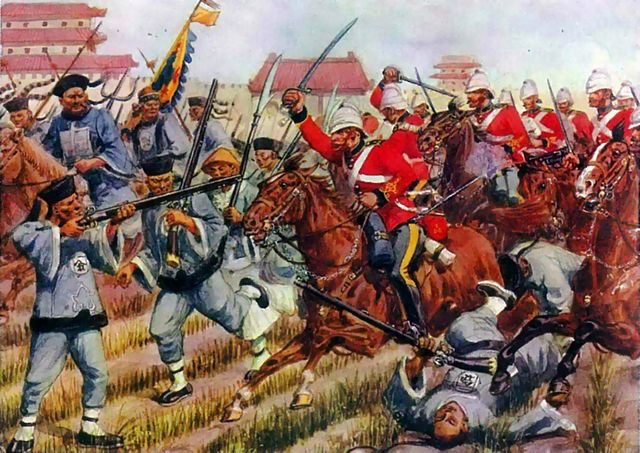
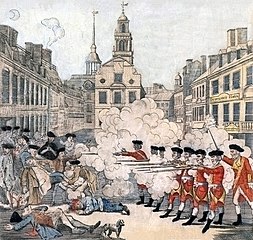
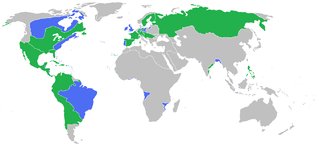
From the Habsburg marriage alliances to the War of Spanish Succession, to the War of Jenkins’ Ear and the Seven Years War; to the Anarchy in India after Aurangzeb’s death and the founding of Afghanistan by Ahmad Shah Durrani. Some glimpses of three centuries of power politics in world history.
The Anti-Empire Project Episode 52: Reading Fanon with Stefan Kipfer
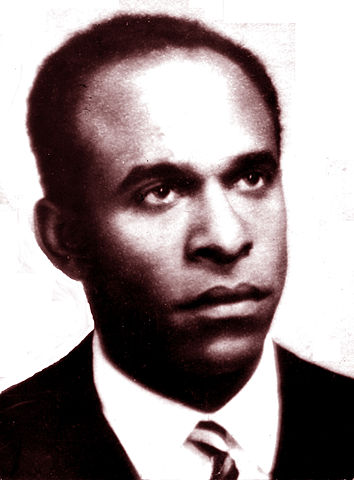
Stefan Kipfer and I talk about the lessons we learned from reading the revolutionary Frantz Fanon, author of The Wretched of the Earth and Black Skin, White Masks.
The Anti-Empire Project Episode 51: What is Ecological Economics? With Peter Victor.
I talk to Ecological Economist Peter Victor, author of Managing Without Growth, about the idea of the economy taking place within a biological envelope, what is required for market prices to reflect value, and the pitfalls of the valuation of natural capital.
The Anti-Empire Project Episode 50: Iranian Tanker Arrives in Venezuela – quick reaction
A quick 12 minute reaction as the first Iranian tanker (Fortune) arrives in Venezuela with gasoline to alleviate shortages there. Some notes on the cruelty of the US sanctions regime, on why an oil producing country like Venezuela needs gasoline (for now), and what is likely to happen next.
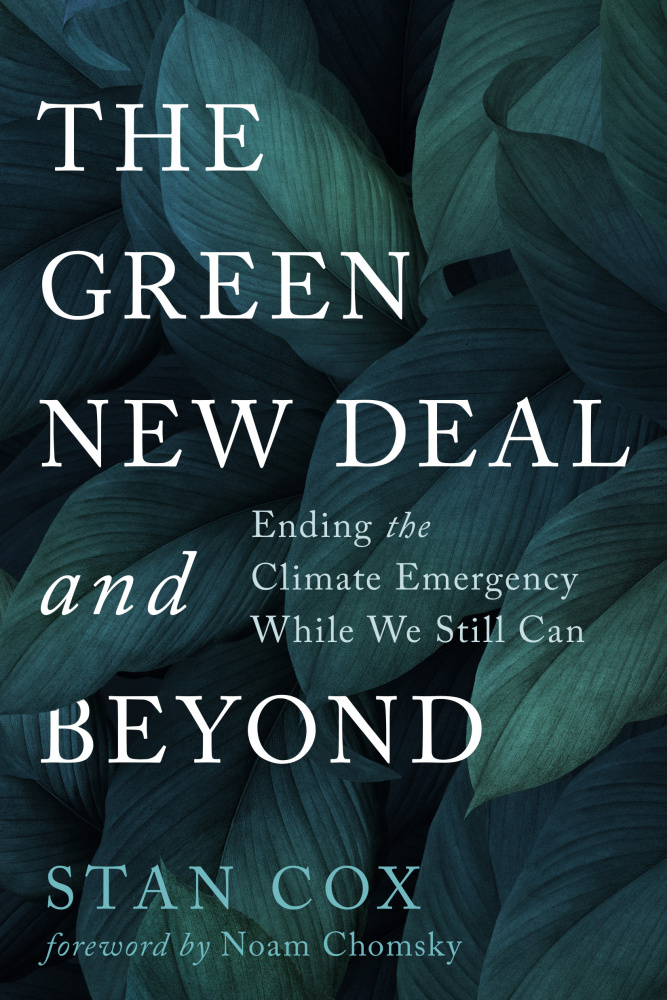
The Anti-Empire Project Episode 49: Beyond the Green New Deal, with Stan Cox
I talk to Stan Cox about his new book, The Green New Deal and Beyond: Ending the Climate Emergency While We Still Can. We talk about the good aspects of the Green New Deal (especially the New Deal aspects), some of the assumptions that will have to be revised (that good fuels will automatically crowd out bad, that we can grow our way out of the emergency, etc.) and discuss some policies that could actually work.
Chapter 7: Solidarity instead of charity (sample of Path of the Unarmed)
Chapter 7 of Path of the Unarmed: Solidarity instead of charity
Welcome especially to new subscribers!
I’ve got a new article that I will be sending around, hopefully in the next few days. Until then, though, I thought I would send what I posted tonight, Chapter 7 of POTU. You’ve been hearing a lot about billionaires, who like to talk about how gracious and generous they are. Here’s the discussion about it that the characters have in POTU.
Remember I’ll be posting every Wednesday and Saturday night until all 20 chapters are posted.
[Path of the Unarmed Chapter 7 on Wattpad]
Hope you’re all doing OK in these strange times.
-Justin
——–
Chapter 7: Solidarity instead of charity
“What about getting rich and then giving back to defeat poverty, end child marriage, or otherwise make the world a better place?”
“It won’t work,” Disarmed said. “There are several problems:
“First, the good you can do with charitable donations is usually going to be cancelled out by the bad you do to acquire the fortune in the first place. Take a big charitable foundation – the Bill and Melinda Gates foundation. They are trying to cure malaria in Africa, let’s say. So, Bill Gates made his fortune by establishing a monopoly over an aspect of the computer business – he’s done many things to prevent competitors from entering and after doing some creative things (that others could have done and were doing at the time) he probably set computer technology back in order to prevent competition. Same goes for less charitable tech billionaires like the Apple or Google billionaires. Generations ago, robber barons made huge fortunes by establishing monpolies over railway, roads, fossil fuels – they stole land from Indigenous people, defrauded by mismeasuring the oil, broke the law, killed workers for trying to unionize or go on strike. Then they gave money away through charitable trusts.”
“What if there was a clean way to make a billion dollars, and give it back?”
“There isn’t.”
“But what if there was?” Unarmed insisted. “Making solar panels or something.”
“Even to make solar panels, the only way to make a huge fortune would be to charge more than you have to to consumers, pay less than you could to workers, cut corners on materials or taking care of the environment – somewhere, there would have to be a squeeze. If I were in business making something I wanted everyone to have and found I was making huge amounts of money I would pay the workers more, or charge less for the product.”
“Fine, but still. What if my rich uncle died and left me a billion dollars, or I won the lottery. I have no workers, I have no products. Couldn’t I do something good with the money?”
“Of course! Money is a tremendous resource. The wealthy are very good at turning it into power. Leftists know that the people will never have enough money to use to turn into power the same way – but we of course need some money, we all do.”
“So why did you say it wouldn’t work?”
“Because even if you did get the money somehow without destroying something valuable (which I don’t think you could, especially if we include your soul or at least your conscience as something valuable) you would run into the next problem. Charity can provide resources to make really bad problems a bit better, but it could never tackle inequality. The wealthiest billionaires giving away reasonably large fractions of their fortunes can’t provide what a government can provide – universal programs like health care or education that give the same standards to everyone and have the effect of putting ordinary, poor people or working people on the same footing in terms of those services as the wealthy. Charity also won’t get Indigenous people their land back, nor will it stop the criminal justice system from persecuting Black people.
“Wealthy people prefer to give to charity because they can decide where the money goes and what it does. They think they know better than governments. But unlike a wealthy foundation or corporation, people could have a say over what happens in a government – depending on how democratic their government is, they could have a lot of say. But if it’s just a billionaire deciding where he feels like giving money, maybe he’ll think paying surgeons to save people from heart attacks is cool one year and then he’ll want to clean up a river the next – what happens to the heart patients? With public funding there’s continuity.”
“So far you’ve said the problems are that getting rich usually involves doing some harm (or as they say, behind every great fortune is a great crime), that charity cannot tackle inequality or redistribute wealth, and that charity doesn’t have continuity the way public programs do”, Unarmed said.
“That’s right. And there’s two more points,” Disarmed said.
“Charitable programs are used as a way for the wealthy to avoid paying taxes, and it’s taxes that enable governments to run public programs. So in the end, it’s not just making the fortune that’s harmful, it’s all the tax avoidance that the wealthy do – which is a lot of what they do, by the way – that is harmful.
“The last point is that the wealthy don’t just give to create a good program or to solve some problem or even just to avoid taxes. When they give to a school system, they end up taking control of the system. When they give to a conservation area, they end up taking control of the activities that take place there. As one leftist writer once wrote, ‘all this philanthropy seems to provide the wealthy with control over public systems by virtue of giving a small portion of the total money to a program.
Through that small portion of a contribution, they buy control over a whole system (like New York’s public education system, university priorities, or public health systems in various African countries).’”
“Sounds awful. I’ll make sure I look up that obscure writer later.1 I was really hoping that charity could be a shortcut. What about volunteering?” Unarmed asked.
“Volunteering has a lot in common with charity. It comes from a good impulse, but by itself it cannot change the system, unless you count your work to change the world – your activism – as a kind of volunteering, which I suppose it is.”
“I should think so,” Unarmed said. “But here’s the thing,” he continued. “At first I was having trouble understanding your message. But now I am understanding that you are trying to tell me that I will have a better life, even for myself, if I spend my time and energy trying to make the world a better place. And I’ve agreed to that. But since I agreed, I’ve proposed several ideas – first, becoming more spiritual and trying to send good vibes out into the world, second, voting for progressive candidates in elections, third, changing my consumption patterns and becoming vegan, and fourth, making money and using it for charity – that I could do. And while you haven’t exactly shot me down, you’ve said these are all basically false leads and they aren’t what I should be focusing on.
“So, if I do become a leftist, what is it that I’m supposed to do to make the world a better place?”
“I thought you’d never ask,” Disarmed said.
Civilizations Series Episode 8: Ideas – Scientific Revolution – Enlightenment
We talk about the scientific revolution – Galileo, Brahe, Kepler, Newton, Rousseau, Voltaire, Montesquieu and others; and take a tour of the Enlightenment as well, and the importance of Enlightenment ideas in the revolutions that would soon follow it.
Civilizations Series Episode 7: Religion – Tolerance – Intolerance, Mostly in England
Dave Power and I talk about the rise of Protestantism, focusing on the characters of Martin Luther (including his advice to Philip Landgrave of Hesse), and Henry VIII.
Anti-Empire Project Episode 48: The Goudreau-Silvercorp Coup in Venezuela, Foiled
I talk to Maria Victor after the foiling of the May 3, 2020 terrorist plot against Venezuela, which involved the infiltration of American mercenaries by boat from Colombia. One of the mercenaries, Jean Goudreau of Silvercorp, gave an interview just before the attack where he revealed a signed contract with self-declared president Juan Guaido. We talk about this as the latest in a continuous run of coup attempts against Venezuela for the past twenty years.
The Brief 009: Hindutva Crackdown
India jails students, writers, and rights activists as the media works in effective coordination with the government inflaming sectarian divides, suppressing dissent and lionizing Modi. We speak to Shalini Gera and Freny Manecksha about India’s Hindutva crackdown.