Why did they overthrow Gaddafi?

The same reason they overthrew everyone else

This post is inspired by The East is a Podcast’s latest episodes on Libya, featuring Matteo Capasso, discussing the rise and fall of Gaddafi’s revolution from 1969-2011. Sina’s episodes coincided with my own research, with my Civilizations co-host Dave Power, into Italy’s initial invasion of Libya in 1911-12. We did our own episode about that invasion, which culminated in Italy committing genocide in Libya after WWI – and we’ll be returning to the long war there and the genocide in our show.

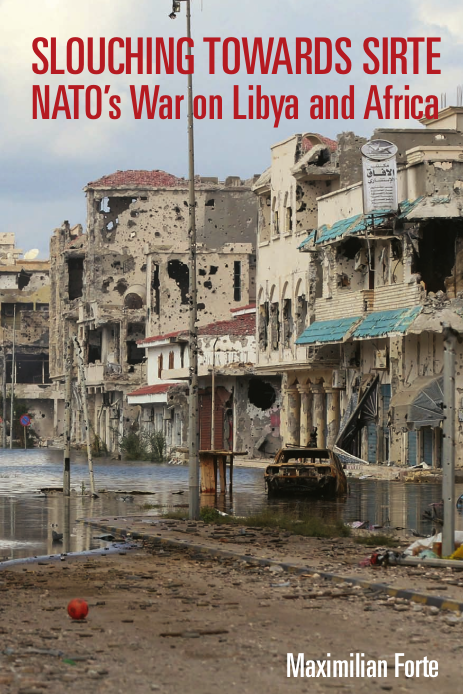
But what I wanted to do in this post is use the occasion of Sina’s episode to talk about a book that profoundly changed the way I viewed Gaddafi and Libya. That book is the 2012 Slouching Towards Sirte: NATO’s War on Libya and Africa, by Maximilien Forte. When there is a US war and propaganda campaign against a targeted country, I instinctively look for books from different perspectives, including if possible the strongest possible case for the other side. I don’t need anti-war books to be fair and balanced: we’re subjected to non-stop pro-war, biased propaganda. I don’t mind reading biased anti-war propaganda. I can do the balancing myself.
I had read a couple of other books about Libya or touching on it. I’d read a bit about the Chadian civil war in pro-US sources like Burr & Collins’s 1999 Africa’s Thirty Years War: Chad-Libya-the Sudan, 1963-1993. I knew about Gaddafi’s Green Book and his Isratine proposal. So, like any consumer of Western media, I got the impression of a snazzy-dressing, mentally unstable, adventurist dictator. Not so different than impressions of Saddam Hussein provided in South Park: The Movie, or of Kim Jong-Un that you would get from Kim Jong-Un’s Little Book of Calm.

Most of the anti-war material I read didn’t really dislodge this view.

But Forte’s book did.

Whenever any US-based regime change is successful, it is cheap and easy to make the argument that the ousted leader was a strategic failure. I have personally heard such arguments about:

  • the Afghan communists, overthrown in 1992;

  • Aristide in Haiti, overthrown in 1991 and again in 2004;

  • Chavez in Venezuela when he was overthrown for a couple of days in 2002;

  • Saddam Hussein in Iraq in 1990 and 2003;

  • Assad in Syria from 2011 on;

  • Hizbullah in Lebanon (for supporting Assad);

  • Milosevic in Yugoslavia;

  • Lula and Dilma in Brazil;

  • Zelaya in Honduras.

These are just the ones I have personally heard in my own life. I know that such arguments have been constructed about every single leader that’s been regime-changed at least since the early phase of the Scramble for Africa in the 1830s when France grabbed Algeria, and probably before.

Now, the fact that they’re formulaic and repeated in every single case doesn’t necessarily make them false. Nor does it make ousted leaders angels or martyrs. It does, however, impose an extremely heavy burden of proof, so much so that it might behoove readers to reverse the default assumption. Maybe if the regime-changers were lying the last 100 times, they’re lying this time.

For Aristide, the argument went that he shouldn’t have accepted the US intervention to put him back into power in 1995; he should have conducted more repression against those who were trying to overthrow him from 2001 on; he should have conducted less repression against same; he should have been more/less conciliatory; he shouldn’t have asked for the indemnity money France stole from Haiti…

And what about Gaddafi? He shouldn’t have antagonized the imperialists with his bombastic style; he shouldn’t have antagonized them by supporting Palestinian armed organizations, the IRA, the ANC; he should have avoided intervening in the Chad war and the fight with that France-backed government; he shouldn’t have made a deal to try to normalize relations with the imperialists, since they overthrew him anyway…
The implication in all these cases is that there was some set of perfect strategic choices that could have kept the nationalist regime in power and kept the revolution moving forward. Maybe there was. But is this a fruitful use of energy, criticizing the failings of third world leaders facing impossible odds? Our efforts might be more profitably deployed in activities other than criticizing the strategic errors of such leaders.

(That’s not to say there aren’t a few good principles that Third World leaders have learned from hard experience. The Patnaiks distilled a few economic ones at the end of their book, Capital and Imperialism: impose capital controls, survive the CIA coup attempt, impose import controls, stimulate the domestic market, raise agircultural productivity, redistribute land, provide rights to employment, food, healthcare, education, pension/disability for 10% of GDP, don’t apologize for economic nationalism. I might eventually do a post just on these points, but not right now).

Anyway, there are several general retorts to the “X was bad and deserved to be overthrown by the imperialists”.

  1. Is the country better of now than it was under X? (Almost always the answer is disastrously no – Libya is an extreme case, though Iraq, Haiti, and Afghanistan are right up there).

  2. If X was so bad, why did the imperialists overthrow him at all?

The answers to #2 can be found in Maximilien Forte’s book. Here are a few:

  • Under Gaddafi’s regime Libya’s life expectancy grew from 51 years to 74. Literacy grew to 95% for men and 78% for women, and per capita income increased to $16,300. It was the only continental African nation to rank “high” in the Human Development Index.

  • Gaddafi supported the anti-apartheid struggle in South Africa. Mandela told Gaddafi: “your readiness to provide us with the facilities of forming an army of liberation indicated your commitment to the fight for peace and human rights in the world.”

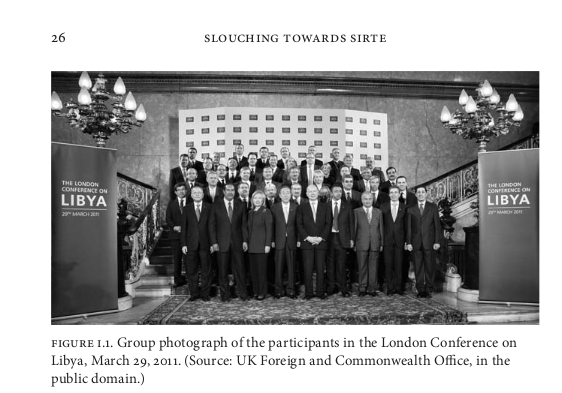
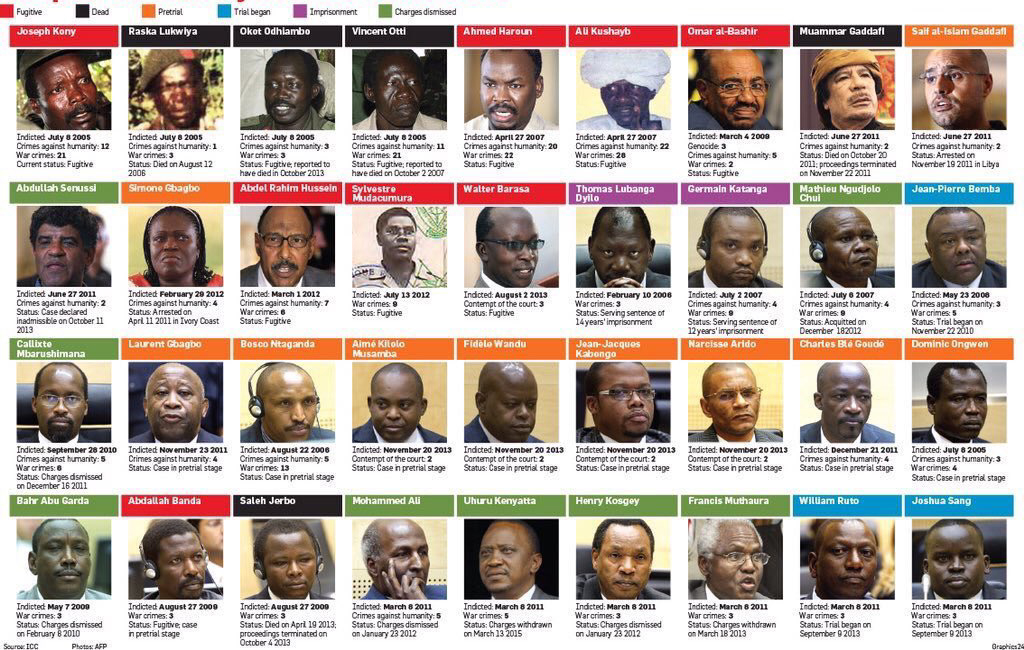
  • Under Gaddafi, Libya was a major financial backer of the African Union and an advocate for independent, AU institutions including sovereignty over resources, an African Monetary Fund to replace the IMF, and independence from the International Criminal Court which, until it added a couple of Russians to its indictment list, has only ever prosecuted Africans.
Contrast this with the photo of those gathered to overthrow Gaddafi in 2011, above. Notice anything?

  • Libya under Gaddafi invested around $150 billion in infrastructure and agriculture projects in Africa.

  • A minor point: Gaddafi treated African leaders and diplomats with dignity (as China does) in contrast with the West which continues to engage in calculated humiliation and indignities of the same leaders.

  • Gaddafi was a fierce adversary of the US African Command (AFRICOM). After his overthrow in 2011, the US announced deployment to four more African countries: Central African Republic, Uganda, South Sudan, and the DR Congo, and 14 joint military exercises in 2012.

Forte suggests that Gaddafi’s “turn toward Africa” was “arguably a turn away from the Arab world’“. While Gaddafi had worked in many Arab unity initiatives, he gave up around 1999. It was Gaddafi’s Africa policy that got him overthrown.

As always, there’s more. Forte’s book is devastatingly argued, has rich footnotes, and a 30-page reference list. I wasn’t able to emerge from my reading of it with the same stereotyped idea of Gaddafi as an erratic and silly person. Indeed, I don’t even think that the US players that overthrew him saw him that way. That’s a myth for mass consumption, an expression of hatred.

(Another aside, I realized watching pro-war propaganda that while we think of hate speech in terms of screaming, clawing, and gnashing teeth, a lot of hate is expressed through mockery and ridicule. Certainly the caricatures of Gaddafi are hateful.)

When she heard Gaddafi was murdered, Hillary Clinton was being interviewed when the note came in on her phone. Her spontaneous reaction was to say: “We came, we saw, he died.” And to burst into what appears to be a truly satisfied laugh, a rare unscripted moment of celebration for a politician renowned for extraordinary self-control.
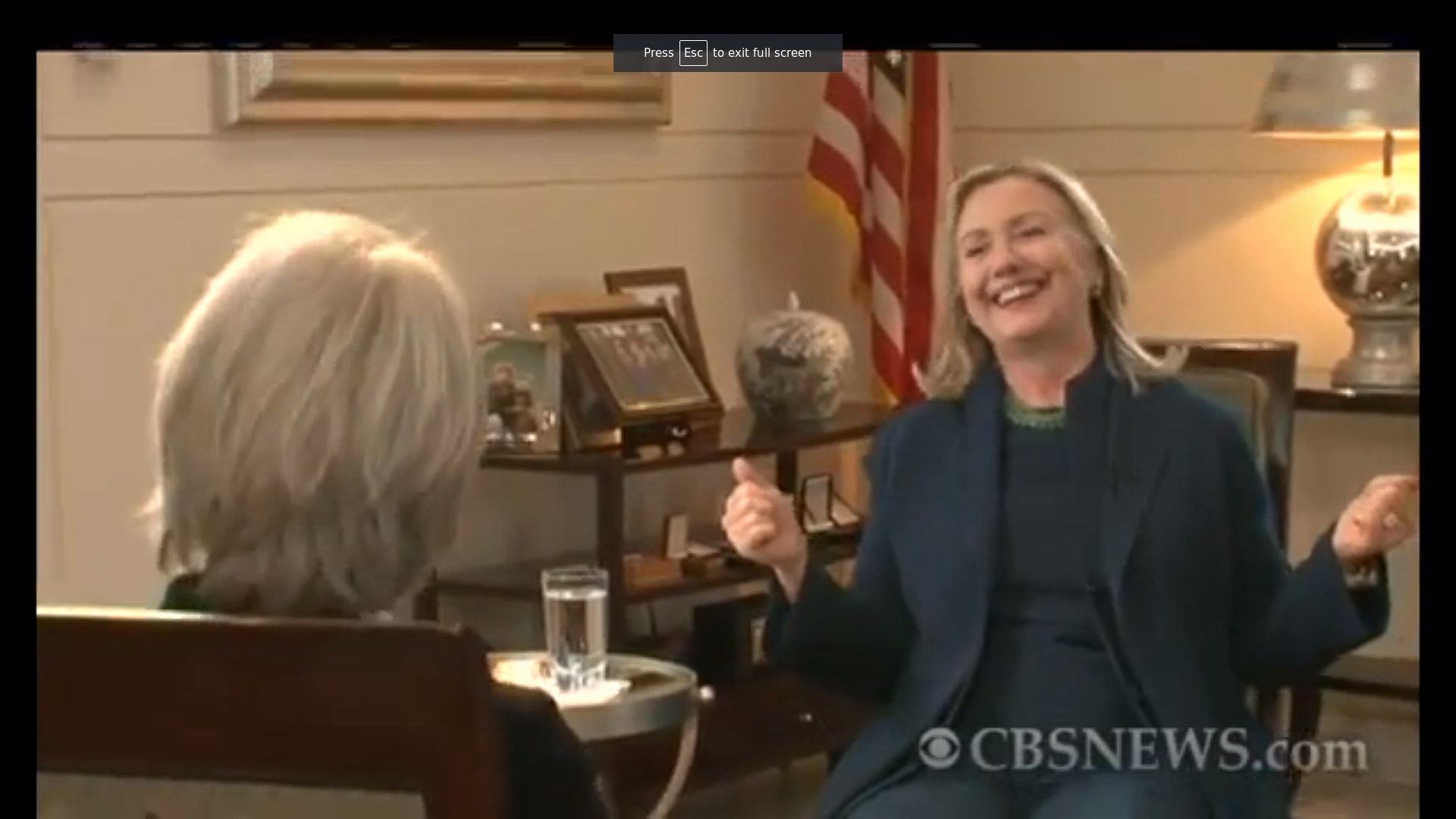
There’s nothing to celebrate.
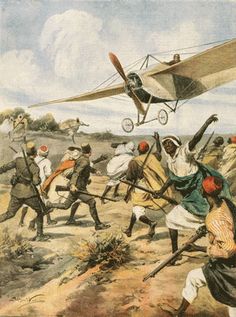
World War Civ 20: Italy invades Libya, 1911-12

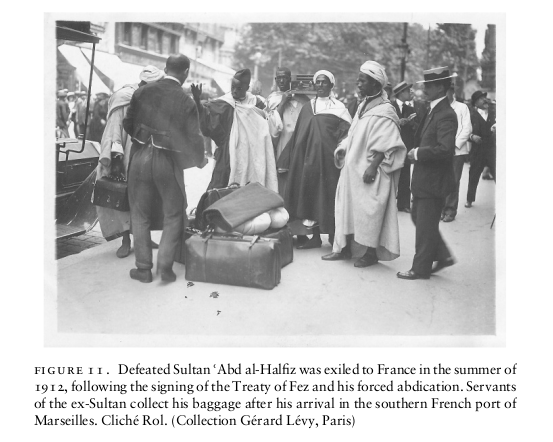
After losing to Ethiopia, Italy tries to restore its reputation as a colonizer by invading Libya, following directly from France’s invasion of Morocco and leading directly to the Balkan War. The dominoes keep falling as the European colonizers keep grabbing. Libya becomes a battlefront for decades – one we will return to in future episodes.

Imperialism is plagiarism

Some notes on a few centuries of stolen knowledge

Plagiarism is when you take credit for someone else’s work. Powerful individuals do it all the time. The powerless, when caught, are usually punished for it. Like bullying, there is a social norm against it and a stigma attached. But also like bullying, it is hard to teach that it is bad when it is one of the structures that underlie the international order. Around here, imperialism is fundamentally about the drain of wealth from poor countries to rich countries and from Indigenous peoples to colonizers. But imperialism is about more than just wealth: knowledge is stolen too. When imperialists steal knowledge without attribution, it’s not just plagiarism: it’s imperialist plagiarism.

And like I said, it is so pervasive as to be almost invisible. So much so that it appears in books about completely unrelated topics. Imagine my surprise when I was just trying to relax and read a nice book about how to survive the apocalypse, namely Lewis Dartnell’s 2014 book The Knowledge: How to Rebuild Civilization in the Aftermath of a Cataclysm, when I came across this passage (on pg. 11 if you’re looking):

“One of the major catalysts for the Renaissance in the 15th and 16th centuries was the trickle of ancient learning back into Western Europe. Much of this knowledge, lost with the fall of the Roman Empire, was preserved and propagated by Arab scholars carefully translating and copying texts; other manuscripts were rediscovered by European scholars.”

What’s wrong with this, you ask?

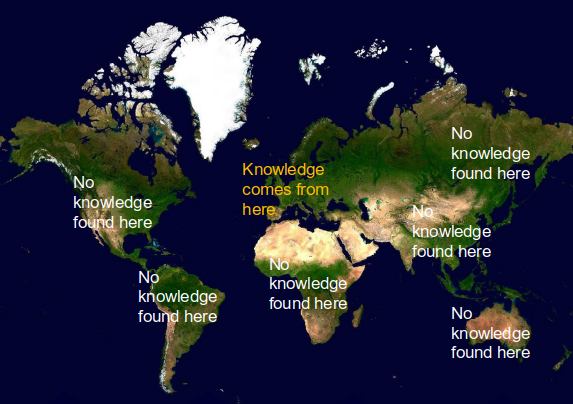
There seems to be a model of global knowledge distribution that looks something like this:

A few questions arise.

1. Did the West’s ancient learning come from Greece & Rome?

2. Was the role of Islamic civilizations to copy & translate texts?

3. Did Asia have any learning worth talking about?

4. Did Indigenous civilizations?

Let’s take each one in turn.

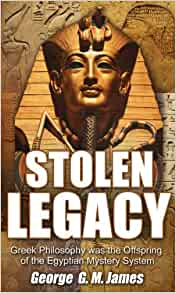
  1. When it comes to Ancient Greece and Rome and where they got their knowledge, there are a number of readings that are of interest, and some striking points that are made by, for example, George G.M. James in his 1954 book Stolen Legacy: Greek Philosophy was the Offspring of the Egyptian Mystery System.

When it comes to Ancient Greece, the fount of knowledge is Aristotle, who wrote 400-1000 books on every topic from physics to medicine to poetics and biology. These books were written in a remarkable period of productivity that Aristotle experienced very shortly after Alexander the Great conquered and looted the great library at the city he then named Alexandria. Did Aristotle really write FOUR HUNDRED books on EVERY TOPIC then known to humanity? George James: “Throughout the intellectual advancement of man, the world has witnessed many a genius; but those have always been specialists in particular fields, not specialists in every branch of science.”

Maybe Aristotle just copied the Egyptian library? In which case Ancient Greek knowledge, which was the fountain of Ancient Roman knowledge, came from Africa (and we haven’t even talked about all the knowledge Greece acquired from its long interactions with Persia and points east of there…). Others who have made this case include Chancellor Williams, The Destruction of Black Civilization, Cheikh Anta Diop, The African Origin of Civilization: Myth or Reality, and of course Martin Bernal, Black Athena: The Afroasiatic Roots of Classical Civilization.

  1. Next, we have the idea that the Islamic scholars’ role was to copy and translate texts! Is that what they did?

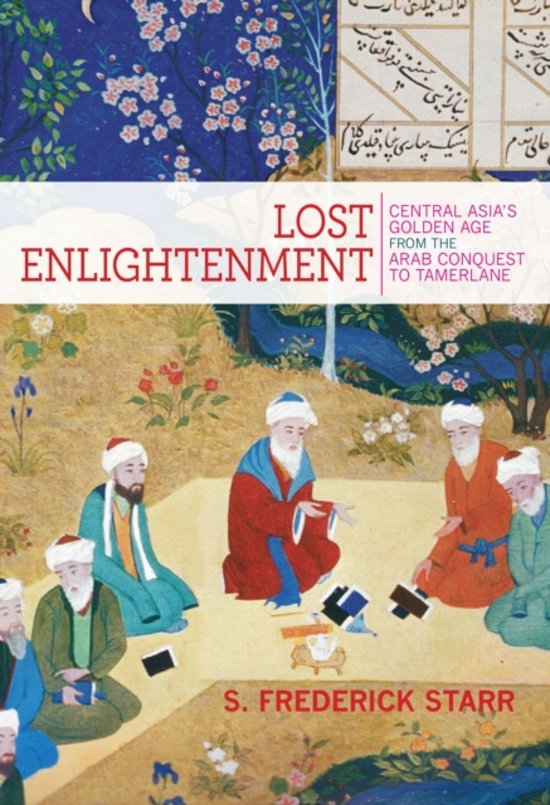
In his 2015 book, Lost Enlightenment: Central Asia’s Golden Age from the Arab Conquest to Tamerlane, Frederick Starr talks about the original and extraordinary contributions to knowledge from medieval Islamic scholars like Al Biruni (973-1050) who separated astronomy from astrology; discovered elliptical orbits and earth’s rotation; calculated the radius of the earth and hypothesized that the American continent existed. Al Khwarazmi (780-850) solved the quadratic equation, treated algebra as an independent discipline, added sine and cosine tables and the first table of tangents. It goes a little bit beyond the copying and translating of texts!

  1. Let’s go a bit farther east, shall we? Because luckily for the advancement of science, these Muslim scientists were not merely reading Greek and Roman texts. They were reading Hindu mathematicians like Aryabhata (476-550) from Nalanda University, who got us the zero, approximated pi, solved the summation of series of squares and cubes, and Varahamihira (505-587) whose astronomical work was used by al-Biruni. Among other discoveries, Varahamihira found that reflection is caused by the back-scattering of particles.

I haven’t even mentioned China, which would require, rather than a newsletter, an immense multivolume over years — how do I know it would require this? Because that is what Joseph Needham produced…

Some of the advancements made in China that are now adopted everywhere are outlined in John M. Hobson’s 2004 book, the Eastern Origins of Western Civilization. Here’s a partial list.

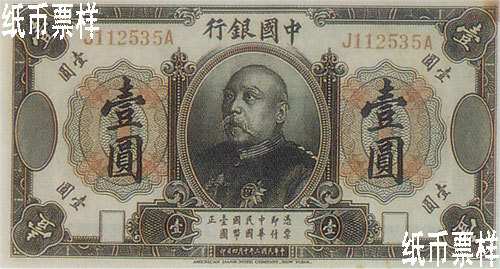
Education – exams – economic analysis – paper money – markets – urbanization – publishing industry – block printing

Manufacturing of: metals, tea, paper, silk, porcelain, dyes, glass, steel (cast iron, coke, steam power), petrol and natural gas for fuel

Agriculture: mouldboard plough, rotary winnowing machine, seed drill, crop rotation

Sailing: compass, square hull, sternpost rudder, fore and aft sails, watertight compartments, gunpowder, cannons, muskets

  1. Our survey is now nearly complete, in that we have shown the origins of human knowledge in both Africa and Asia. But as vast as those knowledges are, humanity in 2023 would be suffering incredible ignorance without the contributions of the Indigenous civilizations of the Americas (and of Oceania).

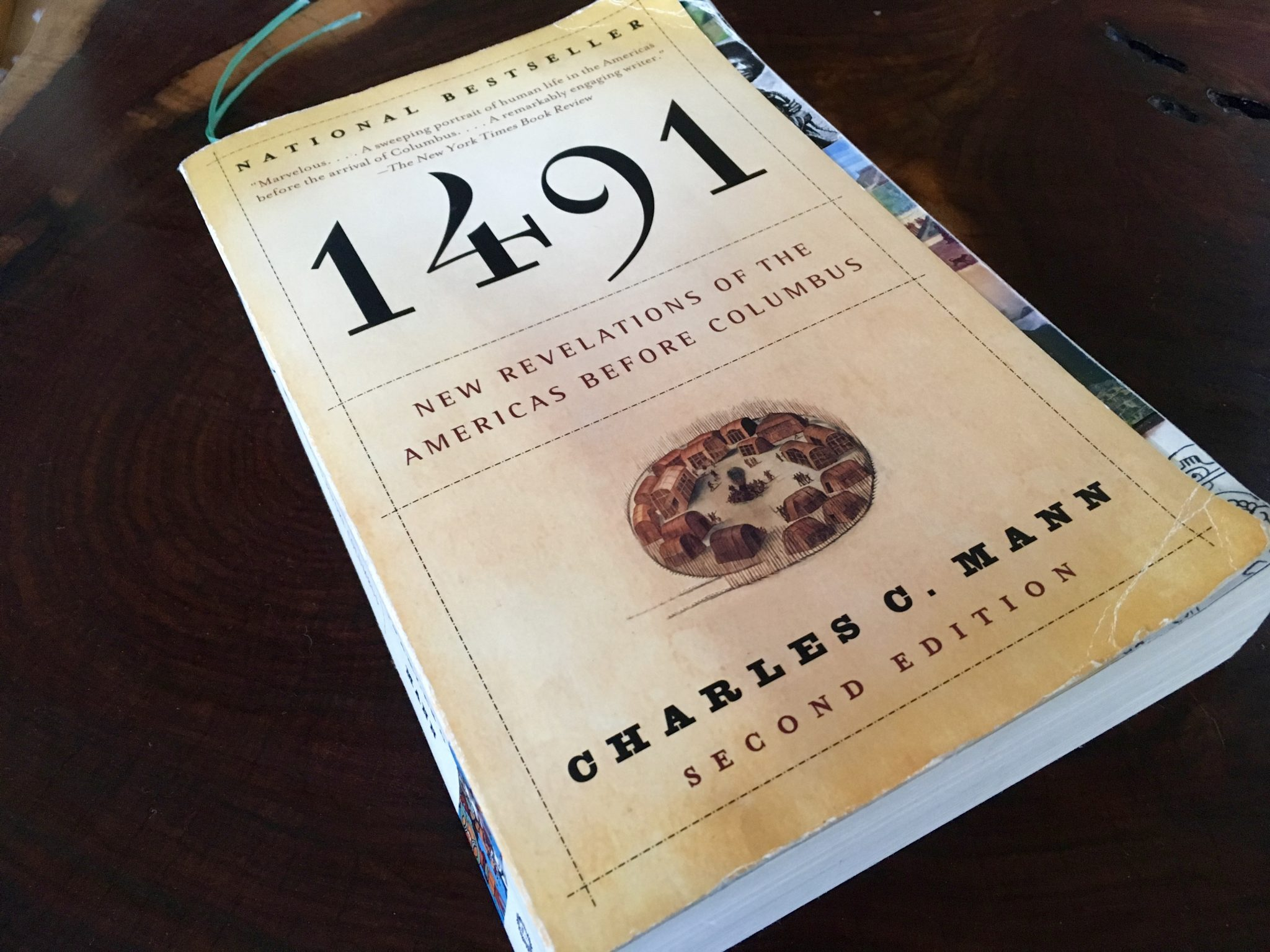
Some surveys of the contributions of Indigenous civilizations include Charles Mann’s 1491: New Revelations of the Americas Before Columbus and David Graeber and David Wengrow’s The Dawn of Everything: A New History of Humanity.

Some concepts that come from Indigenous civilizations: Democracy, deliberation, political debate, freedom, diplomacy, and ecological sustainability. Graeber and Wengrow write the following summary:

“Let’s pause for a moment to take stock. In the years between 1703 and 1751, as we’ve seen, the indigenous American critique of European society had an enormous impact on European thought. What began as widespread expressions of outrage and distaste by Americans (when first exposed to European mores) eventually evolved, through a thousand conversations, conducted in dozens of languages from Portuguese to Russian, into an argument about the nature of authority, decency, social responsibility and, above all, freedom. As it became clear to French observers that most indigenous Americans saw individual autonomy and freedom of action as consummate values – organizing their own lives in such a way as to minimize any possibility of one human being becoming subordinated to the will of another, and hence viewing French society as essentially one of fractious slaves – they reacted in a variety of different ways.

“Some, like the Jesuits, condemned the principle of freedom outright. Others – settlers, intellectuals and members of the reading public back home – came to see it as a provocative and appealing social proposition.”

There are books – libraries – filled with knowledge that was built on these plagiarized foundations. In many cases, the knowledge was taken out of its context and alienated from its source. Not just plagiarized, but corrupted as well. There is a lot more material out there about this (JM Blaut, Gunder Frank, Bagchi…) and in fact I would love to hear if you know of other sources along these lines.

My point in this little survey has been to refute the pillar of racist ideology that knowledge comes from the West and is diffused to the world through semi benign colonial processes. In fact, the West has no special claim to have developed knowledge. Some things came from the West: most things did not. Much that is claimed as Western knowledge comes from elsewhere.

Now here we are, and humanity has the stock of knowledge that it has. We have to make the most of it and maybe it doesn’t matter all that much where it came from, but that everybody gets it and what we can do with it.

But I still don’t think Aristotle wrote all those books…

[I first presented these readings at a conference at York U on May 16, 2023]

Renewable energy development is less important than stopping Chinese industry!

There’s a photovoltaic war to prove it – but China’s won it for now

Janet Yellen went to China and warned them there would be consequences if they didn’t adopt a market economy. There’s so many admissions in this little statement that shouldn’t go unnoticed. If the market system is the best and most efficient, as its proponents claim, why would Yellen complain about China using state subsidies or protections and interfering in it? Wouldn’t that just allow the US to use the market to win the game? If the market is the “cheat code”, as the gamers say, then how could China “cheat” by using non-market mechanisms? The flip side of the coin is also there. If the US, as its officials repeatedly cry, is desperate to stop the rise of China, why would they advise China to take steps (like market reforms) that should, according to market theory, only accelerate China’s rise? Perhaps it is because Yellen knows market reforms would actually destroy the basis of China’s growth and ensure its subordination to the US.

I want to talk about one of these Chinese industries that has grown up under state subsidy and protection that is – again according to Western environmentalists – very important in the struggle against climate change: photovoltaics (solar panels) and other renewable energy technologies.

There’s this video from a youtube channel called Tech Teller that outlines some details about the rise of China’s PV industry. The news hook for the video was the arrest of a Chinese PV executive, Pu Yonghua of Jiangsu Green Power New Energy, in Germany. It looked like Germany was going to pull a Canada (with the kidnapping of Meng Wanzhou of Huawei) and get into a pointless years-long conflict at US urging. But it looks like Pu Yonghua was released a few days later.

Tech teller’s video provides some “startling figures” about China’s dominance in PV:

-of 150,000 PV patents worldwide, Chinese companies hold 120,000 of them.

-The top ten PV companies in the world are all Chinese.

-Chinese PV has a market share of 60% in the US and peaked at 95% in the EU. EU’s domestic PV capacity accounted for 3% of market share there.

-200 countries are customers of Chinese PV products.

The EU’s attempt to raise its renewable energy use to reduce its dependence on Russian gas is ultimately a plan to transfer its dependence on Russia — to China.

China’s PV industry is so far ahead that the US and EU industries are going to have a lot of difficulty catching up. This despite, as the video tells, depraved and repeated attempts to stop China from developing by both the US and EU.

There are problems with PV, as environmentalists like Stan Cox have noted, including the mining footprint of rare earths and the use of fossil fuels in their production. But there is a Green consensus on the need to get off of fossil fuels and PV technology will be key to get there. The imperialist anxiety to stop the rise of Chinese industry conflicts with Green the green priority for a transition to renewables. It is another case of Western imperialism vs the environment. If you believe climate change is an existential issue for the species like nuclear war, you could use Chomsky’s phrase and consider it a choice between Hegemony or Survival.

Which do you think the US will choose?

AER 128: CAUKUZians speak out!

Arama Rata, independent Maori researcher, and Carl Zha of Silk & Steel podcast are both back! Carl reports on his lived experience as a survivor of the Prigozhin coup in Moscow; Arama outlines the anti-AUKUS speaking tour she is on with other journalists and activists; I continue my rant about the sheer plagiarism of Canada’s China panic using David Brophy’s book about Australia’s China panic. We conclude with the possibility of a regular meeting of CAUKUSZians (Canada + AUKUS + new Zealand)

Olivia Chow is right to raise property taxes

And there’s more to it even than addressing a municipal revenue crisis

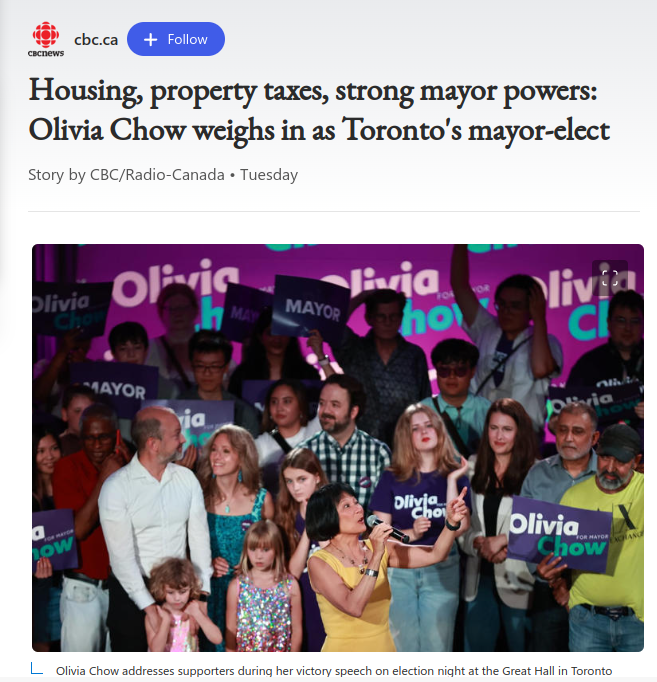
Of all the cheap propaganda tricks in Canadian media, the cheapest has to be using unflattering photographic angles of politicians you’re trying to discredit. CBC’s recent one of Olivia Chow is incredibly cheap.

Just wanted you to know, CBC, we see you. We know the trick. We know you had better photos where Olivia Chow was, say, looking at the camera, or smiling, or looking relaxed. But you picked this one. Cheap, CBC!

But that’s not what I’m doing here today. This is another political economy post and I should just face facts that this mailing list is going to have a lot of economic analysis. There’s probably no anti-empire project without economic analysis, so let’s start.

Western politicians campaign on austerity. They promise to keep taxes low and therefore, implicitly, to keep public services on the edge of collapse. This formula goes across political parties and could be a durable feature of Western democracies. Where politicians do talk about expanding public health or education or anything else that’s good, they take pains to explain how they can do this magically without any tax increases or any sacrifice by anyone who’s been accumulating wealth over the decades. So, when Olivia Chow campaigned for mayor of Toronto on a small property tax increase, I knew it would make her media enemies and earn her a full-fledged Canadian freakout. Which is unrolling as predictably as a forest fire after a sustained dry weather spell. So, in this post, I’ll tell you something surprising about property taxes, and why they are important.

It isn’t just the “culture of cheapness” that has led, e.g., to the city’s animal services taking up to 5 days to collect a dead animal or the transit commission more or less proudly announcing simultaneous fare hikes and service cuts.

It is also that low property taxes do not lead to lower housing costs, but to much higher ones.

There’s a bit of data to confirm this: If low property taxes led to the city being an affordable place to live, Toronto, which has low taxes, wouldn’t be one of the least affordable in North America.

To understand this, as often occurs, we need Michael Hudson.

The one city that beats Toronto, the least affordable in North America, is Vancouver, and some years ago Michael Hudson gave a lecture in that city to talk about the real estate crisis. In that lecture, Hudson outlined an argument for raising the land tax. As property values increase, most of the property value increase is taken by the government to pay for services, rather than by those who get that property value increase now. Can you guess who that is? It isn’t even the landlords. It’s the banks.

In Hudson’s analysis, the value of property is set by how much a bank is willing to lend against that property. From the bank’s perspective, the ideal value of a property is one where the bank gets the maximum monthly payment from the mortgage-holder. And the ideal value of all real estate across a city is the one where everyone is paying everything they earn above subsistence to the bank – whether there is an intermediary landlord who is collecting rent, or an intermediary homeowner who is paying a mortgage, most of the money should be captured by the bank in the end. Maximizing the total amount the bank gets in mortgage payments will leave many people unhoused, it’s true, or having to commute from far to work or go to school in the city. Those social costs can be borne by society though – perhaps by the city, with its ever-declining revenue (and its ever-rising police budgets). Hudson’s claim was shocking to the audience, who asked several questions.

Won’t higher property taxes just be passed on to tenants though, as higher rents? When asked this, Hudson argued that the tax law could be written to make that impossible (there are already controls on how much a landlord can raise rents).

What about those who are betting their future on increasing home values? This one is tougher, but Hudson’s brutal answer is that that is a bad bet: betting on increasing home values is betting on increasing debt loads. It’s unsustainable. As Cory Doctorow wrote in a post about this topic, “But asset accumulation isn’t — and can’t be — a path to widespread prosperity. A middle-class that relies on increasing property values as a means to fund their kids’ university tuition, their own retirements, and the next generation’s down-payments sows the seeds of its own destruction.” Doctorow’s point — which I agree with — is that there is more meaningful security in unions and social democracy – “employment-based security” than there is in “asset-based security.”

If Michael Hudson is right, higher property taxes would reduce property values. Banks, realizing that some of what they’re now collecting as mortgage would be taken in taxes, would be willing to lend less against those properties. Is that such a disaster? “Lower property values” sounds bad, while “more people being able to afford living in the city where they work” sounds good — but they’re the same thing.

There is one other thing going on with mortgages that it would be remiss not to mention: that is that interest rates are being hiked and Canadian banks will be collecting a lot more in interest than they’ve been collecting. This, too, will lower the value of real estate as there will be fewer people able to afford these higher payments — lower effective demand. Unlike taxes though, these increases won’t be opposed by the media and they won’t make things more affordable, they’ll just price people out of housing by higher interest payments on lowered property values rather than pricing them out through lower interest payments on higher property values. They’ll also drive the economy into a recession, increase unemployment and misery. When that happens, you can be sure that the Canadian media won’t blame the banks and their games with interest rates and asset inflation: they’ll blame progressive politicians like Olivia Chow and modest property tax increases. Don’t be fooled.

World War Civ 18: Japan annexes Korea 1910

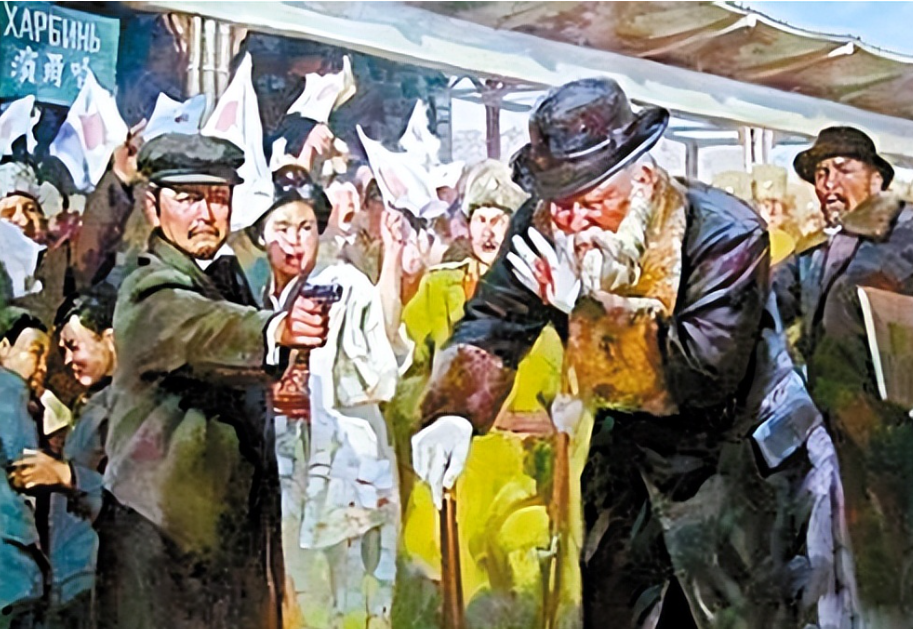
Japan’s annexation of Korea in 1910 is scramble-like colonial behavior; it is the beginning of a long and bold resistance by Korean patriots whose names will return; it is the occasion for studying Japanese colonialism in East Asia as well as its disputes with Russia. A short episode on Korea’s struggles from the Russo-Japanese War to the 1910 annexation.

IPE and MMT: a theoretical quibble

For both the podcast and a recent article on de-dollarization, I’ve been getting into some heavy duty political economy.

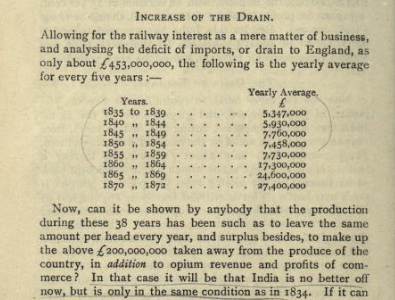
For both the podcast and a recent article on de-dollarization, I’ve been getting into some heavy duty political economy. One very valuable thread I’ve followed is sometimes called Indian Political Economy, or IPE. The tradition begins with Dadabhai Naoroji, who studied the way that the British Empire “drained” India. Naoroji’s best known book was the 1901 Poverty and un-British Rule in India, which is funny because in retrospect nothing is less un-British than draining India of all of its wealth (in several ways the book is a painful read, full of Naoroji trying to appeal to the better natures of the imperialists, but important as the beginning of a tradition!).

Today’s leading practitioners of IPE (unclear whether they’d identify as IPE since they’re really just P.E.s who happen to be from I and know a lot about I) include Utsa and Prabhat Patnaik, authors of such works as Capital and Imperialism and A Theory of Imperialism, both of which I used in the de-dollarization article. Utsa Patnaik’s research is where the figure of $45 trillion drained from India by Britain comes from. In Zak Cope’s book The Wealth of Some Nations, as well as research by Jason Hickel and his co-authors, you can read about the various mechanisms by which “drain” continues, to the tune of some $2 trillion per year, drained from the poor countries to the rich ones, year after year.

In the de-dollarization article there was a point that I wanted to make, that follows from IPE, which is the maintenance of the imperial currencies underlying the global economy – the gold standard in the British Empire and the dollar today – is based on the constant flow of free labor and commodities, of “drain” from the colonies (now neocolonies). If the Global South countries are able to carve out the ability to trade with one another without needing the dollar, as seems to be happening; and if the dollar isn’t replaced by another imperial currency regime, which it might not be… well, then the drain might also be coming to an end, which could be very good for the no-longer-drained countries who could then use those resources for some sensible combination of development and environmental protection.

None of which is really why I’m writing this post today. It’s instead to make a record of something I encountered in my research that didn’t fit into the article and doesn’t really fit anywhere, but is worth a short post of its own. Because in addition to using IPE, anyone trying to make sense of how money works in the economy will also encounter Modern Monetary Theory, or MMT. There is a very clearly written book by Stephanie Kelton called the Deficit Myth, but I was using a textbook called Modern Monetary Theory by Randall Wray. The point that MMTheorists make is that currencies are given force by taxes and are ultimately backed by states. This means governments don’t tax and spend, they create money and people accept and use the money because they know they can always use the money to pay their taxes.

Several consequences follow from this, the main one being that governments don’t need taxes or debt to create money. States are limited only by real resource and labor power constraints – the constraints of the real world. Debt ceiling debates, deficit scares, are all propaganda used for austerity politics. Inflation and deflation could both be managed by making sure the amount of currency issued matches the actual resources available in the economy.

This is all fine and a more realistic way of looking at money than the proponents of austerity. But Wray’s discussion of the history of money and of, for example, the gold standard, I don’t think holds up. Wray starts with a good point that accounting money preceds commodity (gold) money, meaning the earliest forms of money were actually debt marks in temple and palace records, and that gold came later. But then he asks, “what were coins and why did they contain precious metal? To be sure, we do not know.” Because coins and gold have been very important, Wray suggests that they became important for Athenian democrats who mocked the wealthy and powerful by using gold for something so sullied as coinage (pp. 156-157). I don’t think this is right, and I think the commitment to the point MMTheorists are making about the importance of state power in creating currency causes Wray to dismiss the whole role of gold in the imperial economy – as well as its historic role in imposing deflation and “drain”. Wray dismisses this all as a “monetary mess”: “The sovereign was always short of gold and silver,” which was “needed to conduct the foreign wars”, which made for a “nice vicious circle”. This “monetary mess”, Wray writes, “was resolved only very gradually with the rise of the modern nation state, a clear adoption of nominalism in coinage, and with abandonment of the long practiced phenomenon of including precious metal in coins.”

You all know I have many opinions about the British Empire. One opinion I do not hold is that it was full of idiots who created a “monetary mess”. They weren’t having a fit of absence of mind then and they aren’t doing so now. The gold standard then, and debt- and deficit-based global finance now, are shining examples of methods to drain wealth from the global south. The MMTheorists want to cut through the propaganda, which is fine. But to understand how the mechanisms work historically, why gold was – and remains – more than a “mess”, how the currency regime underlying the global economy is a tool for plundering the poor countries – for that, you’ll need IPE more than MMT.