The Hodeidah Tribunal

A fictional story of Victor’s Justice

[Dear Readers: For a few months I’ve imagined writing a speculative novel or novella of a post-genocide world in which a group of heroes travel the world catching the war criminals and enablers behind the current genocide. The last act of the story would be the actual trial, which would give me the chance to show how much of the Nuremberg Trial text applies directly to the situation we find ourselves in today. All of which is to say, this scene is rather stripped of the elements of dramatic writing, but it could nonetheless be considered an excerpt of a future book… ]

A favorite target of the now shattered US empire, the old port city of Hodeidah was hit with saturation airstrikes in the final months of the war that liberated the Middle East from occupation. At the very end, the aircraft carrier USS Trump’s F-35s emptied their bomb bays on a final destructive run, after which the Trump left the Red Sea and ran into ‘mechanical troubles’ in the Mediterranean. It never got home. But Hodeidah was rebuilt – with a set of buildings rebuilt in the old style – and in it, a palace custom-built for the express purpose of holding the proceedings that were about to occur. 

Old buildings in Sanaa, Yemen

In the vast, main hall, the prisoners sat together in a glass-encased defendants’ box to the right. 
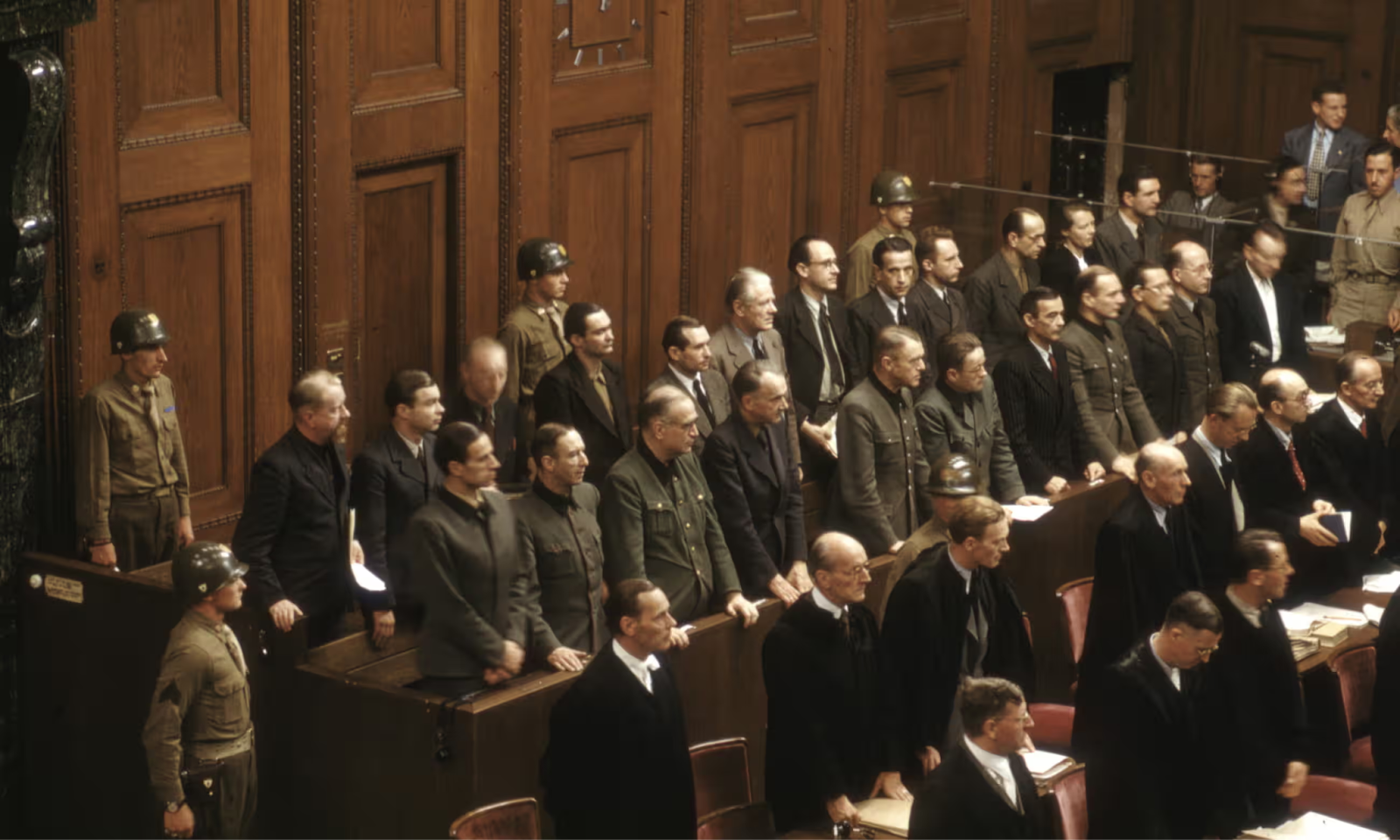
Nuremberg defendants

The panel of judges shuffled inscrutably onto the elevated stage. Wardah and the other prosecutors sat directly across from their legal opponents: Egyptian, Saudi, and Jordanian lawyers defending the war criminals in the dock, their Western advisors sitting directly behind them. The proceedings were in Arabic, the jurisprudence Islamic, and so the defense team had deemed it best to have Arabs be the faces and voices of the defense and let the Westerners work behind the legal front line. 
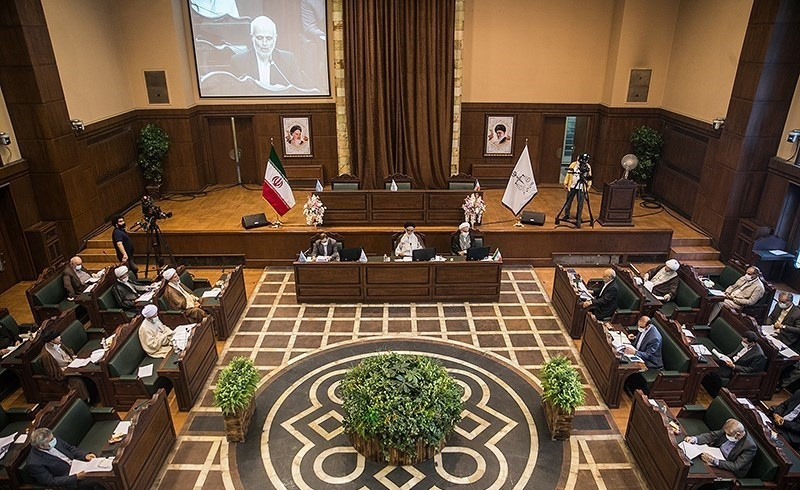
A 2020 meeting of the Iranian Supreme Court

A pale, thin man with an impeccable haircut sat in the defendant box wearing a familiar smirk. The younger woman beside him leaned forward, twirling her hair and looking bored, appearing confident that nothing would befall her from this silly court. Watching them, Wardah found herself unbothered by their inaudible whisperings and incomprehensible complicities. As the leader of the Yemeni prosecution team, she felt a responsibility to history, to the past, to the living, to the survivors, to the children who would have to rebuild the nation and whose grief cried out for justice. Like hers. 

When the room quieted and the bailiff signaled to her that her turn to speak had come, she walked to the podium and looked at the judges, ignoring completely the assembled criminals on display to the side.

“When the first Nazis were defeated, some of them faced a trial. One of the prosecutors, whose words I will quote here today (1), said that that trial had a grave responsibility because the Nazi crimes were so calculated, so malignant, so devastating, that civilization could not tolerate their being ignored because it could not survive their being repeated.

“They were repeated. And that American man, Justice Robert Jackson, said that instead of vengeance, putting the Nazis on trial, was a tribute which Power paid to Reason. Like Resistance fighters in the field who did not shoot down the Israeli Nazi enemy helicopters when they came to evacuate their wounded, like the men of Ansarallah who assured the crew of the Galaxy Leader that they would not be harmed but treated according to Islam, we too will pay tribute to Reason here today and to religion also, by seeking justice instead of vengeance.

“The law, my predecessor said, must not stop with the punishment of petty crimes by little people, but must also reach men who possess themselves of great power and make deliberate use of it to set in motion evils which leave no home in the world untouched. I could say, evils which leave no screen in the world untouched.

“The men that your honors are here to judge, are, like my predecessor called the German Nazis, ‘living symbols of racial hatreds, of terrorism and violence, and of the arrogance and cruelty of power. They are symbols of fierce nationalisms and of militarism, of intrigue and war-making which have embroiled Europe generation after generation, crushing its manhood, destroying its homes, and impoverishing its life. They have so identified themselves with the philosophies they conceived and with the forces they directed that any tenderness to them is a victory and an encouragement to all the evils which are attached to their names.

“Under the banner of ‘Zionism’, these men took from their own people all those dignities and freedoms that we hold natural and inalienable rights in every human being. The people were compensated by inflaming and gratifying hatreds towards their opponents, anti-Zionist Jews, Palestinians, all Arabs and Muslims, and indeed anyone else who stood in their path, they directed such a campaign of arrogance, brutality, and annihilation as the world has not witnessed since… the previous trial of this kind. They excited the Western ambition to be a “master race” which of course implies serfdom for others. They led their people on a mad gamble for domination. They diverted social energies and resources to the creation of what they thought to be an invincible war machine. They replaced all rules and laws of war ever developed with their own Dahiya doctrine of mass murder of civilians, their Hannibal doctrine of killing their own people, and their Samson option of trying to blow up the world rather than lose the land they stole from others. They have demoralized and morally compromised the entire West beyond recognition. These are the fruits of the sinister forces that sit with these defendants in the prisoners’ dock. 

“Like my predecessors at the Nuremberg Trial, we had to do an immense amount of legal work in a short amount of time. Less than a year ago, this Palace of Justice did not exist and the building that had stood here had been bombed. We too may suffer from incomplete research and would have benefited from more time, for the crimes were immense and the evidence for them as well. Our case is adequate for you to judge.

“Also like the last time Nazis were tried, the nature of these crimes is that both prosecution and judgment must be by victor nations over vanquished foes. The worldwide scope of the aggressions carried out by these men and women has left but few real neutrals. Either the victors must judge the vanquished or we must leave the defeated to judge themselves. We, too, must draw a line between just and measured retribution and the unthinking cry for vengeance which arises from the anguish of war. 

“These defendants have gone to great lengths to avoid being caught and tried. They did not extend the favor of a trial to the tens of thousands they tortured in their prisons. But they will be given a fair opportunity to defend themselves. We accept the burden of proving criminal acts and the responsibility of these defendants for their commission. 

“And like the previous Nazis, these modern versions are not accused of yielding to the normal frailties of human beings. It is their abnormal and inhuman conduct which brings them to this bar.

“The Israelis performed their crimes and posted them as trophies on social media sites. We will show you their own films. You will see their own conduct and hear their own voices as these defendants re-enact for you, from the screen, some of the events in the course of the conspiracy.

“The Jewish people should know by now that we Muslims do not hold them in fear nor hate. In our religion they are the people of the book. And if we are not awed by what the so-called ‘Jewish state’ has done to our people in war, Jewish people have long been truly integrated and celebrated in our lands and protected by just rulers of the Ummah. It is Zionism that led a portion of the Jewish people astray. Zionist aggression has left the whole region in ruins. Zionist readiness to pledge the West’s word without hesitation and break it without shame has fastened upon Western diplomacy a reputation for duplicity that will handicap it for years. Western arrogance has made the very phrase ‘Zionist’ a taunt – a word which used to be both proudly claimed and banned for use as an insult – that will be thrown at Westerners for generations. The Zionist nightmare has given the word a sinister significance that will linger: the Jewish, no less than the Muslim world has accounts to settle with these defendants. 

“The fact of the war and the course of the war, which is the central theme of our case, is history. From the Nakba of 1948 to the Naksa of 1967, through to the 1973 war, the invasions of Lebanon starting in the 1970s, Israel seemed invincible. All the Arab armies were vanquished in five days of 1967, overrun by swift, powerful, well-aimed blows. All of Palestine from the river to the sea was under occupation. Parts of Syria and Lebanon, a huge part of Egypt. The Zionists built colonies in the lands they occupied and displaced the inhabitants. They committed unspeakable massacres where they went. Aggressive wars, wars of colonization, war crimes, crimes against humanity, which the nations of the world had renounced.”

Wardah looked at her notes, wondering if she was belaboring the point. Hadn’t the war settled the issue? Wasn’t it a different world now? No, she would make this presentation as if she still lived in a world where the most obvious truths about Zionism required nearly impossible standards of evidence. So she continued.

“This war did not just happen – it was planned and prepared for a long period of time and with no small skill and cunning. The authors of this war achieved a stupendous work in organization. Our case will show these defendants all uniting in a plan they knew could be accomplished only through genocide. Their planning of war, their calculated and planned ruthlessness in the conduct of warfare, their deliberate and planned criminality toward conquered peoples – all these are ends for which they acted in concert and all these are phases of the conspiracy, a conspiracy which reached one goal only to set out for another and more ambitious one. 

“The case as we present it here will be concerned with the brains and authority behind all the crimes. These defendants were of a station and rank which does not soil its own hands with blood. But unlike the old Nazis, who used lesser folk as tools, Zionism created through careful design of the education system and media structures, a population that celebrated genocide, that self-organized to deny aid convoys and attack unarmed Palestinians in mobs. This design was a constant work-in-progress and it is the designers, the inciters and leaders without whose evil architecture the world would not have been scourged with the violence and lawlessness, and wracked with these agonies and convulsions, of this terrible war, whom we hope to reach. As for the masses who participated in the crimes organized by their betters, they must be forgiven after telling their truth in a different set of proceedings, in Palestine, that will follow these. The pursuit of punitive justice against a genocidal majority would not lead us anywhere good, in the view of the prosecution.”

Wardah paused to take a sip of water, before continuing (2).

“One question that we must address first is, why not use the existing tribunals? The International Court of Justice and the International Criminal Court? Why did we choose to bring the criminals here, to stand trial in our region, rather than in New York, at the United Nations? Because these bodies have failed. When South Africa brought the case, the ICJ ordered Israel to stop its genocide after several months. These defendants ignored the order. The ICJ ordered a stop again before the Rafah invasion. The defendants ignored the order. The International Criminal Court prosecutor, after years of inaction, found himself unable to distinguish between aggressor and victim, and asked for arrest warrants against both. The defendants ignored these – they said Israel never signed on and the Americans had a law threatening to invade the Hague if any American were tried at the ICC. These are the courts of racism, the courts of injustice, the courts of inequality. We believe that all are equal before God and our concept of justice cannot accept that some of God’s children are above the law. 

“We will leave it to the Palestinian prosecutor to go through the history prior to October 7, 2023. The Deir Yassin massacre and the many other massacres of the Nakba, the crimes of aggression, occupation, ethnic cleansing throughout the decades. The way that the Western countries and institutions of international law, human rights, and free expression that were supposed to protect the vulnerable, all conspired to create a separate standard for Israel that let them commit any crime against our people. They are the best authority on this history and they can set it out for you. 

“We focus instead on the systematic nature of the crimes committed by these defendants in the post-October 7, 2023 genocide war.

“The South Africans showed video and provided an extensive dossier full of these defendants going on record publicly ordering their soldiers to commit genocide. They said there would be no food, water, or electricity going to the civilian population; they cited biblical passages calling for the murder of women, children, and livestock; they made trophy videos of the destruction of homes, buildings, hospitals, water infrastructure, farmers’ fields. The destruction and stopping of aid trucks became a scene for partying. No attempt was made to cover up. This was the most unashamed, open celebration of genocide we have seen.

“But what the South Africans could not say was what we know: that the Resistance operation of October 7 was not an operation to kill Israeli civilians, but to take military prisoners alive to try to obtain a prisoner exchange, Israeli military captives in exchange for thousands of Palestinian captives who were held – tortured and starved and done to death – in the Zionist prisons until they were liberated at the end of the war. And as the Zionist newspaper Ha’aretz reported on July 7, 2024, in Yaniv Kubovich’s report “IDF Ordered Hannibal Directive on October 7 to Prevent Hamas Taking Soldiers Captive”, most of the Israeli civilians (3) who were killed on that day were killed by Israel, applying the Hannibal Directive. The genocide was built on a lie, a lie that was taken up, developed, and repeated by some of the defendants here today. 

“We are bringing this case before you, your honors, because Western institutions of rights and justice chose to self-destruct rather than hold Israel accountable. We mentioned the ICJ, ICC, UN, and the Western media: all have lost their credibility, which is why we are holding the Tribunal here and in this form. But it is not just these institutions that have lost their credibility. The very conceptions of the conduct of war and diplomacy have been corroded and must be rebuilt from zero. It is for this reason that the prosecution of these defendants is so necessary.

“Regarding the conception of war. The Zionists put forward the following norms for the conduct of war: 

  • All civilians, including children, are fair targets if a claim can be made that they are close enough that killing them is necessary to kill a combatant target. The shorthand they used was, ‘Hamas uses human shields’. Their Israeli army used actual human shields, tying children to military vehicles and forcing them to go into tunnels and houses, but were not held accountable for this. 

  • The Zionists also put forward the notion that they can use any type of weapon, including two thousand pound bombs, for any purpose, including trying to kill an unarmed person in a tent. They removed any notion that a particular weapon might be overkill for the task for which it is used. In their conduct of war, they can use whatever weapons they choose. 

  • In their view, if they can make a claim that any protected group of people or infrastructure might be used by a combatant, that it can be targeted. This includes all hospitals in Gaza, all medical personnel, all journalists, all food supplies, all water supplies, apartment buildings – everything, as per the Biblical quotes about Amalek, the enemy of the Israelites who is to be wiped out man, woman, child, and livestock. 

  • Military censorship and manipulation of information is always present but in the view of the defendants, systematic and structural lying is merely a part of the war. Several of the defendants repeated a completely fake story about Resistance members eating lunch around the corpses of a family they’d murdered. This was before the thousands of trophy photos of Israelis posing with the toys and underwear of families they’d murdered, in the incitement period of the genocide. 

  • In their zeal for extreme force protection, their soldiers target the unarmed and avoid combat with armed combatants. On the other hand, they kill their own soldiers and civilians if there’s any chance they might become captives (who could then be exchanged for Palestinian prisoners). This is the Hannibal Directive we mentioned earlier. They have institutionalized cowardice in war. 

“We wish to punish the defendants for all of these: targeting of civilians, systematic lying to incite genocide, destruction of infrastructure, and total disproportion of weaponry. We wish to punish these crimes to eradicate this whole conception of war from history, so that if there are wars that must be conducted in the future, they are conducted according to laws of war that distinguish between combatants and non-combatants, use weapons that are proportional, do not target civilians or civilian infrastructure, and – even if information is controlled during war – do not use lies to incite genocide.

“In terms of diplomacy, the defendants allowed a successful exchange of prisoners in November of 2023. But then, after a pause, they resumed the war, recaptured the Palestinian prisoners and resumed their torture, and methodically targeted the remaining Israeli captives to kill them. In one operation they murdered three Israeli hostages in cold blood. In another operation they rescued three hostages while killing several others and hundreds of Palestinian civilians. Whenever ceasefire negotiations reached a point of near success, the Israelis would add new clauses and insist on continuing the war as a condition of a ceasefire! These are contrary to the principles of good faith negotiation. To the United Nations, the Israelis sent a buffoon to accuse the countries of the world of terrorism. The West vetoed multiple ceasefire resolutions and when they finally accepted one, they allowed Israel to ignore it. 

“We wish to punish the defendants for abusing negotiation and diplomacy to continue the genocide, so that these conceptions of negotiation and diplomacy are also left behind and the world can move forward on better ideas.

“In 1975, the United Nations passed Resolution 3379, which argued that Zionism was a form of racism. The Israeli representative to the UN stood before the gathered nations and tore the resolution to shreds, just as the Israeli representative took a miniature automatic paper shredder to the UN charter in 2024. 
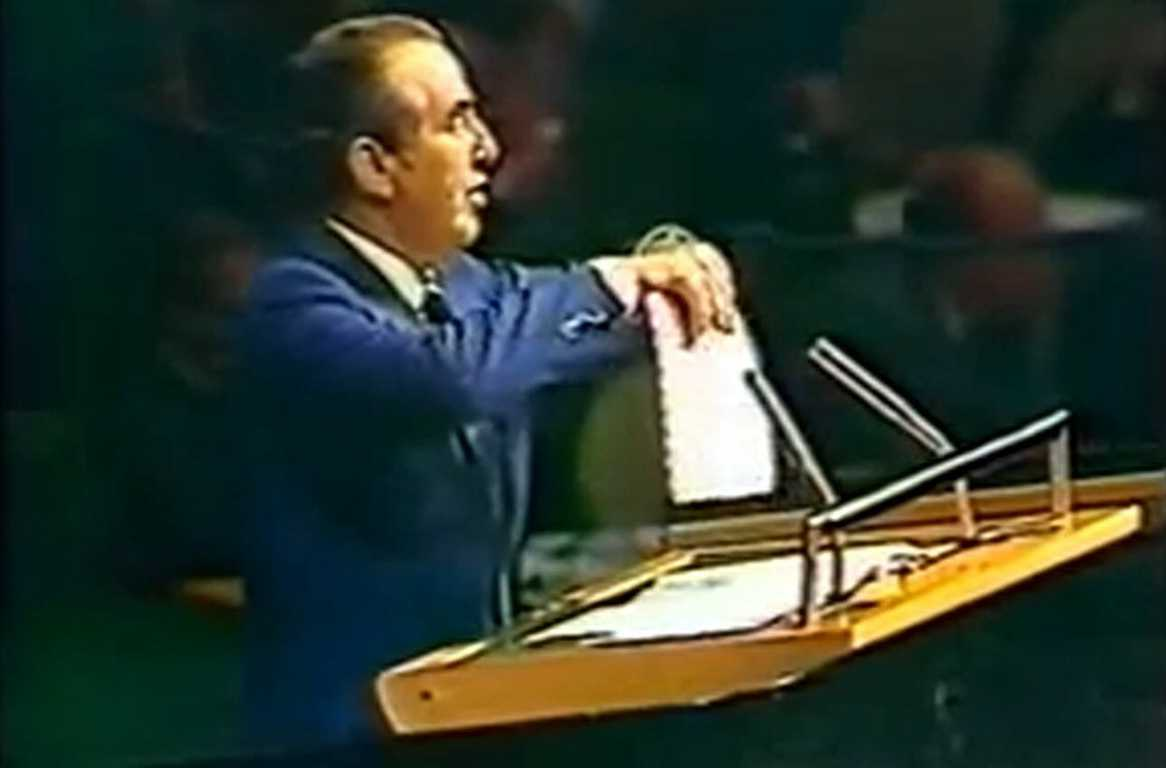
Chaim Herzog rips up the UN resolution 3379, which said Zionism was a form of racism

Israeli Ambassador rips up the UN charter

“As you know, UN Resolution 3379 was repealed in 1991 (4). While the United States was laying waste to Iraq, whose president Saddam Hussein had invaded Kuwait and dared to propose a “linkage” of Iraq’s withdrawal from Kuwait with Israel’s withdrawal from the West Bank and Gaza, the resolution stating that Zionism was a form of racism was repealed through US pressure. Your honors also know that when our country, Yemen, voted against the US invasion of Iraq, we were told that this was “the most expensive vote we ever cast” and we suffered sanctions for it (5). 

“3379 should never have been repealed. But today I am asking your honors to go further. I am asking your honors to rule that Zionism is not just a form of racism, it is a criminal enterprise, one which ultimately requires genocide to continue, and which therefore must be ended. Doing justice here will be a first step.”

Wardah looked at the other prosecutors: her counterparts from Iran, Palestine, Lebanon, and Iraq. To her, they seemed satisfied, and she felt she had presented her case well. The judges gave little away from their expressions, and Wardah again did not favor the criminals with her gaze. 

The presiding judge called for adjournment until the next day, when the Iranian prosecutor would present his case. 

Notes

(1) The first part of Wardah’s speech is basically a reproduction of Robert Jackson’s opening remarks at the Nuremberg Tribunal. Wardah alternates between quoting between quote marks, paraphrasing with modern updates, and quoting without quotation marks. 

(2) If you read Justice Jackson’s speech, the middle part of the speech is the history of the Nazi party, its rise to power, and its conduct of WWII. This section of Wardah’s speech is not a copy/paste with find/replace of Jackson’s speech, but instead a part of the case as it is imagined would be laid out at a tribunal run by the Axis of Resistance. 

(3) Ha’aretz was very late to report this. There were some reports in the Israeli media here and there and these were assembled carefully by Electronic Intifada, the Grayzone, and The Cradle. I did my own modest assembly of a few Western sources on substack in October

(4) I made part of a video about Resolution 3379, its rise and fall. 

(5) Amply documented. E.g. Ian Williams, “A Costly Vote? Yemen Paid a High Price for 1990 Security Council Veto.” Washington Report on Middle East Affairs, 2010. 
In defense of ‘wokism’

Briefly straying from my lane to make a quick point

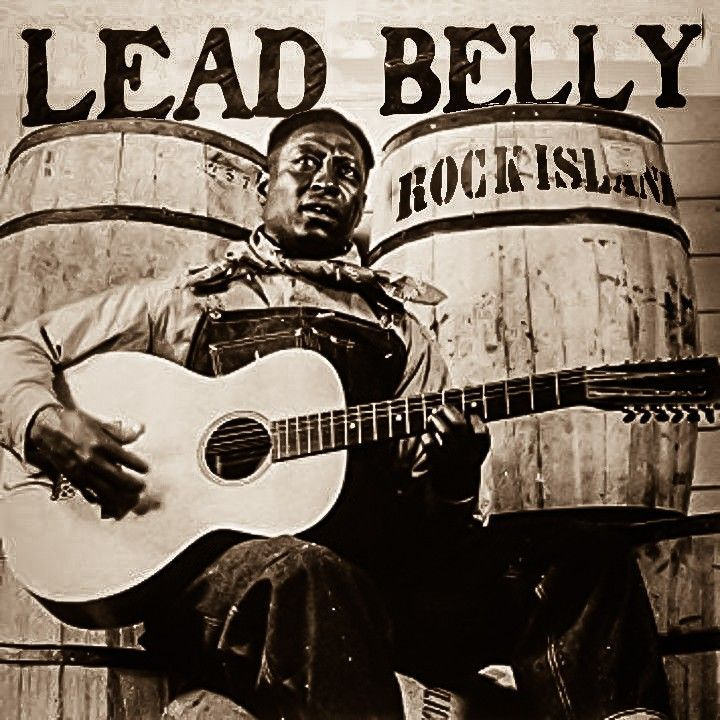
A Black American folk singer, Lead Belly, enjoined listeners in 1938 to ‘stay woke’ in a song about a false accusation against a group of young black men in Alabama. A century later and the word is exclusively used as an epithet, a code word that identifies its speaker as someone who has some opposition to left-wing politics. 

That isn’t how the anti-’woke’ would put it, of course. Champions of the liberal value of free speech, right-wing anti-wokes believe that left-wing orthodoxies have gone too far and stifled these once widely available liberal freedoms. When asked for examples, the anti-wokes will generally present examples like drag shows, pronoun etiquette, and trans women competing in sports. 

There are details and ongoing areas of study and work when it comes to how to implement these values in a way that allows everyone to be who they are (trans rights, sex and gender equality, etc.) There’s a lot to know about these issues and readers know this isn’t my lane. But to my eyes, comparatively untrained on these issues, the selected anti-woke examples look like a distraction or an outrage engine, like the way most of these same anti-wokes talk about immigration, crime, or terrorism. 

Anti-imperialism is, and like all left-wing ideologies is based on the core value of equality. And the anti-’wokes’, whether they justify it as naturally ordained by science or divine will, generally hold a core value of hierarchy. It’s an irreconcilable difference. 

Almost all anti-woke criticism is just right-wing politics and therefore holds nothing of interest for leftists. 

There is one legitimate complaint in the antiwoke arsenal, which is against the language-policing that takes place in mainstream, liberal institutions. But language-policing in such corporate environments has nothing to do with equality and therefore nothing to do with anything truly left-wing. It is nothing more than an office game, in which the winner is the one who can master the language and the bureaucratic rules. Words and concepts that were developed in communities fighting for liberation – or even survival – have been stolen, appropriated by liberal professionals for use in their office power games. But the theft of these words and concepts doesn’t discredit the projects of liberation from which they emerged. 

Now we can come back to my lane. You know the old saying that when you scratch a liberal a fascist bleeds? The Gaza genocide has scratched the liberals and the fascists alike. Turns out that when Palestine comes up, the right wing (squealing for police to crush speech and deport protesters) doesn’t care about free speech or assembly and liberal professionals didn’t mean anything they said about the liberation of oppressed groups by race, class, gender, and sexuality. 

Anomalous exceptions aside, both antiwokes and the liberal professionals they claim to despise have revealed themselves to be enthusiastic supporters of genocide who hate us much more than they hate one another. There’s no use contemplating alliance with these people or searching for common ground. 

I have over the decades, every few years, written something to protest left-wing language-policing and the adoption of liberal professional games. But leftists will find no allies among the anti-’woke’. They don’t want us and we don’t want them. They mock social justice warriors and they mock being woke, but it’s better to be a warrior than a coward and it’s better to be awake than asleep.

False friends are everywhere. Lead Belly warned us about them, and told us the state we need to be in, to remain vigilant.

Israel can’t occupy like it used to

The devolution of Israel’s military happened gradually but it has lost abilities it once had

Mao Zedong presented a staged model where a guerrilla army began with organization in safe and remote areas, building the ability to hold territory, then hit-and-run actions and raids, and finally engagement in conventional warfare to destroy the enemy’s army on the battlefield. Israel has been doing this in reverse: in 1967 it defeated the Egyptian, Syrian, and Jordanian armies. But it could not defeat Hizbollah in 2006 and cannot defeat Hamas today. It once possessed the ability to occupy and hold territory and control populations. But in Gaza and increasingly in the West Bank, Israeli warfare has devolved into an endless series of hit-and-run attacks on civilian targets, with the heavily armed Israeli army running away before their comparatively lightly armed opponents can catch them.

The gruesomeness of the hit-and-run attacks themselves, the revolting trophy photos that the Israeli army takes (e.g. posing in women’s lingerie, playing with the toys of dead children, blowing up houses and apartment blocks, etc.), the torture of thousands of Palestinian captives, by Israel’s imposed mass starvation on Gaza – these have obscured this reality. But beneath this stomach-turning surface is a cold military fact: the methods of occupation that Israel used for decades are unraveling.

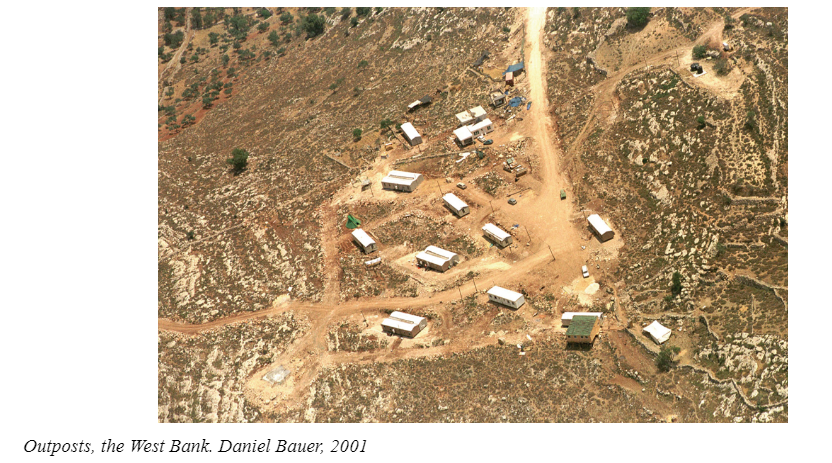
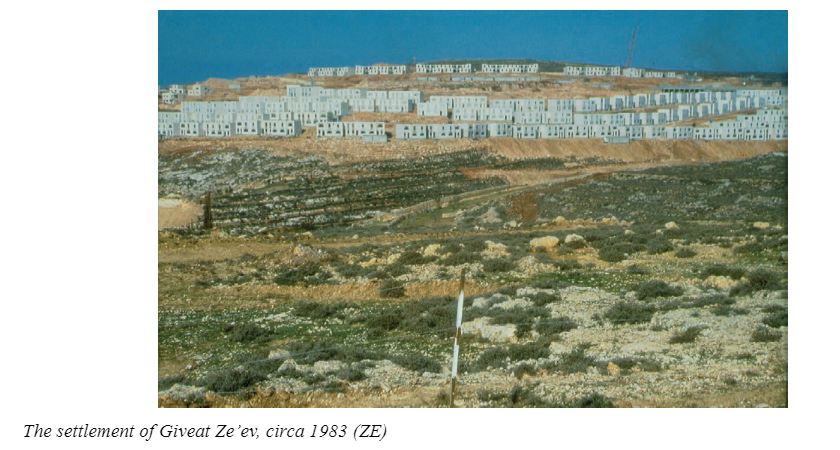
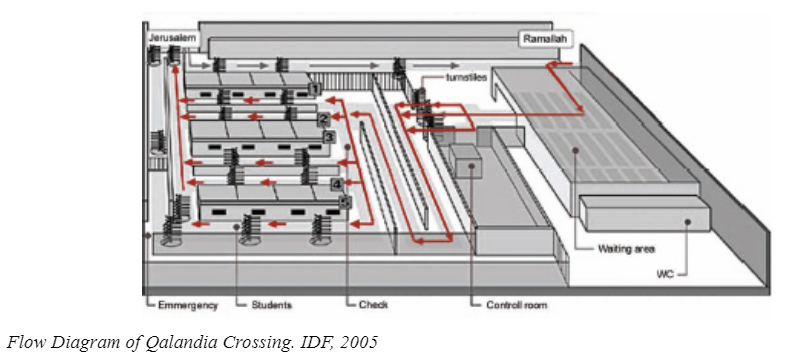
In the 2007 book Hollow Land, Israeli academic Eyal Weizman analyzed what he called the “architecture of occupation”: the way Israel used the built environment to impose its will on the Palestinians. Befitting a book by an architect, Hollow Land is filled with drawings and photos of how the occupation worked from the early Zionist days until the 2005 withdrawal from Gaza.

The work would begin with small settler outposts, defended by the army and the settlers themselves.

The outposts would grow into full fledged fortress settlements that commanded the heights and looked down on the native villages below.

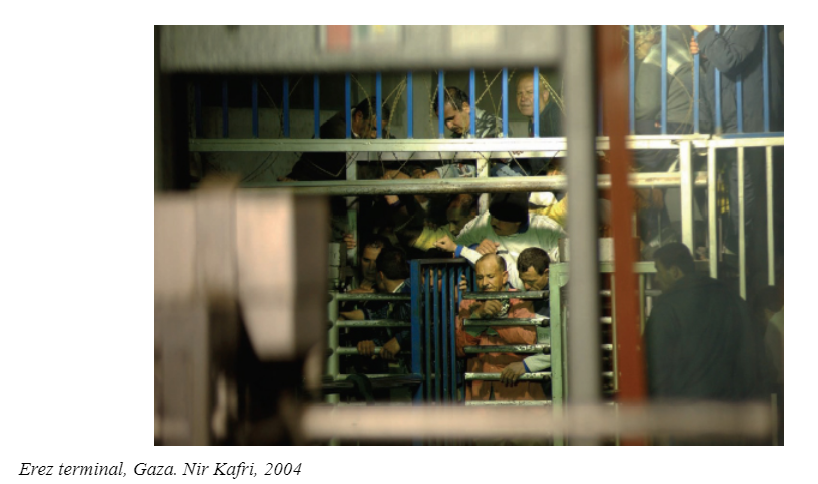
The Israeli army forced the occupied people to accept these new realities. Palestinian movement from place to place was controlled by checkpoints. The big terminal at Qalandiya, for example:

Hollow Land also has a photo from the major checkpoint controlling people entering and exiting Gaza from Israel, Erez.

But the Erez terminal was destroyed on October 7 — mostly, like so much on that day and since, by Israeli airstrikes. The giant Israeli army that went into Gaza to destroy Hamas withdrew from Gaza City, then attacked Khan Younis, withdrew from there, threatened an invasion of Rafah for many months, invaded, and is in the process of being driven from there. The Israelis enlisted American help in building occupation infrastructure – the famous pier which took so long coming, floated into the sea, and then was rebuilt in time to commit a joint US-Israeli war crime of immense proportions in the Nusseirat refugee camp. They are trying to build a base along a road in central Gaza. But their base construction has come under constant mortar fire and soon, so will the American pier.

The Americans themselves have been forced into this way of fighting: they sailed into the Red Sea to engage in a little bit of classical gunboat diplomacy, to warn Yemen’s Ansarallah (the so-called Houthis) not to try to stop Israel’s genocide. They were roundly ignored, Ansrallah has not hesitated to engage the US navy directly with missiles, and the US has responded with aerial bombardment of civilian targets – hit-and-run.

There is no occupation if you cannot stay in one place, and Israel cannot stay in any one place in Gaza. They even have to return to the same hospitals again and again after destroying them because they can’t stay until the resistance comes for them.

That is Gaza, and Gaza is unique: Israel withdrew from there in 2005 (because the resistance made it impossible to maintain the occupation) and the resistance in Gaza has built an extensive infrastructure from which to fight the Israelis. But the Israeli occupation of the West Bank is devolving too. Yes, there are still checkpoints and settlements controlling the lives of Palestinians there. The occupation isn’t over in the West Bank. But Israeli operations in West Bank towns like Tubas, Tulkarem, Qalqilya, Nablus, and Jenin are raids: they go in heavy, besiege a house, fight gun battles with the resistance, have their bulldozers blown up by IEDs… and inevitably withdraw. And the duration of the raids seems to get shorter. Jenin had a raid a few weeks ago that was 48 hours long; the next one was 3 hours. In Tubas, the Israelis try to let their Palestinian Authority collaborators seize weapons and arrest resistance fighters on their behalf, so they can attack from a place of greater safety.

What explains this devolution from region-dominating conventional army to genocidal raider? The adaptations of the resistance have played the main role: their ability to defeat the ground forces of Israel render most of the occupation’s other infrastructural goals unachievable. Another factor: Israel slowly transformed its army into one that mainly staffs checkpoints and monitors electronic murder machines while serving as the institution responsible for socializing Jewish migrants and indoctrinating youths into Zionism.

But the arrogance of Zionist ideology and belief in racial superiority also played a role. Why train day and night to fight your racial inferior? Why risk death when you can kill by pressing a button? The Zionism of yesterday was stealing the land. The Zionism of today is killing from a distance. But stealing somebody’s land can only be done from up close. Too close, maybe, for illusions of racial superiority to hold up.

Why Israel is Stuck

Three concepts of Western warfare

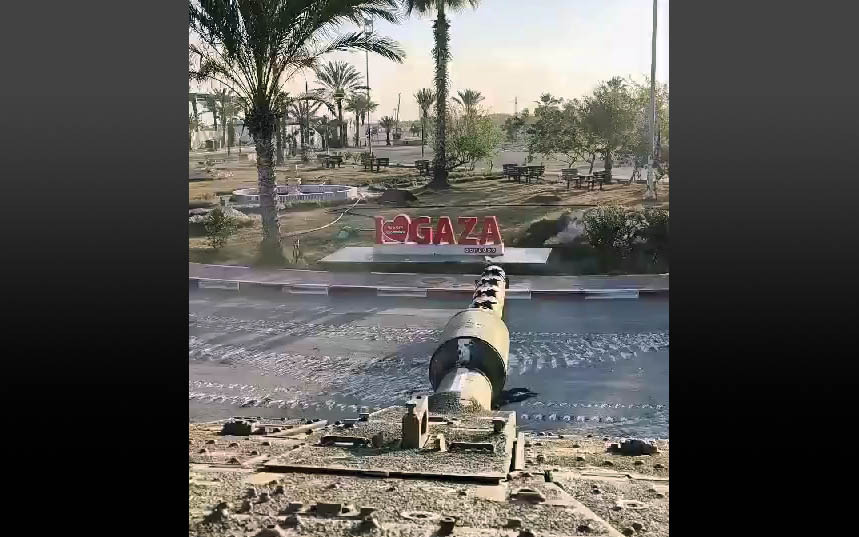
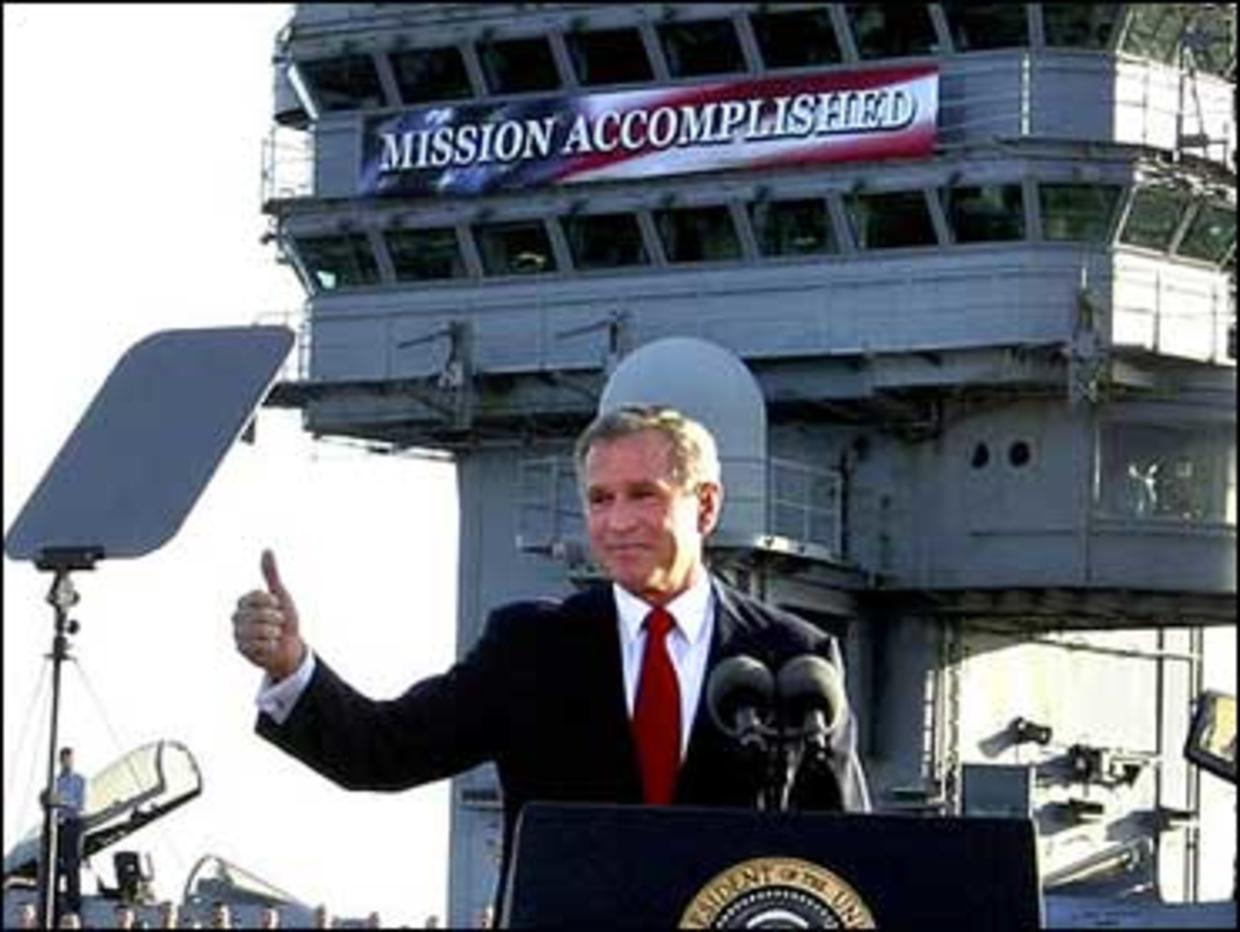
After months of threatening a Rafah invasion, Israel finally went in. They quickly took the civilian crossing with Egypt – in violation of the peace treaty negotiated between the two countries to Israel’s great advantage in the 1970s. They planted Israeli flags at the crossing, blasted the sign saying “I love Gaza”, and declared a kind of “Mission Accomplished” moment.

But like George W Bush’s speech which was supposed to be the end of the Iraq war but was actually the beginning of the Iraq insurgency and a major step in the long-term erosion of American supremacy, Israel’s declaration of victory is premature.

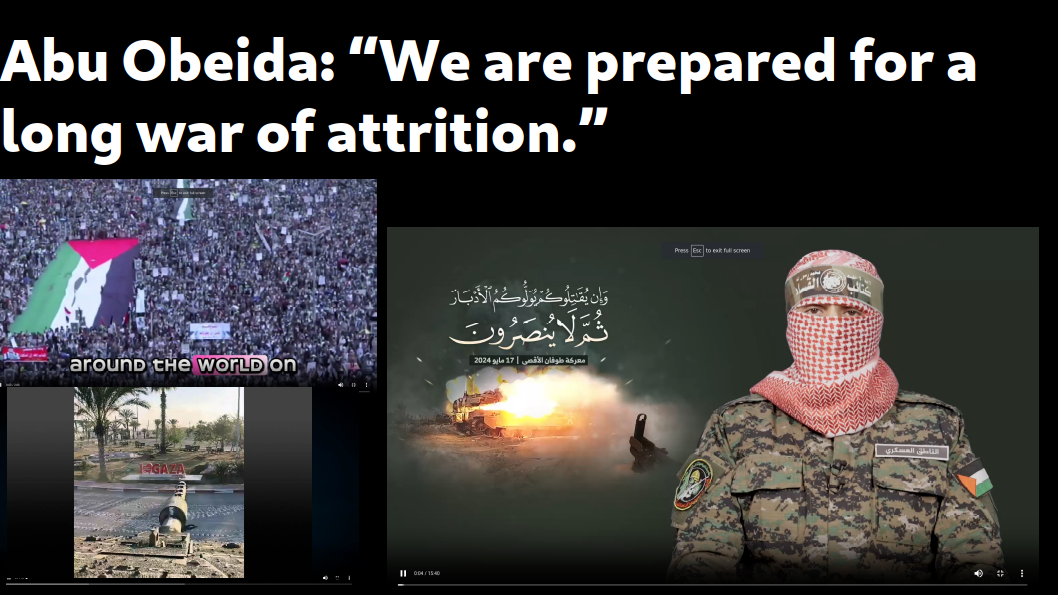
Over the next few days, Palestinian resistance groups initiated a series of operations (many of which they recorded in dramatic field videos) at a tempo nearly unmatched in the war, now in its eighth month. Resistance spokesman Abu Obeida told listeners that the fighters had scored hits on 100 Israeli military vehicles in 10 days in Rafah in the south of Gaza, Jabalia in the north, and Zeitoun in the north (from which the Israelis have since withdrawn). Israeli soldiers, Abu Obeida said, were suffering casualties “by the dozen”. 

Under heavy fire in both Rafah and Jabalia, Israel is likely to withdraw from these areas as well. We can then expect a return to aerial bombardment and siege warfare on the starving population. Then more raids, perhaps into the middle of Gaza, during which Israel will lose more soldiers and more vehicles, before withdrawing. Then a period of bombing, then more raids. All the while, Lebanon’s Hizbollah will be hitting military installations on Israel’s northern border with escalating firepower and Yemen’s Ansarallah will be tightening a blockade on ships trading with Israel. 

Based on the experiences of the 2006, 2008/9, 2012, 2014, and 2021 wars, Israel would have been expected to have accepted a ceasefire by now, having settled for the demonstration effect of killing between 40,000 – 200,000 or more (according to an estimate made by Ralph Nader) and unwilling to bear the growing costs in soldiers’ lives, displaced Israelis, and economic difficulties. 

Why has Israel been so determined this time, compared to previous times? Is it the case that, having mobilized around half a million men, that the numbers of casualties sustained in these ground operations is bearable by Israel, even if Israeli casualties reach the thousands or even tens of thousands? 

This is, likely, the calculation. Israel has mobilized all available troops and the US has provided all the firepower Israel can wield. But this approach of maximal firepower and maximum mobilization – of overkill and of over-mobilization – has disconnected Israel from normal military calculations and normal strategic thinking, rendering it vulnerable to the resistance’s counter-strategies.

To understand this vulnerability, let’s break down Western wars in history into three types: Clausewitzian, counterinsurgency, and genocidal.

Clausewitz says war is policy by other means; Counterinsurgency wars are about controlling a population; Genocidal wars are about destroying the foundations of life.

Clausewitz’s book On War uses the campaigns of Frederick the Great, the Prussian king who fought with his European neighbours, and of Napoleon, who fought all the rest of Europe combined (while also fighting a genocidal war against Haiti, but we’ll leave that aside for this article). In these wars, the goal is to inflict losses on the enemy’s military to compel the loser to do the winner’s bidding. 

In colonial counterinsurgency wars, the goal is population control. Insurgent leaders are targeted for assassination. Insurgent and insurgency-suspected organizations are dismantled by arrest and imprisonment, physical destruction, and sabotage. Compliant leaders are installed and supported. Populations are overawed and terrorized by campaigns of torture and demonstrative massacres, including “punitive raids”. Recent examples of these wars are the US wars on Iraq and Afghanistan, and general Israeli behavior in the West Bank. 

In colonial genocidal wars, the goal is extermination. Food sources are targeted – both stored food and crops. Masses of people are killed indiscriminately including women, children, noncombatants. Survivors of massacres are driven into unlivable areas to die and ringed with enough firepower to kill them if they try to escape. Many of the US “Indian Wars” followed this pattern (see Stannard’s American Holocaust and Grenier’s The First Way of War) as did the German genocides of the Herero in 1905 and the Nama in 1908, reported in, e.g., The Kaiser’s Holocaust

Israel has been trying to conduct a genocidal war on Gaza since 2005. The idea was to surround Gaza with the Gaza fence and the ring of settlements known as the Gaza envelope; to use automated weapons, AI targeting, and frequent “mowing the lawn” aerial massacres to prevent exit without being labor-intensive; and to gradually render the entire Gaza Strip unlivable by the destruction of farmer’s fields, denial of coastal fishing, and an ever-constricting siege of food supplies. 

The strategy was foiled by the Palestinians in Gaza, who managed to keep making Gaza livable while also generating a military resistance capable of counterattack (the notorious rockets) and ultimately, on October 7 2023, of breaching the ring of firepower built to keep them contained in their long-term death trap.

To counter the Palestinian strategy, since October 7th, Israel has tried to further constrict the area through total siege, bringing about famine; destroy every hospital to deepen the unlivability of the strip; and finally to use their ground forces to break Gaza into smaller enclaves in the hope that each enclave might be made uninhabitable in a way that the entire Gaza strip could not be. 

In response to this, the Palestinian resistance has maintained steady military pressure on Israeli troops forming the individual rings of fire to try to enclave Gaza, forcing the Israelis to withdraw after taking losses each time. The network of tunnels and the resilient local weapons industry has made it impossible for Israel to destroy the armed resistance, even as the Palestinian civilian population is targeted for genocide.

Now we can return to a discussion of why overkill and overmobilization haven’t brought Israel to victory.

Overkill means the ability to threaten is gone. Israel’s doctrine of massively disproportionate violence against civilians (called the Dahiya doctrine for a neighbourhood Israel destroyed in Lebanon) has culminated in Gaza in the most appalling string of war crimes that could, if an actual system of international justice were to materialize, at some point see its leaders in jail for crimes. But in the military context, the consequence is that Israel cannot use the threat of firepower to try to get compliance. If they are going to exterminate you no matter what, if they shoot anything that moves, if they attack hospitals – then there’s no benefit to complying and no additional penalty for defiance, since they’ll kill you in any case if they get the chance. 

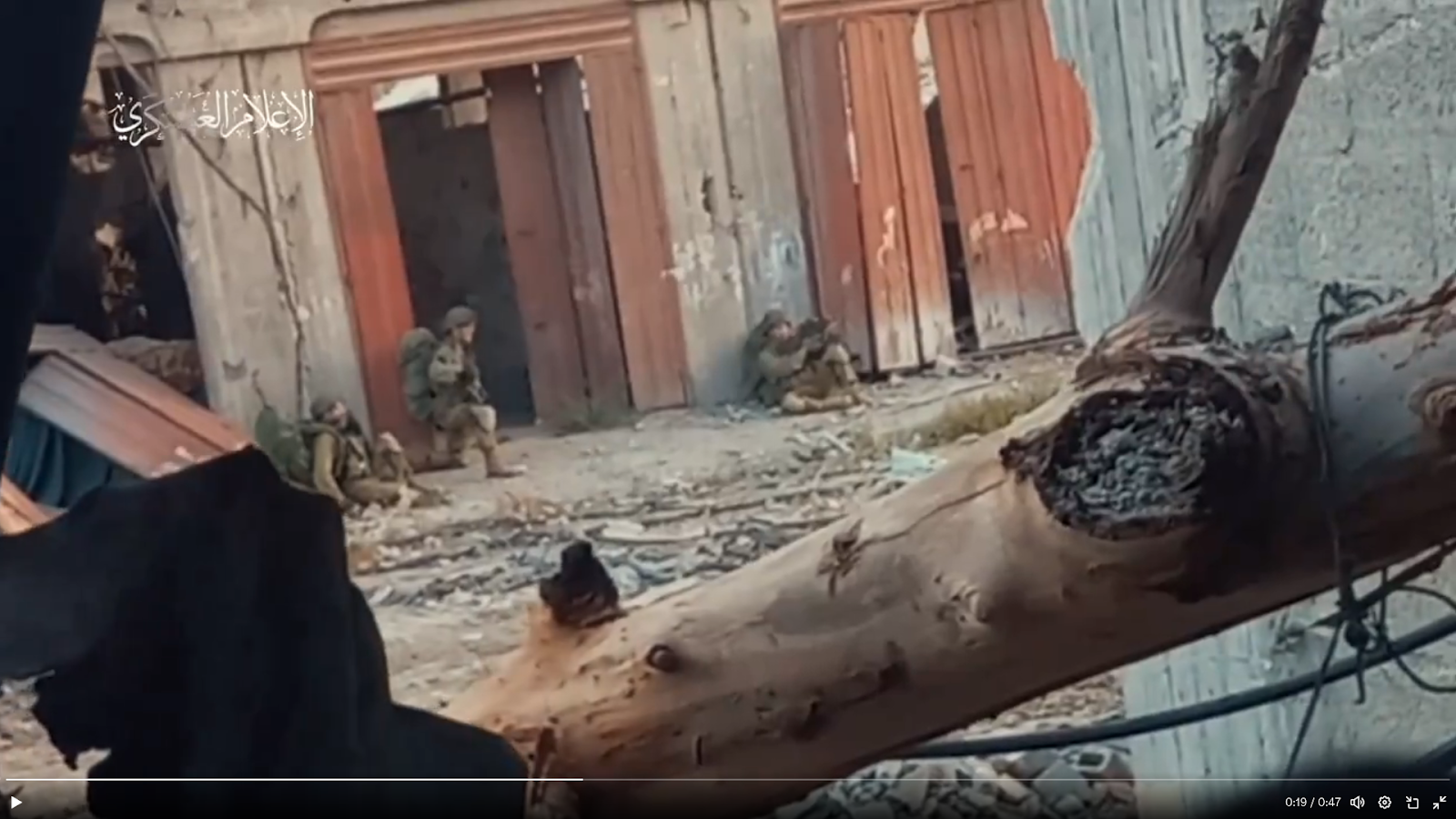
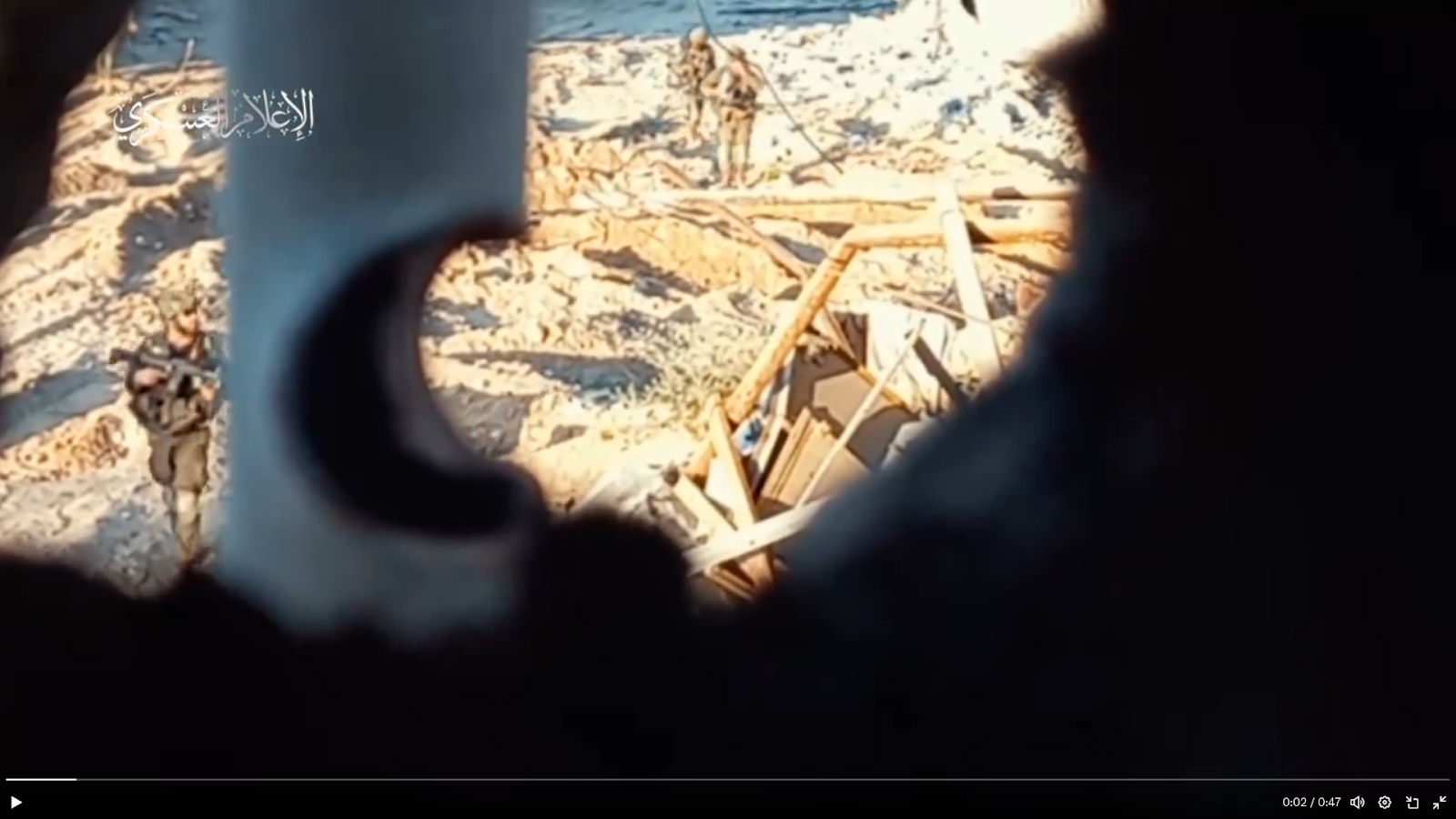
Overmobilization means most soldiers have nothing to do. The transformation into rubble of most of the urban surface of Gaza renders any counterinsurgency warfare strategy moot: there are no flows of people to try to control by setting up checkpoints, no one able to go to work or school as the schools and workplaces have been destroyed; no functioning civilian institutions to try to recruit spies and informants from; all leadership has moved underground. Would-be counterinsurgent troops have nothing to do except wander around in the rubble waiting to be ambushed from unseen tunnels. The Israelis have shaped the battlefield into one that gives them no role but to take a position, fire endless amounts of US-provided ammunition into the distance, and wait to be attacked. 

Israeli soldiers hanging around
Israeli soldiers walking in the rubble

While the mobilization of half a million troops means that losses of dozens of soldiers per day can be sustained for a very long time, these huge numbers can’t really be brought to bear on the enemy even if the Israelis were to try to go into the tunnels, which they thus far have not been. 

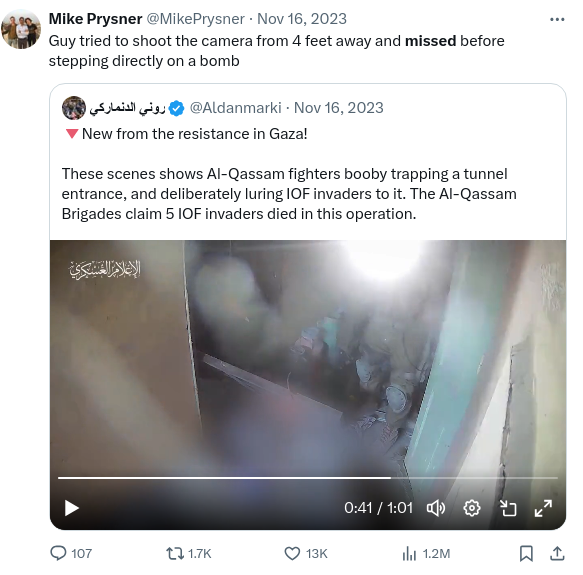
Mockery aside, the fact is warfare in the tunnels means multiplication of such incidents manyfold.

The Israeli army is much more than a military force: it is the melting pot meant to create social cohesion (now failing) in a country composed of people from all over the world with nothing in common. As Rabbi Yaakov Shapiro notes in The Empty Wagon, the Israeli Defence Forces officer training course contains modules like “What is Judalism? The uniqueness of the Jewish people; the people and land in a Jewish perspective; War and the army in a Jewish perspective; is Judaism a religion, a way of life, or a constitution?; the identity of the Jewish people.” Ben Gurion envisioned the army as the place where the “admixture of people which flows in from foreign exiles will be cleansed, refined and purified from harmful, foreign dross in the melting pot of Jewish brotherhood and through military discipline.” Shapiro notes, “sounds more like a rehab than an army.” Only a tiny fraction of this half million would have the qualities to even be accepted into, let alone complete, a training course on knife fighting in dark tunnels. Even the basics of staying out of windows or infantry cover for armored vehicles doesn’t seem to have been learned.

Meanwhile the seeping of the Hannibal doctrine – in which a soldier should expect to be killed by his comrades rather than risk becoming a captive and a potential bargaining chip to swap for thousands of Palestinian prisoners – into every corner of Israeli life since its application against masses of Israelis on October 7th and its pervasiveness in the army cannot but erode the confidence of the ordinary soldier. Not only does the Israeli army not have an ethos of “no man left behind”, the ethos is “don’t get captured or your comrades will kill you because your life is worth less to us than the Palestinian prisoners we’re torturing…”

Keeping bad news from the Israeli public is a high priority for the regime, and that seems to extend to the army as well, as soldiers don’t appear to learn lessons from their engagements with the resistance. Keeping this huge force in the field, supplied, and above all propagandized, is costly in proportion to its size – while military results do not appear to be. 

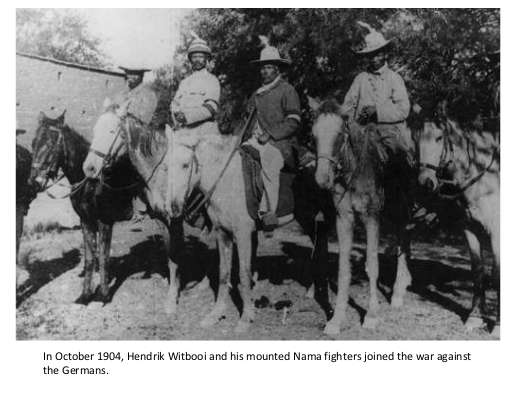
In 1905, the Germans were losing the war to the Nama. 20,000 Germans, succumbing to thirst and driving themselves mad, were chasing 2,000 nimble Nama cavalry, led by Hendrik Witbooi, around in the desert endlessly. 

Nama noncombatants had fled to the bush where they suffered from hunger hiding from the Germans. The Germans finally tried to convince the noncombatants to surrender by using missionaries, who promised to alleviate the starvation in exchange for surrender. They lied: when the Nama surrendered, they were sent on further death marches and into (perhaps a German innovation) the world’s first death camp on Shark Island. When the Germans couldn’t complete the genocide by war, they did so by deception. 

But that’s also a trick that expires, and a century later, the Palestinians won’t be deceived.  

World War Civ 40: How Britain Took Palestine in 1917

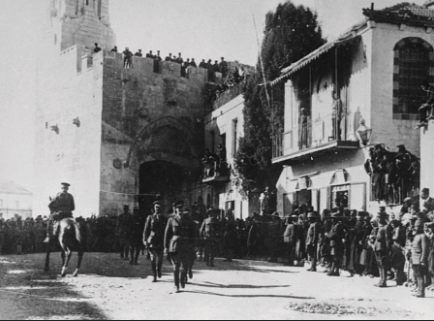
General Allenby, Sharif Hussein and his son Feisal, and their handler TE Lawrence array the forces of the British Empire and the Arab Revolt against the Turco-German forces in Palestine. The battle starts in Gaza and ends with Allenby walking into the Jaffa Gate of Jerusalem. The story of the fateful campaign that brought British imperialism to Palestine (and Lebanon, and Syria…). We note that the British found Gaza to be a “fortress” from which it was impossible to dislodge the Turkish forces; Justin felt TE Lawrence was overrated, just another imperialist; and we compare admiration of the stoicism with which Allenby took news of his son’s death, with an analogous situation today.

AER 141: Gaza War Sit Rep Day 213 – the invasion of Rafah has begun

On the Anti-Empire Project Youtube Channel there are frequent situation reports or Sit Reps that are posted late at night. Not all of them are reposted here to this podcast, but we’re posting this one on the day of the Rafah invasion. A breakdown of the ceasefire negotatiations and an assessment of where the war is at. With Jon Elmer.

Palestine 2018 proved the futility of anticolonial nonviolence

There is no case of nonviolent anticolonial struggle

The US struggle for civil rights, remembered as the nonviolent movement of Martin Luther King, was also the movement of the Deacons for Defense in Louisiana, the movement of the Mississipi Regional Council of Negro Leadership which could “speedily mobilize substantial and deadly firepower” including E.W. Steptoe who had “guns all over the house, under pillows, under chairs”, of Robert Williams of Monroe, North Carolina’s NAACP who said in 1959 that “we must be willing to kill if necessary”, the movement of a night-long battle with police in Albany, Georgia in 1962 and in Birmingham, Georgia in 1963, when “every day of riots was worth a year of civil rights demonstrations”. 

The Indian Freedom struggle, remembered as the nonviolent movement of MK Gandhi, was also the movement of the Hindustan Republican Army, of Chandrasekhar Azad and of Bhagat Singh, of the Telengana Uprising of 1946, of the Tamil Nadu anti-feudal struggle of 1943, of the underground guerrilla struggles after Quit India in Odisha, West Bengal, Bangalore and elsewhere, of the Toofan Sena in Maharashtra, of Indian National Army of Subhas Chandra Bose, and of the Naval Mutiny of 1946. 

The two most iconic tales of the deployment of strategic nonviolence turn out, upon historical examination, to have been armed struggles, replete with violence.

Through an analysis of the work of Gene Sharp (“Gene Sharp’s Neoliberal Nonviolence” part 1 and part 2), writer and academic Marcie Smith has revealed the existence of a sort of “nonviolence industrial complex”, a network of institutions linked to the US foreign policy establishment, dedicated to two things: 1. steering opposition to US-backed states and projects in nonviolent directions, and 2. to using methods of nonviolent insurgency as a part of a set of tactics (including covert, violent action) to destabilize US targets. 

The jewels in the narrative crown of this nonviolence network are the US civil rights movement and the Indian Freedom Struggle, which is why I devoted the two previous articles in this series to showing that these were in fact armed struggles. 

The narrators of the nonviolence network have one other weapon: quantitative analysis. But this weapon too, turns out to be a plastic replica. 

In their book Why Civil Resistance Works, Erica Chenoweth and Maria J. Stephan claim to have proven through statistical analysis that nonviolence is more effective than violence. Their analysis is worth detailed examination since it claims to have the authority of a huge dataset and logistic regression proving the chances of success are higher with nonviolence. 

But what did they actually do? They made a list of several hundred revolutions from the 20th century (nearly all of which were in fact violent), coded some struggles as violent and others not, coded some struggles as successful and others not (in fact many of the successes delivered the countries and their economies directly over for imperialist plunder), and then after a quantitative assessment which amounts to counting the number of successful cases of each type, found that their “nonviolent” coded struggles had a higher chance of success. These nonviolent-coded struggles include: 

  • the South African struggle (including its armed wing, Umkhonto we Sizwe); 
  • and the many East European color revolutions. 
  • the Palestinian Intifada;

A quick skim of any of these histories show that these were all violent struggles. The data reveal the conclusion the authors believed at the outset and for which they coded their data. Why Civil Resistance Works is historical falsification covered with a quantitative mystique. 

To determine the veracity of their analysis we need examine only those events coded as both nonviolent and successful. Nonviolent failures are of no interest, since they do not bolster the nonviolence narrative. Neither violent successes nor failures are of interest either, since to the nonviolence industry armed struggles are already failures. 

The database published with the book contains 57 nonviolent successes. There are two types of movements analyzed in the database: movements for regime change and movements for secession. There are no nonviolent successes for secession movements: all 57 nonviolent successes are regime change successes. There are only 4 secession successes out of 46 attempts in the database (Croatia, Tigray, Bangladesh, and Aceh from Indonesia starting in 1976-2005). All of these were violent.

Philosophers of science know that there is a complicated set of human decisions that go into the translation of things occurring in nature into statistical data. Even such decisive phenomena as birth and death can only be entered in a spreadsheet as “0” and “1” by the declaration of a doctor. Of all the types of data to translate into “0”s and “1”s on a spreadsheet, historical data is the worst. Was the French Revolution a success, a failure, or is it too early to tell? In history, some failures are necessary prerequisites for future success; some processes simply cannot be classified as one or the other (Chenoweth and Stephan include a “limited success” category to try to capture these). 

The relevant point here is that the coding of these 57 events as both “nonviolent” and “successful” ranges from deeply problematic to utterly preposterous. 

Going through them: 

In this database, the Palestinian liberation struggle apparently started in 1973, was violent, and a failure. The Intifada, 1987-1990, is considered a nonviolent partial success. The 1979 overthrow of the Shah of Iran, which I won’t dispute was successful, is coded as a nonviolent process – which would be a surprise to the guerrilla fighters and defectors who fought the Shah’s soldiers in the streets. The 2005 Cedar Revolution in Lebanon is coded as a success, but it did not change the regime and Lebanon’s political system continued as before. 

The Cedar Revolution is not the only “color revolution” (short-hand for a US-backed regime change operation in a US enemy country led by US-trained political and media cadres) coded as a nonviolent success. Indeed a good part (14 of the 57) of the nonviolent successes are East Europe color revolutions: 1989 Germany, 1981 Poland, 1989 Hungary, 1989 Czech, 1989 Slovakia, 1989 Bulgaria, 1990 Russia, 1989 Estonia, 1989 Latvia, 1989 Lithuania, 2001 Ukraine, 2003 Georgia, 1989 Kyrgystan, 2005 Kyrgistan. In the background of all of these color revolutions was the threat of US-led NATO expansion and US nuclear war, as well as the fact of US violent covert operations. Three more of these East Europe nonviolent successes – 1999 Croatia, 2000 Yugoslavia, 1989 Slovenia – are from the incredibly violent US-led dismembering of Yugoslavia in a series of civil wars (described in, e.g., Michael Parenti’s book To Kill a Nation and Diana Johnstone’s book Fool’s Crusade). 

Operation Allied Force: The NATO Bombing Of Yugoslavia
NATO bombed bridge in dismembered Yugoslavia, 1999, one of the nonviolent successes in the database.

In Africa, in addition to coding the South African anti-apartheid struggle as nonviolent (which would be news to umKhonto we Sizwe, the armed wing of the African National Congress), and the Ghanaian, Zambian, and Malawi Independence struggles as nonviolent (they were not), the majority of African nonviolent successes in the database were mass mobilizations to press for elections. These were: 1989 Mali, 2000 Ghana, 1993 Nigeria, 2001 Zambia, 1992 Malawi, 1991 Madagascar, 2002 Madagascar, 1985 Sudan (in active civil war at the time).

In East Asia, the 1960 April Revolution in Korea (in which 186 people were killed) is coded as a nonviolent success, as is the 1986 People Power Revolution in the Philippines (after decades of guerrilla struggle and notable defections from the military). East Timor, widely recognized to have suffered a genocide from the 1970s to the 1990s, is coded as having had a nonviolent success in 1988, despite Independence coming in 1999 after a long guerrilla war. A 1973 popular uprising in Thailand, that had bomb explosions and dozens of deaths in riots, is coded as a nonviolent success. So, too, in Thailand, a long-running political crisis in 2005 that culminated in a military coup in 2006, is coded as a nonviolent success. 

In the Americas, the database includes as nonviolent successes a 1931 naval mutiny in Chile, a 1944 armed revolution in Guatemala, 1958 Venezuela (which featured attacks on security services headquarters and resulted in the awful Punto Fijo pact), a clear failure to overthrow the system in Mexico in 1987, and struggles against dictatorships in Argentina (1977 and 1986), Uruguay (1984), and Chile (1983), all of which had prominent guerrilla movements. The database cites 2002 in Venezuela as a nonviolent success, but there were two things that happened in April 2002 in Venezuela: a violent coup against Chavez and its reversal when the army refused to endorse the coup: the coup failed, the the successful reversal of the coup involved military moves. 

In Europe, a 1974 military coup in Portugal is coded as a nonviolent success. Of the churning conflicts, revolutions, and civil wars in Germany in the 1920s that culminated in the rise of Nazism in the 1930s and the most violent events in human history so far, 1923 in Germany is coded as a nonviolent success. 

There is, however, a specific type of conflict coded as a nonviolent success in the database that recurs in different parts of the world, in which a spent dictatorship gives way, in the face of a basically nonviolent popular movement, to an election. About eight of the 57 nonviolent successes belong to this pattern: 1963 and 1974 in Greece, 1977 in Bolivia, 1984 in Brazil, 1985 in Haiti (which led to a military coup and additional years of mobilization until Aristide was elected, then violently overthrown again…), 1990 Guyana, 2000 Peru, and 2001 in the Philippines. This particular set of eight cases (five of which took place in the Americas) could be used as evidence for the argument that, under the right circumstances, largely nonviolent popular mobilization can reverse a stolen election or force a weakened government to agree to elections. It does not prove at all that nonviolent movements have a better chance of success than violent ones. But even in these cases, the threat of violence existed. 

There is value in analyzing and comparing movements of resistance in history. There may even be value in coding them and calculating probabilities. But there is no value to be had in building a model for probability of success based on violence and nonviolence by miscoding failures as successes and armed struggles as nonviolent. 

We never needed a database to tell us that under some circumstances a social and political struggle can be kept on the nonviolent plane. The key factor is the investment elites have in maintaining the policy that is being challenged. Union struggles can often succeed in winning wage and working conditions improvements nonviolently. Every election where the loser congratulates the winner and there is a peaceful transfer of power is an example of a successful nonviolent struggle. But colonialism, struggles over land, in which oppressors have racial ideas of superiority over the oppressed? In these cases, whether it succeeds or fails, armed struggle alone has a chance. Only by wielding falsified histories and models can the nonviolence storytellers argue otherwise.

Palestine 2018: the final proof of the uselessness of nonviolence in anticolonial struggle

And so we turn to Palestine, a colonial struggle over land, in which the oppressors have racial ideas of superiority over the oppressed and are, since 2023, engaging in active genocide. Palestine has been an area of focus for the nonviolence industry for decades. 

A February 2024 paper by the Center for Constitutional Rights has shown that US anti-terror legislation was “driven by anti-Palestinian agendas from the beginning.” The nonviolence industry has had a similar Palestine focus from the beginnings of Gene Sharp’s Albert Einstein Institute. The 1987-1989 Intifada was an object of fascination for Sharp and for the nonviolence industry. Sharp’s Journal of Palestine Studies article in 1989, “The Intifadah and Nonviolent Struggle”, identifies him as the author of the 1973 book The Politics of Nonviolent Action as well as the author of Almuqawama Bila Ounf (Nonviolent Resistance), published in Jerusalem by the Palestinian Center for the Study of Nonviolence in 1986. In the article, Sharp argues – quantitatively again – that 85% of the intifada has been nonviolent. He simply asserts that armed struggle and nonviolent struggle are “not easily mixed to advantage” – and so the Palestinians should go from 85% to 100% nonviolent. After the usual arguments absolving Israelis of responsibility for the violence they mete out on Palestinians and the normal nonviolence argument that the the colonial repression faced by the victims is their fault for provoking their oppressors, Sharp suggests Palestinians go on a 21-day hunger strike, followed by “whistling or wailing at night, especially in dark streets” and “having the youths standing peacefully, not fleeing, holding small Palestinian flags, their right hands outstretched in a gesture of friendship.” Sharp dangles recognition before well-behaved Palestinians: “The shift to fully nonviolent struggle would also make possible more active support for Palestinian independence in Western Europe and the United States.”

After months of genocide, starvation, and the gleeful mass murder of tens of thousands of children, all filmed and celebrated across Israeli society and by Israel’s supporters in the West, Sharp’s arguments are striking for their absurdity as well as their vulgarity. 

But Sharp was not alone. 

Pakistani activist and academic Eqbal Ahmed made the argument to Palestinians numerous times. He reported to journalist David Barsamian in 1996 (published in the 2000 book Confronting Empire) that he’d told a group of Arab students in the US after the 1967 war that “armed struggle was supremely unsuited to the Palestinian condition,” that “Israel’s fundamental contradiction was that it was founded as a symbol of the suffering of humanity at the expense of another people who were innocent of guilt,” and that “you don’t bring (the contradiction) out by armed struggle. In fact you suppress this contradiction by armed struggle.” He told them in 1968 that 

“This is a moment to fit ships in Lebanon and say, ‘we’re not going to destroy Israel. That is not our intent. We just want to go home.’ Reverse the symbols of Exodus. See if the Israelis are in a mood to sink some ships. They probably will. Let them do so. Some of us will die. Let us die.” Eqbal Ahmed imagined if Arafat were to “take on the role of a Gandhi or a Martin Luther King and announce tomorrow, ‘I must stop these settlements. They violate the spirit of Oslo. We are committed to peace. You are making war. We do not want to use violence against you. Peacefully we will march against you. We will sit in. We will clog the roads, start a full-scale movement, and discipline the Palestinians not even to throw stones, intifada-style, because Israelis will use and justify bullets against stones. They will use soldiers against children. Don’t even give them that.’ Israel will divide. It will divide as a society the way America divided. I would keep it divided until it makes peace.” 

But Eqbal Ahmed, despite being an  insightful anti-colonial strategist, was wrong about the histories he cited (Gandhi and Martin Luther King) and wrong about what would happen in the face of Palestinian non-violence, which did not divide Israel but incited Israel to ever-more intense racism. 

Norman Finkelstein wrote a whole book (What Gandhi Says) trying to assimilate lessons from Gandhi to the Palestinian struggle. His conclusions are ambivalent to say the least, since at times he writes things like “it might fairly be said that Gandhi fostered a death cult.” The book ends up being a presentation of the self-contradictory politics in Gandhi’s writing, not the practical manual of civil resistance Finkelstein may have hoped to create when he picked up Gandhi’s 100 volumes of writing as an aid for the US-based academic and activist “to think through a nonviolent strategy for ending the Israeli occupation of Palestinian lands.” 

Palestinians took up these ideas in good faith for years – in better faith than the method deserves. Hundreds of Palestinians died trying to do nonviolent struggle. So too did a handful of friends of Palestine, including Rachel Corrie, Tom Hurndall, and others in the International Solidarity Movement.

Eqbal had suggested finding out “if the Israelis were in the mood to sink some ships.” They were – they already had been in 1967, if we count the USS Liberty –  but in 2010 a nonviolent flotilla tried to go to Gaza*. Israel boarded the ships, killed some of the activists, and arrested, mistreated, and deported the rest. 

'The Marmara raid wasn't a failure' - www.israelhayom.com
Israelis attacked the Mavi Marmara as it tried to break the blockade on Gaza in 2010

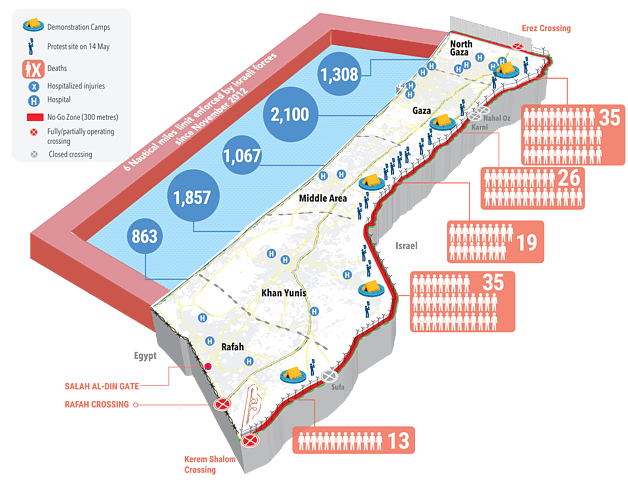
But the culmination of the nonviolent vision, the maximum horizon of all nonviolence, the controlled scientific experiment of perfect nonviolence, occurred in the Great March of Return in Gaza in 2018. It proved that nonviolence does not work. From a scientific standpoint, the nonviolence debate ended in 2018. 

As Gene Sharp’s article on the First Intifada opened the debate on nonviolence in Palestine, Jehad Abusalim’s article, “The Great March of Return: An Organizer’s Perspective”, in the same journal, closed the debate on the topic. 

The Great March of Return started, Abusalim reports, with a facebook post by Abu Artema on January 7, 2018. Abu Artema asked, “What could the occupation bristling with arms do to a mass of human beings advancing peacefully? Kill ten, twenty, or fifty of them? And then what? What could it do in the face of an unwavering mass peacefully marching?” Abu Artema and others worked to make it happen and organized for months, calling for a date in March: 

“To the surprise of all concerned, an estimated 30,000–45,000 people showed up on the first day of the Great March of Return. And on that day, Israeli snipers shot dead 17 Palestinians and injured some 1,400 others.32 The mainstream international media instantaneously referred to the carnage as “rioting” and “clashes” but to those on the ground in Gaza, it was beyond shocking: how could nonviolent protests unleash such fury as to cause Israel to kill 17 peaceful protesters and maim or injure another 1,400? That is how, from the very first day, bloodshed came to define the protest.” 

By the end of the protest, cold-blooded Israeli snipers had killed 226 Palestinians and methodically injured 30,000. For the Israelis, it was sport. The Western media fluidly and easily lied about the march, its nature, and the murderous Israeli response. Neither Israel nor its sponsors faced any crisis or internal division about what they were doing to the Palestinians. Neither Israel nor the West paid any cost for inflicting these tens of thousands of Palestinian casualties. 

Abu Artema, the protest organizer interviewed by Abusalim in the article, seems bereft of ideas at the end – he feels that more international mobilization is needed, some tool that prevents Israel from “targeting Palestinians in such a horrific way” and to “prevent the occupation from using propaganda to prime the public for slaughtering us.” The nonviolence industry was unable to come up with any such tools: the slaughter of Palestinians at the Great March of Return was not the fault of the nonviolent protesters any more than the genocide in 2023-24 was the fault of the Palestinian armed groups. Israel is a genocidal state: then as now, it is doing what it is organized to do. 

Six years later, Palestinians are waging an armed struggle against the Israeli military in Gaza and the West Bank. The Israeli military has chosen to accept military casualties and defeats on the battlefield (including the methodical destruction of its armored vehicles and groups of soldiers) to focus entirely on conducting a genocide against Palestinian civilians, with the central goal being the destruction of all of Gaza’s hospitals and educational institutions and the murder of patients and medical personnel, while blocking food and water from reaching people. Palestinians’ allies in Lebanon, Iran, Syria, Iraq, and Yemen are all engaging militarily with Israel and its Western sponsors. In the region, for the time being, the nonviolence case is closed. 

Back in America though, in the solidarity movement, with the expansion of campus protests in April 2024, along with police repression all over the US, the nonviolence debate will rise again.

anti-genocide students face the cavalry in Texas

Anti-genocide students demand universities – which turned out, to the surprise of the students and faculty, to be investment banks that sometimes teach classes – divest from the military industry feeding the genocidal state. The pro-genocide establishment has called the police to crush the protests. What will be the outcome? Nonviolent or violent? Success or failure? 

*As I write this, another nonviolent international flotilla is planning to leave from Turkey to Gaza.