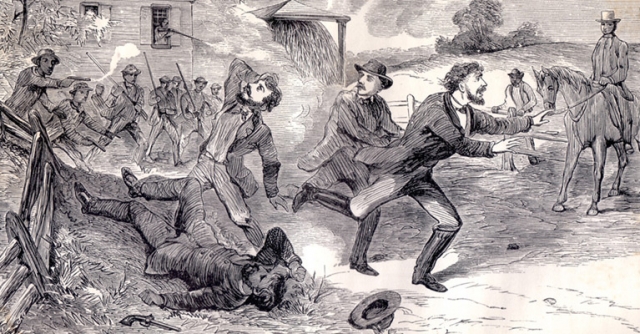
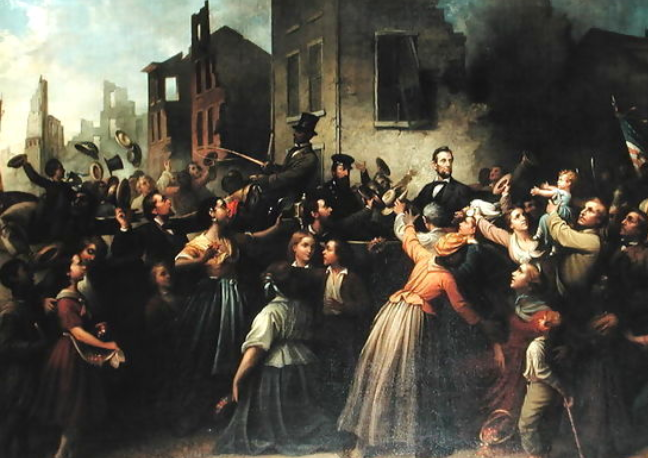
Civilizations begins our study (at least four parts) of the American Civil War. We start with the abolitionist movement in the decades before the war, and the conflict between the British Empire and the United States over abolition. This episode relies on (among other sources) Kellie Carter Jackson’s book Force and Freedom, and Gerald Horne’s book Negro Comrades of the Crown.
Author: Justin Podur
AEP 72: Artificial Whiteness with Yarden Katz
Step off of the Artificial Intelligence hype train with me and my guest Yarden Katz. Yarden is the author of Artificial Whiteness: Politics and Ideology in Artificial Intelligence. AI is a squishy concept, and under scrutiny it is full of imperialist and racial assumptions. We go over some of the many ideas in this idea-packed book, which I highly recommend.
The police system is a colonial system
The policing system wasn’t created by elections and can’t be ousted by one.
Back in June, I sent an article around about the irrelevance of policing for public safety. With the article below, I’ve studied the roots of the policing system in colonialism, and why it keeps delivering counterinsurgency outcomes despite claiming that it is about public safety. Dave Power and I have also been preparing for a series of Civilizations episodes on the US Civil War – those will start next week.
I’m also saying RIP to Robert Fisk, who was one hell of a journalist of a type that almost doesn’t exist any more. I interviewed him back in 2005 when he was promoting his gigantic book about the .
Below, the article on the policing system and counterinsurgency.
https://podur.org/2020/10/22/the-police-system-that-terrorizes-the-poor-and-minorities-is-rooted-in-the-colonial-past/
The Police System That Terrorizes the Poor and Minorities Is Rooted in the Colonial Past
Justin Podur for Globetrotter, October 22, 2020
The Minneapolis City Council’s attempt to defund police may have fizzled out for the moment, but the problem of police violence across the United States is unresolved—and much of it stems from the institution’s colonial, counterinsurgency roots.
Here are seven counterinsurgency features of policing and the inequities in the criminal justice system.
1. Counterinsurgency Tactics Are Everywhere.
In the Canadian province of Ontario, when the Toronto Transit Commission (TTC) changed its public transportation fare collection method from tokens to the Presto card, users had a strange experience. Sure, the fare booth was predictably replaced by an inhuman and unforgiving terminal that malfunctions all the time (despite the steep price the province had paid for it). But instead of having less human interaction, TTC passengers found they had more—with fare inspectors who corral passengers into small spaces at stations to test everyone’s cards. In counterinsurgency terms, this is called a cordon-and-search operation.
Another counterinsurgency concept, that of “hearts and minds,” can be seen in a public information campaign to shame fare evasion through posters blanketing subway walls and the sides of buses. Riders were infuriated—not just by the campaign itself but also by abuses and racial discrimination by the fare inspectors. Unsurprisingly, spoofs of the TTC’s messaging followed, as they did in New York City in resistance to the Metropolitan Transportation Authority’s fare evasion messaging.
There is nothing special about Toronto, New York City, or other transit systems that increasingly use these warlike techniques to police customers; what’s happening with the TTC and MTA is a relatively mild example of what happens when counterinsurgency methods are the first resort for any urban problem that arises.
2. Police Don’t Live in the Communities They Police.
Colonial forces are imposed from outside; this prevents too much natural solidarity between the occupier and the occupied. In the United States, the majority of police don’t live in the communities they serve. One Newark officer from the Fraternal Order of Police put it succinctly: “the community hates the police. And you want to put us right in the middle of that with our families?”
The polling is consistent with the idea that one group of people is policing another. A July 2020 Gallup survey showed that 70 percent of Black Americans support reducing police budgets, while only 41 percent of white Americans do. Out-and-out defunding is more commonly supported by Black Americans (according to FiveThirtyEight’s average of two polls, 45 percent of Black Americans polled support defunding, with 28 percent opposed) and opposed by white Americans (with 61 percent of white Americans opposed to defunding and only 23 percent in support of defunding). The difference in public opinion reflects one group benefiting from police security and another suffering from police violence and surveillance.
As Richard Rothstein showed in his book The Color of Law, the racial segregation of U.S. cities was brought about by methodical legal means, racially explicit zoning, and the destruction of integrated neighborhoods. This segregation, too, has consequences for the police-counterinsurgency alignment.
In author James Ron’s book Frontiers and Ghettos: State Violence in Serbia and Israel, he compared the methods of state violence used in a “ghetto,” where a hostile population is meant to be contained by powerful state control but where law and morality still limit its enforcement due to the nature of oppressor and oppressed living side-by-side; and on a “frontier,” where even more devastating warfare is unleashed since state power is more tenuous on targeted populations who don’t live among their oppressors, but the bounds of law and morality are weaker.
In the United States, this theory also has applied throughout its history: domestic ghettos are policed, and frontiers are the sites of total war both at home and abroad. But the more police think of cities as the “frontier,” the more violence they will commit against the policed.
3. Police Get Specialized Counterinsurgency Training.
Police officers are encouraged to take weekend courses in a field called “killology,” developed by retired Army Lt. Colonel Dave Grossman. There, they learn to see themselves as “front-line troops” in a war, presumably on the civilians they are policing.
A critic of killology courses, Seth Stoughton, says they steep police in the worldview that “the officer is the hero, the warrior, the noble figure who steps into dark situations where others fear to tread and brings order to a chaotic world, and who does so by imposing their will on the civilians they deal with.” Another critic, Craig Atkinson, calls the courses “fear porn.” One such training, “The Bulletproof Warrior,” was taken by Philando Castile’s killer.
4. In a Counterinsurgency, Everyone’s a Criminal.
According to defenders of law enforcement, the thinking is: If you don’t want to be policed, don’t commit crimes, right? But the law creates the criminal.
And the number of laws for police to identify those criminals is growing suspiciously. American University professor Emilio Viano notes, quoting the conservative think tank the American Heritage Foundation, that “the ‘number of criminal offenses in the United States Code increased from 3,000 in the early 1980s to 4,000 by 2000 to over 4,450 by 2008.’ From 2000 to 2007 Congress added 56.5 new crimes every year.” The staggering number of laws is incongruous to American society’s actual concerns, as is evidenced by attorney Harvey Silverglate’s book arguing that the average American commits “three felonies a day.”
In this system, the full weight of the law is available to bring down upon anyone at any time.
And once it is brought down on you, you have no meaningful right to a trial.
5. There’s No Right to a Trial in a Counterinsurgency.
In TV cop shows, the police are constrained by clever lawyers and fair-minded judges in the courtroom—but in reality, cases almost never go to trial. As Professor Viano writes:
“In fiscal year 2010, the prevalent mode of conviction in U.S. District Courts of all crimes was by plea of guilty (96.8% of all cases). The percentage ranges from a relative low of 68.2% for murder to a high of 100% for cases of burglary, breaking and entering. With the exception of sex abuse (87.5%), arson (86.7%), civil rights (83.6%) and murder (68.2%), for all other crimes the rate of convictions by plea of guilty is well over 90%. In the… [2012] U.S. Supreme Court decision, Missouri v. Frye, Justice Kennedy, writing the majority opinion, pointed out the statistics that 97% of federal convictions and 94% of state convictions are the result of guilty pleas.”
The fact that 90 percent of cases don’t go to trial is the outcome of two Supreme Court rulings described by Michelle Alexander in a 2012 op-ed in the New York Times:
“The Supreme Court ruled in 1978 that threatening someone with life imprisonment for a minor crime in an effort to induce him to forfeit a jury trial did not violate his Sixth Amendment right to trial. Thirteen years later, in Harmelin v. Michigan, the court ruled that life imprisonment for a first-time drug offense did not violate the Eighth Amendment’s ban on cruel and unusual punishment.”
Regardless of the innocence of the offender or the senseless overzealousness of law writing and enforcement, it is standard operating procedure that the accused do not get their day in court. Instead, prosecutors threaten the accused with shocking sentences, and have them plead guilty to something less to get them into the life-ruining prison system.
Alexander noted that the criminal justice system is unequipped for any other way: “If everyone charged with crimes suddenly exercised his constitutional rights, there would not be enough judges, lawyers or prison cells to deal with the ensuing tsunami of litigation.” The author of The New Jim Crow: Mass Incarceration in the Age of Colorblindness also argued in the New York Times op-ed that “crash[ing] the system just by exercising our rights” could comprise a strategy to combatting the inequities and flaws in the criminal justice system. Blogger Arthur Silber agreed that this strategy could work if done en masse, noting, “[n]othing short of mass non-cooperation has a chance in hell.”
But the price of seeking one’s right to trial is prohibitive. Julian Assange is being publicly tortured right now mainly for doing journalism, but partly also for insisting on his rights to a trial. And Aaron Swartz was hounded to death, driven to suicide by a prosecutor applying the standard operating procedure by threatening Swartz with a 35-year sentence for trying to make scientific publications available to those outside of university paywalls.
In cases relating to the drug war, the goal of police and prosecutors is also to get the accused to turn on one another: in exchange for more lenient punishments, suspects are made to become informants against others—another key element of counterinsurgency and its slow destruction of solidarity in the criminalized, targeted society.
6. U.S. Policing Was Developed in Concert With the U.S. Empire.
Consider one of the founding fathers of American policing, August Vollmer. A U.S. Marine who invaded the Philippines in the Spanish-American War in 1898, he set out to “reform” Berkeley’s police when he became its first chief in 1909. He used the scientific techniques of counterinsurgency developed by the U.S. empire in the Philippines (a system described in Alfred McCoy’s book Policing America’s Empire: The United States, the Philippines, and the Rise of the Surveillance State). Vollmer brought in centralized police records, patrol cars, and lie detectors. Vollmer established a criminal justice program at the University of California, Berkeley in 1916 and wrote books including scientific racist theories of “racial degeneration” and crime. He joined the American Eugenics Society and wondered how to prevent “defectives from producing their kind.”
Smedley Butler provides another example. The military man famously wrote that he had been “a gangster for capitalism,” including that he “helped make Haiti and Cuba a decent place for the National City Bank boys to collect revenues in.” He had done so by, among other things, establishing Haiti’s first police force when the Marines occupied that country in 1915, as Jeremy Kuzmarov describes in his book Modernizing Repression: Police Training and Nation-Building in the American Century. When Butler became police chief in Philadelphia in 1924, he too upgraded police technology and militarized its tactics, including military checkpoints and Marine-style uniforms. The mayor fired him after two years, sending him back to the Marines.
7. Counterinsurgencies Use Auxiliaries.
In counterinsurgency campaigns, state armies and police work with paramilitaries, who do dirty work with plausible deniability.
As Alan MacLeod reported on September 28, there were more than 100 vehicle ramming attacks against protesters since the George Floyd protests started in May, many of which “seem to have the tacit approval of local law enforcement,” given the lack of consequences.
Portland activist Mac Smiff told the Brief Podcast, “We call it a shift change. They’re all the same people… there’s the cops, there’s the sheriffs, there’s the marshals, there’s the DHS [Department of Homeland Security], there’s the Proud Boys, there’s the Patriot Prayer, it just goes on and on. They just take turns.”
It is called impunity: the criminal activities of paramilitaries or proxy forces go unpunished, while the full power of the state is brought down upon the intended victims of counterinsurgency.
The default counterinsurgency mode is a consequence of being ruled by an elite that sees the whole population as the enemy. The model for policing isn’t going to be changed even if Trump is replaced by “shoot them in the leg” Biden. The occupied always challenge the legitimacy of their occupiers: the debate about abolition is not going anywhere.
This article was produced by Globetrotter. Justin Podur is a Toronto-based writer and a writing fellow at Globetrotter. You can find him on his website at podur.org and on Twitter @justinpodur. He teaches at York University in the Faculty of Environmental and Urban Change.
Civilizations 22: German Unification and Otto von Bismarck
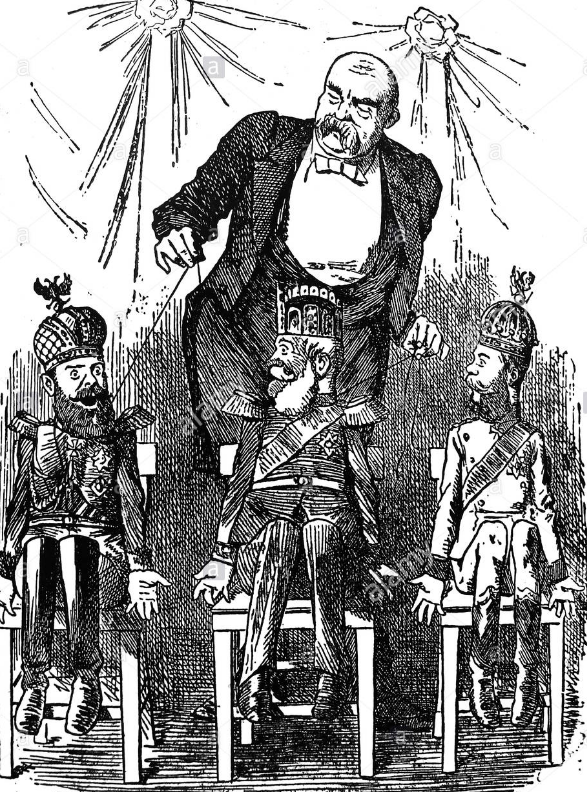
The name most associated with the unification of Germany is that of Otto von Bismarck. Bismarck was the great puppet master of Europe in the 1860s, but he may just have set things up for future conflagrations.
AEP 71: The Colonial Determinist World View, with Sameer Dossani

I’m joined by scholar and campaigner Sameer Dossani. A PhD student at the Institute for Economic Research on Innovation (IERI) in South Africa and an activist at PeaceVigil.net, Sameer wrote the paper “Ecological Catastrophe, Capitalist Excess or Ongoing Colonialism – How should we understand the crisis?” – which outlines what I call “colonial determinism“, a big-picture view that I hold. We discuss the paper and go freely off into tangents in what I hope will be one of several episodes with Sameer.
Civilizations 21: Italian Unification
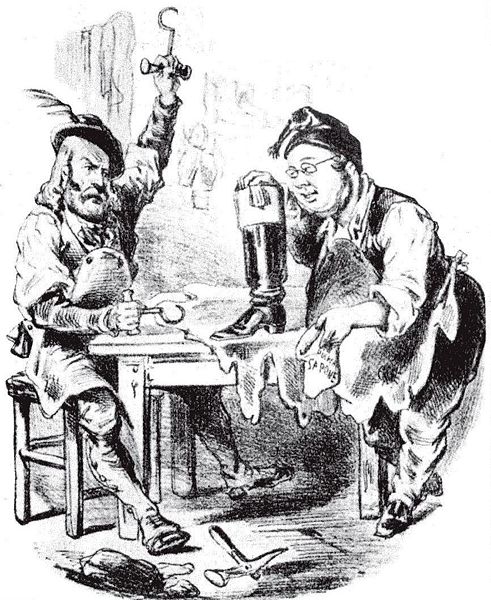
Two very different characters – Cavour and Garibaldi – were instrumental in orchestrating the unification of Italy in the 1860s. We talk unification and consequences, and give a mention to Garibaldi’s famous letters to Abraham Lincoln of 1861 and 1863.
The Police System That Terrorizes the Poor and Minorities Is Rooted in the Colonial Past

The Minneapolis City Council’s attempt to defund police may have fizzled out for the moment, but the problem of police violence across the United States is unresolved—and much of it stems from the institution’s colonial, counterinsurgency roots.
Here are seven counterinsurgency features of policing and the inequities in the criminal justice system.
1. Counterinsurgency Tactics Are Everywhere.
In the Canadian province of Ontario, when the Toronto Transit Commission (TTC) changed its public transportation fare collection method from tokens to the Presto card, users had a strange experience. Sure, the fare booth was predictably replaced by an inhuman and unforgiving terminal that malfunctions all the time (despite the steep price the province had paid for it). But instead of having less human interaction, TTC passengers found they had more—with fare inspectors who corral passengers into small spaces at stations to test everyone’s cards. In counterinsurgency terms, this is called a cordon-and-search operation.
Another counterinsurgency concept, that of “hearts and minds,” can be seen in a public information campaign to shame fare evasion through posters blanketing subway walls and the sides of buses. Riders were infuriated—not just by the campaign itself but also by abuses and racial discrimination by the fare inspectors. Unsurprisingly, spoofs of the TTC’s messaging followed, as they did in New York City in resistance to the Metropolitan Transportation Authority’s fare evasion messaging.
There is nothing special about Toronto, New York City, or other transit systems that increasingly use these warlike techniques to police customers; what’s happening with the TTC and MTA is a relatively mild example of what happens when counterinsurgency methods are the first resort for any urban problem that arises.
2. Police Don’t Live in the Communities They Police.
Colonial forces are imposed from outside; this prevents too much natural solidarity between the occupier and the occupied. In the United States, the majority of police don’t live in the communities they serve. One Newark officer from the Fraternal Order of Police put it succinctly: “the community hates the police. And you want to put us right in the middle of that with our families?”
The polling is consistent with the idea that one group of people is policing another. A July 2020 Gallup survey showed that 70 percent of Black Americans support reducing police budgets, while only 41 percent of white Americans do. Out-and-out defunding is more commonly supported by Black Americans (according to FiveThirtyEight’s average of two polls, 45 percent of Black Americans polled support defunding, with 28 percent opposed) and opposed by white Americans (with 61 percent of white Americans opposed to defunding and only 23 percent in support of defunding). The difference in public opinion reflects one group benefiting from police security and another suffering from police violence and surveillance.
As Richard Rothstein showed in his book The Color of Law, the racial segregation of U.S. cities was brought about by methodical legal means, racially explicit zoning, and the destruction of integrated neighborhoods. This segregation, too, has consequences for the police-counterinsurgency alignment.
In author James Ron’s book Frontiers and Ghettos: State Violence in Serbia and Israel, he compared the methods of state violence used in a “ghetto,” where a hostile population is meant to be contained by powerful state control but where law and morality still limit its enforcement due to the nature of oppressor and oppressed living side-by-side; and on a “frontier,” where even more devastating warfare is unleashed since state power is more tenuous on targeted populations who don’t live among their oppressors, but the bounds of law and morality are weaker.
In the United States, this theory also has applied throughout its history: domestic ghettos are policed, and frontiers are the sites of total war both at home and abroad. But the more police think of cities as the “frontier,” the more violence they will commit against the policed.
3. Police Get Specialized Counterinsurgency Training.
Police officers are encouraged to take weekend courses in a field called “killology,” developed by retired Army Lt. Colonel Dave Grossman. There, they learn to see themselves as “front-line troops” in a war, presumably on the civilians they are policing.
A critic of killology courses, Seth Stoughton, says they steep police in the worldview that “the officer is the hero, the warrior, the noble figure who steps into dark situations where others fear to tread and brings order to a chaotic world, and who does so by imposing their will on the civilians they deal with.” Another critic, Craig Atkinson, calls the courses “fear porn.” One such training, “The Bulletproof Warrior,” was taken by Philando Castile’s killer.
4. In a Counterinsurgency, Everyone’s a Criminal.
According to defenders of law enforcement, the thinking is: If you don’t want to be policed, don’t commit crimes, right? But the law creates the criminal.
And the number of laws for police to identify those criminals is growing suspiciously. American University professor Emilio Viano notes, quoting the conservative think tank the American Heritage Foundation, that “the ‘number of criminal offenses in the United States Code increased from 3,000 in the early 1980s to 4,000 by 2000 to over 4,450 by 2008.’ From 2000 to 2007 Congress added 56.5 new crimes every year.” The staggering number of laws is incongruous to American society’s actual concerns, as is evidenced by attorney Harvey Silverglate’s book arguing that the average American commits “three felonies a day.”
In this system, the full weight of the law is available to bring down upon anyone at any time.
And once it is brought down on you, you have no meaningful right to a trial.
5. There’s No Right to a Trial in a Counterinsurgency.
In TV cop shows, the police are constrained by clever lawyers and fair-minded judges in the courtroom—but in reality, cases almost never go to trial. As Professor Viano writes:
“In fiscal year 2010, the prevalent mode of conviction in U.S. District Courts of all crimes was by plea of guilty (96.8% of all cases). The percentage ranges from a relative low of 68.2% for murder to a high of 100% for cases of burglary, breaking and entering. With the exception of sex abuse (87.5%), arson (86.7%), civil rights (83.6%) and murder (68.2%), for all other crimes the rate of convictions by plea of guilty is well over 90%. In the… [2012] U.S. Supreme Court decision, Missouri v. Frye, Justice Kennedy, writing the majority opinion, pointed out the statistics that 97% of federal convictions and 94% of state convictions are the result of guilty pleas.”
The fact that 90 percent of cases don’t go to trial is the outcome of two Supreme Court rulings described by Michelle Alexander in a 2012 op-ed in the New York Times:
“The Supreme Court ruled in 1978 that threatening someone with life imprisonment for a minor crime in an effort to induce him to forfeit a jury trial did not violate his Sixth Amendment right to trial. Thirteen years later, in Harmelin v. Michigan, the court ruled that life imprisonment for a first-time drug offense did not violate the Eighth Amendment’s ban on cruel and unusual punishment.”
Regardless of the innocence of the offender or the senseless overzealousness of law writing and enforcement, it is standard operating procedure that the accused do not get their day in court. Instead, prosecutors threaten the accused with shocking sentences, and have them plead guilty to something less to get them into the life-ruining prison system.
Alexander noted that the criminal justice system is unequipped for any other way: “If everyone charged with crimes suddenly exercised his constitutional rights, there would not be enough judges, lawyers or prison cells to deal with the ensuing tsunami of litigation.” The author of The New Jim Crow: Mass Incarceration in the Age of Colorblindness also argued in the New York Times op-ed that “crash[ing] the system just by exercising our rights” could comprise a strategy to combatting the inequities and flaws in the criminal justice system. Blogger Arthur Silber agreed that this strategy could work if done en masse, noting, “[n]othing short of mass non-cooperation has a chance in hell.”
But the price of seeking one’s right to trial is prohibitive. Julian Assange is being publicly tortured right now mainly for doing journalism, but partly also for insisting on his rights to a trial. And Aaron Swartz was hounded to death, driven to suicide by a prosecutor applying the standard operating procedure by threatening Swartz with a 35-year sentence for trying to make scientific publications available to those outside of university paywalls.
In cases relating to the drug war, the goal of police and prosecutors is also to get the accused to turn on one another: in exchange for more lenient punishments, suspects are made to become informants against others—another key element of counterinsurgency and its slow destruction of solidarity in the criminalized, targeted society.
6. U.S. Policing Was Developed in Concert With the U.S. Empire.
Consider one of the founding fathers of American policing, August Vollmer. A U.S. Marine who invaded the Philippines in the Spanish-American War in 1898, he set out to “reform” Berkeley’s police when he became its first chief in 1909. He used the scientific techniques of counterinsurgency developed by the U.S. empire in the Philippines (a system described in Alfred McCoy’s book Policing America’s Empire: The United States, the Philippines, and the Rise of the Surveillance State). Vollmer brought in centralized police records, patrol cars, and lie detectors. Vollmer established a criminal justice program at the University of California, Berkeley in 1916 and wrote books including scientific racist theories of “racial degeneration” and crime. He joined the American Eugenics Society and wondered how to prevent “defectives from producing their kind.”
Smedley Butler provides another example. The military man famously wrote that he had been “a gangster for capitalism,” including that he “helped make Haiti and Cuba a decent place for the National City Bank boys to collect revenues in.” He had done so by, among other things, establishing Haiti’s first police force when the Marines occupied that country in 1915, as Jeremy Kuzmarov describes in his book Modernizing Repression: Police Training and Nation-Building in the American Century. When Butler became police chief in Philadelphia in 1924, he too upgraded police technology and militarized its tactics, including military checkpoints and Marine-style uniforms. The mayor fired him after two years, sending him back to the Marines.
7. Counterinsurgencies Use Auxiliaries.
In counterinsurgency campaigns, state armies and police work with paramilitaries, who do dirty work with plausible deniability.
As Alan MacLeod reported on September 28, there were more than 100 vehicle ramming attacks against protesters since the George Floyd protests started in May, many of which “seem to have the tacit approval of local law enforcement,” given the lack of consequences.
Portland activist Mac Smiff told the Brief Podcast, “We call it a shift change. They’re all the same people… there’s the cops, there’s the sheriffs, there’s the marshals, there’s the DHS [Department of Homeland Security], there’s the Proud Boys, there’s the Patriot Prayer, it just goes on and on. They just take turns.”
It is called impunity: the criminal activities of paramilitaries or proxy forces go unpunished, while the full power of the state is brought down upon the intended victims of counterinsurgency.
The default counterinsurgency mode is a consequence of being ruled by an elite that sees the whole population as the enemy. The model for policing isn’t going to be changed even if Trump is replaced by “shoot them in the leg” Biden. The occupied always challenge the legitimacy of their occupiers: the debate about abolition is not going anywhere.
This article was produced by Globetrotter. Justin Podur is a Toronto-based writer and a writing fellow at Globetrotter. You can find him on his website at podur.org and on Twitter @justinpodur. He teaches at York University in the Faculty of Environmental and Urban Change.
Join me on Friday Oct 23 at 2pm for Congo Week! And some new writing
It’s Congo Week!
It’s Congo Week!
Friends: I consider myself a friend of the Congo and now I get to be a part of an event with Friends of the Congo! The link to the event, about my new book, is here:
I’ve also had a few good conversations about the book – with George Galloway on his RT Sputnik show, with Sean Blackmon and Jacquie Luqman on By Any Means Necessary, and with Netfa Freeman on Voices with Vision – I’m on the same program as Mumia Abu Jamal, Margaret Kimberley, and Ann Garrison!
I also want to share some writing about climate change that I’ve been doing. I reviewed the Green New Deal and Beyond by Stan Cox, who’s been on the podcast and who is always insightful, for the Solutions Journal (below). And in a similar vein I reviewed the film Planet of the Humans, which had some important things in it but which overall I didn’t like.
My review of Stan Cox for the Solutions Journal:
The Green New Deal and Beyond by Stan Cox
By Justin Podur
Volume 11 | Issue 3 | September 2020
The original New Deal was conceived and implemented as a compromise to save the system in a period of enormous upheaval. By the end of that period of upheaval, two world wars had been fought and tens of millions of people had died. Some parts of the world got fascism, others communism: the US got the New Deal.
Might the possibility of mass extinction and the end of organized human life impel a similarly desperate compromise from elites? Bigger changes occurred in 2020 than many could have imagined. Quarantines, airplanes grounded, basic income programs introduced. Surprising successes in containing the coronavirus in some countries have been contrasted with notable failures in the US. And in the midst of the pandemic, the US has seen the largest demonstrations in its history, against racial injustice and police abuse. In this rapidly changing context, Stan Cox’s focus on what needs to be done from an environmental perspective and ignoring considerations of “political feasibility” seems prescient. If these times have shown anything it’s that political “feasibility” is a moving target, and that is a good thing.
When feasibilities open up it is important to separate false solutions from real ones. Stan’s previous work – on rationing, disasters, and air conditioning, and now the Green New Deal – is about using the methods of scientific and historical analysis to discard what’s useless. What’s left is a simple, clear program that could, if followed, save the planet.
The first idea Stan slices away is that we can grow our way out of the climate crisis. In 1972 the Club of Rome published the Limits to Growth, which Stan says went over like a “bowl of prune soup at a potluck”. Stan shows how the authors of the Limits to Growth were right – that an economy dependent on continuous growth will eventually overrun some environmental threshold. Even if the climate crisis is surmounted, there will be new ecological crises unless the growth imperative is checked.
Which leads us to the next idea to be pruned: that the market, without any plan or intervention, can resolve the climate crisis. Stan shows how carbon pricing and the creation of carbon markets are simply a form of rationing – by ability to pay. Such mechanisms have failed where introduced, and (along with carbon taxes) proven politically as well as practically toxic.
Next, Stan helps us discard a series of flawed plans. 100% renewables plans, including the most notable ones developed in California by Marc Jacobson, have hidden dangers: they sidestep the key policy of taking fuels offline, emphasizing the secondary consideration of building renewable capacity. Stan reminds us that we have to reduce fossil fuel use whether or not we can replace all the lost energy output with renewables.
And we probably can’t replace all that output. Back of the envelope calculations show that finding land for solar and wind installations is a serious problem – requiring 3x existing agricultural land for solar installations and 6% of all of the US land surface for wind generation, in a few of the Jacobson scenarios. The amounts of storage capacity – batteries, and therefore lithium – required by 100% renewables plans is enough to fuel a new round of colonialism. With the 2019 lithium coup in Bolivia, it already has. The 100% renewable future needs at least 120% of the world’s cobalt and up to 160%, of the world’s lithium reserves – so that’s not happening either.
Jacobson’s plan, Stan also points out, is a plan for energy apartheid, with different classes of global energy citizens based on current consumption. The 100% renewable world will look like the old one, with 9500W per US person, and 760W per Haitian. Stan dismisses this apartheid plan with simplicity, pointing out that the rich need to consume less, not replace every fossil watt with a renewable watt. Ultimately, he writes, we need to run an “energy frugal society, not an energy gluttonous one”.
There is more for the dustbin of history here. Forget about biofuels. These will take land out of food crops – feeding cars and starving people. Forget direct air capture, which takes so much energy to do that it cancels out the climate benefit. Forget about Fully Automated Luxury Communism (FALC), which includes no plan for feeding the society of luxury communists and anticipates unlimited nuclear energy. Driving around in electric cars isn’t going to happen either – not when you consider that it takes energy to build the cars and their giant batteries (there’s that lithium again). The cornucopian fantasies are all premised on an idea of ‘decoupling’ – that you can have economic growth without increased resource use. As Stan discusses extensively, you can’t. Nor can you solve the climate crisis by the aggregate of individual choices to ride a bicycle or go vegan (both of which you should do, of course): to solve a problem of this scale, industrial policy, set and enforced by the state, is a must.
But for all the cutting, Stan is not here to generate despair or nihilism. When all the distractions are removed, we are left with a set of ideas based on energy frugality summarized as “cap and cope”.
These begin with ending subsidies to fossil fuels (“supply side suppression”) “locking companies out of public lands, banning fracking, busting pipelines, stopping oil and gas exports, and depriving dirty-fuel companies of investment”. But these are just prerequisites.
The key mechanism is an “impervious cap on the nation’s total supply of fossil fuel” – set it, and then “it ratchets downward by a fixed amount year by year until it liberates us from fossil fuels entirely.” Enforced by a system of government permits in physical quantities “barrels of oil, cubic feet of gas, or tons of coal, not in carbon units or dollars.” Imports and exports of fuels are banned, and importing and exporting goods with carbon footprints will require the surrender of equivalent permits (no moving the problem offshore is allowed in this plan).
That’s the cap. Then there’s the cope, which Stan proposes could take the form of a Victory Plan with a series of public cooperatives, with – of course – rationing and price controls of key goods to ensure a good life for everyone in the transition. And, as every environmentalist has had to do since the 1970s, Stan assures the reader that the future could still be very nice: “Walkable, livable communities will be free of private-vehicle traffic; air, noise, and light pollution; and other dangers. A transformed food system will ensure better nutrition for all. Free neighbourhood public and community clinics will provide preventive medical care, reducing by several sizes the economic and environmental footprint of today’s profit-driven medical industries.”
The resulting book is indispensable for environmentalists. In recent years scientists have opened a discussion about whether the pressure to publish only positive results has damaged the whole scientific enterprise. The analogy to the climate crisis is clear: there has been a proliferation of solutions without enough attention to their fitness for purpose. The Green New Deal and Beyond pares away the distractions and leaves you with climate clarity.
Civilizations 20b: India 1857 pt 2 – the Revolution Defeated
The Delhi Liberated Zone under Bahadur Shah Zafar falls; Tatia Tope and others fight on for another two years; the British kill perhaps 10 million Indian people (7% of the population); the 1857 has some victories even in defeat. But what does it all mean? We conclude our discussion with the concept of a point-of-view in history. I identify six different points of view (RSS, Congress, British imperialist, 1857 line, Subaltern Studies, and Marxist) and show how you end up having to pick one, and why I went with the “1857 line” on the event – for which the key source is Amaresh Mishra’s 2000 page book, War of Civilisations.
At the end of the episode, Dave and I discuss a table that I made about the different points of view I was able to identify in historical scholarship of 1857. The table we are looking at is in the Civilizations Resources Page under episode 20b.
I take full responsibility for this table, which I made up. Here is what I’d say is a representative source for each point of view. You may disagree – and I’m declaring my point of view, after reading all these, is with Misra and the 1857 line.
BJP – Savarkar, The Indian War of Independence
1857 line – Amaresh Misra, War of Civilisations
Marxist – Marx, the Indian War of Independence
Subaltern Studies – Guha, Prose of Counterinsurgency
British Imperialist – Kim Wagner, The Great Fear
Congress- Surendranath Sen, 1857
Civilizations 20a: 1857 – India’s War of Independence, pt1
Are we really doing this? One podcaster with Indian roots and another with British roots, trying to do the history of 1857 India? This is the Civilizations podcast, so yes we are! I’m arguing that 1857 is up there with the other great revolutions of this time – 1848 or 1870 in Europe, or Bolivar’s campaigns in Latin America. Part 1 takes you from the antecedents and context through to the Delhi Liberated Zone under Bahadur Shah Zafar.