
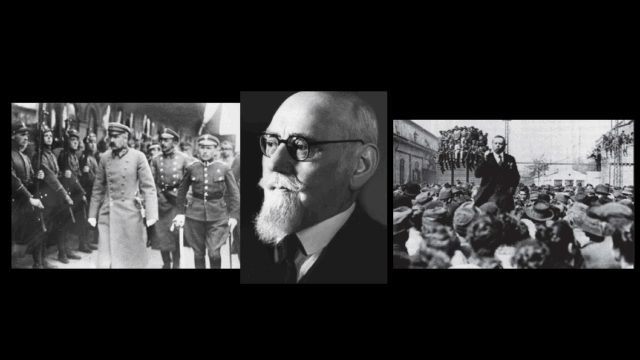
Poland, Czechoslovakia, Austria, and Hungary’s fates are decided at the conference in Paris in 1919.
AER 147: Sudan Civil War, the RSF, and the UAE’s subimperialism
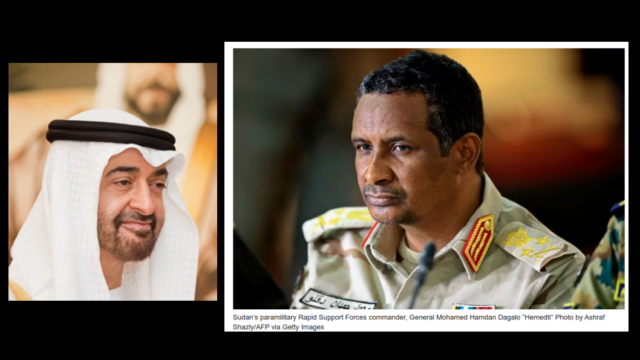
Hamza from Defund the UAE joins to talk about the Sudan war. How did it start? Who are the belligerents? What makes the RSF the greater evil? What is the UAE doing in this war? What can be done from the West to help? Hamza mentions Sudanfunds.com and SudanNewsEnglish on telegram, to start.
Civ 1919: Treaty of Versailles pt4 – Germany
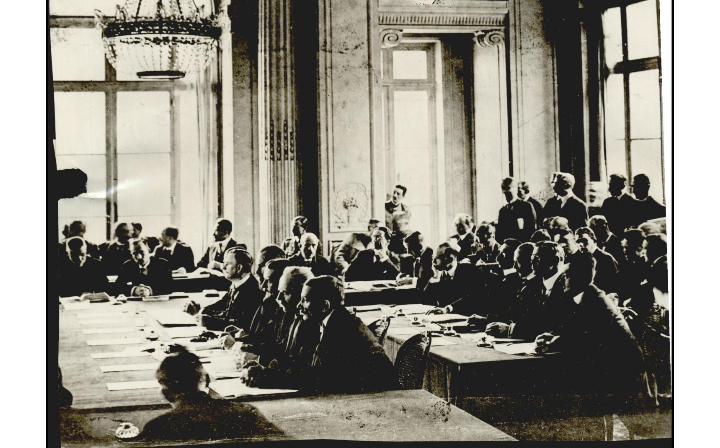
The Anglo-Americans blamed the Germans for World War I, and won. Now they would impose terms. But if they sought too high an indemnity, Germany’s economy would collapse and they would never pay. If they helped Germany rebuild, what kind of punishment would that be? In the end, the Allies chose a path that guaranteed the next war.
The Genocide in Palestine is Powered by Zionism, Not “AI”
We keep hearing that Israel’s genocide in Gaza is “AI-powered.” Many pundits are warning that this marks a new era in warfare, the first time that “automated” war has been waged.
We keep hearing that Israel’s genocide in Gaza is “AI-powered.” Many pundits are warning that this marks a new era in warfare, the first time that “automated” war has been waged. Foreign Policy declared that “AI Decides Who Lives and Dies.” Vox reports that “AI tells Israel who to bomb.” The Washington Post claims “Israel offers a glimpse into the terrifying world of military AI.”
These narratives are misleading, by design. They distract from the institutions and ideologies responsible for the devastation, and from the sheer scale of the devastation itself. Like other appeals to “Artificial Intelligence” – a confused and confusing term that is inseparable from racist ideologies – these framings invite the imperialist experts to offer their non-solutions.
Rather than fight the entities responsible for genocide, and support the Palestinian resistance, the experts want us to blame the genocide on “misuses” of computers – misuses they promise to “fix” through their partnerships with the US government, corporations, and academia (the institutions that have enabled the genocide in the first place).
“AI-Powered” Bombings: A Story Approved by the Israeli Military Censor
The now common narrative about an “AI-powered genocide” in Gaza is largely based on articles by Yuval Abraham, an Israeli journalist and activist working for +972 Magazine. Abraham is famous for co-directing the documentary film No Other Land about Israel’s efforts to destroy Masafer Yatta and the inspiring resistance by the residents, which recently won an Oscar. Abraham’s co-director, Hamdan Ballal – who could easily have told the story with the film’s other Palestinian co-director, but not gotten to the American Academy Awards without Israeli support – was kidnapped and beaten by Israeli settlers and the army in March 2025. The publicity following the Oscar win also led to justifiable criticism of Abraham’s actions, including his circulation of Israeli atrocity propaganda concerning October 7 and his use of the Oscar acceptance speech to condemn Hamas and draw a false equivalence between Al-Aqsa Flood and Israel’s genocidal war.
Over the past year, Abraham wrote several articles that have been used to support the idea of an “AI-powered genocide” – even though Abraham, tellingly, never uses the term “genocide.” Some of his articles were published in collaboration between +972 Magazine and the Guardian and have been widely quoted by pro-Palestinian activists and news outlets. Middle East Monitor, for instance, referred to “Israel’s AI-powered genocide” based on this reporting.
Since +972 Magazine is an Israeli outlet, they are subject to the Israeli military censor. Any story concerning “sensitive” matters must be first approved by the censor to ensure it doesn’t compromise the zionist entity’s “security” interests. And if we read Abraham’s articles carefully, it’s not surprising that they passed, because they minimize the genocide, transfer the blame from people to machines, and (whether intended or not) promote Israeli technologies.
What’s the Difference Between “AI Targeting” and Just Bombing Everything?
Abraham’s widely referenced article on a system called “Lavender” (published April 3, 2024) begins by quoting a book written by the Israeli military. The book claims there’s a “bottleneck” in generating targets (humans are apparently too slow) and suggests that “AI” will solve this problem, thereby revolutionizing warfare. Rather than challenge the premise that the Israeli military has a sophisticated method of “generating targets” – which plays into Israel’s narrative that it uses “precision targeting” – Abraham concludes that the revolutionary technology the Israeli military dreamed of now exists: it is Lavender.
Abraham’s sources are Israeli soldiers who convinced him that Lavender “played a central role in the unprecedented bombing of Palestinians.” Abraham adds that his anonymous sources told him Lavender’s “influence on the military’s operations was such that they essentially treated the outputs of the AI machine ‘as if it were a human decision.’ ”
In fact, all decisions made over the course of this genocide are “human decisions.” Even if a computer was used in the process of enacting genocide, it is people who decided to use the computer, designed the software, chose the data, determined what constitutes a valid “output” and how that output will factor into the ultimately human decision to kill. Machines don’t pull triggers, people do. While AI pundits debate absurd scenarios where machines wake up and decide to turn everything into paperclips, machines on their own are nothing. In the real world, we have material systems and institutions in which human beings make political and moral decisions. No machine is autonomous; everything depends on resources allocated by people, and anything can be unplugged.
It is estimated that by January 2025, over 70% of structures in Gaza have been damaged or destroyed. Israel has dropped over 85,000 tonnes of bombs on Gaza since October 2023 (not to mention the engineered starvation and lack of medical supplies). Basically everything has been bombed, much of it more than once, as we know from accounts by the people of Gaza and from satellite images.
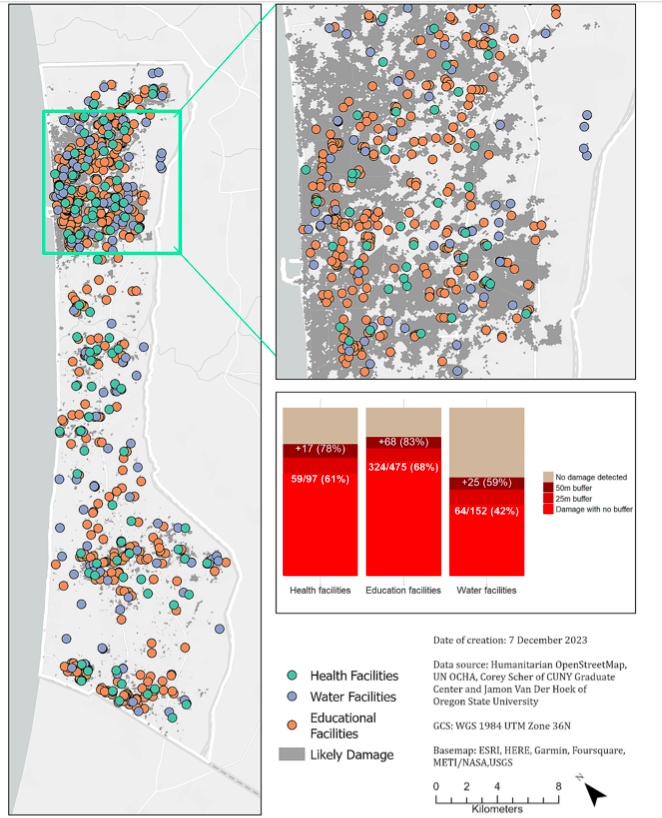
Why would “target generation,” regardless of how it works, matter when the zionist entity decided to bomb all of Gaza – to try to send it “back to the stone age,” as Israel’s craven politicians have openly said for years?
Israel bombed the areas where people lived and the areas people fled to for shelter and food. It has intentionally attacked all life-giving facilities. By October 26, 2023, Israel had bombed over 35 health care facilities, including 20 hospitals. As Mary Turfah wrote then, it was a clear case of “the logic of elimination,” where “the colonizer destroys the medical infrastructure to diminish a people’s ability to live, after they try and cannot crush the people’s will.” By now, several hospitals have been bombed multiple times. Israel aimed to destroy everything that was good for life in Gaza, from mosques to bakeries to water and sewage facilities (85% of such facilities were destroyed by early October 2024).
What does “target generation” even mean, when elimination is the settler-colonial policy? And since Israel has been bombing everything, why so much hype for stories about AI-based targeting?
The focus on target generation minimizes the genocidal intent, painting the perpetrators as victims of sorts, pawns of the machine. Abraham writes,
The [Israeli] army gave sweeping approval for officers to adopt Lavender’s kill lists, with no requirement to thoroughly check why the machine made those choices or to examine the raw intelligence data on which they were based. One source stated that human personnel often served only as a “rubber stamp” for the machine’s decisions…This was despite knowing that the system makes what are regarded as “errors” in approximately 10 percent of cases, and is known to occasionally mark individuals who have merely a loose connection to militant groups, or no connection at all.
But again, these are not “the machine’s decisions,” and Israel has never needed “AI” to indiscriminately bomb Palestinians. Destruction of entire areas is a long-running zionist policy. Saying these attacks are primarily targeted at “militants,” with some deviations due to technical “errors,” sanitizes Israel’s genocidal nature. It also elevates “AI,” treating it like a revolutionary new technology with a mind of its own.
In getting trapped in the logic of “target generation,” Abraham also affirms the propaganda that the Israeli military abides by certain “ethics.” The Israeli military is infamous for having its own philosophers who developed an “Army Code of Ethics,” as well as lawyers who ensure adherence to international law. According to Israel, these experts decide what is an acceptable amount of “collateral damage.”
Abraham writes that “in an unprecedented move” the Israeli military decided recently that “for every junior Hamas operative that Lavender marked, it was permissible to kill up to 15 or 20 civilians; in the past, the military did not authorize any ‘collateral damage’ during assassinations of low-ranking militants.” Abraham added that “in the event that the target was a senior Hamas official with the rank of battalion or brigade commander, the army on several occasions authorized the killing of more than 100 civilians in the assassination of a single commander.”
This framing makes it seem like the policy isn’t one of elimination, but rather that the Israeli military simply moved its “ethical” threshold from something acceptable (~15 civilians for every target) to something that seems extreme even by liberal Zionist standards (~100 civilians for every target). This reporting never challenges the targeting of the resistance, of course. It is implied that it’d be fine for Israel to murder every single “important” Hamas member, as long as it does so with more precision.
Abraham basically says that in an interview with +972 Magazine’s podcast, in Hebrew. The interviewer asked, “These people [marked by Lavender], we have no way of knowing if they’re really active in Hamas?” Abraham answered,
Before the war, Lavender was just an aid. It gave us a lead. Say, there was a phone call and someone on the call was in the Lavender database. Ok, that’s great, fine, so he’s a suspect. Maybe he’s in Hamas, maybe he’s not. Maybe he just has similar communication patterns to Hamas members. Journalists, for example, who regularly talk to Hamas members and attend Hamas rallies and take photos, they could have similar communication patterns.
It was “the madness of October 7,” Abraham says, that drastically changed things. The Israeli army apparently started taking Lavender’s recommendations as the truth, without further “verification,” despite knowing that Lavender has a “1 in 10” chance of mistakenly identifying someone as an “active Hamas member.”
Does Lavender Even Exist?
We can’t even be sure that Lavender exists as described by +972 Magazine. Unlike in Edward Snowden’s disclosures of mass surveillance by the NSA and collaborating companies from 2013, Abraham provides no internal documents about the system. +972 Magazine claims to have obtained footage from a presentation on “human target machines” given by the Israeli military at Tel-Aviv University, along with the presentation slides, but neither the footage nor the full slides were ever released. Abraham’s article shows only two slides from the presentation, which lack details and don’t name any system. Even if Abraham had access to detailed documents, the Israeli military censor wouldn’t have approved their publication (which is why Israeli outlets like +972 Magazine can’t do serious reporting on these topics).
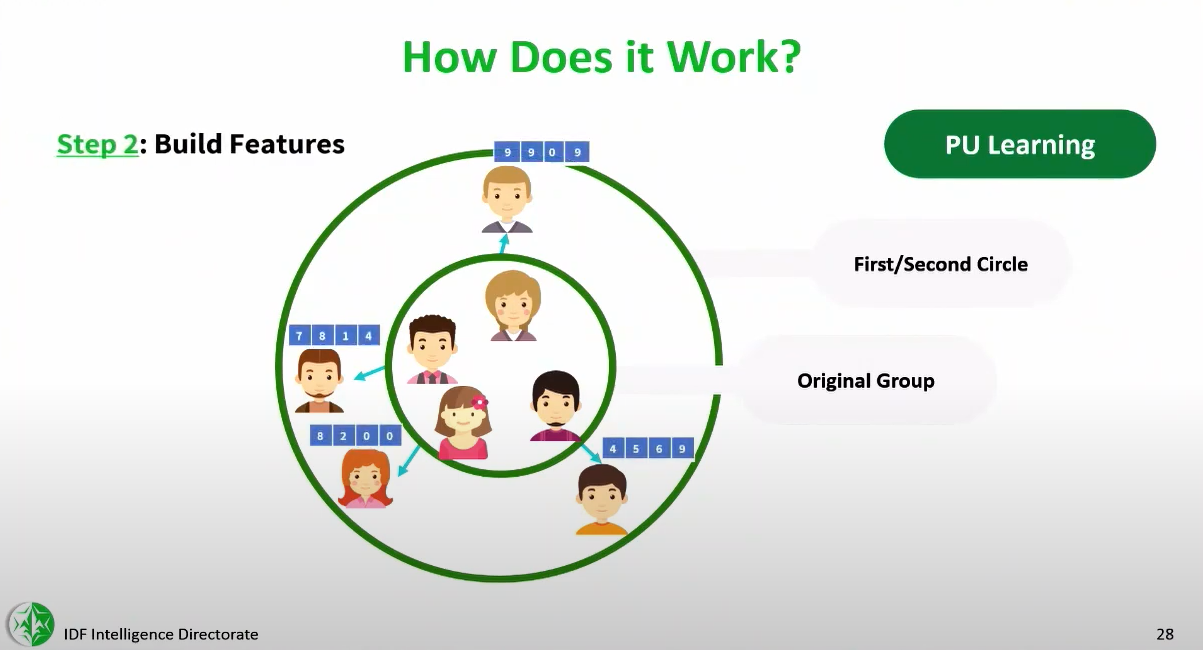
Even if Lavender does exist, it might as well be a list of the GPS coordinates of every structure in Gaza. The result would be no different from what we’re seeing – utter destruction. There is no super machine in the Israeli army’s possession telling them what to bomb. Their compulsions and ideologies can’t be found in the computer.
The story that what is happening in Gaza is driven by a machine makes it appear like some Israeli soldiers are taking a moral stand. In an interview with Democracy Now, Abraham said some of his informants were “shocked by committing atrocities and by being involved in things and killing families, and they felt it’s unjustifiable. And they felt a responsibility, I think.” He added that “they felt a need to share this information with the world, out of a sense that people are not getting it.” Why did their shock not stop them from obeying their genocidal orders?
Abraham anyhow doesn’t endorse such refusals. When asked by Israeli media whether he thinks Israeli soldiers should refuse orders to expel Palestinians in Masafer Yatta from their homes (expulsions documented in No Other Land), Abraham said: “It’s not my place to say. Everyone has to act according to their conscience…our emphasis isn’t on the individual soldier.”
Abraham’s informant soldiers seem to have no conscience. These soldiers aren’t acknowledging the genocide, let alone challenging it. They are merely raising questions about the protocol of “target generation” (without realizing all of Gaza is the target). Abraham’s informants told him they used “dumb” bombs for many targets, which cause massive damage, over so-called smart bombs, which create more localized damage. Some of the soldiers justified this. “You don’t want to waste expensive [smart] bombs on unimportant people – it’s very expensive for the country and there’s a shortage [of those bombs],” one soldier told Abraham. Another similarly said, “it would be a shame to waste bombs” on Palestinians who aren’t important “Hamas operatives.”
Yet another informant told Abraham that the bombing of Gaza is unprecedented in scale, but that “I have much more trust in a statistical mechanism than a soldier who lost a friend two days ago. Everyone there, including me, lost people on October 7. The machine did it coldly. And that made it easier.” Whatever this is, it is not resistance to the genocide.
Israel’s official response to Lavender is actually closer to the truth than +972 Magazine’s coverage. The Israeli military told Israeli media that the “dumb bombs” it has been dropping on Gaza are standard weapons of war. As for Lavender, the Israeli military said they “don’t use artificial intelligence to tell or predict whether a person is a terrorist,” adding that information databases are “just tools” for military analysts who make the decisions.
“Artificial Intelligence” Is the Refuge of Scoundrels
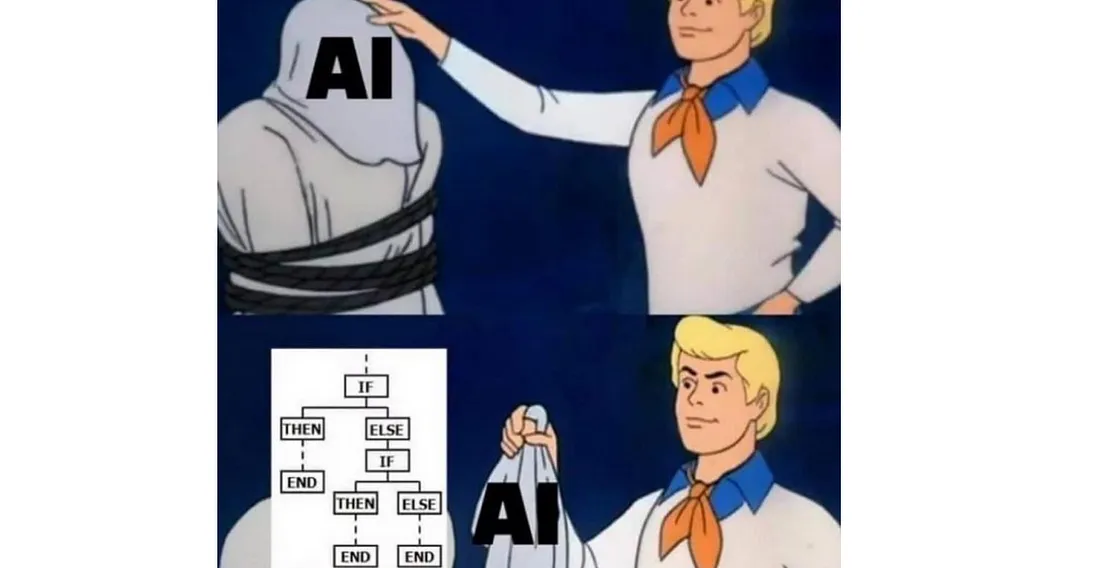
What nearly all discussions of AI miss is the malleability of the term. Systems that have been used for many decades have been rebranded as “AI.” Basically anything involving a computer can be “AI” in the right context, from systems that calculate insurance premiums to the simplest “if-then” statement. Calling something “AI” is marketing, putting a fresh gloss on old political agendas. The term “AI” is useful for oppressive institutions because it hooks into many ideologies about hierarchies of intelligence, labor, and the limits of the human mind.
If there’s an “algorithm” for what Israel is doing, it can be captured by a simple “if-then” statement. “If it’s necessary for indigenous life, then try to destroy it.” This is the logic that settler-colonial states have been following long before digital computers existed. No need to invoke “AI.”
A Red Carpet for the Empire’s Expert Class
If it’s an “AI-powered genocide,” then the issue isn’t racist, Zionist ideology. What we need are experts to help us fix the computer, whose “decisions” were less than perfect.
Yuval Abraham’s reporting on Israel’s supposed use of a ChatGPT-like system, published in both +972 Magazine and the Guardian (co-authored with Harry Davies), is a prime example. Abraham begins by describing the system in a way that sounds like PR for Israeli technologies: a tool created by the Israeli army’s “elite cyber warfare squad,” which is “being fed vast amounts of intelligence collected on the everyday lives of Palestinians living under occupation.” Yet there are downsides. Davies and Abraham’s expert on the matter is Brianna Rosen, a former White House “national security” advisor.
As expected, Rosen told the journalists that ChatGPT holds great potential for the state; that it could “detect threats humans might miss, even before they arise.” But there are “risks” of “drawing false connections and faulty conclusions.” Like many other servants of empire, Rosen says that it’s really AI that is now waging war and she wants to improve its “transparency” and “accountability.” This is done in the name of “national security.” The questions Rosen wants us to focus on are:
What safeguards has Israel put in place to prevent errors, hallucination, misuse, and even corruption of AI-based targeting systems? Can Israeli officials fully explain how AI targeting outputs were generated? What level of confidence exists in the traceability and explainability of results?
Rosen concludes that it’s not clear how “responsible AI” is being practiced. One of her complaints is that Israel, which she describes as “a key U.S. ally,” hasn’t endorsed the principles of AI ethics that enlightened countries such as the US have (she notes that Russia hasn’t either). In 2020, for example, the Pentagon published an “Ethical Principles of AI” statement that includes “Responsibility,” “Traceability,” and “Equitable” use (which is promised to reduce “unintended bias”). If only Israel could be so ethical!
The experts discuss these weighty matters in gatherings such as the “Responsible AI in the Military Domain Summit” (2024) and in the Microsoft-sponsored “Global Conference on AI, Security and Ethics” (2025) hosted by the United Nations. It’s safe to say that if Henry Kissinger (who rebranded himself as an “AI expert” late in life) were still alive, he’d be a keynote speaker in these “responsible AI for war” conferences.
Davies and Abraham give an example of the consequences when AI isn’t “responsible.” In their article on the Israeli military’s ChatGPT-like system, they refer to a case where “AI was likely used by intelligence officers to help select a target in an Israeli airstrike in Gaza in November 2023 that killed four people, including three teenage girls.”
“Killed four people”? It’s remarkable that this article, published March 6, 2025, neglects to mention that tens of thousands – and likely far more – Palestinians have already been killed by Israel in this genocide. Were there tens of thousands of these technical errors? Or are Israeli human beings enacting a genocide their leaders announced beforehand?
The loudest voices on “AI” take the same approach. AI Now, a think tank created by companies complicit in the genocide (Microsoft and Google) and the Obama White House, recycled the analysis of +972 Magazine, crafting it to appeal to the US “national security” establishment. Heidy Khlaaf of AI Now (formerly a Microsoft employee) told Defense One this about the Israeli military’s use of “AI”:
…the data is inaccurate and [the models] sort of attempt to find patterns that may not exist, like being in a WhatsApp group with a…Hamas member should not qualify you for [a death] sentence. But in this case, that is what we’re observing.
The implication here is that if a Hamas member were targeted, not just someone who’s in a WhatsApp group with one, then it’d be okay; that wouldn’t count as a machine “error.” In this worldview, Americans and Israelis decide who lives and who dies in Gaza by right: they just need to do so responsibly.
There’s a similar sleight of hand when “AI” is invoked in other areas. When it comes to policing and prisons, for example, the experts are preoccupied with the “bias” of the “sentencing algorithm” (as if the US carceral state can be made “unbiased”). But the algorithm didn’t make the US incarcerate nearly 2 million people, significantly more than China (which has four times the US population) and more than three times that of India (which also has four times the US population). Instead of thinking about how to abolish this abhorrent, racist system, AI experts are here to make sure those 2 million are selected without undue bias.
Whether the discussion is about policing or genocide, this expert class offers the only solution it knows: forming more partnerships between the “stakeholders” – corporations, the state, academia, and NGOs – and promising “transparency,” “accountability,” and “bias reduction.” Fair, unbiased genocide and mass incarceration delivered by the most updated technologies.
“I See, I Shoot”
The myth of an automated, high-tech means of controlling Palestinians predates the current obsession with AI. For years, Israel has boasted about its weapons systems, presenting them as both impenetrable and nearly fully automated. A video from 2009 shows the Samson remote controlled weapon station, made by Rafael, in action along the Gaza colonial fence. The system is known in Hebrew as “roah-yorah,” which means “I see, I shoot” (in the Hebrew name, the feminine verbs “see” and “shoot” are used). The system’s female operators are in communication with a group of other female soldiers who monitor the colonial fence (the tatzpitanyiot, who were captured by the resistance in Al-Aqsa Flood). When they see movements of “Hamas militants” from afar, the video says, they shoot them down.
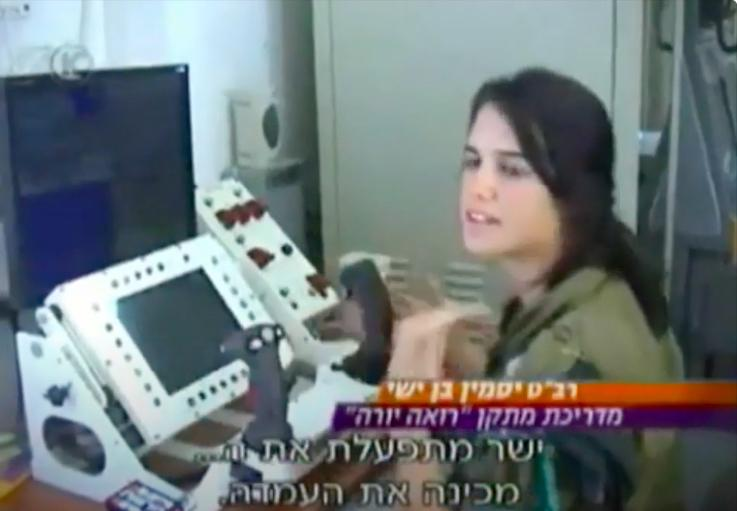
In recent years, such systems (and many others) have been rebranded as “AI.” Journalists and policy pundits circulated many stories about how Israel’s fence around Gaza is apparently patrolled by “killer AI robots,” ushering in a new era of warfare. Such stories help Israel sell its weapons worldwide, along with the people who build them (Israelis who, after serving in the Israeli military, go work for companies like Google and Microsoft).
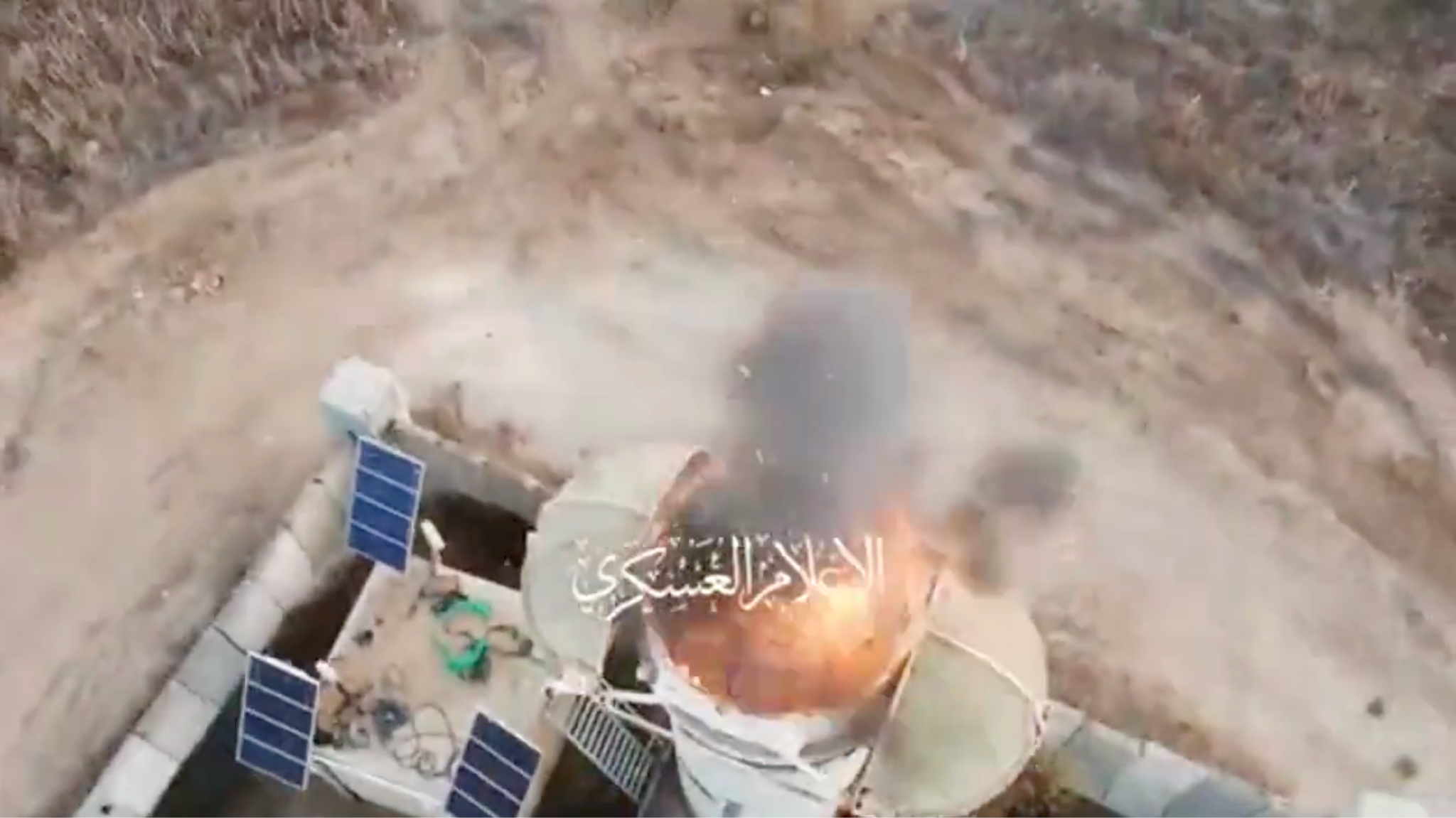
But there’s a big gap here between image and reality. In 2018, we saw how the nearly “automated” fence was made up of Israeli military snipers who were shooting with the intent to maim (or kill) Palestinians. And on October 7, 2023, we saw how the Palestinian resistance broke through and easily glided over that automated “killer AI” fence, even blowing up an “I See, I Shot” station from the air.
Microsoft and Israel: “A Marriage Made in Heaven”
The AI-centered stories still insist there’s a magical new technology that could enable Israel to do great harm – and that if only this technology were regulated, the problem would be solved. Once again, +972 Magazine set the terms of discussion, with an article by Yuval Abraham describing Microsoft’s contracts with Israel for advanced “AI” systems. This story and similar ones have been presented as “breaking news.” Are they?
It’s well-documented that Microsoft (like Google and other companies) has been providing services to Israel for decades. These include routine computing and data storage services, which are necessary for daily oppression and surveillance but have little to do with “AI.” Microsoft is also occupying land in ‘48 Palestine (which includes a new data center opened in October 2023). It also relies on the Israeli military to supply its workforce. Former Microsoft CEO Steve Ballmer once said “Microsoft is as much an Israeli company as an American company,” while current Microsoft CEO Satya Nadella praised the “human capital” that the zionist entity produces. As Benjamin Netanyahu summed it up, in a 2016 meeting with Nadella marking twenty-five years of collaboration: Microsoft and Israel are “a marriage made in heaven but recognized here on earth.”
“AI-Powered” Deportations?
We are now seeing another wave of AI propaganda surrounding the detention and deportation of students engaging in Palestine solidarity work. There are many stories about how the US government and zionist groups are using “AI” to flag people for deportation. Once again, “AI” is being used to dress up old political projects.
It’s already been easy for decades to make lists of people from social media who match certain criteria – that’s what the platforms were built for. It is simple to search posts for keywords that the government might now deem as “pro-terror” (“resistance,” “settler-colonialism,” “BDS,” or whatever). The next step is to compile lists of people based on whether they’ve shared articles from certain sites (say, Mondoweiss or Electronic Intifada) or activist groups (for example, Students for Justice in Palestine).
The Zionist startup that says it is employing “cutting-edge AI” to flag people could very well be doing these simple things, yet calling it “AI” makes the operation seem more powerful and sophisticated. This goes beyond a marketing agenda of overselling a technology by claiming it is better than it really is.
AI propaganda can also make us forget that social media platforms were designed to surveil and create profit. In their 2014 article on surveillance capitalism, John Bellamy Foster and Robert W. McChesney noted that an early application of ARPANET – a Pentagon network created in the late 1960s, which later became the internet – was to store millions of files the state collected on US citizens involved in anti-war movements (known as the “Army Files”). The digital platforms we have today grew from these efforts to surveil and control social movements, and were developed by the same institutions.
Focusing on the (mis)uses of “AI” regarding deportations also distracts from some important and difficult political questions. Questions such as: Why is it that so many activist groups depend on platforms made by companies that serve US imperialism? How can we challenge these platforms and overcome decades of propaganda that said social media is a liberatory tool for grassroots struggles? What can be done about a culture of activism that, in the imperial core at least, is often more focused on creating images of resistance – thereby feeding the platforms of surveillance – than materially disrupting oppressive pipelines (as groups like Palestine Action have)? And what could be done to reduce the harms of these digital platforms, now that they’re everywhere, and that so much information about activists is readily accessible?
Getting Off the Propaganda Train
Every so often an executive from one of the tech monopolies tells the media he’s alarmed that AI is going to replace human beings. Generations of Hollywood blockbusters (2001: A Space Odyssey in 1968, Terminator in 1984, The Matrix in 1999, Avengers: The Age of Ultron in 2013, Subservience in 2024, and many many more) have trained us to think of AI as something awe-inspiring and terrifying. Over the same time span, Israeli propagandists have put forward a similar image of the Israeli military: an invincible, all-knowing machine full of intelligence and technology.
These parallel propaganda trains – of AI and of Israel – have the same goals: puffing up the self-image of imperialists as gods, and inducing despair in those trying to resist genocide. In fact, as anti-colonial rebels have shouted through the centuries, our oppressors have nothing that we don’t have. This genocide can be stopped. If it is, it will be stopped by human beings resisting, not by fixing a computer.
Bios
Yarden Azoulay Katz teaches at the University of Michigan and is the author of Artificial Whiteness: Politics and Ideology in Artificial Intelligence (2020).
Justin Podur is a writer and podcaster at the Anti-Empire Project.
Civ 1919: Treaty of Versailles pt3 – the Balkans
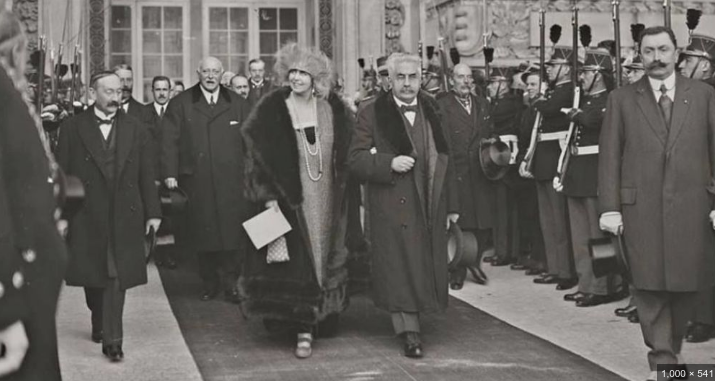
The Balkans are where the Great War began; there were two Balkan wars before the Great War and there was a Balkan war in the Great War. In Paris, delegations from the region made their cases, the Great Powers made their dispensations. New countries formed and new borders drawn, which would be changed again in the next war.
Civ 1919: Treaty of Versailles pt2
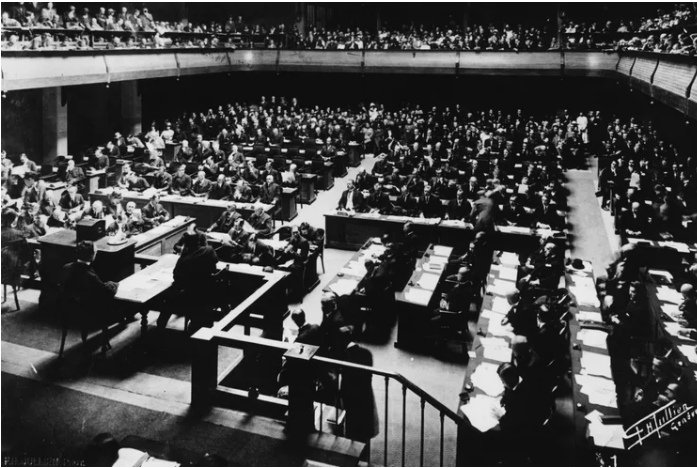
The biggest player at the peace conference, Woodrow Wilson, wants a League of Nations, which in the age of imperialism, is a rather underdeveloped idea. The other problem is, how to continue colonialism but with a nicer name? And so were invented the Mandates.
The anti-genocide focus
A hundred years ago one writer identified antiwar work as a difficult and lengthy business
It feels intolerable to realize how many of our neighbors are genocidal racists. How many others are indifferent and unmoved. How commerce and trade and normal relations can go on while genocide is ongoing. Our minds are repelled. We’re emotional wrecks alternating between panic, guilt, rage, and helplessness.
From this place we write our laments.
The world has failed.
We have allowed this to happen.
We are cowards.
These are our human reactions.
The lament is necessary to feel the futility of appeals to our elites who are more rotten than we could have imagined; to feel the futility of appeals to laws that are on the books but that depend on these same rotten, racist elites for enforcement. When we tell ourselves that we have allowed this to happen because we are cowards, we are challenging our own courage.
How could we not? We share the world with people in Yemen who have said that they will support Gaza even if the sky falls; we share the world with Aaron Bushnell and a growing number of political prisoners. The people of Lebanon had their villages destroyed, thousands killed. The people of Palestine are struggling against a whole West bent on exterminating them. Are we doing enough? It’s a good question, a just question.
But, my anti-genocide friends, we have to focus!
We have to accept the reality we are in. We can’t afford illusions about power we don’t have. We aren’t allowing this to happen: we lack the power to stop it.
We aren’t allowing this to happen: we lack the power to stop it.
The genocide is indeed facilitated by mass Western racism and mass global cowardice. The genocidals have indeed created a world system of legal impotence and racist indifference to their use of unlimited violence. Everything is permitted to them. They repeat lies that even they don’t believe as a way to signal their affiliation to one another, and to show us that they can say and do what they want and there’s nothing we can do about it. It’s incorrect to believe them. But it’s equally incorrect to believe that we can stop them with a shrug.
Many of us do have courage (see Palestine Action) but a small number of extremely courageous acts cannot turn this around. If millions reached that level of consciousness and of action, the genocide would quickly end. The actionists are at one extreme of courage. Risk-free support for fundraisers, awareness-raising, and boycotting are at the other with demonstrating in the middle, we need all of this. Not a few people doing everything, but more people doing more. Focus on that equation: More people all the time, each with a bit more courage all the time.
About 100 years ago one anti-war writer wrote that “the struggle against a centralized state’s powerful terrorist military organization is a difficult and lengthy business.” At the time, that writer argued that leaders of the movement needed to “express themselves in favor of the defeat of their own governments”, to “set up an international apparatus for the purpose of carrying on propaganda”, “organize the publication of illegal literature on the necessity of starting revolutionary activities.” He concluded “we cannot tell whether a powerful revolutionary movement will develop immediately after this war or during it,” but the only worthy thing to do was to “work in this direction.”*
In the Thorn and the Carnation, Yahya Sinwar’s characters organize for struggle while going in and out of prison, under surveillance and torture. These characters have a matter-of-fact attitude about all of it. They debate strategy and principle, they take risks at times and act with caution at others. What you won’t see them doing is lament the indifference of the world or call themselves cowards.
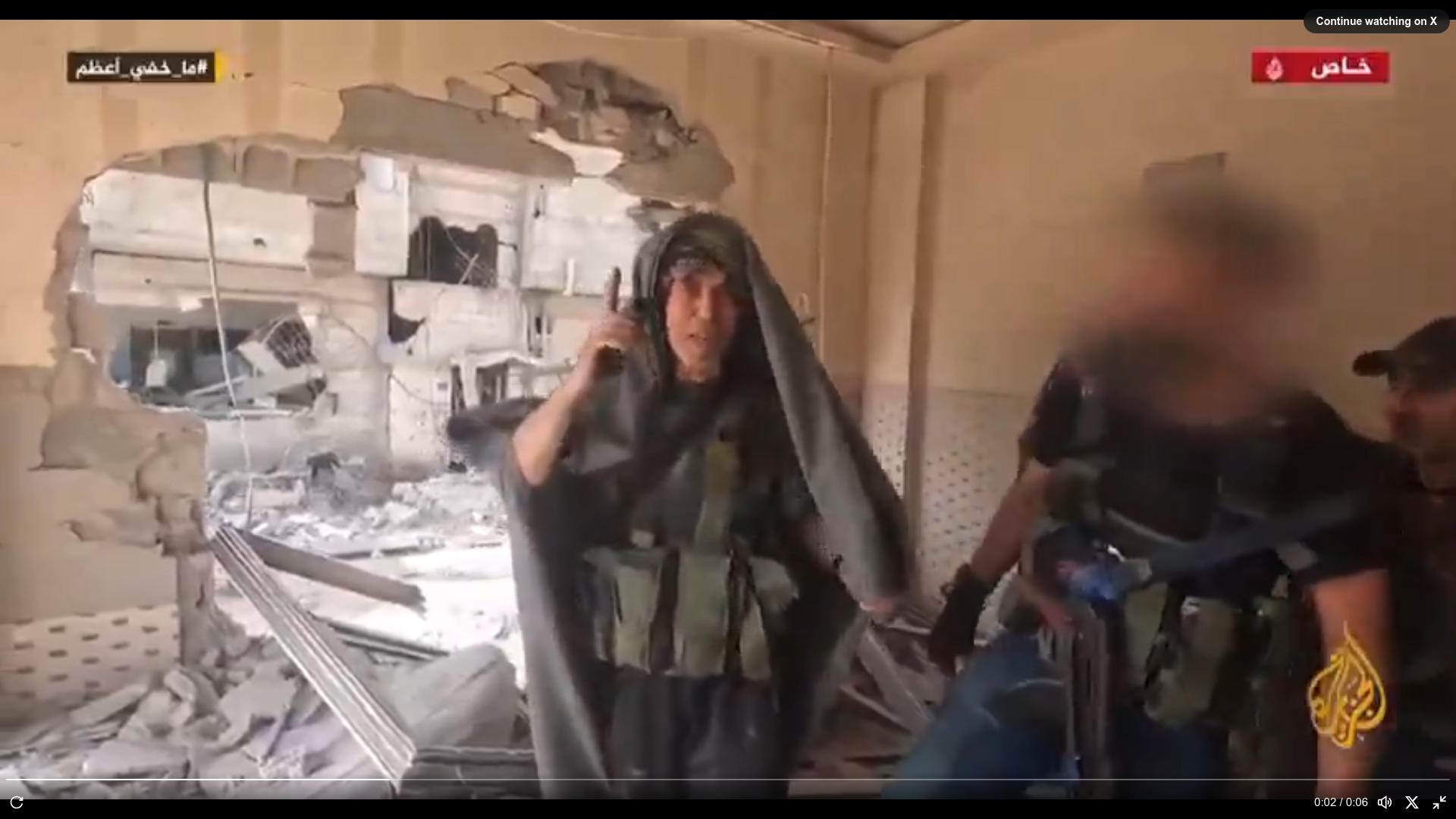
We have the world we have. Take a moment to lament it. Then take back your anti-genocide focus.
*The writer was named Lenin.
Cancellation Court: The Media Trial
Another instalment of fiction about justice after the genocide
[Dear readers: The genocide has started again and I will be returning to reporting on it. But here is a story I’d been working on earlier that I need to get out there first. After writing the Hodeidah Tribunal, I wondered about what justice would entail for the media incitements that have been so visible throughout this genocide. This story deals with the less clear-cut cases of media figures who laundered the genocide by claiming either balance or even anti-genocide credentials while returning the debate to genocider talking points…]
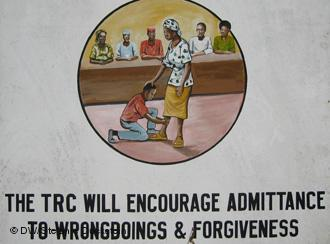
Graphic from South Africa’s TRC
Towards the end of the revolution, the National Revolutionary Authority of North America (NRA-NA) issued a declaration, called the Declaration to Social Media (DSM), that outlined some of the genocidal crimes they would punish upon arrival in power. The DSM was a warning to media figures and social media users to stop their incitement to genocide, for there would be consequences for these incitements. Written in a moment of revolutionary enthusiasm, its legal consequences had to be developed by a number of legally trained revolutionaries after the victory. Sushil was a veteran revolutionary lawyer, and had been defense counsel for many of the NRA revolutionaries since the early days. He was trusted, known, and he knew the law. The leadership collective had invited him to help them develop the document.
The initial DSM had been a very simple list of crimes.
DECLARATION TO MEDIA AND SOCIAL MEDIA ON INCITEMENT TO GENOCIDE
The National Revolutionary Authority declares the following to be crimes that will be punishable by law:
SECTION 1: INCITEMENT TO GENOCIDE
The following acts on social media or media will be considered punishable incitement to genocide:
1.1 – Atrocity Propaganda. Posting or stating lies about atrocity crimes, by the victims, while the genocide against them goes on, will be punishable.
1.2 – Willful or Pretended Ignorance. Media figures or officials who pretend to be, or speak publicly while actually unaware of well-documented and ongoing genocidal crimes or statements, are considered offenders and will be punished.
1.3 – Excusing Genocide. Labeling the victims as “terrorists” or any use of the doctrine that genocide, civilian murder, or destruction of civilian infrastructure is justified because “terorists” are “embedded among civilians”, will be punishable.
When Sushil had begun to study the declaration, he fretted as he tended to do, because Sections 1.1 through 1.3, while precise, encompassed so many acts by so many social media influencers, NGO actors, politicians, and media spokespeople, that it would be impossible to punish them all except by turning the entire revolutionary bureaucracy towards the sole purpose of punishing the complicit. What to do?
Sushil knew that the worst actors could be deported to the Hodeidah Tribunal, but the sentences there were long and even capital punishment was possible under those clauses. Back here, though, the NRA-AN (pronounced “niraan”) had the challenging task of separating the worst actors from the mere social participants, the big genociders from the small.
Having studied it more carefully than most, Sushil had never been fooled by Rwanda’s post-genocide Gacaca court system (1), but the system’s stated principles made sense. People accused of participation in genocide were compelled to face the community and tell their truth, which would be corroborated or disputed by community members at the trial.
Gacaca had been designed for a country of a thousand villages. Sushil had to adapt it for the online community. Instead of an outdoor meeting at picnic tables in a field in the village, the DSM trials would have to take place online, publicly, on the web. The South African Truth and Reconciliation Commission (TRC) had been televised. The DSM trials would be livestreamed. But like Gacaca and the South African TRC, physical custody of the offenders was necessary.

For today’s trial, the offender was brought into a studio in his usual suit and made to sit in a witness box with a camera before him.
Gorman had been a television commentator his whole career, and he’d be allowed to tell his truth in his own element: live to the web. He sat with his chin forward, in a posture familiar to his millions of online viewers.
Gorman’s arrest hadn’t been difficult to effect. NRA agents had an easy time apprehending most of the people they wanted for these trials. Anonymity is hard enough to achieve for anyone: The life of a social media influencer is fundamentally incompatible with good security practices. Gorman was no man of action either. The agents had come to his door, and walked him into custody. He’d been interrogated and debriefed by one of the Hodeidah Tribunal prosecutors, who’d evidently gotten whatever she needed from him. He’d asked if he could be suited and appropriately powdered for his DSM trial, and Sushil had granted the request.
Now Gorman sat looking comfortable – imperious even – in the box, and it was Sushil’s turn. No stranger to grandstanding in the courtroom, Sushil was nonetheless uncomfortable and nervous. Precedents were being set, and this hybrid between a court and a television program was halfway between his world and Gorman’s. That was, after all, why Sushil had designed the trial to work the way that it was going to.
“Mr. Gorman, you are here today before us to tell your truth, after which we will decide whether you will be deported to Hodeidah for the trial of major media genociders or whether you will be able to be reintegrated into the community. Do you understand the process and what is at stake here?’
“I do,” Gorman said, “– and I’d just like to say that –”
Sushil held his hand up and Gorman’s microphone was immediately cut. “No, Mr. Gorman, not yet. When it comes time you will be able to speak freely about your truth, but not before. Thank you for telling us all that you understand the process and its possible outcomes. Now please, in a single yes or no answer, will you answer all of our questions truthfully?”
Gorman moved his mouth without sound several times before finally squeezing out, “yes.”
Sushil was the closest thing to a judge at these proceedings, Gorman the defendant. Both looked to the jury: a group of anti-genocide media figures, including many who had been harangued on Gorman’s show, some of whom had been arrested, had devices seized, homes raided, deported for their media work. A couple of journalists who had survived the genocide in Gaza and Lebanon were present as well, and a few who had simply entered a lottery for the chance to be in the audience during any DSM trial. Some thirty in all, they radiated an expectant and contemptuous energy in Gorman’s direction, reminding Sushil again of the care he needed to take to give this trial the gravity it deserved, despite the somewhat ridiculous figure Gorman cut.
Sushil began abruptly: “First of all, Mr. Gorman, I have to ask: do you condemn the genocide?”
Gorman had been expecting this one. “I have always maintained that Israel was excessive in its response, and I have held Israeli officials accountable and asked them what they thought was a proportional response.”
Sushil replied: “But do you condemn the genocide? Do you condemn Israel?”
“I don’t agree that it was a genocide,” Gorman said. “I think it was self-defense, but I think at times, it was disproportionate.”
Sushil got his pen, made a note of the exact time, wrote it down, and wrote next to the timestamp: 1.3. Excusing Genocide.
“So you don’t condemn Israel then,” Sushil said.
“You’re not going to get me to make a blanket condemnation, I think any state would have to defend itself after a horrendous terrorist attack like the one of October 7th.”
Sushil looked at the time again, wrote it down, and next to it: 1.1. Atrocity Propaganda.
Sushil said: “I’m glad you said that, actually. In your program you repeated lies about October 7th, for which there was no evidence, even implying that you had yourself seen videos of rapes or beheadings, allegations for which no evidence existed. Do you admit that you were lying?”
Gorman said: “I never lied. I said there were atrocities recorded on GoPros and reports of rapes.”
Sushil wrote the timestamp again next to his 1.1. Atrocity Propaganda.
He said: “So you don’t admit these were lies and you continue to claim there was evidence for these atrocities even though you haven’t seen them yourself? Or do you claim to have seen them yourself.”
Gorman said: “Now hang on, because now you’re not letting me respond –”
Sushil interrupted. “– It’s a simple question,” he said. Sushil looked at the audience, and as he suspected, some were enjoying watching Gorman on the receiving end of constant interruption and harangue. “… and it sounds like you’re not going to answer it. So, you’re refusing to admit you lied and you’re avoiding answering the fact that you repeatedly said things that suggested you’d seen evidence you in fact never saw.”
Gorman replied: “I never lied, you’re not going to get me to say I lied no matter how much you interrupt me.”
Sushil paced toward the audience, then turned back on Gorman. “Another question, then. On your show, one of your guests told you about the murder of Hind Rajab, a little girl who was killed with her family in a car while crying for help, and the medics who came to rescue her also were murdered. The same guest told you about a mother who was killed trying to save her son. The guest had just seen videos of these murders. Do you remember?”
Gorman said: “I said I hadn’t seen those particular videos.”
Sushil said: “Have you seen them now?”
Gorman said nothing.
Sushil wrote the time, and wrote down: 1.2. Pretended Ignorance. He continued the questioning until he had accumulated a long record of admitted violations of most of the articles of the DSM.
“I believe we have heard enough,” he said. “Mr. Gorman, your incitement to genocide has been so thoroughgoing, so systematic, and so influential, to such a large audience over the whole period of the genocide, that it shocks the conscience of this court and of the world. You have engaged in atrocity propaganda, in willful ignorance, and of excusing genocide, right here in this court before us and before the livestream audience watching these proceedings. I see no choice,” Sushil said, “but to have you remanded to the Hodeidah Tribunal for a full trial as one of the principal defendants in the media trial.”
“But wait!” Gorman said. “I gave voice to many of you people on my show. I put hard questions to Israeli officials on my show. I have been much more even handed than so many in the media. How could you punish me?”
“I would leave that for the Hodeidah judges to decide,” Sushil said, “but for the benefit of those listening now and for the court’s records, I will say that your phony debate format was transparently stacked in favor of the genociders, and even when the anti-genocide side got a zinger or two in, your own genocidal bias and the destructive effect of your program were apparent to all right-thinking people.” Sushil turned to the NRA agents. “Take him away to get him ready for deportation.” Looking at the cameras, he said: “This session is over for now.”

In the back offices of the studio, he found one of the trial lawyers from the Hodeidah Tribunal waiting for him. He put his hand to his chest and bowed modestly, and she slid a file to him across the table.
“This file,” Wardah said, “is a challenge.”
Sushil sat down with a sinking feeling. He knew who she meant before even looking. As he rifled through the gathered transcripts, his ambivalence only grew.
“My inclination was to just leave this one alone,” he said.
“Ours too. But then…”
“What changed?” Sushil asked.
“He turned himself in.”

It was another debater. To Sushil’s reading, the energetic Ghassan had developed a following over years with a skill of being quick on his feet and a knack for sounding principled even while being slippery when it mattered. He was proud of himself for being pilloried by all sides – that, to Ghassan, was a sign that he was on the right track. Both pro- and anti-genocide people thought he was wrong – to Ghassan, this indicated that he was a teller of uncomfortable truths. Everyone on the anti-genocide coalition had watched him: some enjoying his one-liners, others in disgust of his half-truths, and still others watched him as a bellwether: his positions indicated where public opinion was headed, what it was safe to say out loud at any given moment.
But things started to change for Ghassan when the tide of the war turned decisively. He was on tour with his book, a memoir of his hardest-hitting debates and the importance of free speech, when an audience member asked him if he regretted repeating genocidal talking points. He had answered with his usual speed and vigor, but the disgust and disappointment in her face had stayed with him. He was never a man used to adulation, he just didn’t bring that out in people, but his self image included the belief that he was a man of principle. The questioner had shaken him. Then it happened again, at the next venue. And again. One evening the audience seemed to be full of people who hated him. One had asked: “Why aren’t you on trial?” And the next time, almost no one was there.
He was a decisive man, and so he decided to resolve this problem the same way he’d lived his life: through a public debate. He had turned himself in to the revolutionary authorities and thrown himself on their justice. He wanted to have his day in court. He would speak his truth.

Sushil said, “it sounds like you don’t want him, and we don’t want him. He’s a good debater and fast on his feet, comfortable in the online environment and likely to question our credibility. Will it hurt our cause for him to be tried?”
Wardah gave an unworried look. “I have confidence in the system we have set up. Ghassan wants to speak? Let him speak.”

The cameras and bright lights on him once again, Sushil called Ghassan to the stand.
Ghassan strode confidently forward, unescorted by court officials. The audience reaction was mixed. Some applauded, others watched in cold silence. Opponents of the genocide uniformly hated Gorman, but opinion on Ghassan had always been divided.
He knew how to play to the crowd though. Sushil sat down without a further word and Ghassan walked slowly to the exact right spot for visibility to the most people and the camera.
“Have a seat, Ghassan.” Sushil said. “The court is to decide on what to do with you.”
Ghassan cleared his throat. “That is why I asked to be here today. To start with, I’d like to clarify that I’ve been vocally against this genocide from the very beginning. I’ve always been pro-Palestine!”
Sushil paused for a moment. “While your own crimes were not nearly on the level of Mr. Gorman, you also have engaged in atrocity propaganda. You’ve minimized the genocide by comparing it to situations that are not comparable. You’ve campaigned electorally for genocide perpetrators, arguing that voters set the genocide aside since both sides were genociders.”
Ghassan, composed, replied: “It’s morally consistent to oppose barbarism, war, and occupation no matter who does it. The fact that you and your court are now allied with some unsavory powers isn’t going to silence me.”
Sushil said: “Thank you for mentioning that. As you know, this court has several options short of remanding suspects to Hodeidah for trial. According to the Hodeidah authorities, your case falls below the threshold for the major media criminals, people like Gorman or people who actually provided targets for assassination.”
“Well I’m glad to hear that at least you understand that,” Ghassan said.
Sushil replied: “But you contributed in your own way to the vilification of the resistance and to the perpetuation of falsehoods.”
“I disagree,” Ghassan said.
Sushil continued as if Ghassan hadn’t spoken. “You built a following taking pro-Palestine positions, but you also smeared the movement alleging that Muslims en masse were anti-Semitic.”
“That’s just dealing with uncomfortable truths,” Ghassan said.
“You’ve also never addressed the facts of the Resistance’s conduct of the war, and have deferred to the accounts presented by the pro-genocide forces of what happened.”
“That is how you win debates, sir,” Ghassan said. “You show that your opponent’s logic is incorrect even if what they’re saying is true.”
“No, Ghassan. The facts matter,” Sushil said. “I won’t rebut you point by point. Go ahead and take ten minutes and say everything that you want to say.”
Ghassan looked solemnly at the camera, and at the crowd, and entered into the record a passionate defense of himself and his conduct during the genocide. Knowing that his reactions were being filmed, Sushil practiced keeping his face neutral and willed himself to not shake his head involuntarily with every point.
“Is that all?” Sushil said, when Ghassan stopped.
“Not quite,” Ghassan said, and went on for another ten minutes. “Now I’m finished,” he said.
“Let’s take a break and let the jury deliberate,” Sushil said.

When they returned, Sushil said only: “Let’s hear from the jury.”
The head of the jury stood up, one of the journalists from Gaza who had managed to survive the genocide, and cleared her throat: “For justice to be served, the punishment has to fit the crime. In your case, the jury believes that most of the infractions you have committed have been committed in the search for attention. And so, the punishment is a five-year period of cancellation. You will not be allowed on any live streams, prerecorded videos, television appearances, posts, or opinion columns. No one in the world will know your opinion for a period of five years. The jury recommends that you spend that time reading and learning things you don’t know.” She sat down, composed.
“But,” Ghassan said, appealing to Sushil, “if the goal is for me to learn, I learn best through the cut-and-thrust of intellectual debate.”
“Not this time,” Sushil said. “This time you’re going to have to be humble and learn by listening, not talking.”
“You know,” Ghassan thrust back, working himself into the quick-witted, quick-replying mode that everyone knew so well, “this government’s detractors will say that you’ve set up another totalitarian system and that the so-called revolution is just imitating the anti-freedom policies of your Chinese, Russian, and Iranian sponsors.”
“They might say that,” Sushil said. “But that won’t stop justice.”
Ghassan switched to a pleading mode: “But… five years. Surely that’s excessive? Disproportionate?”
Sushil looked to the audience. “Should we revisit in a year?” The court staff arranged a poll to the livestream, and the audience voted by a majority to meet with Ghassan in a year’s time. “Spend a year. Read. Write. Contribute something to society that isn’t your opinion. And we’ll talk to you then and see whether you have something worth listening to and maybe we’ll shorten your sentence. Until then, though, Ghassan, you are cancelled.”
The bailiffs didn’t touch Ghassan, but walked on either side of him out of the studio. “This isn’t the last you’ve heard from me!” he said.
“It literally is,” Sushil said. And thought: At least for a year.
Notes
-
To understand why Sushil feels this way, it’s unfortunately necessary to read a great deal. The book America’s Wars on Democracy in Rwanda and the DR Congo covers the main points. To get into it here would be a distraction.
Civ 1919: The Treaty of Versailles pt1
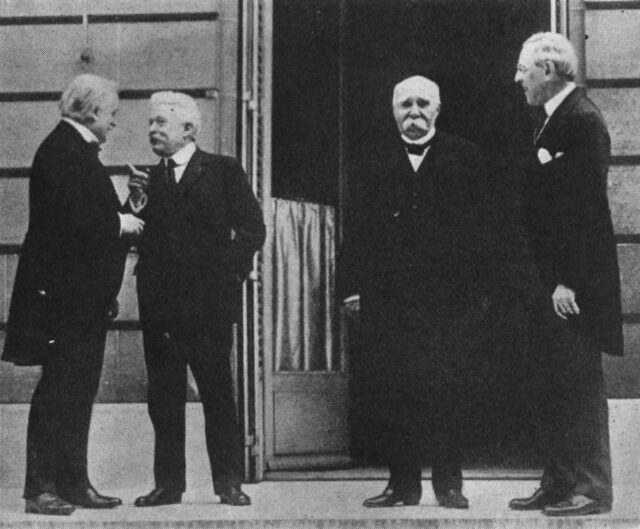
At the end of WW1, the Americans and British went to Paris to decide on the fate of Germany and the future of the world. The Treaty of Versailles and the conference in Paris in 1919 set up the Interwar period and made World War 2 inevitable. Here we begin our short series on the Treaty of Versailles, kicking off our Interwar series. Civilizations is Back!
World War Civ 51: The Debrief

Two and a half years. 50 episodes. 100+ hours. When we set out to cover World War I back in September 2022, after our Scramble for Africa and our Civilizations (1400-1900) series, we had a plan for how we were going to go about it. In this debrief, Dave and I talk about what we were able to do better and worse by using this format compared to when Dave taught it (and I studied it) in high school and when we both studied it in university. As well as some reflections on what stood out from the history, the idea of WWI as an inflection point in history, and previewing our next three series: Interwar, World War II, and Decolonization.