Assessing the US / Israel regime change plan for Iran

Comparisons from similar campaigns in the region

US naval assets are moving in. US bases within striking distance of Iran are being evacuated. Trump has signaled his willingness to ridicule his biggest supporters and contradict his own intelligence director to do Israel’s bidding. All of this adds up to: it is extremely likely that the US will very soon be attacking Iran on Israel’s behalf. The objective of the war is the removal of the Iranian government and its replacement by either a chaotic, perpetual civil war situation (chaos) or a pliant collaborator regime that will allow Israel to keep genociding with impunity (the main priority of the Western elite is genocide now).
A few decades ago, the US set out to “take out” seven countries. The list was Iraq, Syria, Lebanon, Libya, Somalia, Sudan, and Iran.

Wesley Clark explains the plan to take out seven countries

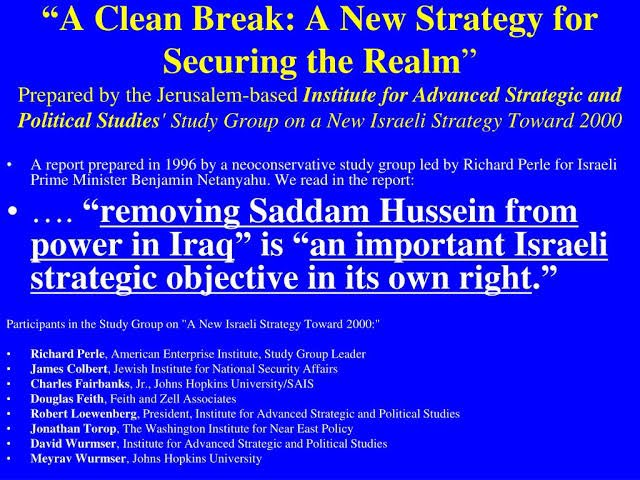
The 1996 Clean Break: A strategy for securing the realm document was written for Netanyahu by a group of American strategists (the realm to be secured was Israel, not America). At that time, their slogan was “anyone can go to Baghdad. Real men go to Tehran.”
To assess the chances that the US/Israel will succeed in Iran, consider the past decades of US/Israel operations in the region and the factors for success and failure.

Successes

Jordan. Defeated by Israel in the 1967 war. Working for Israel since. Main factor for US success: Jordan is small, exposed geographically to Israeli attack, and dependent on US/Israel sponsorship.

Libya. Subject to a sudden regime change effort in 2011 that had extremely rapid success. Chaotic civil war situation since. Main factors for US success: Libya is also a small country (6.3 million in 2011) with very limited military assets.

Egypt. Defeated by Israel in the 1967 war. Made peace with Israel after the 1973 war. Working for Israel since. Main factor for US success: Sadat’s decision to collaborate with the US/Israel even as the military was having success in 1973 and afterwards. Sadat’s successors have followed his pattern.
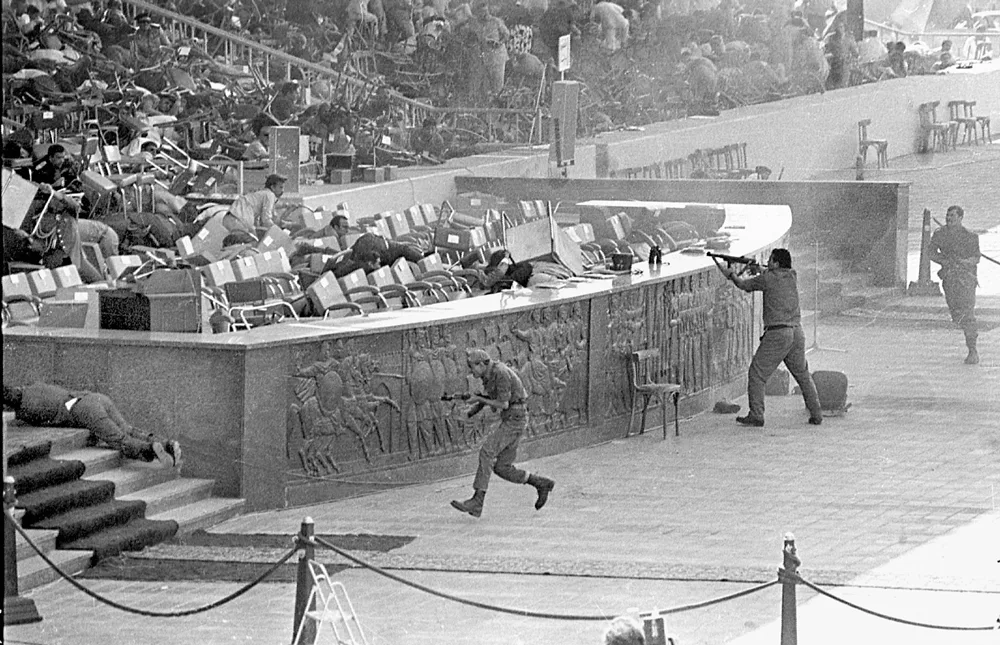
Assassination of Sadat in 1981

Syria. Defeated by Israel in the 1967 war and 1973 (betrayed by Sadat). Maintained a military deterrent capacity despite a decades-long campaign to overthrow the government. Survived an intensified overthrow effort starting in 2011 and only succumbed in 2024. Working for Israel since 2024. Main factors for US success: Turkey’s decision to join the overthrow effort in 2024 and Russia’s partial alliance, balancing of support for Syria against ISIS with Russia’s neutrality in the Syria-Israel conflict allowing Israel to destroy Syria’s military gradually so that Turkey/ISIS could finish it off.

Iraq. Part of the coalition that lost to Israel in 1967. Sponsored by the West to attack Iran 1980-1988. Tried to link withdrawal from Kuwait in 1990 to Israeli withdrawal from the occupied West Bank and Gaza (“linkage”) at which point the US/Israel decided on his ouster. Bombed in 1990/1, much military capacity destroyed, sanctioned for 12 years with hundreds of thousands of lives lost, finally overthrown in 2003 and occupied by the US since then. Main factors for US success: surprise attack in 1990 when Saddam Hussein thought the US was an ally; Saddam Hussein never seriously tried to fight the US in 1990 nor in 2003; the sanctions, inspections, and no-fly zone imposed after 1990 ensured that Iraq could not rebuild a significant military capacity.

Failures

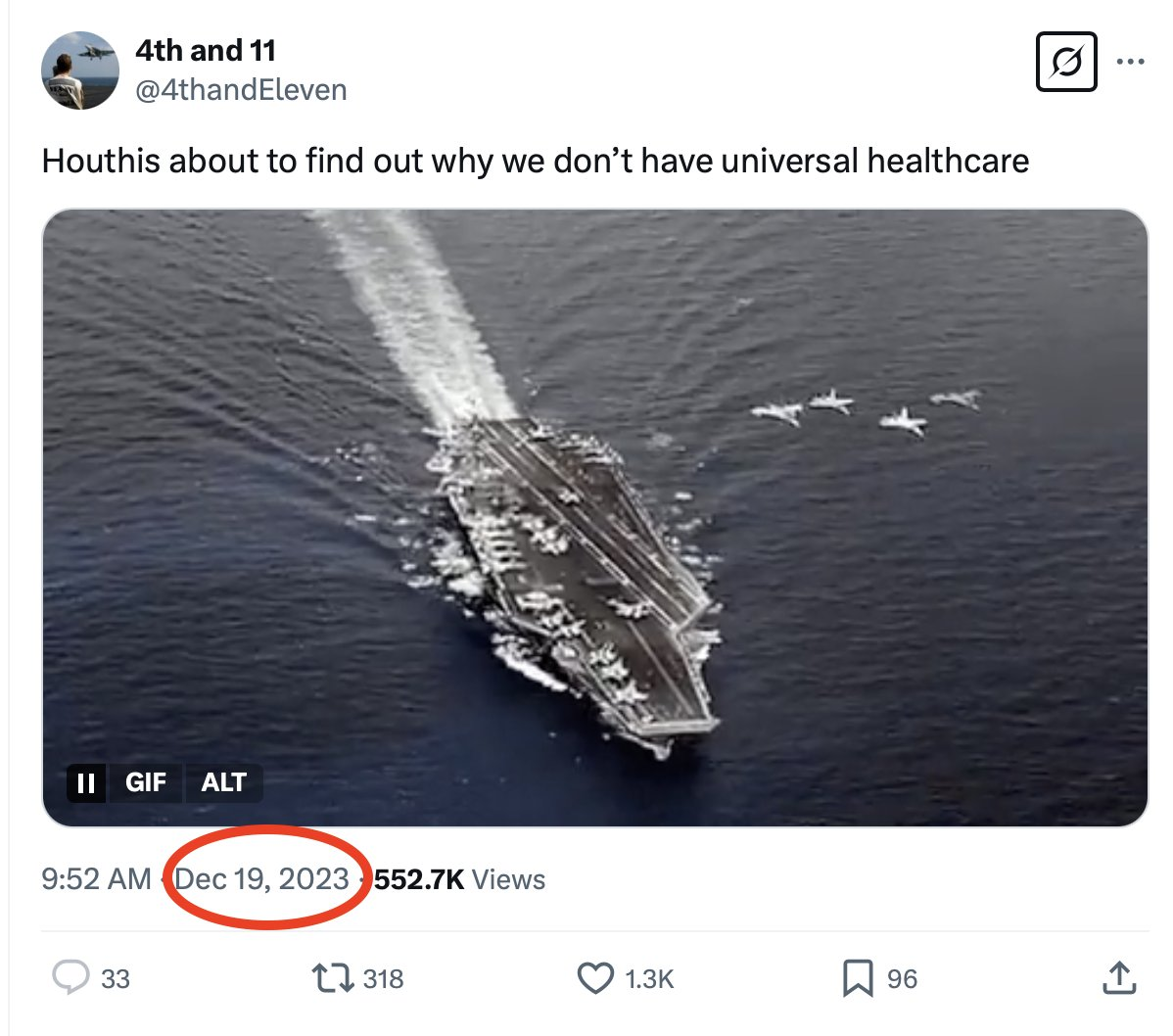
Yemen. Intervening through Saudi Arabia, the UAE, and Qatar, the US and UK bombed Yemen’s cities and attempted to starve the population through siege to try to achieve regime change for nearly a decade beginning in 2015. After Yemen struck Saudi oil facilities in 2022, a ceasefire materialized. Yemen then intervened in 2023 to try to stop Israel’s genocide against the Palestinians in Gaza, and the US Navy attacked Yemen again. Yemen had some successes against US naval vessels, after which a ceasefire materialized between the US and Yemen in 2025. Main factors in US failure: Yemen’s ability to absorb the damage and its ability to strike US targets (Saudi oil facilities in the first instance and the US navy in the second) enabled it to establish deterrence.
Afghanistan. The West has sought a pre-eminent position in Afghanistan since the British Empire in the 1830s. The US intervened (beginning in 1979) in an alliance with Pakistan, Saudi Arabia, and China to destroy the Soviet-backed Afghan government. This US intervention was a failure until Russia (no longer the Soviet Union) ceased supplying the Afghan government in 1991, which collapsed in 1992. The Pakistan-backed Taliban won the civil war and gained power in 1996, and was overthrown in turn by the US in 2001. After a US occupation of 20 years, the Taliban swept the US from power (probably with Pakistan’s blessing) in 2021. Main factor for US success in 1992 – Russia’s betrayal of its Afghan ally. Main factor for US success in 2001 – Pakistan’s decision to work with the US occupation. Main factor for US failure in 2021 – Pakistan’s decision to no longer work with the US occupation.

The analogy with Iran

How can we use these examples to assess the US chances in Iran? Factors include size, population, military capacity, how devastated the target country has been by previous sanctions and wars, the strength of the pro-imperialist constituency in the target country, and the strength and number of neighbours willing to work with the US on a regime change campaign.

Size. With 90 million people, vast terrain with mountains, a very capable missile force, a potentially huge army, and potentially very powerful alliances, Iran is the biggest regime change war the US has ever attempted.

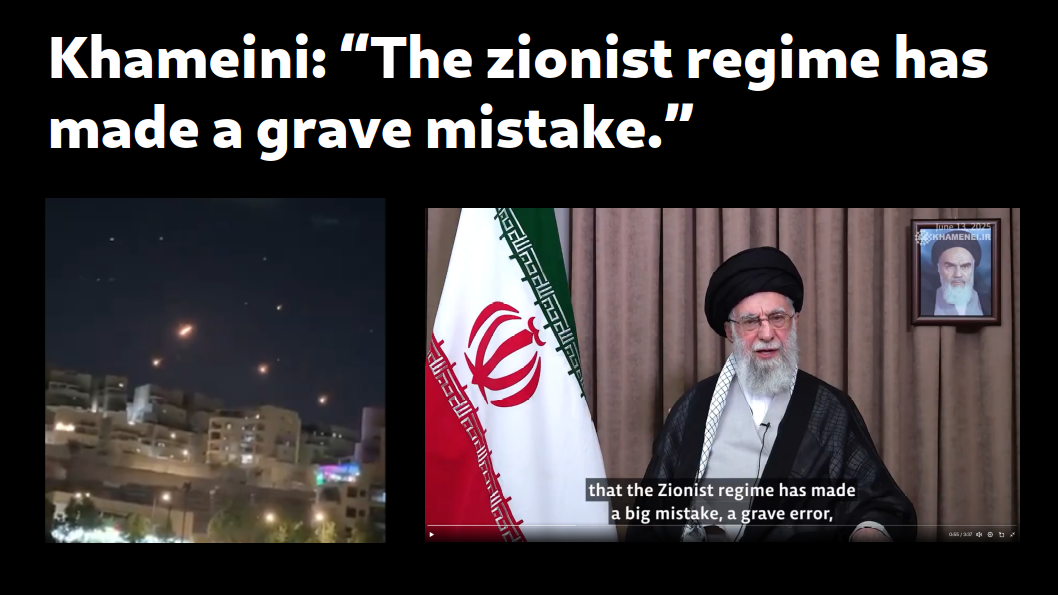
Military capacity. Even after all the sanctions on Iran, even after the surprise attack by Israel on June 13, the country retains the ability to hit Israel and to hit US assets when the US joins.

Devastation by sanctions. Iran has been sanctioned for decades and has suffered great economic harm as a result, like other countries being softened up for regime change. But because of its size and location, it has been able to continue to develop, despite all of the setbacks.

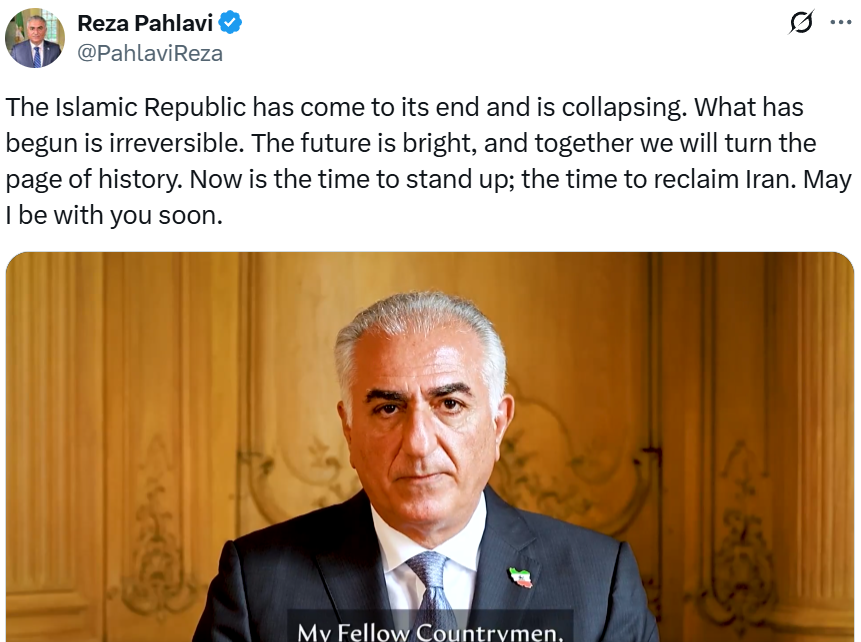
Pro-US elements. The US/Israel have assassinated many Iranian leaders; Iran has a substantial liberal, pro-Western elite bloc (like Russia and China do); there are small Western-sponsored separatist movements among Iranian communities; there’s a substantial, western-sponsored ISIS-like terrorist group called MEK; and the old monarch’s son has declared his readiness to take the throne back in the event of a US/Israeli success. The equivalent of a Jolani (a manufactured terrorist leader who can be put on the throne after a successful regime change) could come from one of these quarters; but the equivalent of a Sadat (someone who gets to the very top of the state and then conspires to disarm and subordinate his own state to imperialists) is a very rare gift to imperialists and happens very rarely (it could still happen and is the main way that the US could win, but it’s unlikely).

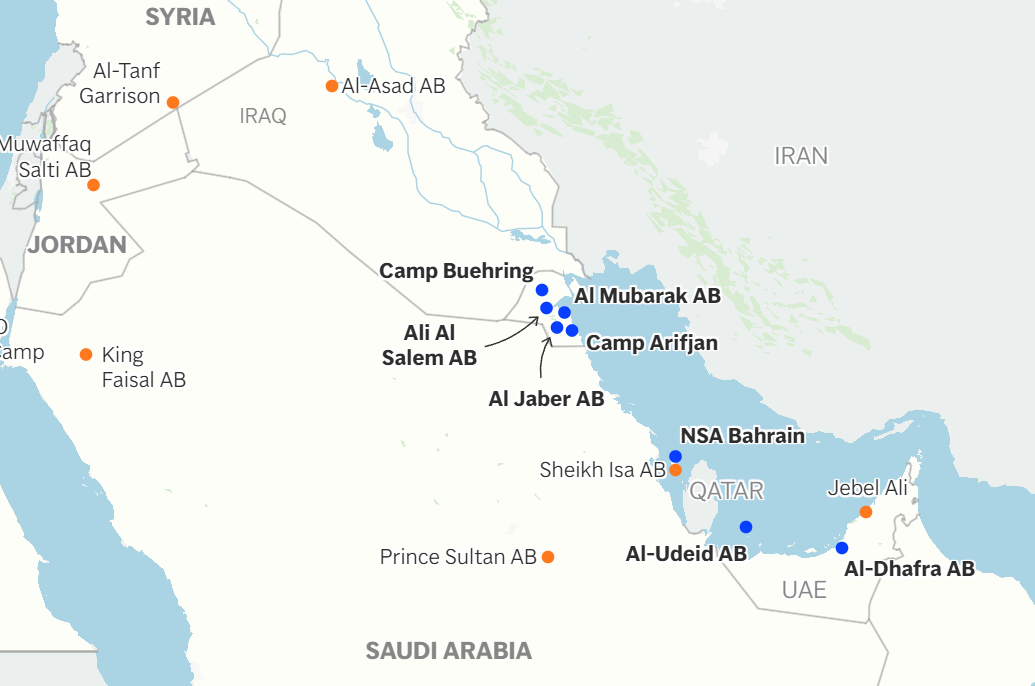
Neighbours. Most of Iran’s neighbours are not likely to join the regime change effort. Afghanistan, Pakistan, and Turkmenistan won’t. Azerbaijan and Turkey could cause issues if the war goes long. Iraq could be a platform for US attacks on Iran, but Iran has allies there as well. Across the Persian Gulf are several US proxies, but they also have targets that are valuable and indefensible from Iranian retaliation, which makes the situation potentially costly for the US/Israel.

Getting past the Iranian military will be (already is) a challenge like none the US/Israel has yet faced, a long, world-transforming war with a highly uncertain outcome. The only alternative the US has is to wait for an Iranian version of Sadat (or Gorbechev) who will voluntarily dismantle his own state. Such a person would have to be in power already, not waiting to be installed.
Rituals of humiliation

How to get into the 0.000001%

How does one join the dizzying heights of the elite? Not the 10%, the 2%, or the 1% of professional or business success, but the billionaire class, the House of Representatives, Governor of a major state or mayor of New York City? Is it by proving your merit in school, a bit of good luck, perhaps a grinding mindset as aspirants are taught to hope? Or by family connection and bloodline, as those doomed to fail may fear?

Certainly it’s the latter. But there is a missing ingredient that aspirants should know before they set out to try to join this genocidal Western club.

In the book Codes of the Underworld: How Criminals Communicate, Italian political scientist Diego Gambetta talks about how in certain circumstances it is rational for subordinates (say, enforcers who are collecting extortion money from businesses) to display to their superiors how incompetent they are (at, for example, actually running a business). This is a display of loyalty: an incompetent subordinate can only survive at the boss’s whim, and is therefore going to be loyal. Taking some irreversible action can also show loyalty: the importance of tattoos to criminal organizations is an example. Getting a specific tattoo permanently affiliates a criminal with others in the group, a valuable display of loyalty.

The codes of the underworld help answer the question: why did the whole elite, Republicans and Democrats, Hollywood and Wall Street and Silicon Valley, go to the private island of convicted-then-assassinated child abuser Jeffrey Epstein?

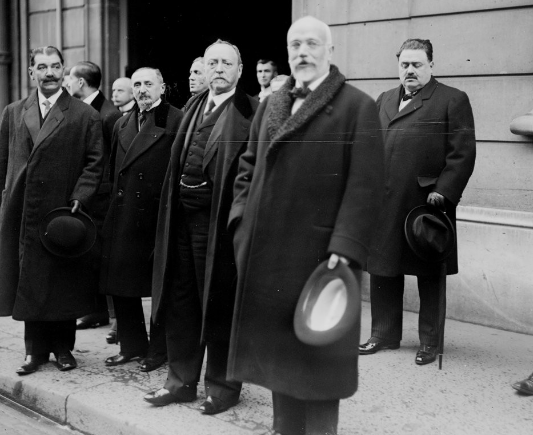
Epstein’s activities were the proclivity of some, others were ensnared through the normal methods spies use, but for others it was probably understood as the equivalent of getting a tattoo: one must make oneself reputationally destroyable as a condition of getting into the elite. When this kind of thing blows up, with members accusing one another and people like Epstein or his mentor Robert Maxwell meeting with fatal accidents, it reveals the pattern in sufficient detail for researchers like Whitney Webb to document them (in the two-volume One Nation Under Blackmail). Neither sexual abuse nor blackmail are the point: the point is to undergo rituals that prove your subordination is absolute, and that you can therefore be trusted to exercise your power according to (genocidal) principles.

The greater the power sought, the greater the display of submission required.

For lower rungs, public words of submission could suffice.

https://www.middleeasteye.net/trending/do-you-think-israel-has-right-exist-nyc-mayoral-debate-question-sparks-backlash-over

Sometimes an elite member will survive (or be allowed to survive) a revelation with a warning.

Or the revelation will have the effect of keeping things in line.

But where scandal fails to have the desired effect, there are other, more murderous options.

As genocide subordinates all other Western goals, these messy rituals of humiliation become more public. As revealing them becomes a valid tactic for intra-elite disputes, we may all be subjected to a more comprehensive view of the mess.

We already have a picture: This is an elite that wants nothing more than to continue a genocide against children, bound together by fear of exposure of the crimes they’ve personally committed in private.

Can they be trusted to solve the problems of the world?

Resurrecting the Academy

The university is dying in the West. Can it be resurrected on anti-genocide principles?

In the West, the university is dying for three reasons.

  1. Financialization. The Western university is based on generous public endowments of land (in North America, endowments of stolen Indigenous land) and public resources intended to produce an increasingly large educated public (in Western countries the goal was, quite recently, universal higher education) the better to innovate and develop the whole society intellectually, scientifically, and technologically.

    1. But led by US propaganda (white backlash against the racial diversification of the student body and against desegregation progress, the presentation of everything as a form of consumption…), support for public education has eroded. Higher education is seen as an (increasingly false) promise of individual prosperity for which an individual (and their family) should have to pay (and borrow), generating hundreds of billions of dollars of business for banks and comparable amounts in private tuition revenue for institutions.

    2. The generous endowments of land and government subsidies for teaching and research have come to be understood by the institutions as collateral for investment portfolios, land deals, and financial trickery.

    3. Research collaborations are focused on legitimizing Israel’s genocide and providing intellectual cover and innovation in genocidal weapons and methods of dehumanization, policing, and control.

    4. After decades of this, the stated mission of the university – teaching and open-ended (non-genocidal) research – is quite incidental to the financial, real estate, investment, and genocidal operations that are the highest priority of Western societies.

  2. Genocidality. To be successful, academic inquiry and teaching require a wider range of tolerance of views and their expression (“academic freedom”), including on the most important questions of the time.

    1. To have a society whose most important priority is the commission of genocide, as Western societies exist today, requires the range of expression and thought to be extremely narrow and for inquiry and teaching to be physically suppressed. This suppression has been established through the destruction of student university encampments in 2024, progressing to the deportation and imprisonment of students for their views in 2025.

    2. Meanwhile what you actually learn in university has to conform to Western genocidal ideology, and continues to narrow (because most knowledge actually threatens that ideology)

    3. The university, like social media, has become a trap: individuals are drawn to these institutions with the promise of free expression, but then arrested, beaten, and jailed for actually expressing themselves, if those expressions are anti-genocide.

    4. The consequences of this have yet to be fully felt and may not be as bad as anticipated here, but the promise of a place for young people to grow intellectually through debate, study, and even activism has been broken. It is unclear whether young people will want to take on immense debt when the university reality is so far from the university ideal.

  3. AI. The actual activities of studying at university include: listening to lectures, reading, writing essays and assignments, perhaps taking midterm and final examinations. Through repetition of these activities and taking into account feedback from professors and tutorial leaders, learning happens.

    1. Lectures and readings are now available online, and you’ll probably be able to find something better than your average lecture on youtube. There are interactive elements that aren’t available by listening to a podcast or a youtube video, but they would have to be built in consciously by your instructor – and aren’t, always.

    2. Essays and assignments can be written by AI. In principle AI could be used to increase productivity which could be shared across society. In practice it’s a trillion-dollar industry whose main use case seems to be the facilitation of cheating in schools and universities – a use case for which AI is excellent. The temptation to use it is irresistible. The use of it is undetectable. The main weapon of the university professor – the writing assignment – is now obsolete. Most of the adaptations proposed for dealing with this are variations of “just let them use it.” We can switch to in-person, pen-and-paper testing, oral exams, and interviews, but only until they put their trillions towards using wearables to cheat on those too.

The promise of university was: spend some years on an idyll, meet friends for life, learn and grow, challenge yourself and challenge society, get a valuable credential for your future. The promise of university today is: mortgage your future to finance genocide today, suppress your conscience or be punished, use robots to write your assignments that will probably be graded by robots, and get a dubious credential that might be denied to you if you get a conscience at any point.

This is the future of university in the West

If this is true, there should be an opportunity to create a different kind of Academy.

The abilities to write, read critically, apply logic, and evaluate evidence, will continue to be valuable. Developing these abilities by practicing them through challenges designed and evaluated by a teacher who gives you progressively more difficult tasks and feedback along the way and peers who you can learn with socially, will continue to be an excellent – maybe even optimal – way to learn.

The university is ultimately professors and students. Its history is longer than the current genocide, longer than its current corporate form, longer even than capitalism and colonialism. Many liberatory projects have included an academic component: The Black Panthers, SNCC, movement schools and freedom universities.

Over a year ago, during the dismantling of the encampments, when the possibility of a massive purge of academics from US universities seemed to be on the table, I talked in a sit rep about building a university that could absorb the purged academics as teachers and the purged students as learners. We don’t need the land or buildings, the extortionate tuition or the investment portfolios. We could charge students enough that the teachers could make a good living teaching; publish research and writing directly to the web without the extortions of the journal publishing monopolies; and students could come out of their programs with portfolios and credentials showing exactly what they did (since we’d be unlikely, for reasons I’m about to mention, to get the same legislatures that ordered the purges to give our academy degree-granting status). These would be real courses, with real work and real feedback, not merely watching (even great) lectures on an online platform, chained together in a progression to make a real program.

This Academy need not have its entire curriculum focused on Palestine. Ideally students could learn all the subjects that they would learn at a Western university. But Palestine would not be a taboo and that alone would differentiate it from all other universities in North America. Students could study Israel, Zionism, apartheid, and genocide; at the journalism school students could develop their skills without worrying about the pro-Israel censor, etc. We might even get a brief reprieve from AI: for as long as AI is trained on data from the corporate web currently monopolized by genocidal maniacs, students would have to write their own papers to meet the anti-genocide criteria of this Academy.

There are several hurdles in the way of establishing the anti-genocide Academy.

  1. Web infrastructure and payment systems can be attacked and shut down. Genocidals like to infiltrate all spaces and, if these spaces threaten their racist goals (or feelings), shut them down. An institution dependent on the web (currently monopolized by the aforementioned genocidal maniacs) would have this vulnerability. It can be mitigated, but not completely eliminated.

  2. The credential obtained would be worthless to mainstream genocidal institutions (though not, perhaps, elsewhere). On the other hand, the skills would be real and the credential itself would be true badge of honor in an anti-genocide community that might be bigger than many of us realize.

  3. Institution-building is very difficult and no one trained in mainstream institutions is very good at working together. Political, ideological, and organizational splits doom most organizations. This risk is also always present.

This is the kind of thing that we could try to start small and see where it goes; we could have multiple groups trying it different ways. If I’m right and there is real demand for this, there could well be enough demand for many academies. I think we should go for a labor-intensive model, where more students means more teachers – the niche of trying to mega scale is already filled.

When I talked about this idea about a year ago, many of you came forward to tell me that you would want to participate. Here, I am fleshing out the idea further. Let’s discuss.

All the genociders must go

American Revolutionary theory states, in the words of Thomas Jefferson, that, “the tree of liberty must be refreshed from time to time with the blood of patriots and tyrants.” Thomas Jefferson was a slaver and genocider but that doesn’t negate the truth of his statement.

American Revolutionary theory states, in the words of Thomas Jefferson, that, “the tree of liberty must be refreshed from time to time with the blood of patriots and tyrants.” Thomas Jefferson was a slaver and genocider but that doesn’t negate the truth of his statement. Chinese political theory had the concept of the Mandate of Heaven, which a ruler could lose, and which would give the people the right to rebel.

It’s a myth that Western democracies are messy and unstable compared to so-called authoritarian regimes in the Global South that are free to use repression to impose stability. In reality Western democracies are no less repressive: these states torture, assassinate, mass-incarcerate, and have police do what they like with no accountability. They use all the tools of the dictatorships they criticize, inflicting the same evils at the same scale. These days they do all of these things in the service of genocide.

What Western democracies have that others lack is several layers of defense protecting their system of brutality. These pressure releases make Western democracies much harder to overthrow, as they channel rebellious energy into one dead end after another.

The genocide Israel is committing in Gaza should have lost the whole Western elite its mandate, heavenly or otherwise. It should have exposed the Western elite as a total, genocidal, racist tyranny. By presenting fake divisions inside of this elite, they give the people false hopes that the genocide can be stopped while they remain in charge, if they could be asked in just the right way.

Wait for elections. Trump came in and imposed a ceasefire for a short time, before advancing the genocide to its worst level (and getting worse). Democrats argued that since both parties were genocidal, the strategic voter would vote for the Democrats because they’re better on other issues, and ignore the anti-genocide parties that were running (Stein/Ware, De la Cruz/Garcia…). The idea that there are differences between the parties about genocide makes people think there’s some anti-genocide strategy in voting instead of starting from the premise that all genocidal parties are illegitimate. People are apparently waiting for Israel’s democracy to produce an alternative to Netanyahu, ignoring the fact that there millions of Israelis who are just as genocidal as Netanyahu and who will eagerly continue the genocide were he replaced.

Wait for divisions. Apparently Obama hated Netanyahu when he gave him $38 billion. Biden yelled at him on the phone before giving him a thousand new one-ton bombs. Trump doesn’t answer Netanyahu’s calls and doesn’t mention Israel on a trip to Saudi Arabia (which is the historic norm and nothing special) as Israel gleefully embarks on mass starvation. The UK, Canada, and France have issued a “serious warning”, after 19 months of genocide and hundreds of thousands murdered as Israel celebrates.

This is what Piers is.

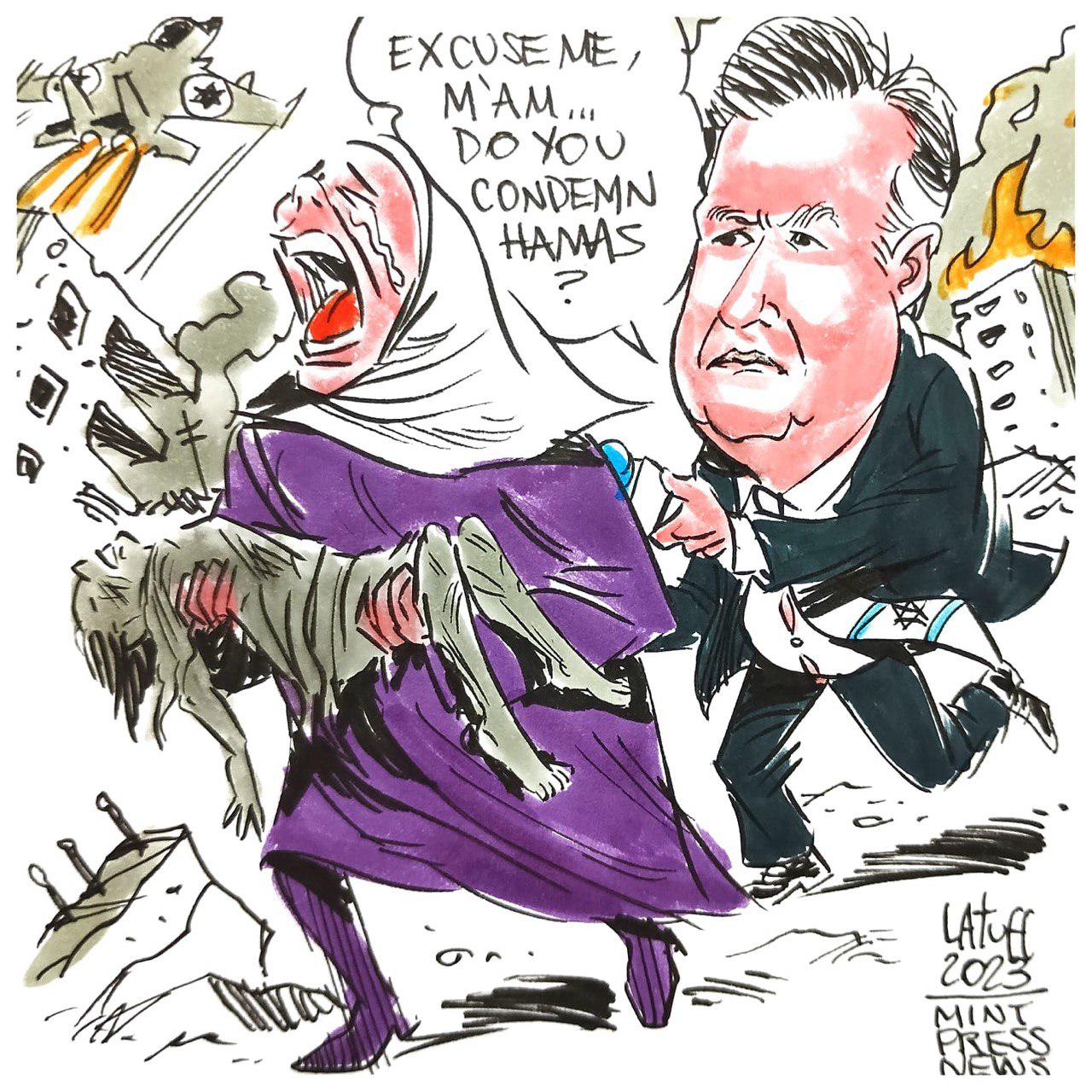
Piers Morgan, after becoming a caricature chasing genocide victims down to ask them if they condemn Hamas, tweets that Israel has gone too far. This is faked controversy and faked division in the most united and monstrous ruling class.

Decades ago, during one of Argentina’s economic crises, the people marched shouting the slogan, “que se vayan todos” – all of them must go. It should be common sense that there should not be any mass murderer or defender of mass murder in power anywhere.

It’s scary to take on people who are proudly displaying that they have no limits to their depravity. It’s natural to hope for cracks between them that might make the task easier. But the cracks are fake. And there’s no escaping the starting point: all the genociders must go.

India Pakistan war

Some not-frequently repeated facts

Here are some facts that are being avoided in the discussion of this conflict.

  1. India has committed horrible injustices and abuses in Kashmir for decades. Kashmir only joined India at Partition time on the basis of a deal with protections through special articles in the Indian Constitution. The current government did not have the authority to cancel these articles of the constitution (Articles 370 and 35), but did so nonetheless, in 2019, which was a major abuse in a long line of abuses.

  2. India’s government is run by fascists who have used police riots, mob violence, assassination, torture, public and media campaigns against minorities, especially Muslims, as an established part of their ruling and electoral strategy. The image of Pakistan plays a major role in this playbook.

  3. Pakistan’s regime is run by group that came to power in a coup against Imran Khan, who was overthrown at US behest, principally as punishment for not allowing Pakistan to be used as a platform for the US to continue to hold Afghanistan, but also because of deals he wanted to make with Russia, his advocacy for Palestine. It has faced the largest protests in history, it has seen a decline in the prestige and faith in its military (always the main power bloc in the country), and it continues to persecute Imran Khan’s movement to this day, including stealing elections and outrageous abuse of the judicial system.

  4. The Pakistani state commits horrible injustices and abuses against minorities, including counterinsurgency and international assassination campaigns against activists from Balochistan.

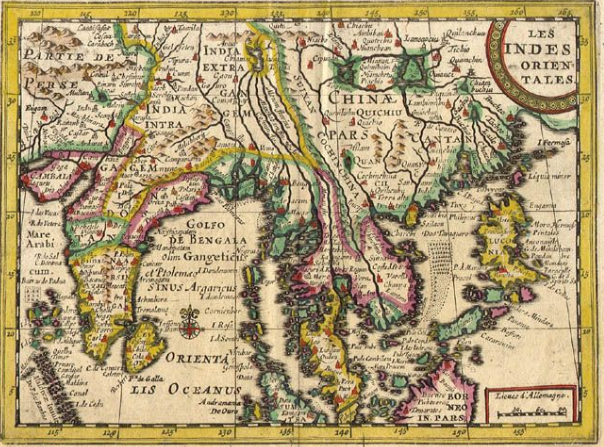
  5. India, Pakistan, and Bangladesh were all part of British India. After the British monopoly on the slave trade and its pillage of the Americas, India became the principal engine of Britain’s wealth and power, generating so much surplus that Britain used it to industrialize the US and Europe.

  6. When it became clear that India was going to become independent, Britain ensured that it would be divided and poor. Partition was imposed by the British imperialists.

  7. All of India and Pakistan’s wars with one another since Partition have served no one but the same (now neo) colonial interests that imposed it in the first place. Militarily speaking there can be no victor in a war between these countries, only losers.

  8. The official language of India is Hindi (and English). The official language of Pakistan is Urdu (and English). These are the same language written with a different alphabet in each country. This language, Hindi-Urdu, is not spoken by people from any other country. It’s the same language, the same people, with the same culture and a shared history.

  9. It is outrageous and unrealistic to suggest that Partition shouldn’t have happened and that South Asia could be a federation with wealth and power commensurate to its size and history.

  10. It is far more realistic to believe that India and Pakistan should develop methods of rule dependent on persecuting minorities internally and fighting wars with one another with weapons manufactured in other countries and purchased at huge expense.

That’s it, we’ll return now to regular anti-genocide programming.