
We start with a quick history of France’s theft of Congo-Brazzaville, centering on Brazza himself and ending with the Toque-Gaud Trial. Then on to the nearly early start of WWI – the Fashoda Crisis between Britain and France. Finally, we give the floor to Aime Cesaire to give us some commentary on what French colonialism in Africa meant and how to understand the specifics of France’s colonial crimes.
AER 109: Imran Khan’s ouster in Pakistan – coup or reconfiguration of power?
The ouster of Imran Khan continues to play out. We’re asking: 1. Was it a coup? 2. How can we understand Imran Khan’s foreshortened time in government and his ruling coalition? 3. How important are these events for the people of Pakistan – are they just elite maneuvering or do they have deeper implications? 4. How US-centric is too US-centric in understanding these things, as opposed to understanding regional actors and their roles and especially local power blocs and class dynamics. A friendly debate with Pakistani activist and academic Ayyaz Mallick.
Scramble for Africa 16: Female Caligula DESTROYS Madagascar!
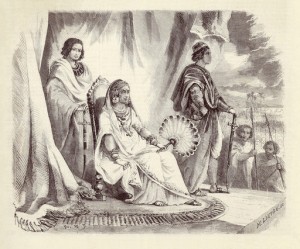
Clickbait title aside, this episode continues to follow the French as they Scramble for Africa. In this case, how France managed to steal the enormous island of Madagascar from its powerful African rulers. We of necessity do tell the story of Queen Ranavalona, but also the outrageous deeds of the French military, the dastardly things they said, and some of the rebellions of the Malagasy that started straight away and continued until independence, including the menelamba movement aka the Rising of the Red Shawls.
In Real Time with Stan Cox 1: The US environmental and political crisis
We have hatched a new plan for a series on the Anti-Empire Project, a monthly discussion of (mainly) environmental issues with Stan Cox. Stan is the author of quite a few environmental books and is going to be writing a monthly dispatch about US politics and environmental movements moving into the next US presidential election. Each episode of the series we’ll talk about his latest dispatch, and conclude with some thoughts about anti-imperialism and environmentalism. We start this one with an introduction to the series and what you can expect from it.
Anti-Empire Radio 108: Pakistan – I think it was a coup!
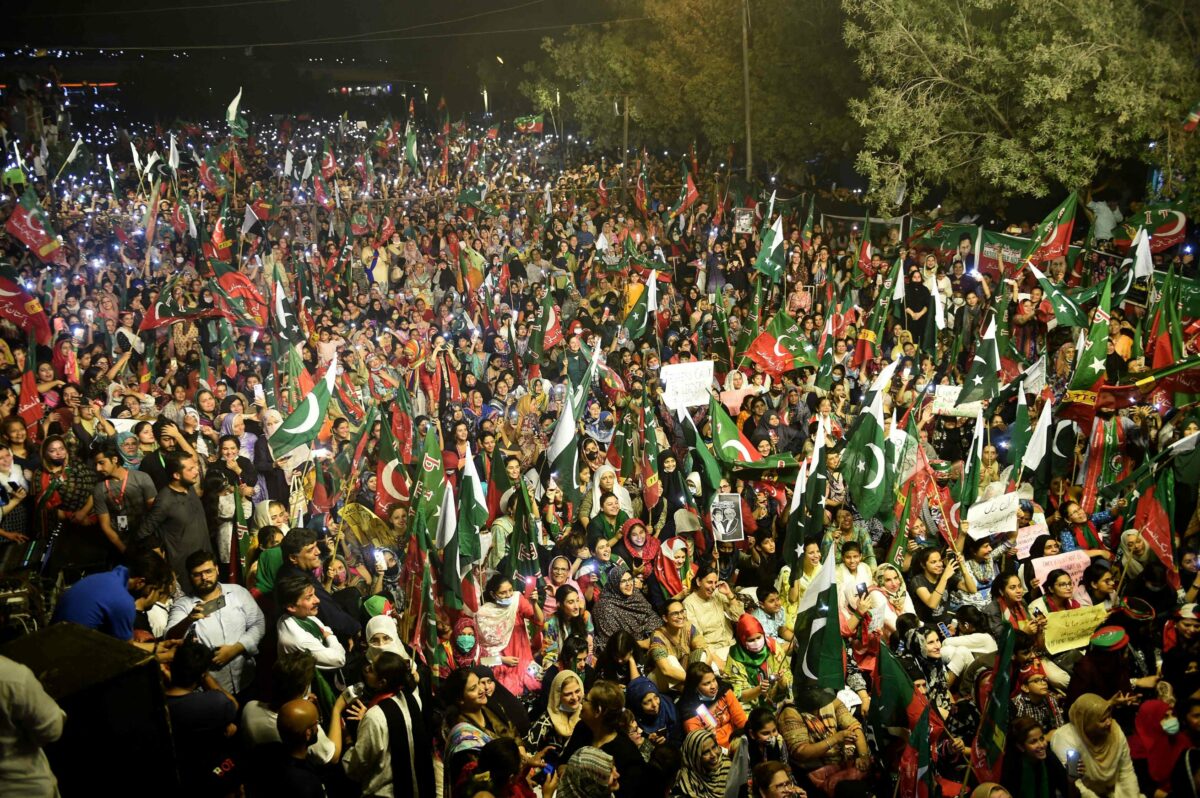
Was Imran Khan ousted in a US-backed regime change, or is Imran Khan crying conspiracy over a routine non-confidence vote? Was the memo real or exaggerated? Are the mass protests a sign of a cult-like following or a repudiation of a sleazy change of power? Was Imran Khan not a part of the very establishment that just threw him out? What will be the implications for Pakistan’s relationship with China? For Afghanistan? I discuss these questions with journalist Waqas Ahmed.
AER 107: Interviewed by the Cadre Journal about the DR Congo and Rwanda
A new youtube channel, the Cadre Journal, has been publishing hour-long in-depth interviews with Communist party activists and others on and largely from the Global South. I was happy to be invited on to talk to them about the history of the US in the DR Congo and Rwanda. Check out their channel – they’re doing an interview a day almost, and they’re all really good.
Scramble for Africa 15: France Seizes West Africa
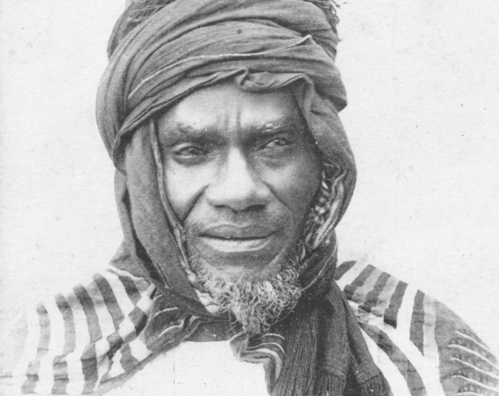
In this episode France seizes the territories of the Tukolors (overthrowing Sultan Ahmadu), battles Samori Toure, and fights a long war with King Benanzin of Dahomey. Some observations about the differences between France’s notions of colonialism and those of the British, in whose footsteps the French colonizers hoped to follow.
Anti-Empire Radio 106: How the US started the war on Syria in 2011, with William van Wagenen
More than a decade later it is well past time to look at how the Syrian Civil War really started – with a US-orchestrated regime change campaign with continuities going back to European colonialism and with continuous US regime change efforts against Syria from 1949 on. I’m talking with William Van Wagenen, who has written a series of long-read articles about the war on Syria for the Libertarian Institute. We go in great depth about US social media-based regime change efforts, the US-Saudi recruitment of the “Jihad, Inc.” international brigade, and how these two forces handled the early events leading up to the war, from multiple failed attempts to spark a revolution to an ultimately successful attempt to spark a civil war and a partition of the country that was leading inexorably to collapse and an Islamic State takeover until Russia intervened in 2015.
An interview on Balochistan
View this email in your browser
The war in Balochistan has gone on too long
Friends, welcome back for the March newsletter. Early this month I wrote an article for Globetrotter trying to imagine a development-first path to peace in Balochistan. The article was based on three interesting interviews – with Andrew Korybko, Shah Jahan Baloch, and Pervez Hoodbhoy. What was remarkable about the interview with Pervez was that I sent him a series of questions over email, and he replied with basically a highly polished Q/A. I quoted from it for the article but in my opinion it was too good to not put on the web somewhere. So, I’m sending it to you as a reward for being on this list. If not all of you know Hoodbhoy’s work, now would be a good time to find it – he’s required and prolific reading, on things Pakistan and well beyond. A good place to start would be the Eqbal Ahmad Centre for Public Education.
And now the interview. Have a good April and I’ll be back with something at the end of that month.
Justin Podur (JP): How would you characterize the demands of Balochistan’s movements at the moment? After many conflicts over the decades (four rounds, I believe based on my background reading), are there different tendencies with different demands, some for autonomy, a greater share of resources, and some for outright separatism?
Pervez Hoodbhoy (PH): In political terms, Balochistan has been in revolt since the birth of Pakistan in 1947. It remains so today as well. The nationalists speak of Punjabi occupation, the revival of Baloch independence (referring to the Kalat State) and the reunification of the historical Baloch territory now spread between three states and among numerous provinces within them. The 1973-1976 war was Marxist-led and followed a long train of abuses by the center, including the undue extraction of Balochistan’s mineral wealth. Bhutto’s order to uproot that insurgency in 1973 was a godsend for an army despondent after its surrender to Indian forces in 1971. The final cost of suppressing this insurgency stood at 3000-3500 soldiers, over 5000 Baloch fighters, and many thousand civilians.
JP: How are Baloch movements treated by the state? Is there some dialogue, some attempts to improve representation, along with the repression and human rights violations that we hear about?
PH: The army establishment uses all kinds of ploys but there’s no real softening. It sees Baloch nationalism as a threat to its hegemony and does all it can to crush it. This has become particularly important after the China Pakistan Economic Corridor (CPEC) which the Baloch resent. Like the dreaded generals of Latin America, Pakistan’s generals too have learned how to quell insurgencies. Over the years dead bodies have appeared on the roadsides with marks of torture and many thousand young Baloch men have gone missing, some forever. The Supreme Court of Pakistan expressed helplessness in face of numerous petitions. The establishment has willfully used extremist militant religious organizations like Sipah-e-Sahaba as an antidote to Baloch nationalism. It has worked up to a point – what was once a Marxist inspired insurgency as in the 1973 uprising – is now more ethnically oriented.
JP: Is there any joint struggle between Balochistan’s movements and other activists in Pakistan? Anything at the level of official politics? How is the situation in Balochistan seen in the rest of Pakistan?
PH: For much of Pakistan, Balochistan is far off distant land about which is little is known. The mainstream media may not comment upon Baloch matters. No journalist who reports accurately on events from Balochistan can expect to live too long. Balochistan is such a sensitive issue for the ruling establishment that Pakistan’s universities may not hold seminars or meetings and Baloch students in Punjab and Sind are closely watched by the so-called “agencies”. In January 2022, Baloch students were rounded up in Lahore, which is many hundred miles away, after a terrorist attack likely carried out by the Taliban.
JP: Is the Pakistani establishment feeling more confident now that the US has left Afghanistan? Does this have any impact on the Balochistan situation?
PH: In principle it should be but it is not. The US exit from Afghanistan and the rule of the Taliban has not lessened the anxiety of Pakistan’s Punjab-centered civil and military establishment. It is bent upon resource extraction and upon making Balochistan safe for the Chinese. It wasn’t ever that the generals feared the US. Rather it was India’s tit-for-tat in Balochistan that they were afraid of. Everyone knows that for decades Pakistan had helped fuel the insurgency in Indian-held Kashmir and now it was getting paid back in the same coin.
JP: It seems to me that US and Pakistan relations are at a low point, including the financial sanctions of FATF and other impacts. Does this have any impact on the Balochistan situation – in terms of US covert operations in Balochistan (and/or Afghanistan pre- and post-2021…)
PH: Pakistan’s generals are rather miffed that, now that their boys have won in Afghanistan, the US does not seem to care much about them – or for Pakistan – any more. After all they had made a killing for decades from the Coalition Support Funds driven by NATO’s need to truck supplies into land-locked Afghanistan. The loss of geopolitical importance after last August means that the gravy train has stopped. China has not taken up the slack – it has put in $62 billion into Pakistan but these are all loans and investments, almost no aid. Our generals would like to give the US bases for use in Afghanistan on the sly, but the US has pretty much burnt its boats there – it does not seem to have any large scale military ambitions in Afghanistan presently. Instead it would rather ally with India against China; allying with both India and Pakistan is very difficult.
JP: Is Balochistan one area where Pakistan’s relationship to India isn’t really relevant? Or is it still relevant?
PH: Well, on every occasion when the security forces or Chinese nationals have been attacked in Balochistan, the Pakistani establishment has blamed India. The capture of Kulbhushan Yadhav in 2017, an Indian national with a faked passport, was held as one solid proof of Indian involvement in seeking to subvert CPEC. Could this allegation be correct? Possibly so. As a general rule, whenever a population is angry with those who it sees as an occupying power, it is not hard for enemies of that power to find domestic allies. This is exactly why Pakistan was able to successfully recruit Kashmiris on the Indian side of the LOC. And this is also why Balochistan is now an arrow in India’s quiver against Pakistan.
JP: Another question is how Pakistan seems to have lost influence in Kashmir, and whether that is a temporary situation or not.
PH: India has so thoroughly fenced off the Line of Control in Kashmir that Pakistan based jihadis are finding it near impossible to breach it. But even more, the jihad infrastructure has had to down-sized because international monetary sanctions, in particular FATF (Financial Action Task Force), has arm twisted Pakistan into dropping support for cross-border activities. However, India has not been able to translate Pakistan’s loss into its gain. The Hindu nationalism of India’s ruling party is unacceptable to the majority of Muslims in the Kashmir valley. So there is a lull, but neither India nor Pakistan seem to learn from history.
JP: Why has Islamabad gone to such extreme lengths to protect China’s interests in Balochistan? Why are Baloch insurgents targeting Chinese projects?
PH: Islamabad’s czars have made sure that the Balochistan assembly and various chief ministers have almost no say in matters related to the $62 billion dollar China Pakistan Economic Corridor (CPEC) project of which Gwadar is the linchpin. The port of Gwadar, which was historically a fishing village, is China’s future base in the Persian Gulf. China is therefore viewed as an accomplice of Islamabad and Chinese businessmen, engineers, and technicians are seen as fair game for assassination and kidnapping. The 2018 attack on the Chinese consulate in Karachi, and on the Pearl Continental Hotel in Gwadar in 2019, were claimed by the Baloch Liberation Army and sent shockwaves down the CPEC corridor.
In December 2021, protests in Gwadar became so visible and loud that it became impossible for the establishment to hide or suppress the fact. These drew tens of thousands of people, including women and children, day after day for three weeks from nearby areas of Gwadar including Turbat, Pishkan, Zamran, Buleda, Ormara and Pasni. They were protesting against the treatment of locals, and particularly the paucity of drinking water and intrusions by Chinese fishing vessels. The sense of deprivation is felt far and wide in Balochistan. Baloch nationalists feel they have always been sold out by the center. For example in 1974, Zulfikar Ali Bhutto, who met with Nixon twice in the White House, had offered Gwadar to the US with the view that it could use it as a naval base. The US, however, rejected the proposal because the US already had ships in Chabahar under the Shah of Iran’s pro-American government!
JP: What possibilities and prospects exist for improving the situation?
PH: The diversity of its various peoples means that ethno-nationalism will always to be a challenge to the center. But this, by itself, is not a bad thing. India with far greater diversity could nevertheless succeed in evolving a stable political dispensation. The devastation of Pakistan in 1971 showed decisively the hollowness of its belief that religion can suffice to cement disparate peoples together. Nor will raw force work forever. The key to Pakistan’s stability does not lie in making the Army’s fist yet harder or peddling hard varieties of religion in an attempt to contain nationalist discontent. Instead it must be found in sharply limiting the power of the federation, sharing power between provinces, equitably distributing resources, and giving Pakistan’s various cultures and languages their due. In the long run, only a system where all have a stake can survive and prosper.
Pervez Hoodbhoy is a an Islamabad based physicist and social activist
Scramble for Africa 14: France saves Sadok Bey of Tunis from a nonexistent threat and steals the country 1881
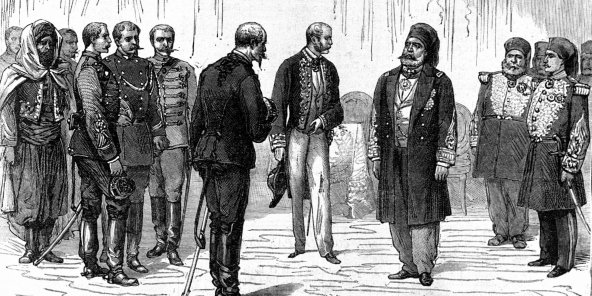
After a bit of comparing and contrasting French colonialism with the British type, Dave tells us about the French Foreign Legion; Then we’re on to a key piece in France’s Scramble for Africa, the theft of Tunis from the Bey, Muhammad Sadok. In the process, the French colonizers insisted they were saving Sadok Bey from a threat from local tribes. He insisted he didn’t need the help, but in the end, Tunisia became a French protectorate.