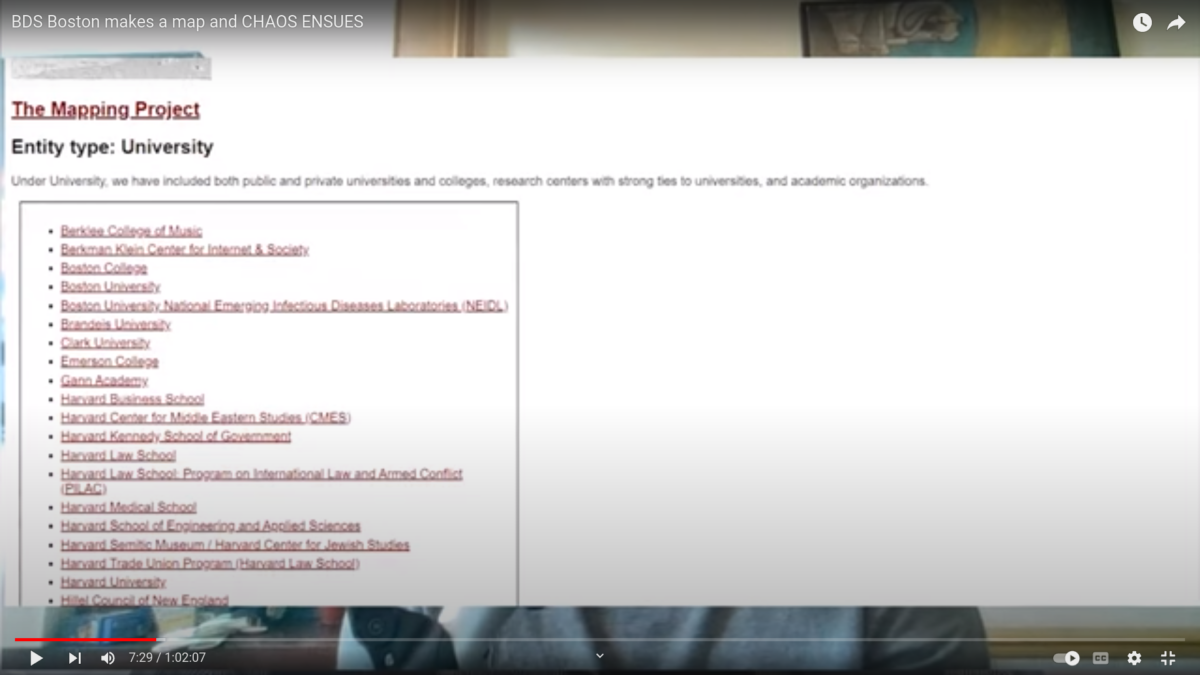
In June 2022 a small activist group in Boston created mapliberation.org, a project mapping primarily policing institutions in Massechussetts and their connections to corporations, organizations, and politicians who are implicated in the prison-industry complex, in throwing people out of their homes to create investment opportunities, in grabbing Indigenous land, in colonizing Palestinian land, and other harms. When the website came out, the very institutions discussed in the mapping project unleashed a storm of criticism, bullied them off of two servers, and hurled a wide ranging set of ridiculous accusations. A roundup of the mapping project and the “freakout” about it.
Scramble for Africa 20: Germany (pt3) genocides the Nama, 1908
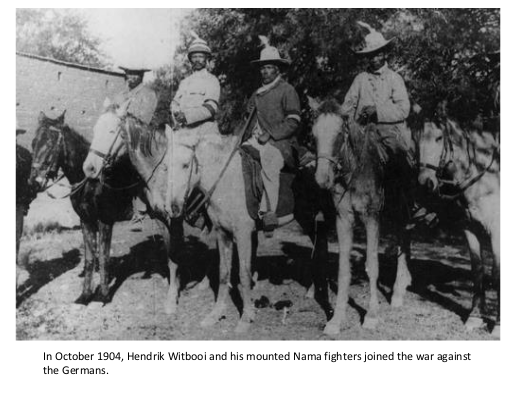
In September 1904 several Nama scouts slipped away from the Germans after the battle of Waterberg and the genocide of the Herero, to warn their leader, Hendrik Witbooi, of what the Germans were capable of. Hendrik Witbooi then called all the Nama leaders to war, a war where they used guerrilla tactics to confound the Germans and drive the German leader, von Trotha, home in defeat. But while they exhausted the German colonizers, they exhausted themselves as well and German missionaries were able to draw the survivors to surrender on false promises of good treatment, after which they were sent first to concentration camps and then to – perhaps – the world’s first death camp, on Shark Island. Our concluding episode on the Germans in the Scramble – on the Nama genocide.
Gustavo Petro wins Colombia’s presidency – what next?
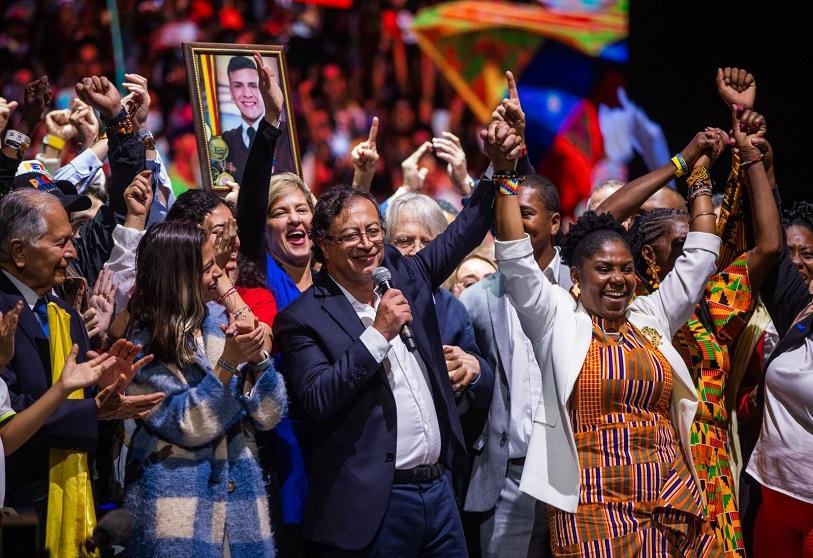
Colombia, in a run-off vote, elected Leftist ex-rebel Gustavo Petro to the presidency in a narrow, historic election. We are joined by Colombian doctor and political activist, MANUEL ROZENTAL.
Justin Podur joins us for this roundtable on the impact of the elections in Colombia. This is a joint operation with The Anti-Empire Project and The Brief Podcast.
In Real Time with Stan Cox 3: The People vs Petrocracy
Stan Cox joins us for June’s dispatch of In Real Time. As he prepares to travel to Washington DC for a protest (the report on that will follow next dispatch) Stan actually talks to us about local struggles: Indigenous struggles against pipelines, and the remarkable story of the LA Bus Riders Union. All that and more in this episode of In Real Time with Stan Cox.
Scramble for Africa 19: Germany (pt2) genocides the Herero, 1904
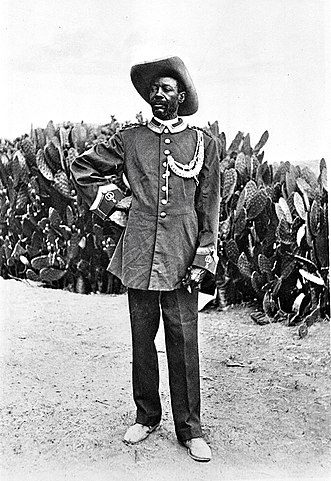
The devastating story of the Herero genocide, complete with von Trotha’s extermination order, Samuel Maharero’s resistance, the battle at the Waterberg, and the concentration camps at Swakopmund and elsewhere. We’re using Erichsen and Olusoga 2011, The Kaiser’s Holocaust: Germany’s Forgotten Genocide and the Colonial Roots of Nazism.
Newsletter: Reading Galeano in Costa Rica
View this email in your browser
Reading Galeano in Costa Rica
I recently had occasion to re-read Eduardo Galeano’s book, the Open Veins of Latin America, and to do it while traveling in Costa Rica.
Open Veins was written in 1970, and remains relevant a half-century later (and it would have been current and relevant to debates half a century before, had it been written in 1920). There are some heart-rending moments, where Galeano talks full of hope about Salvador Allende’s plans in Chile (Allende was overthrown in 1973). But there is also vindication – he talks about how much progress the Cuban Revolution has made in a decade (by 1970) and half a century later, Cuba is sending its doctors to save lives all over the world. In the decades after Galeano’s book, Cuba also helped overthrow South African apartheid, which must have seemed an intractable reality when Galeano wrote Open Veins, and survived the collapse of its ally, the USSR, by inventing agroecology.
I wanted to write this newsletter about an experience that maybe you have had: you read a book, then decades later you re-read it and it is a completely different experience. There is so much on this second read that my eyes glossed over when I first read it without knowledge of the surrounding history. I’m also perpetually amazed by how much people seemed to know in the 1970s – about imperialism, about environmental issues, and even about history – that was since forgotten and is only being picked up again now. Has there been a review of imperialism in the Americas that surpasses Open Veins? Has there been a review of imperialism in Africa that surpasses How Europe Underdeveloped Africa by Walter Rodney? Let me know if you think there is one that I missed.
Let me share with you some of the stories that struck me this time around, in this book that I now think of as one of the best economics textbooks out there.
No accomplices here
In telling the story of Tupac Amaru’s revolt against the Spanish in Peru, Galeano has a dialogue between an Inquisitor who talks to Tupac Amaru after his capture. “The Examiner Areche entered his cell to demand, in exchange for promises, the names of his rebel accomplices. Tupac Amaru replied scornfully: ‘There are no accomplices here otehr than you and I. You as oppressor, I as liberator, deserve to die.’” [Listeners to the Civilizations Series know that I scour history for quotes like these by invincible anti-colonial heroes…]
1703 Methuen Treaty, 1713 Assiento Contract and the rise of England
Galeano talks about the importance of the 1703 Methuen Treaty between Portugal and England, which basically enabled England to take over Portugal’s economy – including all the resources of the Americas (notably Brazilian gold) that Portugal had stolen in the previous two centuries. Portugal and England were the two countries Ricardo built his “Theory of Comparative Advantage” on – the England-serving theory that said that England should specialize in building manufacturing power while Portugal supplied it with wine (even though what Portugal was actually supplying wasn’t wine, but Brazilian gold). Between the Methuen Treaty and the Assiento Treaty with Spain of 1713 which granted England a monopoly over the slave trade to the Americas, we see the basis of England’s rise. The Portuguese prime minister, the Marquis de Pombal, in 1755 said that “the English had conquered Portugal without the trouble of a conquest.”
The commodity doesn’t bring wealth
Story after story in Open Veins is of the discovery of some immense new source of wealth (sugar, gold, silver, nitrates…) which creates a boom, after which the area of the boom is abandoned to squalor. There are two points here. First, commodities don’t make a town or a nation wealthy – they provide wealth to be siphoned to the metropole of the time. And second, that the particular commodity doesn’t seem to matter – the commodities are depleted but the relationship of subordination (and of Open Veins) remains constant. Venezuela was a cacao monopoly before it was an oil monopoly; Chile was the go-to place for guano before copper; Bolivia was about silver before tin and gas…
Slave revolts and the Black Kingdom of Palmares, 1693
There are slave revolts described by Galeano that I wish I’d covered in Civilizations! One in 1522 in Santo Domingo by the slaves of Diego Columbus (the son of *that* Columbus). A huge revolt in Guiana; in Brazil they built a Black Kingdom of Palmares, which “throughout the eighteenth century had successfully resisted dozens of military expeditions sent to suppress them… assaults by thousands of soldiers were fruitless against the guerrilla tactics which, until 1693, made the refuge invulnerable.” The Black Kingdom had positive human *and* positive ecological consequences: “Palmares was the one corner of Brazil where agriculture was being diversified. Guided by their own experience or that of their ancestors… the [Africans] raised corn, sweet potatoes, beans, manioc, bananas, and other foods” where only sugar was growing elsewhere in Brazil. Finally the Portuguese sent the biggest army seen in Brazilian history to invade.
19th Century British-sponsored regime changes
The names Sandino, Zapata, Arbenz, and Cardenas probably ring bells for you but names like Ubico, Artigas, and Balmaceda were less familiar. Jose Artigas of Argentina/Uruguay, a leader from 1811-1820 and contemporary of Simon Bolivar, is one that Galeano feels has been wronged by history “the victim of impassioned vilification by official historians”, “he fought against Spanish and Portuguese, and his forces were finally crushed by a pincer movement from Rio de Janeiro and Buenos Aires – instruments of the British Empire.” He levied tariffs, enacted land reforms, passed an agrarian code in 1815 – but when he was defeated, his enemies undid most of what he’d made.
There’s also Juan Manuel de Rosas of Argentina in the 1840s, who Galeano also thinks has been done wrong by history (and his Wikipedia page would certainly indicate as much). De Rosas introduced a tariff banning “iron and tinplate manufactures, riding equipment, ponchos, belts, wool or cotton waistbands, coarse woolen cloth, farm products, carriage wheels, tallow candles and combs, and levied heavy duties on coaches, shoes, cordage, clothing, saddles, dried fruits, and alcoholic beverages.” Industry flourished for about 10 years, until “the guns of British and French warships smashed the chains across the Rio Parana to open up the interior waterways that Rosas had kept firmly closed.” The intervention was asked for by a petition from “1500 bankers, traders, and industrialists” who asked the British government to intervene. De Rosas was limited, Galeano argues, because he “always remained true to his class” and so could never undertake a “dynamic, sustained, industrial policy.”
1886-1890, Chile had a President Jose Manuel Balmaceda, who “undertook the most ambitious development plan in its history.” The program was wide-ranging, from nationalizing industry to modernizing education. The British press called him a “butcher” and a “dictator of the worst stripe”, supporting a rebellion and a civil war in which London “generously financed the rebels” while “British warships blockaded the Chilean coast.” It was Balmaceda-must-go. When he was defeated, the British Ambassador wrote home: “The British community makes no secret of its satisfaction over the fall of Balmaceda, whose victory, it is thought, would have ipmlied serious harm to British commercial interests.”
But the most shocking story for me was that there was basically a genocide against Paraguay, sponsored by the British and conducted by Paraguay’s neighbours, in 1870. Somehow, Galeano argues, Paraguay had escaped imperialist absorption until then “the only country that foreign capital had not deformed”. Early 19th century dictators maintained a developmentalist outlook: “When the invaders appeared on the horizon in 1865, Paraguay had telegraphs, a railroad, and numerous factories manufacturing construction materials, textiles, linens, ponchos, paper and ink, crockery and gunpowder.” There was a military industry, a steel industry, a merchant fleet, a stable currency and a balance of payments surplus. “It did not owe one penny abroad, yet was able to maintain the best army in South America.” So, British commerce decided it had to be destroyed. Edward Thornton, the British minister in Buenos Aires, was a key plotter – it was an invasion by a Triple Alliance of Argentina, Uruguay, and Brazil. Paraguay’s president Solano Lopez was presented as “the Attila of America”, etc. The war lasted five years. “Men and women, young and old, fought like lions… when bullets and spears finally finished off the Paraguayan president… he managed to say, ‘I die with my country’ – and it was true. Paraguay died with him.” When the war began, Galeano says, Paraguay’s population was around the same as Argentina’s. By the end, it was 250,000. It destroyed the invaders as well as the invaded. “The financial bankruptcy of the three countries deepened their dependency on Britain. The Paraguay massacre left its mark on them forever.” So an early, unsung, British-sponsored, genocidal regime change in the Americas around the same time as the crushing of the Morant Bay Uprising in Jamaica.
Concluding notes: protectionism, and culture
Galeano’s analysis of US protectionism is also of interest. He argues that the rise of the US occurred precisely because the US didn’t make Britain rich the way the Caribbean made Britain rich and the way Latin America made Britain rich. He calls it “the importance of not being important”, which combined with racial indulgence towards its settler colonies to give them space to grow to industrial power. Ulysses Grant is quoted: “For centuries England has relied on protection, has carried it to extremes, and has obtained satisfactory results from it. After two centuries, England has found it convenient to adopt free trade… Very well then… within two hundred years, when America has gotten out of protection all that it can offer, it too will adopt free trade.” It’s pithy but it isn’t quite right either – since England never abandoned protectionism where it matters and neither has the US. Free trade isn’t a phase: it’s always for others, never for the metropole.
There’s so much more in this book that I’ve only written up half my notes here. But I’ll leave you with this quote which has been on my mind ever since, about the importance of culture and of education.
“Latin American universities turn out mathematicians, engineers, and programmers who can only find work in exile: we give ourselves the luxury of providing the US with our best technicians and ablest scientists, who are urged to emigrate by the high salaries and broad research possibilities available in the north. At the same time, whenever a Latin American university or center of higher learning tries to stimulate the basic sciences, to lay the foundations for a technology that is not copied from foreign patterns and interests, a timely coup d’etat destroys the experiment on the pretext that it is an incubator of subversion. The University of Brasilia, crushed in 1964, was an example of this. And the truth is that the armor-plated archangels who guard the established order are not mistaken: an autonomous cultural policy, when it is genuine, requires and promotes deep changes in all existing structures.”
If you’ve read (or re-read) this book lately, what jumped out for you?
-Justin
AER 111: Imran Khan’s Long March in Pakistan
An update on the dynamic situation in Pakistan. Fan favorite Waqas Ahmad (@worqas on twitter) is back to talk about the massive march and nationwide protest of May 25 in Pakistan, which ousted Prime Minister Imran Khan called. Imran Khan called the protest off on May 26 in the face of escalation and repression, giving the government six days to call a new election (this is posted on day six). When Waqas and I organized this talk, we were in the middle of the protests and saw an explosive situation developing. I’m posting it now in the middle of what is probably a temporary calm.
In Real Time with Stan Cox 2: Can the oily authoritarians be stopped?
Instalment 2 of our monthly discussion on environmental topics with Stan Cox – this week Justin talks about some problems with what he calls “western environmentalism”; then we go over Stan’s latest dispatch (which will be up May 16 at citylights.com/blog) about voter suppression and protest suppression and how it’s changing US politics.
Scramble for Africa 18: Germany in the Scramble pt1 – from Karl Peters to the war on Mkwawa and the Wahehe
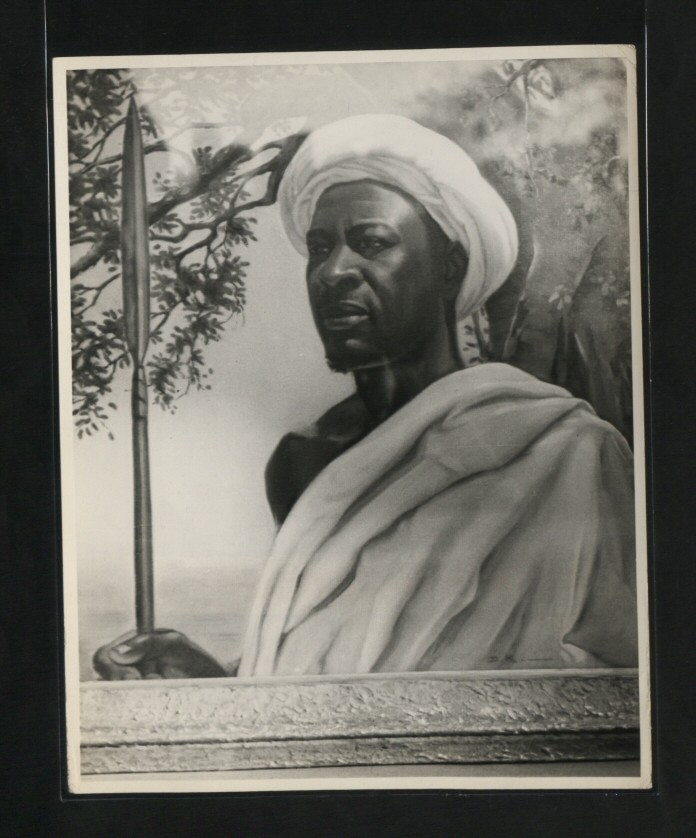
We begin the story of Germany in the Scramble for Africa with the question: was Germany really as bad as their enemies say they were? (spoiler: worse) We talk about Bismarck’s reluctance to own colonies, about why he started to change his mind as Germany caught a growing colonial fever; we talk about the harrowing career of Karl Peters, and then talk about the Germans in East Africa – the war on Mkwawa and the Hehe; the Maji Maji rebellion; and some short notes on Rwanda and Burundi under German control. The Herero and Nama genocides in Namibia will follow in the next episodes.
Anti Empire Radio 110: Karachi University Bombing – Balochistan and China
In the latest episode of Kung Fu Yoga with Carl Zha, we talk about the bombing at Karachi University where a suicide bomber killed herself, three Chinese teachers, and a driver. The Baloch Liberation Army claims responsibility. We ask: what does bombing Chinese teachers in Karachi have to do with Baloch liberation? What is going on in Balochistan? What is China’s footprint there and what are its investments? How is this event being perceived and understood in China? And what role does the US have in it?