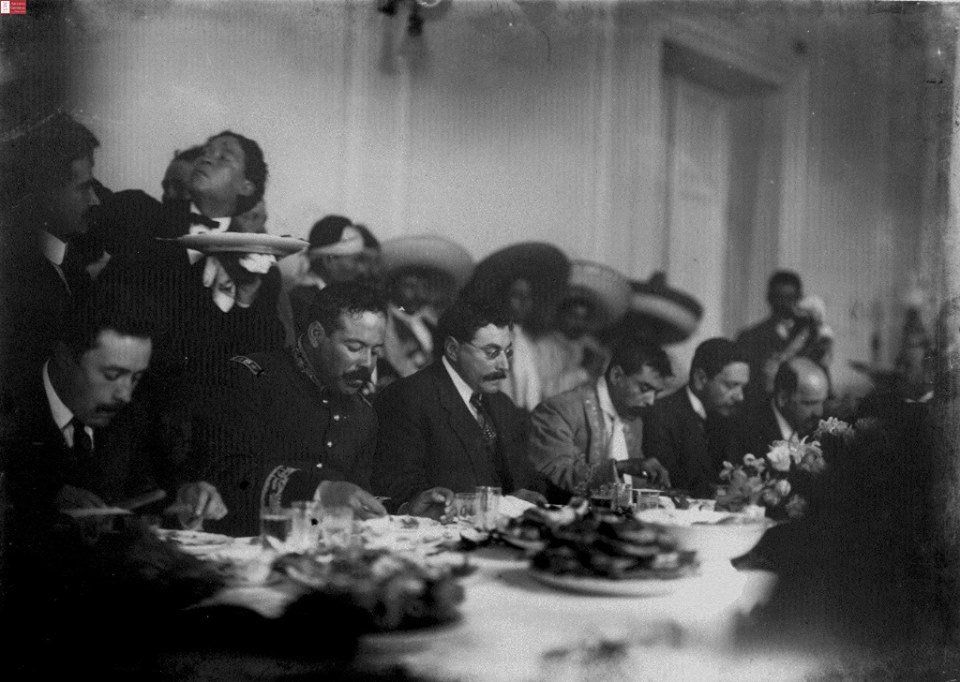
Porfirio is out, Madero is in, but he has the same problem: how to stop the invincible peasant revolution now in motion? And the answer is, he can’t! Pancho Villa and Emiliano Zapata take the capital, but the seeds of their downfall and of their glorious peasant revolution are already laid. Part 2 of our miniseries on the Mexican Revolution.
The Mexican Revolution pt1: The end of the Porfiriato
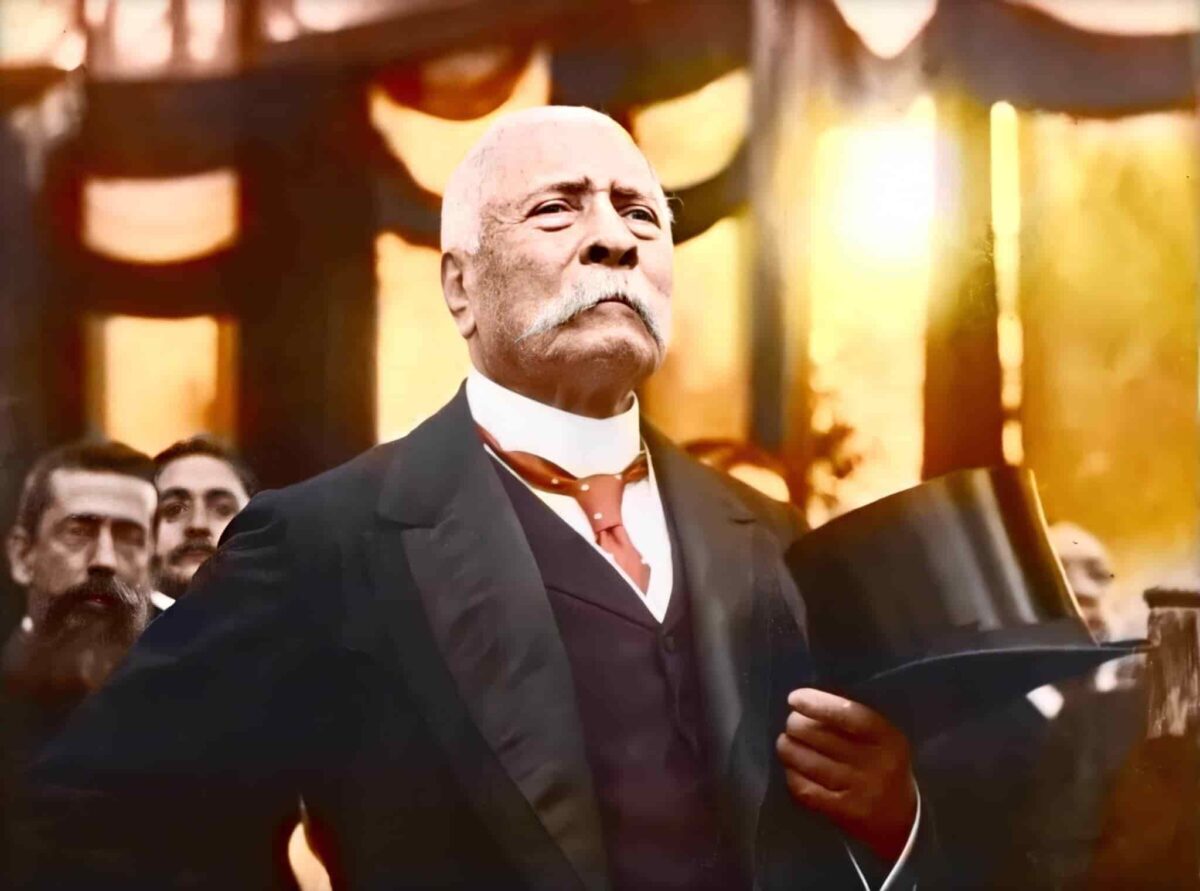
The Mexican Revolution was an extraordinary event in 20th century history. In part 1 of our miniseries on the revolution we give the background from the Mexican-American war to the end of the quarter decade of Porfirio Diaz. The class balance of forces leading to the revolution and the dramatic events. We also talk about the main book Justin is using, Adolfo Gilly’s La Revolucion Interrumpida, written by an Argentinian-Mexican revolutionary in a Mexican prison! The intro and outro music for this episode is the Mexican Revolutionary song, La Cucaracha, performed by the Castilians. Listen to it at archive.org: https://archive.org/details/78_la-cucaracha-the-mexican-cockroach-song_the-castilians-stanley-adams_gbia0004379
World War Civ 14b: Anglo-German Naval Race pt2 – The Dreadnoughts
We talk about the fearsome dreadnought, the race to build it, the Le Queax novels that were the Red Dawn of the 19th century, the Heartland theory of history, and conclude our discussion of the naval race. The tensions are getting high…
AER 124: China’s use of telepathy and WeChat to control Canadian elections, with Carl Zha
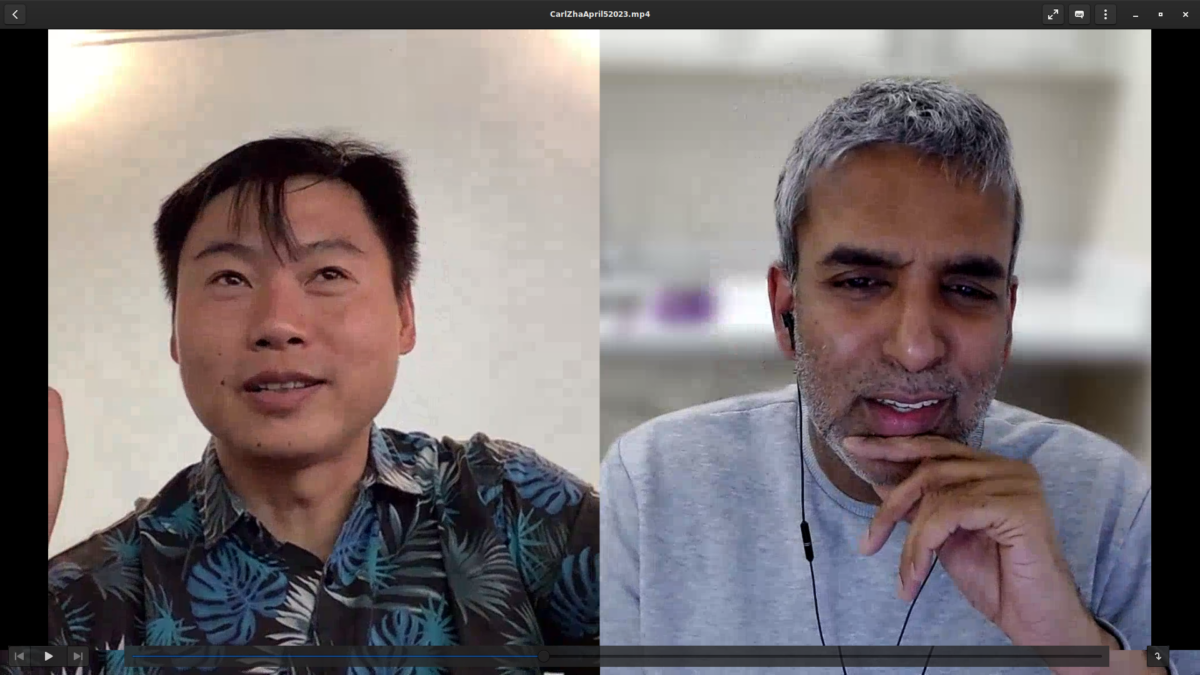
Carl Zha is back and I try to explain to him the hysteria of the accusations by the CSIS leaker in Canada of Chinese electoral interference. He can’t find a word of it in Chinese media which leads to the horrible possibility that Canada doesn’t matter very much to China. I try to explain to him what has been going on in the Canadian media and he reminds us that Australia has been concocting the same story – anonymous intelligence sources using the media to create a scandal around supposed Chinese electoral interference – since 2017. It’s hard to take seriously, so we don’t.
World War Civ 14a: Anglo-German Naval Race pt1 – Theorists and Practitioners of World Domination
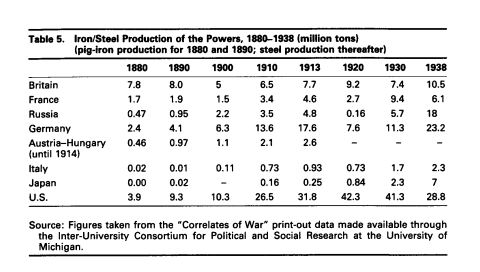
Part 1 of 2 on the Anglo-German Naval Race. We start with a modern theorist, Paul Kennedy, and his thesis that industrial power translates to military power. Then some earlier imperialist theorists we’ve mentioned before: Mahan and Mackinder, who Justin finally read. Then, the practitioners of naval power, Admiral Tirpitz on the German side and Fisher on the English. The first of two parts on the Anglo-German Naval Race leading up to WW1.
Subimperialism and multipolarity
Brazil’s dilemma
[NOTE: This article was produced by Globetrotter and is published in many of the usual places, but was mainly intended to have a permanent home at the Independent Media Institute’s Observatory, a place for articles that aren’t tied to the news cycle where readers can get into concepts (like, for example, subimperialism!) At my blog, I hosted an article by a colleague, Mandisi Majavu, where he blasted the concept’s analytical value back in 2005 in the South Africa context. I had always intended to come back to it and 18 years later I finally have, after seeing the term pop up in my re-reading of Galeano last year. I found the concept to have been developed through thinking about Brazil, and I wanted to mention the main theorist of the idea that I was able to find, Ruy Mauro Marini… and it helped me think about where Brazil might be headed today…]
A look at sub-imperialism and multipolarity in Brazil historically and into the future.
In the Open Veins of Latin America Eduardo Galeano described an 1870 genocidal war of regime change waged on Paraguay by a Triple Alliance of its neighbors, Argentina, Uruguay, and Brazil, on behalf of British imperialism. The target, nationalist president Solano Lopez, died in battle. The country lost 56,000 square miles of territory. Paraguay’s population was reduced by 83.3 percent.
By the end, Galeano wrote: “Brazil had performed the role the British had assigned it.” Before the intervention, “Paraguay had telegraphs, a railroad, and numerous factories manufacturing construction materials, textiles, linens, ponchos, paper and ink, crockery, and gunpowder… the Ibycui foundry made guns, mortars, and ammunition of all calibers… the steel industry… belonged to the state. The country had a merchant fleet… the state virtually monopolized foreign trade; it supplied yerba mate and tobacco to the southern part of the continent and exported valuable woods to Europe… With a strong and stable currency, Paraguay was wealthy enough to carry out great public works without recourse to foreign capital… Irrigation works, dams and canals, and new bridges and roads substantially helped to raise agricultural production. The native tradition of two crops a year, abandoned by the conquistadors, was revived.”
After the war: “it was not only the population and great chunks of territory that disappeared, but customs tariffs, foundries, rivers closed to free trade, and economic independence… Everything was looted and everything was sold: lands and forests, mines, yerba mate farms, school buildings.”
Summarizing all this, Galeano wrote: “Paraguay has the double burden of imperialism and subimperialism.”
“Subimperialism,” Galeano continued, “has a thousand faces.” Paraguayan soldiers joined an intervention against the Dominican Republic in 1965, under the command of a Brazilian general, Panasco Alvim. Paraguay “gave Brazil an oil concession on its territory, but the fuel distribution and petrochemical business [was] in U.S. hands.” The U.S. also controlled the university, the army, and the black market as well, of which Galeano wrote: “Through open contraband channels, Brazilian industrial products invade the Paraguayan market, but the Sao Paulo factories that produce them have belonged to U.S. corporations since the denationalizing avalanche of recent years.”
Elaborating on Brazil’s sub-imperial function since 1964, Galeano wrote: “A very influential military clique pictures the country as the great administrator of U.S. interests in the region, and calls on Brazil to become the same sort of boss over the south as the [U.S.] is over Brazil itself.”
Ruy Mauro Marini Analyzes the Phenomenon
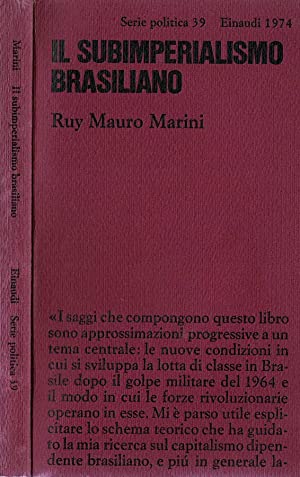
It is perhaps no coincidence that the leading scholarly authority on sub-imperialism is the Brazilian scholar Ruy Mauro Marini. Mauro’s 1977 article was published shortly after Galeano’s book. To understand “global capitalist accumulation and subimperialism” some background on the theory of imperialism set out by Lenin is in order, and more recent books like Zak Cope’s The Wealth of Some Nations and Patnaik and Patnaik’s A Theory of Imperialism teach the theory eloquently.
The key concepts are unequal exchange and value transfer, magical processes through which the wealthy countries exchange smaller amounts of labor for larger amounts of labor from the poor countries. The mechanisms are many: patent regimes, Western corporate control of Global South resources, denomination of oil and other commodities in U.S. dollars, IMF and Western-bank loan terms and draconian rescue packages, Western arms sales and military training programs—all backed up by the threat of sanctions, coups, invasions, and “color revolutions,” which happen frequently enough to remind Global South governments to stay in line.
In Imperialism, Lenin described the pressure on wealthy countries to “go imperialist:” winners in the Western domestic market invariably consolidate and tend towards monopoly; these winners are invariably coordinated increasingly through banks and financial interests; throwing new investments in to a mature market brings lower returns than they can get in newly opened ones, so the financiers seek colonies to get high returns on their growing piles of capital; the colonies also address their interests in labor and raw materials that are cheap (or ideally, free, through theft).
Mauro shows how this dynamic can lead to sub-imperialism if the context is right. Sub-imperialism, he writes, is “the form assumed by the dependent economy when it reaches the stage of monopoly and finance capital,” and it has two basic components.
The first is a “relatively autonomous” expansionist policy that functions under the overall umbrella of U.S. hegemony.
The second is what Mauro calls a “medium” organic composition of capital. To explain this concept an example comparison will suffice: an economy with a high organic composition of capital is one where workers use advanced, costly machinery that itself required a lot of labor to produce (the word “composition” refers to how much so-called “dead labor” went into the machines on which the “living labor” is now laboring). These are the workers in the vacuum labs making nanometre-precise computing chips. An economy with a low organic composition of capital is one where workers labor with their hands or simple tools, cutting sugar cane with machetes as day laborers. Their work is called “unskilled” and their wages are proportionately lower.
In 1977, Mauro argued that in Latin America, only Brazil had both the medium organic composition and the relatively autonomous expansionist policy. But what about today? And what about in other regions?
Generalizing the Concept
Are there sub-imperialists in South Asia? Pakistan exercises its ambitions in Afghanistan under U.S. hegemony. Imran Khan was overthrown in a coup for withdrawing support for the U.S. occupation of Afghanistan; his successors have worked hard to prove their subordination to the hegemon. India meddles in the affairs of its small neighbors like Bhutanand does so under U.S. hegemony; Western corporations certainly have an immense footprint in both India and Pakistan.
In the Middle East, Saudi Arabia and Turkey qualify as sub-imperialists though both showcase how each sub-imperialist is a special case. In Africa, South Africa has been analyzed as a sub-imperialist and tiny Rwanda could well qualify as a Central African version.
Who doesn’t fit? None of the U.S. Five Eyes partners (Australia, New Zealand, Canada, or UK) nor Japan, nor Israel, since all are high-income countries with higher than “medium” organic composition of capital.
Nor do China, Russia, or Iran fit the sub-imperialist mold. They may exercise hegemony—or contest it—in their regions, but they do not do so under the umbrella of U.S. hegemony.
This brings us back to Brazil and to the changes in the world since the writings of Mauro and Galeano on sub-imperialism.
Sub-Imperialism and Multipolarity
Until very recently, unilateral U.S. hegemony was the basic fact of world affairs.
No one could contest the U.S. invasions of Grenada, Panama, Iraq, or Haiti or its destruction of Yugoslavia and Libya. But Russia and Iran did contest the U.S. plan to dismantle Syria in 2015.
When Yemen voted against the U.S. invasion of Iraq in 1990, they were told that it was “the most expensive vote they ever cast” and punished economically. But by 2022 many countries remained neutral in the Russia-Ukraine War despite Western demands that they support Ukraine. India and China ignored Western demands that they refuse to buy Russian energy, expanding a series of options for trading commodities in currencies other than the U.S. dollar. African countries need not beg Western commercial banks for development finance: they can examine Western offers side-by-side with the Chinese Belt and Road Initiative. In 2023, China brokered a peace deal that restored relations between Saudi Arabia and Iran.
These developments reveal a historical change from a unipolar to a multipolar world order. The world has been under unipolar Anglo-American hegemony since the 1750s. There were world empires prior to that (notably the Spanish and Portuguese) but China and India each had around 25 percent of the world economy even at that time; a few centuries earlier, before the devastation of the Americas, the world was even more multipolar, if much less globalized.
If we are indeed moving away from the unipolar historical pattern, current sub-imperialists have some re-thinking to do: the U.S. umbrella is not what it once was.
Sub-Imperialism or Multipolarity? Which Way for Brazil?
With Lula (Luiz Inácio Lula da Silva) back in the president’s office in Brazil as of 2023, the country faced this precise dilemma. In his previous tenure, Lula acted as both a multipolarist and a sub-imperialist. An early proponent of multipolarity (before the moment had even arrived) through his advocacy of BRICS (Brazil, Russia, India, China, and South Africa) and of Latin American integration, Lula’s Brazil played the sub-imperial role as well, leading the morally compromised and disastrous UN mission to take over the U.S. occupation of Haiti. Some of the military officers who led the Haiti occupation helped overthrow Lula’s party in the coup that led to his jailing and eventually to Bolsonaro’s destructive presidency.
Bolsonaro was certainly, symbolically sub-imperialist: he saluted the U.S. flag and marched under the Israeli one. But most of his time in office was characterized by a disastrous COVID-19 response, genocidal policies against Indigenous peoples, and a general incoherence on foreign policy. Bolsonaro participated in a regime change stunt in Venezuela but tried to stay out of the Russia-Ukraine war.
Lula returned to office in a context of weaker domestic left-wing movements but a stronger multipolar context. Lula’s Brazil voted with the West in the condemnation of Russia’s invasion of Ukraine but Brazil was told by Russian diplomats that Russia understood the vote.
There are economic considerations beyond the organic composition of capital that can drive Global South leaders back into the criminal arms of the U.S.—dependence on natural resource exports and foodgrain imports are tendencies that are difficult to reverse, especially in democracies like Brazil that are vulnerable to coups or regression when the right-wing returns to power.
Perhaps Brazil will be the vanguard of multipolarity in the Americas, or the sub-imperialist agent undermining BRICS from the inside. The changing world includes possibilities never contemplated by Galeano, Mauro, or Lenin.
Justin Podur is a Toronto-based writer and a writing fellow at Globetrotter. You can find him on his website at podur.org and on Twitter @justinpodur. He teaches at York University in the Faculty of Environmental and Urban Change.
This article was produced by Globetrotter.
Subimperialism and multipolarity: Brazil’s dilemma
A look at sub-imperialism and multipolarity in Brazil historically and into the future.
In the Open Veins of Latin America Eduardo Galeano described an 1870 genocidal war of regime change waged on Paraguay by a Triple Alliance of its neighbors, Argentina, Uruguay, and Brazil, on behalf of British imperialism. The target, nationalist president Solano Lopez, died in battle. The country lost 56,000 square miles of territory. Paraguay’s population was reduced by 83.3 percent.
By the end, Galeano wrote: “Brazil had performed the role the British had assigned it.” Before the intervention, “Paraguay had telegraphs, a railroad, and numerous factories manufacturing construction materials, textiles, linens, ponchos, paper and ink, crockery, and gunpowder… the Ibycui foundry made guns, mortars, and ammunition of all calibers… the steel industry… belonged to the state. The country had a merchant fleet… the state virtually monopolized foreign trade; it supplied yerba mate and tobacco to the southern part of the continent and exported valuable woods to Europe… With a strong and stable currency, Paraguay was wealthy enough to carry out great public works without recourse to foreign capital… Irrigation works, dams and canals, and new bridges and roads substantially helped to raise agricultural production. The native tradition of two crops a year, abandoned by the conquistadors, was revived.”
After the war: “it was not only the population and great chunks of territory that disappeared, but customs tariffs, foundries, rivers closed to free trade, and economic independence… Everything was looted and everything was sold: lands and forests, mines, yerba mate farms, school buildings.”
Summarizing all this, Galeano wrote: “Paraguay has the double burden of imperialism and subimperialism.”
“Subimperialism,” Galeano continued, “has a thousand faces.” Paraguayan soldiers joined an intervention against the Dominican Republic in 1965, under the command of a Brazilian general, Panasco Alvim. Paraguay “gave Brazil an oil concession on its territory, but the fuel distribution and petrochemical business [was] in U.S. hands.” The U.S. also controlled the university, the army, and the black market as well, of which Galeano wrote: “Through open contraband channels, Brazilian industrial products invade the Paraguayan market, but the Sao Paulo factories that produce them have belonged to U.S. corporations since the denationalizing avalanche of recent years.”
Elaborating on Brazil’s sub-imperial function since 1964, Galeano wrote: “A very influential military clique pictures the country as the great administrator of U.S. interests in the region, and calls on Brazil to become the same sort of boss over the south as the [U.S.] is over Brazil itself.”
Ruy Mauro Marini Analyzes the Phenomenon
It is perhaps no coincidence that the leading scholarly authority on sub-imperialism is the Brazilian scholar Ruy Mauro Marini. Mauro’s 1977 article was published shortly after Galeano’s book. To understand “global capitalist accumulation and subimperialism” some background on the theory of imperialism set out by Lenin is in order, and more recent books like Zak Cope’s The Wealth of Some Nations and Patnaik and Patnaik’s A Theory of Imperialism teach the theory eloquently.
The key concepts are unequal exchange and value transfer, magical processes through which the wealthy countries exchange smaller amounts of labor for larger amounts of labor from the poor countries. The mechanisms are many: patent regimes, Western corporate control of Global South resources, denomination of oil and other commodities in U.S. dollars, IMF and Western-bank loan terms and draconian rescue packages, Western arms sales and military training programs—all backed up by the threat of sanctions, coups, invasions, and “color revolutions,” which happen frequently enough to remind Global South governments to stay in line.
In Imperialism, Lenin described the pressure on wealthy countries to “go imperialist:” winners in the Western domestic market invariably consolidate and tend towards monopoly; these winners are invariably coordinated increasingly through banks and financial interests; throwing new investments in to a mature market brings lower returns than they can get in newly opened ones, so the financiers seek colonies to get high returns on their growing piles of capital; the colonies also address their interests in labor and raw materials that are cheap (or ideally, free, through theft).
Mauro shows how this dynamic can lead to sub-imperialism if the context is right. Sub-imperialism, he writes, is “the form assumed by the dependent economy when it reaches the stage of monopoly and finance capital,” and it has two basic components.
The first is a “relatively autonomous” expansionist policy that functions under the overall umbrella of U.S. hegemony.
The second is what Mauro calls a “medium” organic composition of capital. To explain this concept an example comparison will suffice: an economy with a high organic composition of capital is one where workers use advanced, costly machinery that itself required a lot of labor to produce (the word “composition” refers to how much so-called “dead labor” went into the machines on which the “living labor” is now laboring). These are the workers in the vacuum labs making nanometre-precise computing chips. An economy with a low organic composition of capital is one where workers labor with their hands or simple tools, cutting sugar cane with machetes as day laborers. Their work is called “unskilled” and their wages are proportionately lower.
In 1977, Mauro argued that in Latin America, only Brazil had both the medium organic composition and the relatively autonomous expansionist policy. But what about today? And what about in other regions?
Generalizing the Concept
Are there sub-imperialists in South Asia? Pakistan exercises its ambitions in Afghanistan under U.S. hegemony. Imran Khan was overthrown in a coup for withdrawing support for the U.S. occupation of Afghanistan; his successors have worked hard to prove their subordination to the hegemon. India meddles in the affairs of its small neighbors like Bhutanand does so under U.S. hegemony; Western corporations certainly have an immense footprint in both India and Pakistan.
In the Middle East, Saudi Arabia and Turkey qualify as sub-imperialists though both showcase how each sub-imperialist is a special case. In Africa, South Africa has been analyzed as a sub-imperialist and tiny Rwanda could well qualify as a Central African version.
Who doesn’t fit? None of the U.S. Five Eyes partners (Australia, New Zealand, Canada, or UK) nor Japan, nor Israel, since all are high-income countries with higher than “medium” organic composition of capital.
Nor do China, Russia, or Iran fit the sub-imperialist mold. They may exercise hegemony—or contest it—in their regions, but they do not do so under the umbrella of U.S. hegemony.
This brings us back to Brazil and to the changes in the world since the writings of Mauro and Galeano on sub-imperialism.
Sub-Imperialism and Multipolarity
Until very recently, unilateral U.S. hegemony was the basic fact of world affairs.
No one could contest the U.S. invasions of Grenada, Panama, Iraq, or Haiti or its destruction of Yugoslavia and Libya. But Russia and Iran did contest the U.S. plan to dismantle Syria in 2015.
When Yemen voted against the U.S. invasion of Iraq in 1990, they were told that it was “the most expensive vote they ever cast” and punished economically. But by 2022 many countries remained neutral in the Russia-Ukraine War despite Western demands that they support Ukraine. India and China ignored Western demands that they refuse to buy Russian energy, expanding a series of options for trading commodities in currencies other than the U.S. dollar. African countries need not beg Western commercial banks for development finance: they can examine Western offers side-by-side with the Chinese Belt and Road Initiative. In 2023, China brokered a peace deal that restored relations between Saudi Arabia and Iran.
These developments reveal a historical change from a unipolar to a multipolar world order. The world has been under unipolar Anglo-American hegemony since the 1750s. There were world empires prior to that (notably the Spanish and Portuguese) but China and India each had around 25 percent of the world economy even at that time; a few centuries earlier, before the devastation of the Americas, the world was even more multipolar, if much less globalized.
If we are indeed moving away from the unipolar historical pattern, current sub-imperialists have some re-thinking to do: the U.S. umbrella is not what it once was.
Sub-Imperialism or Multipolarity? Which Way for Brazil?
With Lula (Luiz Inácio Lula da Silva) back in the president’s office in Brazil as of 2023, the country faced this precise dilemma. In his previous tenure, Lula acted as both a multipolarist and a sub-imperialist. An early proponent of multipolarity (before the moment had even arrived) through his advocacy of BRICS (Brazil, Russia, India, China, and South Africa) and of Latin American integration, Lula’s Brazil played the sub-imperial role as well, leading the morally compromised and disastrous UN mission to take over the U.S. occupation of Haiti. Some of the military officers who led the Haiti occupation helped overthrow Lula’s party in the coup that led to his jailing and eventually to Bolsonaro’s destructive presidency.
Bolsonaro was certainly, symbolically sub-imperialist: he saluted the U.S. flag and marched under the Israeli one. But most of his time in office was characterized by a disastrous COVID-19 response, genocidal policies against Indigenous peoples, and a general incoherence on foreign policy. Bolsonaro participated in a regime change stunt in Venezuela but tried to stay out of the Russia-Ukraine war.
Lula returned to office in a context of weaker domestic left-wing movements but a stronger multipolar context. Lula’s Brazil voted with the West in the condemnation of Russia’s invasion of Ukraine but Brazil was told by Russian diplomats that Russia understood the vote.
There are economic considerations beyond the organic composition of capital that can drive Global South leaders back into the criminal arms of the U.S.—dependence on natural resource exports and foodgrain imports are tendencies that are difficult to reverse, especially in democracies like Brazil that are vulnerable to coups or regression when the right-wing returns to power.
Perhaps Brazil will be the vanguard of multipolarity in the Americas, or the sub-imperialist agent undermining BRICS from the inside. The changing world includes possibilities never contemplated by Galeano, Mauro, or Lenin.
Justin Podur is a Toronto-based writer and a writing fellow at Globetrotter. You can find him on his website at podur.org and on Twitter @justinpodur. He teaches at York University in the Faculty of Environmental and Urban Change.
This article was produced by Globetrotter.
In Real Time 10: A 5-year and a 50-year farm bill
Back with Stan Cox on the environmental file. Stan’s written a dispatch on the Farm Bill. How the 5-year Farm Bills used to have consensus but how even that might be breaking, and then we talk about Wes Jackson’s ideas about a 50-year farm bill, thinking on the scale we probably need to be thinking on…
AER 123: The fruit of 5 years of demonizing China in Canada
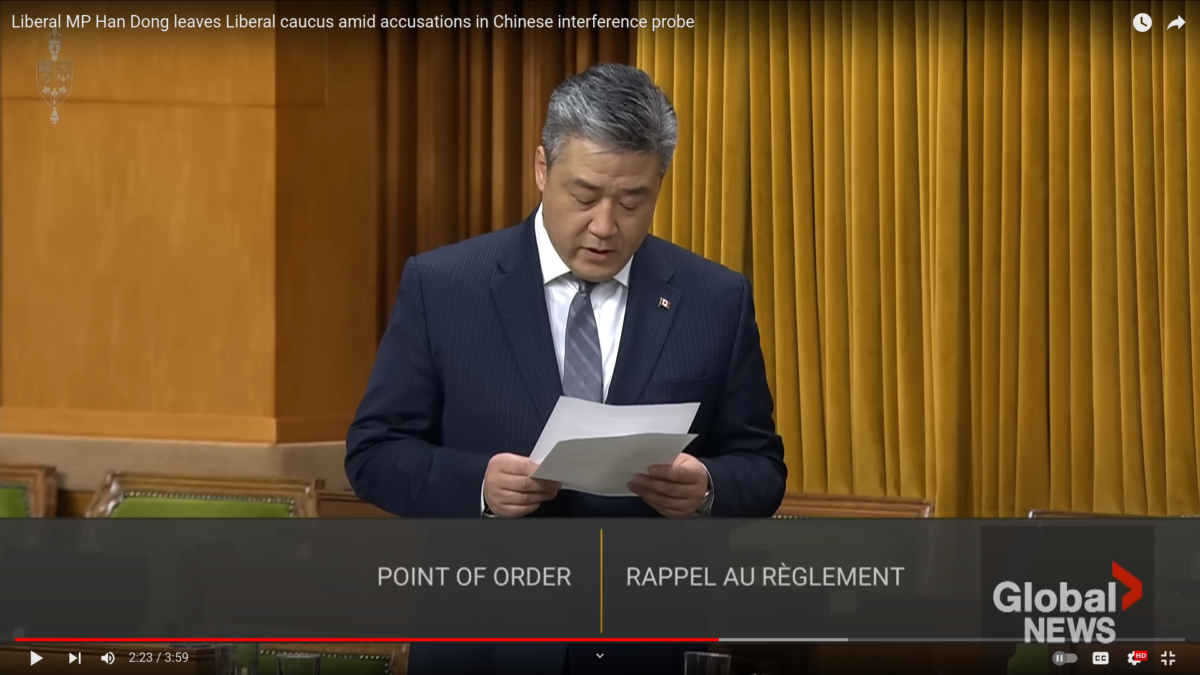
I’m joined by Dock Currie with another episode on the gift that keeps on giving, the CSIS-leaking China panic in Canadian politics. We talk about the recent walk-back from the most ridiculous allegations against Han Dong, the pivot to more aggressive demonization of China in Canadian culture starting in 2018, the Meng Wanzhou case and where things are headed. Dock is an articling student in BC and on twitter at Dock_Currie
Some basics of journalism to evaluate these CSIS stories
Have professional guidelines been followed here?
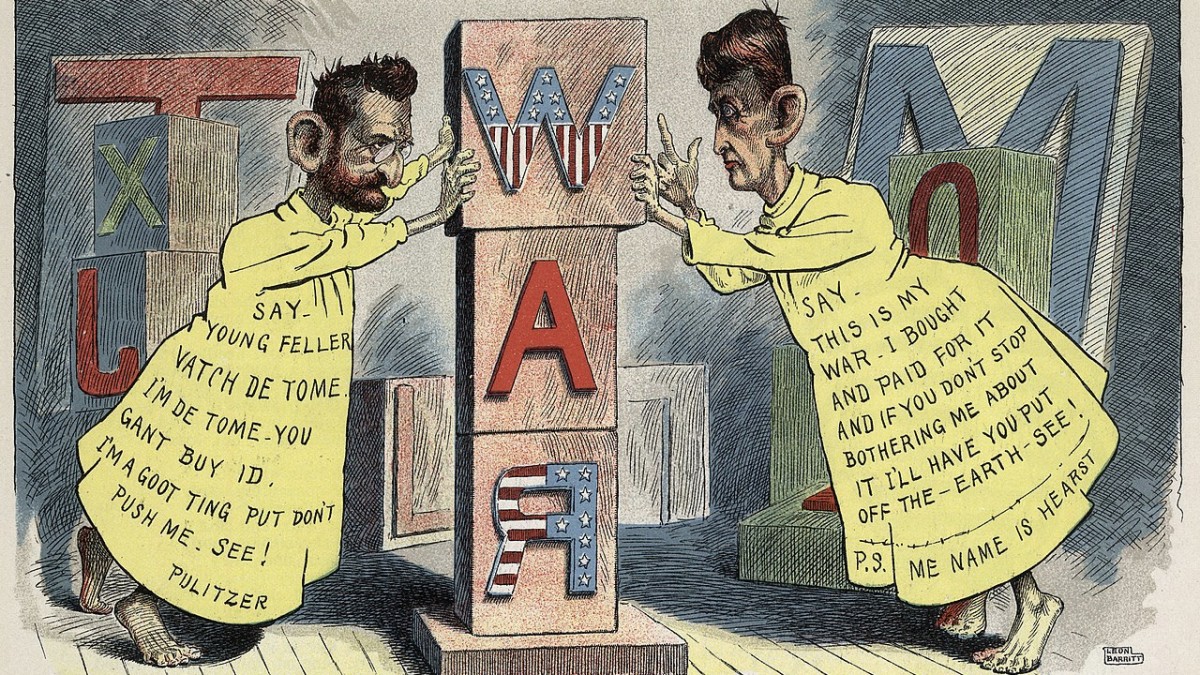
Since the Canadian media engulfed itself in a Sinophobic panic fueled by some probably racist CSIS leaker and credulous reporters (that I have referred to previously as CSIS-GM) a small number of people in independent media have tried to create some kind of response. While we have at least a couple of good pieces in e.g. The Canada Files and in Passage, we are definitely talking about, if not voices in the wilderness, honourable exceptions to a dishonourable unanimity. There is no debate going on here, at least not yet.
On the other hand, there is nothing that upsets a monopolist more than the slightest sign of a crack in their racist wall of anti-China coverage. And so it is that we are treated not only to the unfolding defamation campaign against Chinese-Canadians, but also to several of the most fervent of the campaigners sniveling – because of the lack of credulity in these little pockets of twitter about what CSIS-GM is selling – about how the public doesn’t understand the complexity of journalism.
Like the ungrateful public that refuses to understand how what looks like food prices being driven up by monopoly is actually much more complex, the ungrateful public refuses to understand how what looks like fiction from a racist spy agency is actually the apogee of professional journalism. If they only knew.
Shall we take up the challenge? Shall we pick up the gauntlet thrown down by the Canadian media? Perhaps we can take a look at some foundational resources for journalists, from the place you know all Canadian journalists look for foundational resources – the US.
How does the CSIS-GM reporting of the past few months stack up against, for example, the Society of Professional Journalists’ Code of Ethics? Here are some principles from the code for you to compare with the behavior of the Canadian media in recent weeks. They include:
-
Verify information before releasing it.
-
Consider sources’ motives before promising anonymity.
-
Diligently seek subjects of news coverage to allow them to respond to criticism or allegations of wrongdoing.
-
Provide access to source material when it is relevant and appropriate.
In recent years there have been real journalists and sources who have suffered real persecution by the US and its allies for reporting within the above code of ethics. Wikileaks, after a painstaking process of harm reduction to ensure no danger would come to US spies and military personnel, published whole troves of source documents – the Iraq War Diary, the Afghan War Diary, Cablegate – so that the public, journalists, researchers could do their own analysis and their own verification on the documents directly. The source, Chelsea Manning, was punished severely and the publisher, Julian Assange, is in jail, his life in danger. Edward Snowden, after getting himself to safety, came out in his own name and defended his decision to become a source on the NSA’s universal surveillance program.
Meanwhile the CSIS leaker was given space in the Globe and Mail to defend his honor as well – to defend, that is, his decision to engage in political manipulation and defamation behind a cloak of anonymity. He will continue to be defended by the journalists who published his narratives and by the spy agency that employs him, even as Assange languishes in prison.
Let’s go over now to the Comittee of Concerned Journalists. There we find similar ideas about sources and verification, which is “a consistent method of testing information — a transparent approach to evidence — precisely so that personal and cultural biases would not undermine the accuracy of their work.” How is that working out in Canada? Also in the CCJ principles you will find the idea of publishing in the public interest: “journalists must continually ask what information has most value to citizens and in what form.” The more the CSIS-GM leak material that seems by perfect coincidence to vindicate their approach and assumptions, the more it’s revealed that the goal is narrow political and personal agendas and not what “has most value to citizens”.
A third resource. While I wouldn’t want to imply that Associated Press follows its own ethics, it too has guidelines that are being mocked by the CSIS-GM operation.
“ Under AP’s rules, material from anonymous sources may be used only if: 1. The material is information and not opinion or speculation, and is vital to the report. 2. The information is not available except under the conditions of anonymity imposed by the source. 3. The source is reliable, and in a position to have direct knowledge of the information.”
If the CSIS-GM information has passed these tests, there is no way to know it from the story. It doesn’t look like information (#1 failed) and the source says things that make absolutely no sense (#3 failed). With #1 and #3 failed there’s no way to even think about #2, since some of the leaks sound like pure inventions.
Like any other important endeavour, journalism involves both skill and insight that develop over time and practice. Verification, for example, is a complex method. Seeing with your own eyes is better than hearing from a witness; two witnesses are better than one, but not all that much better if they coordinate their stories before talking to you. Documents are good but can be faked. How much trust you can put into, e.g., a Wikileaks cablegate cable depends on how much you know about what was going on at the time, how well the information fits with what else you know, the nature of the official denial, the motivation of the leaker and of the publisher. How to make a judgment about what is in the public interest and how to balance that with how well you were able to verify and how timely it all is (why now?). Infinite possibilities to do good work emerge from a fairly simple set of principles.
Violating the principles leads to bad work – which is what has happened here. The social damage, as I’ve said before, is just beginning.