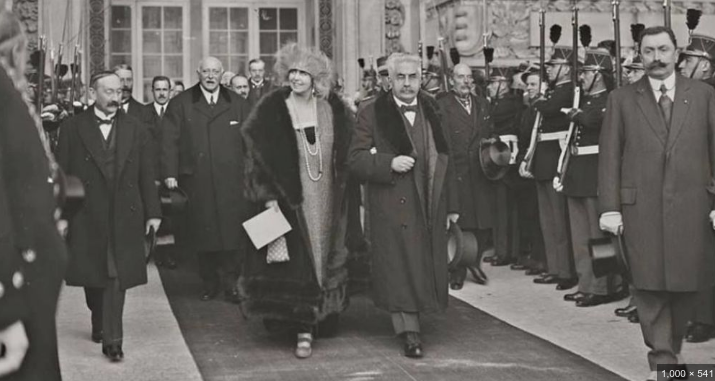
The Balkans are where the Great War began; there were two Balkan wars before the Great War and there was a Balkan war in the Great War. In Paris, delegations from the region made their cases, the Great Powers made their dispensations. New countries formed and new borders drawn, which would be changed again in the next war.
Civ 1919: Treaty of Versailles pt2
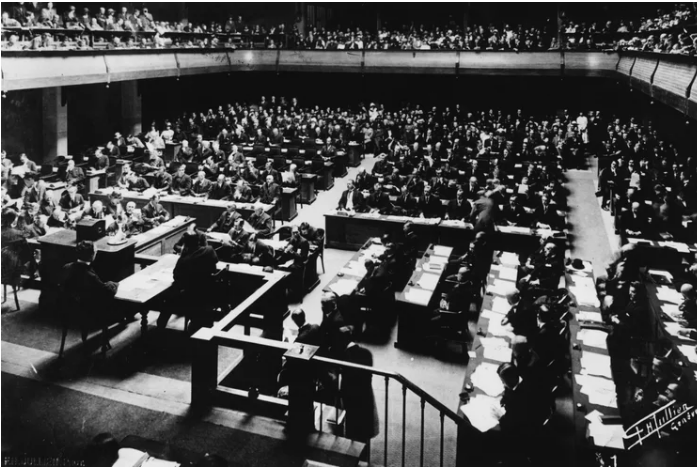
The biggest player at the peace conference, Woodrow Wilson, wants a League of Nations, which in the age of imperialism, is a rather underdeveloped idea. The other problem is, how to continue colonialism but with a nicer name? And so were invented the Mandates.
The anti-genocide focus
A hundred years ago one writer identified antiwar work as a difficult and lengthy business
It feels intolerable to realize how many of our neighbors are genocidal racists. How many others are indifferent and unmoved. How commerce and trade and normal relations can go on while genocide is ongoing. Our minds are repelled. We’re emotional wrecks alternating between panic, guilt, rage, and helplessness.
From this place we write our laments.
The world has failed.
We have allowed this to happen.
We are cowards.
These are our human reactions.
The lament is necessary to feel the futility of appeals to our elites who are more rotten than we could have imagined; to feel the futility of appeals to laws that are on the books but that depend on these same rotten, racist elites for enforcement. When we tell ourselves that we have allowed this to happen because we are cowards, we are challenging our own courage.
How could we not? We share the world with people in Yemen who have said that they will support Gaza even if the sky falls; we share the world with Aaron Bushnell and a growing number of political prisoners. The people of Lebanon had their villages destroyed, thousands killed. The people of Palestine are struggling against a whole West bent on exterminating them. Are we doing enough? It’s a good question, a just question.
But, my anti-genocide friends, we have to focus!
We have to accept the reality we are in. We can’t afford illusions about power we don’t have. We aren’t allowing this to happen: we lack the power to stop it.
We aren’t allowing this to happen: we lack the power to stop it.
The genocide is indeed facilitated by mass Western racism and mass global cowardice. The genocidals have indeed created a world system of legal impotence and racist indifference to their use of unlimited violence. Everything is permitted to them. They repeat lies that even they don’t believe as a way to signal their affiliation to one another, and to show us that they can say and do what they want and there’s nothing we can do about it. It’s incorrect to believe them. But it’s equally incorrect to believe that we can stop them with a shrug.
Many of us do have courage (see Palestine Action) but a small number of extremely courageous acts cannot turn this around. If millions reached that level of consciousness and of action, the genocide would quickly end. The actionists are at one extreme of courage. Risk-free support for fundraisers, awareness-raising, and boycotting are at the other with demonstrating in the middle, we need all of this. Not a few people doing everything, but more people doing more. Focus on that equation: More people all the time, each with a bit more courage all the time.
About 100 years ago one anti-war writer wrote that “the struggle against a centralized state’s powerful terrorist military organization is a difficult and lengthy business.” At the time, that writer argued that leaders of the movement needed to “express themselves in favor of the defeat of their own governments”, to “set up an international apparatus for the purpose of carrying on propaganda”, “organize the publication of illegal literature on the necessity of starting revolutionary activities.” He concluded “we cannot tell whether a powerful revolutionary movement will develop immediately after this war or during it,” but the only worthy thing to do was to “work in this direction.”*
In the Thorn and the Carnation, Yahya Sinwar’s characters organize for struggle while going in and out of prison, under surveillance and torture. These characters have a matter-of-fact attitude about all of it. They debate strategy and principle, they take risks at times and act with caution at others. What you won’t see them doing is lament the indifference of the world or call themselves cowards.
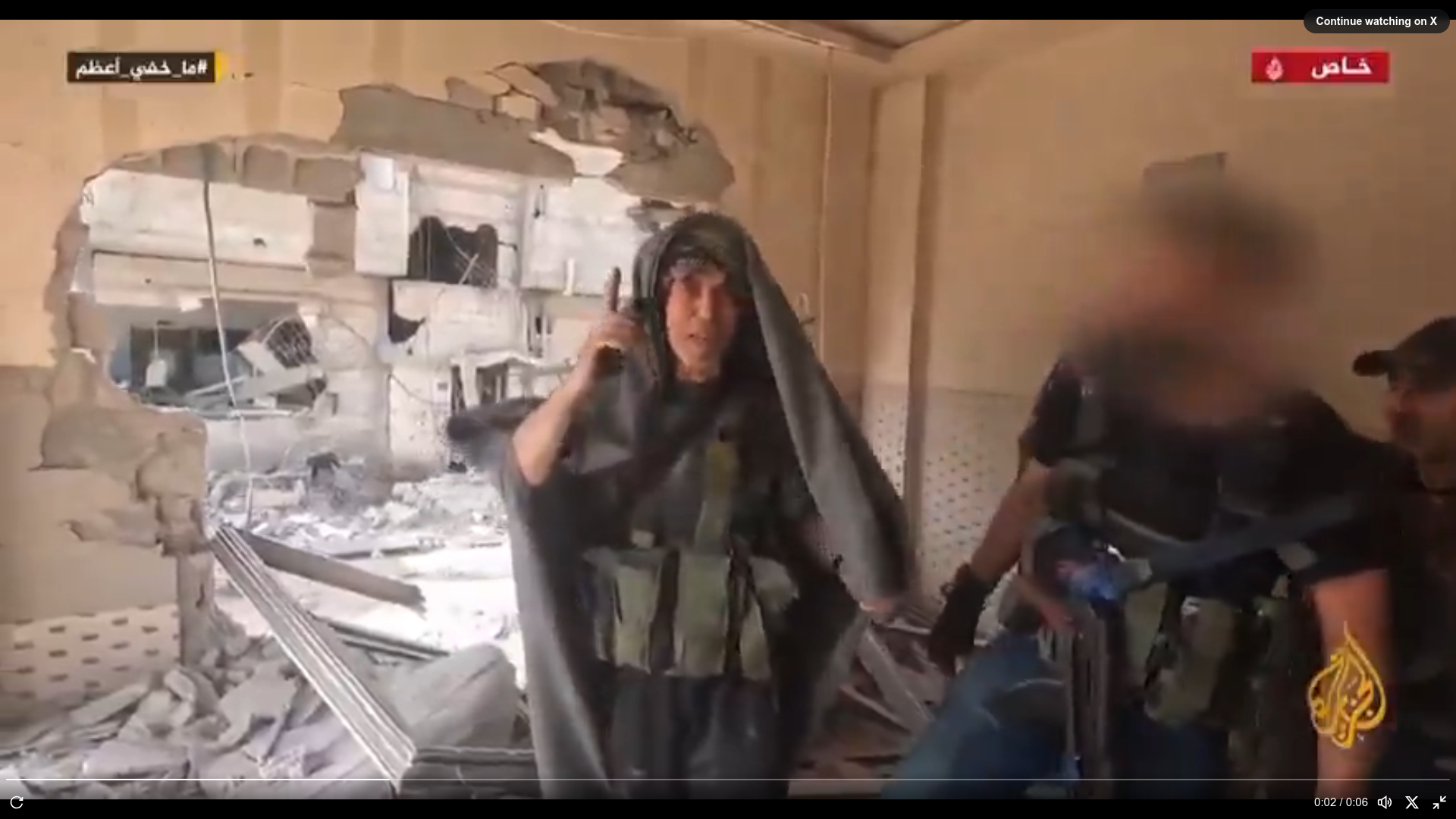
We have the world we have. Take a moment to lament it. Then take back your anti-genocide focus.
*The writer was named Lenin.
Cancellation Court: The Media Trial
Another instalment of fiction about justice after the genocide
[Dear readers: The genocide has started again and I will be returning to reporting on it. But here is a story I’d been working on earlier that I need to get out there first. After writing the Hodeidah Tribunal, I wondered about what justice would entail for the media incitements that have been so visible throughout this genocide. This story deals with the less clear-cut cases of media figures who laundered the genocide by claiming either balance or even anti-genocide credentials while returning the debate to genocider talking points…]
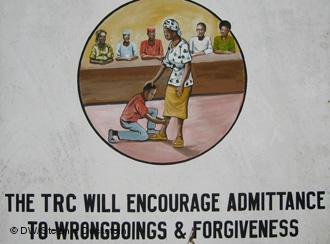
Graphic from South Africa’s TRC
Towards the end of the revolution, the National Revolutionary Authority of North America (NRA-NA) issued a declaration, called the Declaration to Social Media (DSM), that outlined some of the genocidal crimes they would punish upon arrival in power. The DSM was a warning to media figures and social media users to stop their incitement to genocide, for there would be consequences for these incitements. Written in a moment of revolutionary enthusiasm, its legal consequences had to be developed by a number of legally trained revolutionaries after the victory. Sushil was a veteran revolutionary lawyer, and had been defense counsel for many of the NRA revolutionaries since the early days. He was trusted, known, and he knew the law. The leadership collective had invited him to help them develop the document.
The initial DSM had been a very simple list of crimes.
DECLARATION TO MEDIA AND SOCIAL MEDIA ON INCITEMENT TO GENOCIDE
The National Revolutionary Authority declares the following to be crimes that will be punishable by law:
SECTION 1: INCITEMENT TO GENOCIDE
The following acts on social media or media will be considered punishable incitement to genocide:
1.1 – Atrocity Propaganda. Posting or stating lies about atrocity crimes, by the victims, while the genocide against them goes on, will be punishable.
1.2 – Willful or Pretended Ignorance. Media figures or officials who pretend to be, or speak publicly while actually unaware of well-documented and ongoing genocidal crimes or statements, are considered offenders and will be punished.
1.3 – Excusing Genocide. Labeling the victims as “terrorists” or any use of the doctrine that genocide, civilian murder, or destruction of civilian infrastructure is justified because “terorists” are “embedded among civilians”, will be punishable.
When Sushil had begun to study the declaration, he fretted as he tended to do, because Sections 1.1 through 1.3, while precise, encompassed so many acts by so many social media influencers, NGO actors, politicians, and media spokespeople, that it would be impossible to punish them all except by turning the entire revolutionary bureaucracy towards the sole purpose of punishing the complicit. What to do?
Sushil knew that the worst actors could be deported to the Hodeidah Tribunal, but the sentences there were long and even capital punishment was possible under those clauses. Back here, though, the NRA-AN (pronounced “niraan”) had the challenging task of separating the worst actors from the mere social participants, the big genociders from the small.
Having studied it more carefully than most, Sushil had never been fooled by Rwanda’s post-genocide Gacaca court system (1), but the system’s stated principles made sense. People accused of participation in genocide were compelled to face the community and tell their truth, which would be corroborated or disputed by community members at the trial.
Gacaca had been designed for a country of a thousand villages. Sushil had to adapt it for the online community. Instead of an outdoor meeting at picnic tables in a field in the village, the DSM trials would have to take place online, publicly, on the web. The South African Truth and Reconciliation Commission (TRC) had been televised. The DSM trials would be livestreamed. But like Gacaca and the South African TRC, physical custody of the offenders was necessary.

For today’s trial, the offender was brought into a studio in his usual suit and made to sit in a witness box with a camera before him.
Gorman had been a television commentator his whole career, and he’d be allowed to tell his truth in his own element: live to the web. He sat with his chin forward, in a posture familiar to his millions of online viewers.
Gorman’s arrest hadn’t been difficult to effect. NRA agents had an easy time apprehending most of the people they wanted for these trials. Anonymity is hard enough to achieve for anyone: The life of a social media influencer is fundamentally incompatible with good security practices. Gorman was no man of action either. The agents had come to his door, and walked him into custody. He’d been interrogated and debriefed by one of the Hodeidah Tribunal prosecutors, who’d evidently gotten whatever she needed from him. He’d asked if he could be suited and appropriately powdered for his DSM trial, and Sushil had granted the request.
Now Gorman sat looking comfortable – imperious even – in the box, and it was Sushil’s turn. No stranger to grandstanding in the courtroom, Sushil was nonetheless uncomfortable and nervous. Precedents were being set, and this hybrid between a court and a television program was halfway between his world and Gorman’s. That was, after all, why Sushil had designed the trial to work the way that it was going to.
“Mr. Gorman, you are here today before us to tell your truth, after which we will decide whether you will be deported to Hodeidah for the trial of major media genociders or whether you will be able to be reintegrated into the community. Do you understand the process and what is at stake here?’
“I do,” Gorman said, “– and I’d just like to say that –”
Sushil held his hand up and Gorman’s microphone was immediately cut. “No, Mr. Gorman, not yet. When it comes time you will be able to speak freely about your truth, but not before. Thank you for telling us all that you understand the process and its possible outcomes. Now please, in a single yes or no answer, will you answer all of our questions truthfully?”
Gorman moved his mouth without sound several times before finally squeezing out, “yes.”
Sushil was the closest thing to a judge at these proceedings, Gorman the defendant. Both looked to the jury: a group of anti-genocide media figures, including many who had been harangued on Gorman’s show, some of whom had been arrested, had devices seized, homes raided, deported for their media work. A couple of journalists who had survived the genocide in Gaza and Lebanon were present as well, and a few who had simply entered a lottery for the chance to be in the audience during any DSM trial. Some thirty in all, they radiated an expectant and contemptuous energy in Gorman’s direction, reminding Sushil again of the care he needed to take to give this trial the gravity it deserved, despite the somewhat ridiculous figure Gorman cut.
Sushil began abruptly: “First of all, Mr. Gorman, I have to ask: do you condemn the genocide?”
Gorman had been expecting this one. “I have always maintained that Israel was excessive in its response, and I have held Israeli officials accountable and asked them what they thought was a proportional response.”
Sushil replied: “But do you condemn the genocide? Do you condemn Israel?”
“I don’t agree that it was a genocide,” Gorman said. “I think it was self-defense, but I think at times, it was disproportionate.”
Sushil got his pen, made a note of the exact time, wrote it down, and wrote next to the timestamp: 1.3. Excusing Genocide.
“So you don’t condemn Israel then,” Sushil said.
“You’re not going to get me to make a blanket condemnation, I think any state would have to defend itself after a horrendous terrorist attack like the one of October 7th.”
Sushil looked at the time again, wrote it down, and next to it: 1.1. Atrocity Propaganda.
Sushil said: “I’m glad you said that, actually. In your program you repeated lies about October 7th, for which there was no evidence, even implying that you had yourself seen videos of rapes or beheadings, allegations for which no evidence existed. Do you admit that you were lying?”
Gorman said: “I never lied. I said there were atrocities recorded on GoPros and reports of rapes.”
Sushil wrote the timestamp again next to his 1.1. Atrocity Propaganda.
He said: “So you don’t admit these were lies and you continue to claim there was evidence for these atrocities even though you haven’t seen them yourself? Or do you claim to have seen them yourself.”
Gorman said: “Now hang on, because now you’re not letting me respond –”
Sushil interrupted. “– It’s a simple question,” he said. Sushil looked at the audience, and as he suspected, some were enjoying watching Gorman on the receiving end of constant interruption and harangue. “… and it sounds like you’re not going to answer it. So, you’re refusing to admit you lied and you’re avoiding answering the fact that you repeatedly said things that suggested you’d seen evidence you in fact never saw.”
Gorman replied: “I never lied, you’re not going to get me to say I lied no matter how much you interrupt me.”
Sushil paced toward the audience, then turned back on Gorman. “Another question, then. On your show, one of your guests told you about the murder of Hind Rajab, a little girl who was killed with her family in a car while crying for help, and the medics who came to rescue her also were murdered. The same guest told you about a mother who was killed trying to save her son. The guest had just seen videos of these murders. Do you remember?”
Gorman said: “I said I hadn’t seen those particular videos.”
Sushil said: “Have you seen them now?”
Gorman said nothing.
Sushil wrote the time, and wrote down: 1.2. Pretended Ignorance. He continued the questioning until he had accumulated a long record of admitted violations of most of the articles of the DSM.
“I believe we have heard enough,” he said. “Mr. Gorman, your incitement to genocide has been so thoroughgoing, so systematic, and so influential, to such a large audience over the whole period of the genocide, that it shocks the conscience of this court and of the world. You have engaged in atrocity propaganda, in willful ignorance, and of excusing genocide, right here in this court before us and before the livestream audience watching these proceedings. I see no choice,” Sushil said, “but to have you remanded to the Hodeidah Tribunal for a full trial as one of the principal defendants in the media trial.”
“But wait!” Gorman said. “I gave voice to many of you people on my show. I put hard questions to Israeli officials on my show. I have been much more even handed than so many in the media. How could you punish me?”
“I would leave that for the Hodeidah judges to decide,” Sushil said, “but for the benefit of those listening now and for the court’s records, I will say that your phony debate format was transparently stacked in favor of the genociders, and even when the anti-genocide side got a zinger or two in, your own genocidal bias and the destructive effect of your program were apparent to all right-thinking people.” Sushil turned to the NRA agents. “Take him away to get him ready for deportation.” Looking at the cameras, he said: “This session is over for now.”

In the back offices of the studio, he found one of the trial lawyers from the Hodeidah Tribunal waiting for him. He put his hand to his chest and bowed modestly, and she slid a file to him across the table.
“This file,” Wardah said, “is a challenge.”
Sushil sat down with a sinking feeling. He knew who she meant before even looking. As he rifled through the gathered transcripts, his ambivalence only grew.
“My inclination was to just leave this one alone,” he said.
“Ours too. But then…”
“What changed?” Sushil asked.
“He turned himself in.”

It was another debater. To Sushil’s reading, the energetic Ghassan had developed a following over years with a skill of being quick on his feet and a knack for sounding principled even while being slippery when it mattered. He was proud of himself for being pilloried by all sides – that, to Ghassan, was a sign that he was on the right track. Both pro- and anti-genocide people thought he was wrong – to Ghassan, this indicated that he was a teller of uncomfortable truths. Everyone on the anti-genocide coalition had watched him: some enjoying his one-liners, others in disgust of his half-truths, and still others watched him as a bellwether: his positions indicated where public opinion was headed, what it was safe to say out loud at any given moment.
But things started to change for Ghassan when the tide of the war turned decisively. He was on tour with his book, a memoir of his hardest-hitting debates and the importance of free speech, when an audience member asked him if he regretted repeating genocidal talking points. He had answered with his usual speed and vigor, but the disgust and disappointment in her face had stayed with him. He was never a man used to adulation, he just didn’t bring that out in people, but his self image included the belief that he was a man of principle. The questioner had shaken him. Then it happened again, at the next venue. And again. One evening the audience seemed to be full of people who hated him. One had asked: “Why aren’t you on trial?” And the next time, almost no one was there.
He was a decisive man, and so he decided to resolve this problem the same way he’d lived his life: through a public debate. He had turned himself in to the revolutionary authorities and thrown himself on their justice. He wanted to have his day in court. He would speak his truth.

Sushil said, “it sounds like you don’t want him, and we don’t want him. He’s a good debater and fast on his feet, comfortable in the online environment and likely to question our credibility. Will it hurt our cause for him to be tried?”
Wardah gave an unworried look. “I have confidence in the system we have set up. Ghassan wants to speak? Let him speak.”

The cameras and bright lights on him once again, Sushil called Ghassan to the stand.
Ghassan strode confidently forward, unescorted by court officials. The audience reaction was mixed. Some applauded, others watched in cold silence. Opponents of the genocide uniformly hated Gorman, but opinion on Ghassan had always been divided.
He knew how to play to the crowd though. Sushil sat down without a further word and Ghassan walked slowly to the exact right spot for visibility to the most people and the camera.
“Have a seat, Ghassan.” Sushil said. “The court is to decide on what to do with you.”
Ghassan cleared his throat. “That is why I asked to be here today. To start with, I’d like to clarify that I’ve been vocally against this genocide from the very beginning. I’ve always been pro-Palestine!”
Sushil paused for a moment. “While your own crimes were not nearly on the level of Mr. Gorman, you also have engaged in atrocity propaganda. You’ve minimized the genocide by comparing it to situations that are not comparable. You’ve campaigned electorally for genocide perpetrators, arguing that voters set the genocide aside since both sides were genociders.”
Ghassan, composed, replied: “It’s morally consistent to oppose barbarism, war, and occupation no matter who does it. The fact that you and your court are now allied with some unsavory powers isn’t going to silence me.”
Sushil said: “Thank you for mentioning that. As you know, this court has several options short of remanding suspects to Hodeidah for trial. According to the Hodeidah authorities, your case falls below the threshold for the major media criminals, people like Gorman or people who actually provided targets for assassination.”
“Well I’m glad to hear that at least you understand that,” Ghassan said.
Sushil replied: “But you contributed in your own way to the vilification of the resistance and to the perpetuation of falsehoods.”
“I disagree,” Ghassan said.
Sushil continued as if Ghassan hadn’t spoken. “You built a following taking pro-Palestine positions, but you also smeared the movement alleging that Muslims en masse were anti-Semitic.”
“That’s just dealing with uncomfortable truths,” Ghassan said.
“You’ve also never addressed the facts of the Resistance’s conduct of the war, and have deferred to the accounts presented by the pro-genocide forces of what happened.”
“That is how you win debates, sir,” Ghassan said. “You show that your opponent’s logic is incorrect even if what they’re saying is true.”
“No, Ghassan. The facts matter,” Sushil said. “I won’t rebut you point by point. Go ahead and take ten minutes and say everything that you want to say.”
Ghassan looked solemnly at the camera, and at the crowd, and entered into the record a passionate defense of himself and his conduct during the genocide. Knowing that his reactions were being filmed, Sushil practiced keeping his face neutral and willed himself to not shake his head involuntarily with every point.
“Is that all?” Sushil said, when Ghassan stopped.
“Not quite,” Ghassan said, and went on for another ten minutes. “Now I’m finished,” he said.
“Let’s take a break and let the jury deliberate,” Sushil said.

When they returned, Sushil said only: “Let’s hear from the jury.”
The head of the jury stood up, one of the journalists from Gaza who had managed to survive the genocide, and cleared her throat: “For justice to be served, the punishment has to fit the crime. In your case, the jury believes that most of the infractions you have committed have been committed in the search for attention. And so, the punishment is a five-year period of cancellation. You will not be allowed on any live streams, prerecorded videos, television appearances, posts, or opinion columns. No one in the world will know your opinion for a period of five years. The jury recommends that you spend that time reading and learning things you don’t know.” She sat down, composed.
“But,” Ghassan said, appealing to Sushil, “if the goal is for me to learn, I learn best through the cut-and-thrust of intellectual debate.”
“Not this time,” Sushil said. “This time you’re going to have to be humble and learn by listening, not talking.”
“You know,” Ghassan thrust back, working himself into the quick-witted, quick-replying mode that everyone knew so well, “this government’s detractors will say that you’ve set up another totalitarian system and that the so-called revolution is just imitating the anti-freedom policies of your Chinese, Russian, and Iranian sponsors.”
“They might say that,” Sushil said. “But that won’t stop justice.”
Ghassan switched to a pleading mode: “But… five years. Surely that’s excessive? Disproportionate?”
Sushil looked to the audience. “Should we revisit in a year?” The court staff arranged a poll to the livestream, and the audience voted by a majority to meet with Ghassan in a year’s time. “Spend a year. Read. Write. Contribute something to society that isn’t your opinion. And we’ll talk to you then and see whether you have something worth listening to and maybe we’ll shorten your sentence. Until then, though, Ghassan, you are cancelled.”
The bailiffs didn’t touch Ghassan, but walked on either side of him out of the studio. “This isn’t the last you’ve heard from me!” he said.
“It literally is,” Sushil said. And thought: At least for a year.
Notes
-
To understand why Sushil feels this way, it’s unfortunately necessary to read a great deal. The book America’s Wars on Democracy in Rwanda and the DR Congo covers the main points. To get into it here would be a distraction.
Civ 1919: The Treaty of Versailles pt1
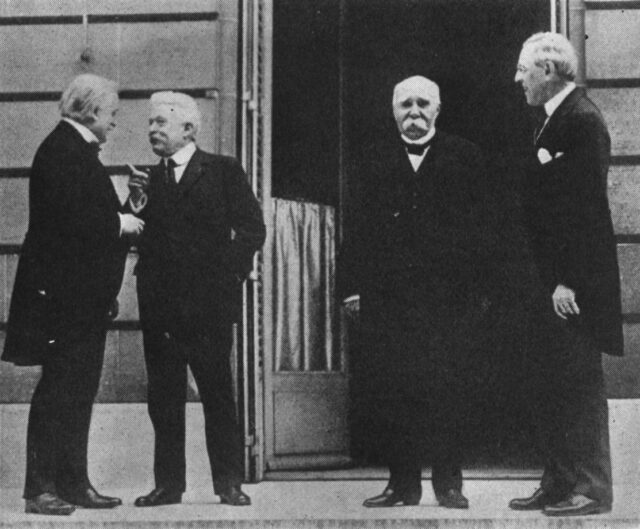
At the end of WW1, the Americans and British went to Paris to decide on the fate of Germany and the future of the world. The Treaty of Versailles and the conference in Paris in 1919 set up the Interwar period and made World War 2 inevitable. Here we begin our short series on the Treaty of Versailles, kicking off our Interwar series. Civilizations is Back!
World War Civ 51: The Debrief

Two and a half years. 50 episodes. 100+ hours. When we set out to cover World War I back in September 2022, after our Scramble for Africa and our Civilizations (1400-1900) series, we had a plan for how we were going to go about it. In this debrief, Dave and I talk about what we were able to do better and worse by using this format compared to when Dave taught it (and I studied it) in high school and when we both studied it in university. As well as some reflections on what stood out from the history, the idea of WWI as an inflection point in history, and previewing our next three series: Interwar, World War II, and Decolonization.
Was World War I an Immense Anglo-American Conspiracy?
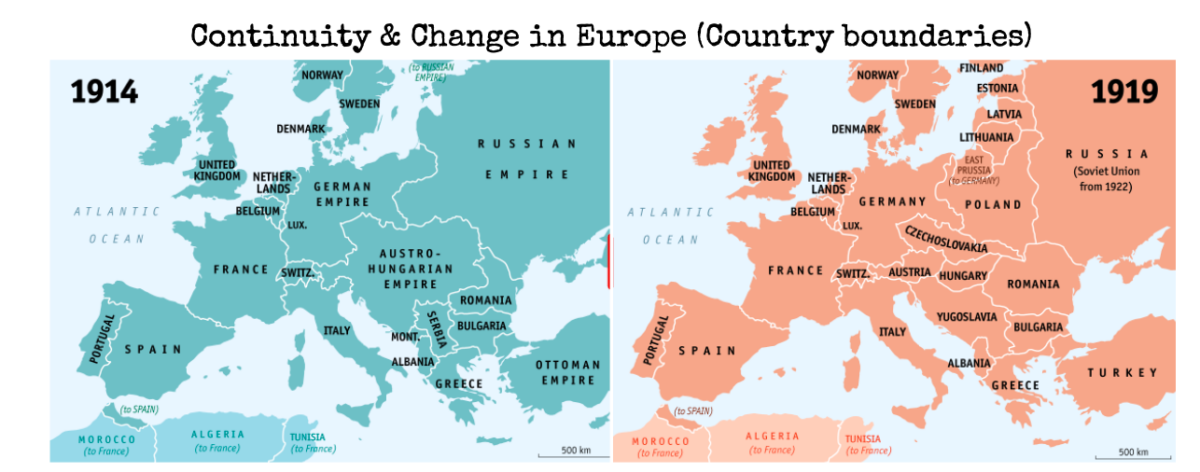
We have come to the end of our study of World War I, gone over its causes, events, and costs in great detail. Now it’s time for a plot twist: the idea that the whole war was conceived and extended by a conspiratorial group of race patriots at the heart of the Anglo-American elite. We use Carroll Quigley’s book, the Anglo-American Establishment; Docherty and McGregor’s two books, Hidden History and Prolonging the Agony; and James Cafferky’s Lord Milner’s Second War, to present the case that the war was orchestrated by this Secret Elite to destroy the possibility of a German industrial rival possibly allied with Russia… perhaps this elite still exists… and still conspires along the same lines one hundred years later!
Partyism
An analytical error
When America sends the National Endowment for Democracy, the National Democratic Institute, and the International Republican Institute abroad, they are teaching the rest of the world the best political system invented so far, the worst one except for all the others as Churchill said, the system at the end of history as Fukuyama declared, the system that peoples around the globe fought and bled for, multiparty democracy.
Ideally, two-party democracy, so that people have a choice, but not too much choice.
Never mind that rather undemocratic means can be used to keep other parties out of the game; or that begging rich people for campaign money is the principal activity of American politicians; or that politicians do not do what they promised; or that decisions like investment, pricing, money supply, energy and military planning are either jointly private-public or entirely private matters outside of democratic control.
There’s a jest in the East that in the Chinese system you can change the policy but not the party, while in America you can change the party but not policy.
This is another thing the genocide should have taught us. After an American election season where both parties promised enthusiastically to continue the genocide of Palestinians, while in other Western countries parties compete to show the most fealty to the genocidal state, Western electorates have never been more helpless. Given the opportunity to change the party, they’ll change the party. But it makes no difference.
In the Global South, elections often matter. They’re high stakes affairs for several reasons. First, a real alternative might get into office and engage in actual wealth redistribution, land reform, or measures towards economic sovereignty. Second, if voters dare to vote for such an alternative the country will face US-backed coups, sanctions, and sabotage.
In the West, though, democracies are more mature. The most important policies won’t be changed through something as capricious as the public will. Americans who want Medicare For All, for their police to kill fewer of them each year, or simply an end to the genocide, can’t vote those in. The notion of asking the public to vote on regime change, covert wars, or overt ones, in Eastern Europe or West Asia – is even more ridiculous.
Analytical energy is being wasted on what the Biden administration is trying to do before Trump comes in, or how Trump might want to take on the deep state but for now he has to bide his time, or in Canada how hapless the liberal leader is and how prime ministerial the conservative candidate looked in the latest podcast video with an immensely popular, totally conventional pro-Israel commentator who is of course portrayed as an outsider and maverick.
In the West, these frothy shows known as elections are of tremendous value to the corporate interests and owners of private fortunes that decide whether the masses of the Global South will have peace or genocide, whether the masses of the Global North will have public health care and education or crumbling infrastructure. To name a few of these benefits:
-
Elections channel nearly all the mass energy for change into the false hope of change, stabilizing corporate rule and hiding it behind the scenes.
-
The media / social media spectacle employs otherwise idle journalists, professionals, and political operators, while circulating and laundering billions of dollars.
-
It’s a huge distraction and diversion of attention, pre-empting the possibility of large numbers of people working – or even strategizing about what it would actually take – to change policies.
The belief that established Western political parties offer meaningful differences in policy from one another has taken different forms.
Advocates of lesser-evilism admit that the differences between what parties do in power are actually very small, but argue that these small differences matter and so it’s important to go and vote for the lesser evil.
Advocates of strategic voting argue that you need not like a party or candidate but that you should vote for them anyway to fulfill some broader strategic objective, which is usually blocking the party you don’t like from coming to power.
I propose subsuming these variants and coining the word, partyism, for any form of the belief that Western political parties are meaningfully different on important policy matters. Partyism can never be disproven, since we could never know what the loser would have done had the winner not won. We could only ever speculate. But circumstantial evidence against partyism is presented every time a party betrays their electoral promises – something that does happen from time to time, though notably, neither Harris nor Trump were willing even to make a promise to end the genocide that they could later renege on.
Instead of falling into the partyist trap, look at a country’s billionaires, the statements by the chambers of commerce, the policies advocated for the country in America’s business newspapers (regardless of which country you’re in). Political scientists Martin Gilens and Benjamin Page have done a big study twenty years ago and another ten years ago to show that politicians listen to the rich, not to you.
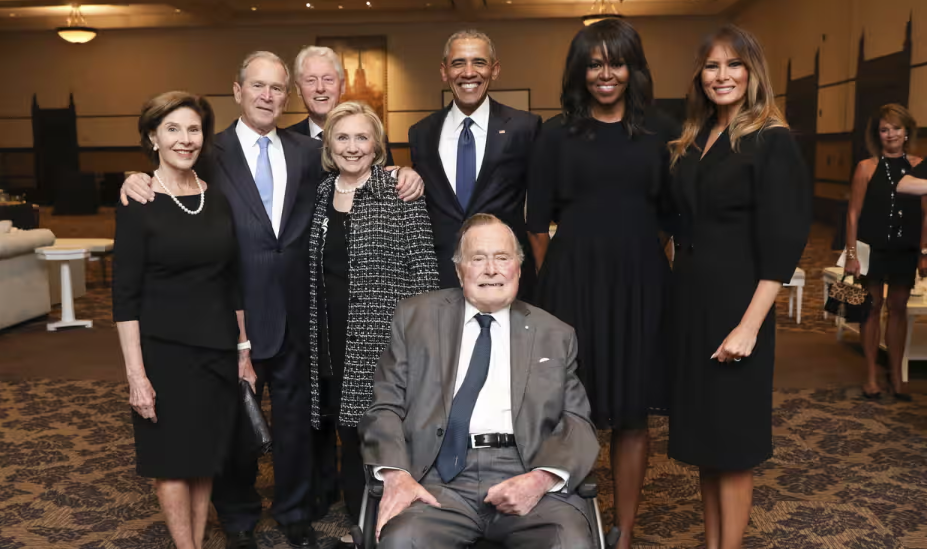
You know who’s not in this picture? You.
World War Civ 49: How the war changed how things work
From the transformation of all the technologies of war – railways, air travel, wireless, tanks, poison gas – to the changes to the institutions of daily life (notably health care) World War I made many changes into the world we recognize today. Also – my apologies – in the second half, my recurrent audio issue came up and I was recording with my webcam instead of my mic!
The illusions of 2024
In his novel, The Thorn and the Carnation, Yahya Sinwar’s character Ibrahim challenged his cousin Mahmoud, who said the Palestinians had to surrender lest they be wiped out entirely.
In his novel, The Thorn and the Carnation, Yahya Sinwar’s character Ibrahim challenged his cousin Mahmoud, who said the Palestinians had to surrender lest they be wiped out entirely. Ibrahim said no, they cannot wipe us out, because they are governed by many equations. Mahmoud’s defeatism was always on the wrong track because the Israelis don’t accept surrender. After 2024 it seems Ibrahim was also mistaken about the equations.
Israelis were probably surprised as everyone else that they have been permitted to run this open-ended genocide. In the past, they’ve behaved as if constrained by things that didn’t turn out to constrain them in 2024. Let’s make a list so we can go into 2025 without illusions about the world we live in.
We can divide our list into non-constraints and partial constraints that may just not have reached an effective level.
Non-constraints first. Israelis are not constrained by any of the following:
Israeli society. The Western conscience. Israeli society began this year irredeemably genocidal and racist and has descended into worse condition every single day. They are actively demonstrating in favor of starvation and masses of them watch footage of Palestinians dying for pleasure. Western elites support all this with equal racist enthusiasm.
Hostage families. The families of the Israeli captives that actually want a prisoner exchange have been crushed by the weight of Israeli society and have no leverage over their government. There are also families of Israeli captives that campaign against a prisoner exchange. Israel’s plan is to kill all the hostages in order to continue the genocide. They will not be stopped by the captives’ families.
The American Jewish Diaspora. In 2024, there were some high-profile protests by Jewish Americans against what Israel is doing. But the majority of the Jewish diaspora supports Israel including while Israel is conducting genocide. https://www.ajc.org/news/survey2024. Predictions made by, e.g., Norman Finkelstein in his 2011 book A Farewell to Israel, that there would be a split between Israel and the Jewish diaspora, have proven incorrect.
Widespread information and Western public opinion. I’m old enough to remember when millions marched against the forthcoming invasion of Iraq in February 2003. The New York Times labeled us the “second superpower”, global public opinion. I had the feeling at the time that it was some kind of taunt, but was naive enough at the time to believe that the cost of the war would be too high and that if the US had wanted to invade and occupy Iraq they would have done it 12 years before in 1991. It seems I’ve been fooled by this type of delay many times now (believing for example that if HTS couldn’t take Syria in 2019 they couldn’t do it in 2024; or that if Israel couldn’t succeed in Lebanon in 2006 that they wouldn’t try in 2024…) In any case 2024 has shown yet again that global public opinion is no superpower.
American voting. The American electoral system worked to effectively exclude any third anti-genocide party and ensured that all candidates of both parties were genocidal. Pro-genocide forces boast openly about how anti-genocide voters have no option and how America will support Israel no matter what. The Israeli leader gets more standing ovations than any American could dream of. There will be no voting out the genociders.
American activism. Professional pro-genocide organizations have devoted enormous resources over decades to making anti-genocide organizing on campuses and elsewhere exceptionally difficult. The student encampments that brought hope of a new movement were dismantled by immense police violence in 2024. The election revealed the worthlessness of trying to pressure politicians through protest or petition. America’s genocide is well insulated from the mechanisms of civic action and activism.
The Arab street. It was believed, out of fear that the masses might revolt and destabilize them, that Arab regimes like Egypt, Jordan, Saudi Arabia and others wouldn’t dare support Israel while Israel was genociding the Palestinians. There were some demonstrations in Jordan at various times in 2023 and 2024 in solidarity, but these were crushed and their organizers jailed. In Egypt, the people live in fear of the regime. Israel might just try to overthrow Egypt in 2025, to try to displace the Palestinians into the Sinai desert for Israel to kill there in an Israeli-reoccupied Sinai peninsula – or try the equivalent in the West Bank, removing a supportive regime in favor of direct occupation and ethnic cleansing. Even the Palestinian Authority has continued faithfully with its security cooperation with Israel, killing West Bank resistance members even as their fellow Palestinians are being genocided. The only Arab government overthrown with great fanfare in 2024 was Syria – the last neighbour that opposed Israel. In 2024, the Arab street has done more for Israel than against it.
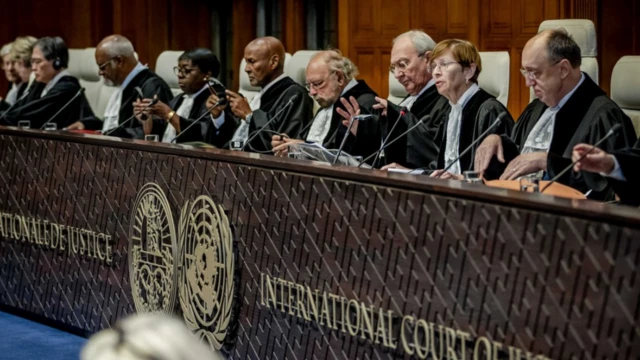
International law. In 2024 the ICC issued arrest warrants for Netanyahu and Gallant and the ICJ declared the occupation illegal. Having ordered provisional measures and been ignored, the ICJ promised to take years to rule on whether Israel is committing genocide and they have fulfilled their promise to do nothing legally for a long time. The Security Council issued a ceasefire resolution that wasn’t even vetoed by the US. All were ignored. International law has been exposed as an illusion.
International diplomacy and BRICS. A couple of countries have cut ties with Israel. Most – including big powers who could have made a big difference like China and Russia – continue to interact with Israel as if it’s not committing genocide (Turkey also could have made a difference and it did – helping Israel and destroying Syria). On the official level, the countries of the world have taken the position either that genocide is not a big deal or that it’s actually fine. It turns out that if you’re Israel, committing genocide won’t make you a pariah state – business will continue as usual.
None of the above have had any effect in halting the genocide.
What about partial constraints? The following probably still operate but, so far, below the threshold needed to stop genocide.
The balance of terror. At the beginning of 2024, Iran’s president Raisi, Hamas’s leaders Ismail Haniyeh and Yahya Sinwar, Hezbollah’s General Secretary Hassan Nasrallah and the organization’s senior commanders all were alive. Israel killed them all. Even though they failed to occupy Lebanon through war, the Israelis have crept forward during the ceasefire and made a separate peace with Lebanon. They removed Assad, occupied Syria and destroyed the state and its arsenal, and probably used a nuclear weapon on an undefended target in Tartus. Iran still exists and Yemen continues to fight Israel but both are threatened with annihilation in 2025. If there was a balance of terror and deterrence going into 2024, it has been broken.
Military casualties. In previous Israeli wars on Gaza and Lebanon, Israel stopped well short of the casualty numbers they have already suffered in 2023-4. In 2024 they successfully added the religious orthodox to the recruiting pool and censored their actual casualty numbers effectively while likely suffering tens of thousands of wounded and thousands killed. Israel was believed to be a society that would disintegrate if military casualties reached a certain threshold. Perhaps Israeli society is in fact disintegrating, or perhaps the threshold is higher than previously believed. At the level that the Palestinian resistance can inflict them, military casualties have not so far been sufficient to stop Israel’s genocide.
Civilian casualties. Before 2024, many observers believed that Israel would balk at attacking Lebanon because of Hizbollah’s capacity to hit targets in Israel with rockets, drones, and missiles (as promised in a famous speech by Nasrallah in 2012). In 2024 Israel attacked Lebanon, slaughtering Lebanon’s civilians, destroying infrastructure, and absorbing the standoff attacks by Hizbollah. Israel sought a ceasefire after taking hundreds of military casualties in a short period of time, but continued genocide every single day of 2024, including days it was being bombed by Palestinian Resistance rockets from Gaza, by Hizbollah, by Ansrarallah in Yemen, by Iraqi resistance groups, and the two nights that it was bombed by Iran.
Economic attrition. Ansarallah in Yemen successfully imposed a major set of costs on Israel through its blockade of ships bound from Israel through the Red Sea. Hundreds of thousands of reservists were taken out of the work force to go and kill children in Gaza. The tourism industry died. Major investors have withdrawn. But the US will provide any amount of funds needed to keep Israel going and to keep the bombs falling on the children. Arab neighbours have created a land bridge so that Israelis can keep eating while they starve the Palestinians. Turkey keeps providing fuel while Israel plunges the Palestinians into darkness and cold. International shipping has assumed the extra costs of traveling around Africa to avoid the Red Sea blockade. Israel is suffering economically, but that suffering has not made Israel reconsider its genocide.
What are we left with? Palestinian and allied armed resistance, legal under international law. The potential of unarmed resistance of the kind that Palestine Action is engaged in. The accumulation of pressures that haven’t yet reached the required level – military actions, economic pressure, and activism at a higher threshold.
Since nothing has worked yet and the genocide goes on, it is impossible to say how well anything is working. Whenever the genocide does end, some of the things that didn’t yet get it done in 2024 will have played a role.
What’s certain is that against this enemy there’s no room for wasted effort.
May 2025 be a year of no more illusions.