The Iran Insurgency

A review of the available evidence

Iran, the Sanctioned Economy

Before a military analysis of the demonstrations of January 1-15, let’s look at Iran’s economic problem and the origin of the December 28 demonstrations.

Iran faces a unique set of problems. Surrounded by US military bases, facing both the US and Israel that have stated that they want not solely its surrender but its destruction and partition, its scientists and military personnel facing assassination wherever they go in the world, its economy under one of the most severe sanctions regimes in the world with its oil and ships periodically stolen on the high seas. All the same, the people still need jobs and incomes and development.

Some Iran watchers fantasize that if Iran could convince Israel and the US of its peaceful intentions, that the West would lift the sanctions and Iran could have a normal economic life. Iranian American Virginia Tech professor Djavad Salehi-Isfahani expressed such a fantasy in a January 9 article, “The Economic Roots of Iran’s Protests”. The economist concludes: “Iran’s government cannot credibly promise to stabilize exchange rates or tame inflation any time soon. The one move that could offer relatively quick economic relief – and to which the government could credibly commit – is a cessation of hostilities with Israel and the US.” Leaving aside the moral bankruptcy of normalizing with genocidal Israel as a means of sanctions relief, the absurdity of thinking that a unilateral cessation of hostilities from the Iranian side would be met with anything but increased violence from the US and Israel should be apparent to anyone that has been awake for any amount of time in the past several decades (never mind since 2023). Salehi-Isfahani’s prescriptions – predictably for a mainstream US-based economist – are for “free-market” remedies: basically, letting the Iranian currency float. Like all neoliberal cures, this remedy would be fatal for the patient (which could be why the US prescribes it to its enemies). Netherlands-based economist Kayhan Valadbaygi argues that Iran has built a “welfare-warfare state”, but the problem is that it has done so “without a firm economic basis to maintain it.”

Many Iranian policy makers were educated in these US schools of economics and believe that if they can play by Western rules they can get sanctions lifted and enter a free market utopia. But as Nahid Poresa told Max Blumenthal of the Grayzone in an interview on January 22, a more realistic approach would be to accept the sanctions as a permanent fact of life instead of having false hope that they would be lifted, and commit fully to a “look east” economic policy with Russian and Chinese (also sanctioned) partners. To, instead of accepting the de facto dollarization of the Iranian economy, use the local currency to run the national economy and limit foreign exchange through capital controls. Iran already does many of these things: its multiple-exchange rate system is an evolution based on the sanctions situation. Industries have built a certain resilience in spite of – or perhaps because of – the sanctions regime which effectively shielded local industries from exposure to competitors. There is a barter trade with neighbours. There are subsidies for gasoline and bread. The Pezeshkian government’s challenge to these latter policies and the threat to cut some of these subsidies and to unify the exchange rate system – these are what led to the collapse of the currency and to the December 28th protests. Western-based economists looking at Iran argue the exact opposite: that the neoliberal reforms are the one good thing the Iranian government wants to do, and that the heterodox adaptations that have enabled people to survive the sanctions are deviations from orthodoxy that need to be removed. Like Israel and the US, these economists are trying to kill Iran.

Why would Iranian economic and political leaders go along with this? Financialization is the fashion and Iran’s banking system is growing more complex with a greater role for private banking and therefore opportunities for truly magical profits, as one Tasnim article from November argues (I read an auto-translation). A harsher assessment is provided by sociologist Yousef Abazari, who laments the naivete of Iran’s economic policy makers who don’t understand that economics isn’t science, that there are very different schools of thought in the field, and that the economics “experts” at the helm of Iran’s economy have the same fatal prescriptions that the Americans want – austerity, misery and oligarchy. Abazari asks sardonically, what’s the point of resisting America if Iran implements the same economic policies on its people? Iran has been attacked by many Western weapons, but among the worst weapons seems to be giving a Western economics education to many of Iran’s leaders.

Still, the most orthodox free-marketeers will turn to things like rationing, planning, barter, and capital controls as a matter of survival. Iran’s policies of solidarity with others in similar situations like Venezuela expose people to a diversity of methods for dealing with economic warfare. What most free-market oriented Iranian officials and Western Iran watchers agree on is that neoliberal austerity is the right direction, which is why it doesn’t come up as a subject of debate. It is the wrong direction.

Iran also needs a tech stack like China has to replace Instagram, WhatsApp, etc. so that people aren’t using US tech companies obsessed with their overthrow and assassination to communicate with one another. Iran has several allies that aren’t bent on its destruction and is full of educated scientists and engineers who make things work and can take the reins away from the Chicago boys. Iran could get out of this one yet.

The economic and university protests

On December 28, facing the end of the multiple exchange-rate system that immediately tanked the value of the local currency, economically motivated protests began against the loss of their purchasing power and a proposed austerity budget. There were more protests the following day and on December 30th, including at universities, where students also protested for their right to protest.

The Iranian president and other officials stated that they would change some of the proposed policies and look at better solutions to the economic problems.

That is the end of the economics discussion and of the economics protest. Beginning January 1, the nature of the protests changed.

January 1-15: A review of NYT and WaPo coverage

I reviewed the main news articles in the New York Times and the Washington Post on the protests from December 30 through to January 15. I was looking in particular at events described and the sourcing of the claims. NYT and WaPo are outlets that are against the Iranian government and in favor of US and Israeli policy towards Iran (regime change, destruction of the state, partition, etc.) I also reviewed all of the videos and comments posted by the pro-Iran aggregator @AryJeay on twitter, “Fotros Resistance” on telegram. I took screenshots of each important video and saved important text from the articles as a slight hedge against the impermanence of the internet.

There is little different between NYT and WaPo coverage in terms of politics, depth, or sourcing. None seem to have reporters present in Iran and bylines are from Beirut, Istanbul, or Jerusalem. Sourcing is often to “according to videos posted on social media”, which is a cheap way of covering world events. Both NYT and WaPo also quoted (if somewhat mockingly) Iranian news outlets such as Tasnim and Fars. There are also interviews with pseudonymous people who tell their ordinary stories of what they’ve seen, with last names not provided. Finally, for the all-important casualty numbers, US- and German-based human rights organizations are cited. The most frequently cited is HRANA, the Human Rights Activists News Agency. Alan MacLeod of MintPress news reported that the Fairfax, Virginia based organization received $900,000 in funding from the United States’s National Endowment for Democracy in 2024 alone. Also frequently cited is the Abdorrahman Boroumand Center for Human Rights in Iran (ABCHRI), also funded by NED, and the Center for Human Rights in Iran, also funded by NED.

On January 1, the NYT cited “footage circulating on social media” to describe protesters pulling a gate open in Fasa, chanting “death to the dictator” in Hamedan, closing their stores in Tehran chanting “don’t be afraid, we’re all together”. NYT supplemented their “videos showed” with an interview with “Yaser”, who saw protesting shopkeepers first hand at a bazaar in Tehran. On January 2, NYT stated that a 21-year old Basij militia member had been killed – the first casualty, on the government side, which the NYT sourced to Iranian government news agency Tasnim. On January 3, the NYT led with Trump’s Truth Social post: “If Iran violently kills peaceful protesters, which is their custom, the United States of America will come to their rescue. We are locked and loaded and ready to go.” NYT also cited Israel’s minister of innovation, Gila Gamliel, who posted to X, “Israel is with you, and we support you in every way possible.”

On January 4-5, coverage was dominated by the US raid on Venezuela and kidnapping of its president and first lady.

On January 6, the NYT reported that things had calmed down, and was reproducing Iranian news outlets describing the organization and violence of the protests of the previous day, mentioning “videos on social media” showing protesters firing assault rifles into the air while chanting “Death to Khamenei”. “But in Tehran, with the exception of the bazaar downtown, the university campus, and a few working-class neighborhoods, the city seemed normal, residents said in interviews and videos on social media suggested. Ski resorts north of Tehran were packed with affluent day trippers.”

But Reza Pahlavi made a call and an op-ed on January 6, calling people to overthrow the regime and calling on the US to intervene.

The peak days of the campaign were January 8 and 9, covered in the NYT on the 9th and 10th. On the 9th, the NYT was estimating 27-36 had been killed up to the 8th; also, citing NetBlocks, NYT noted that the internet in Iran had been shut down on the 8th. Notably, NYT cites no organization, no manifesto, no political demands, no slogans, no placards. Here is their description of the protests on the January 8th:

In telephone interviews, more than a dozen witnesses said that they saw large crowds forming on Thursday night in neighborhoods across Tehran, the capital, and in cities around Iran, including Mashhad, Bushehr, Shiraz and Isfahan. They said the crowds were diverse, with men and women, young and old. The people interviewed inside Iran asked that their names not be published out of fear of retribution.

One resident of Tehran said that the crowds were chanting, ‘’Death to Khamenei,’‘ referring to Iran’s supreme leader, Ayatollah Ali Khamenei, and ‘’freedom, freedom.’‘ The chants could be heard from several blocks away in the affluent neighborhood of Shahrak Gharb in Tehran, which had until now sat out the protests.

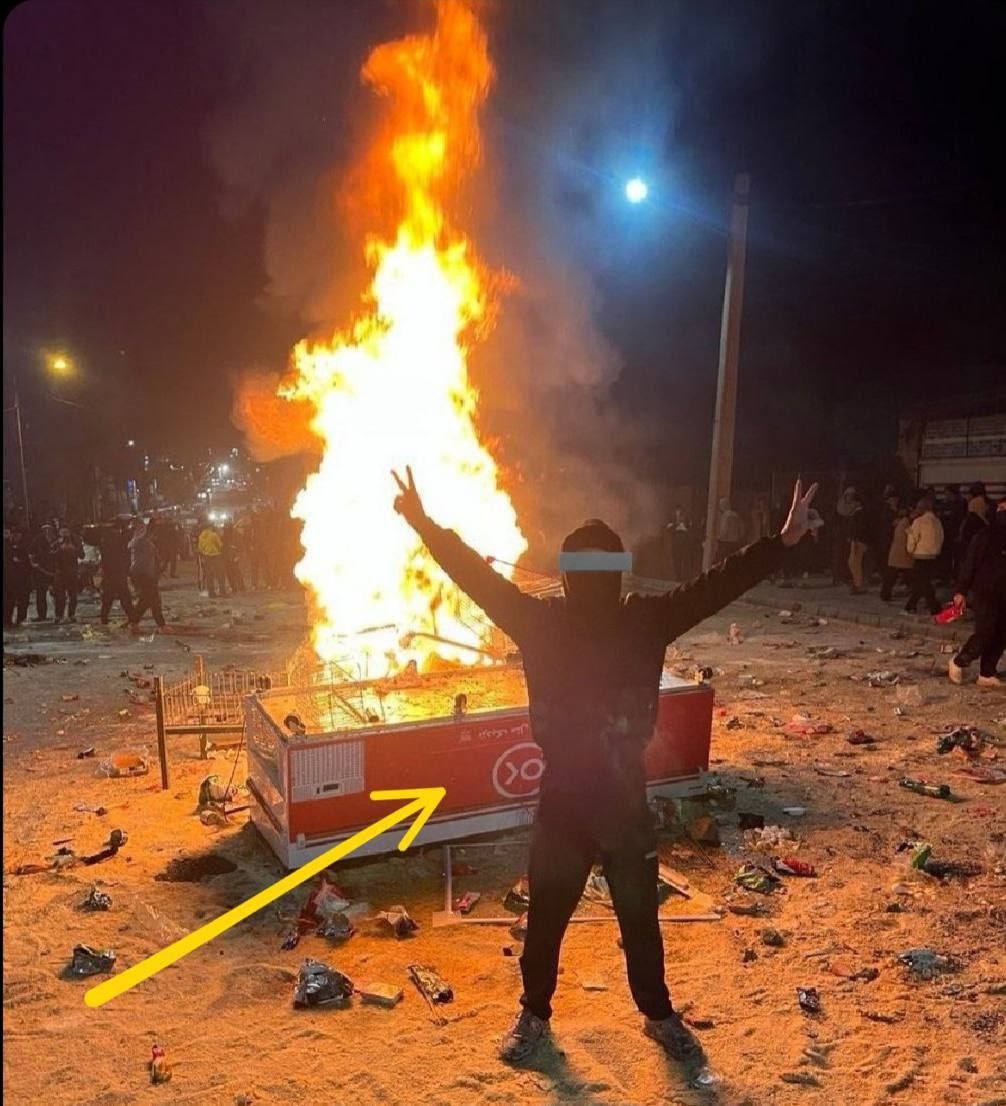
Videos filmed on Thursday night showed government buildings on fire across the country, including in Tehran, as protests grew. While the protests were mostly peaceful early in the evening, violence broke out later in the night in Tehran, with demonstrators setting fire to cars, buildings and items in the street. A video verified by The New York Times shows fires in the streets of Kaj Square in the capital, with thousands of protesters flooding the area.

In Karaj, a suburb west of Tehran, a video verified by The Times showed protesters fleeing after gunshots were fired, though it is unclear from the videos whether it was security forces firing.

On January 10, citing HRANA and others, NYT said deaths were in the “dozens” (up to January 9th).

After January 11, NYT depends increasingly on “Videos shared” as their primary source. On the 11th, notably, the highest estimate printed for numbers killed was 65 protesters. The Washington Post ran an op-ed by Reza Pahlavi stating that he was ready for a transition.

As the protests died down, the casualty numbers leapt. On January 12, WaPo cited a HRANA figure of 490 protesters killed. They backed this up with “A senior Western official who was briefed on the matter”, who “said hundreds were killed”. The official “spoke on the condition of anonymity because he was not authorized to brief the media” (!) On January 14, WaPo came back with a HRANA figure of 2,000 killed, an anonymous source speaking from the suburbs calling it a “full-on war” but who couldn’t see properly because she “didn’t have my glasses or contact lenses”. On January 15, WaPo came back citing Bari Weiss’s CBS in an editorial by Marc Thiessen, “There is no US downside to striking the Iranian regime”, with new casualty figures of 12,000 and potentially as many as 20,000. Diminutive German-Iranian lobbyist for Reza Pahlavi, Amir Parasta, gave a figure of 30,304. Parasta also tweeted offering Iran’s assets to Turkey, and of course praising Reza Pahlavi.

January 1-15: A review of the videos

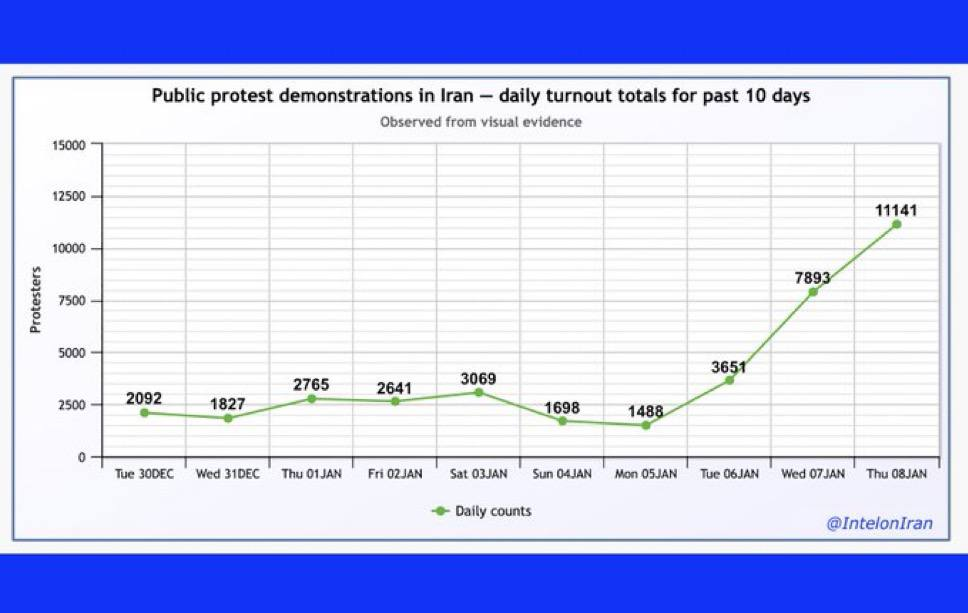
In order to fill out their pseudonymous interviews, NYT and WaPo freely cited Iranian news agencies. In the same period, pseudonymous pro-Iran social media account AryJeay / Fotros Resistance aggregated a comprehensive set of videos from Iranian news, cellphones, and CCTV footage. One aggregator, IntelonIran, estimated a peak of 11,000 demonstrators on the streets on the night of January 8, before the internet was shut down. According to this source, 11,000 was the highest number of people on the streets. The economic protests were long ended and the violent riots had been ongoing for a week, so it is safe to assume all 11,000 of these were people working for regime change.

The five ways of attack

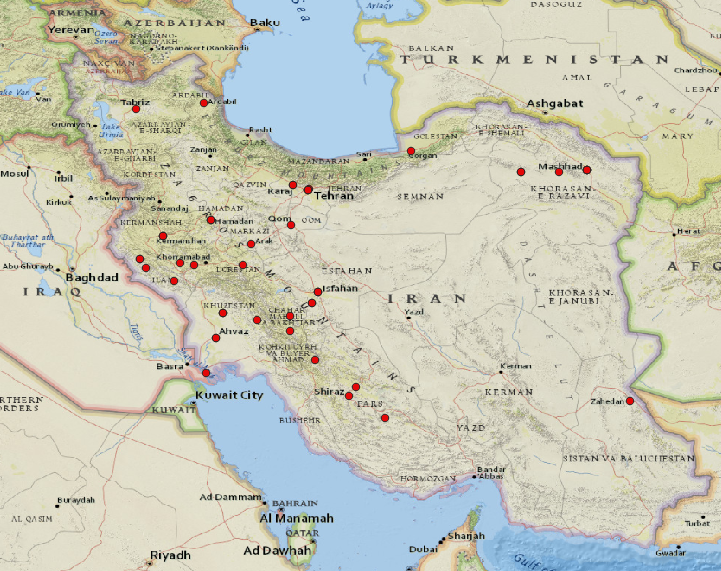
Rather than repeat a chronology, I will compile the five different kinds of attacks that appear in these videos. I made a rough map of the locations of the attacks as well.

  1. The Jump. A crowd jumps a single bystander or security, beats him and/or burns his vehicle

January 1, location unspecified, rioters throw rocks at the home and burn the car.

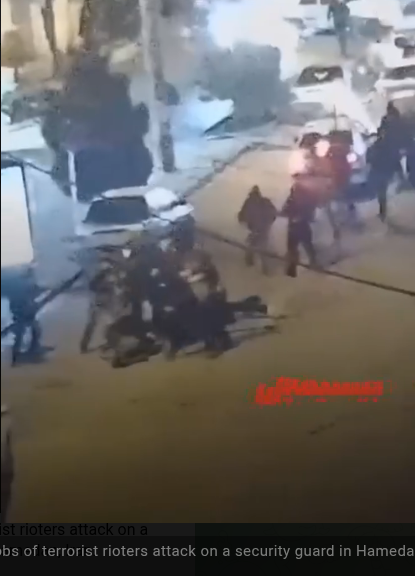
Hamedan, January 1, rioters jump a security guard and beat him down (CCTV).

January 2, location unspecified. Shop owner, Ali Azizi, killed by 6 rioters.

January 2, Qom. Rioter sets a shop on fire.

January 4. Hamedan. Rioters jump a police officer and beat him.

January 5, Isfahan. 2 rioters jump a police officer and beat him with an iron bar. Cellphone footage.

January 7. Colonel Shahin Dehghan, Malard County near Tehran, stabbed to death.

January 7, Kermahshah. Rioters kick a man on the ground with his pants pulled down: this is a standard procedure, pull their pants down and then beat and kick them on the ground.

January 8, location unspecified, rioters jump a man and kick and beat him.

January 8, Ahvaz City. CCTV footage of a group of rioters overpowering an elderly man, beating him, and burning his car.

January 8, Noorabad County, Lorestan. Cellphone footage of rioters destroying a car.

January 9, Gohardasht, Karaj. Group of rioters jump a man and beat him. Cellphone footage.

January 9, Tehran. CCTV footage of armed rioters attacking a police officer.

  1. The attack on first responders. Rioters attack ambulances, fire, buses or emergency response vehicles

January 2, Tehran. Rioters attack an ambulance.

Between January 6-9, rioters burned several Red Crescent centers throughout Iran.

January 9, Mashhad. An Iranian firefighter burned to death.

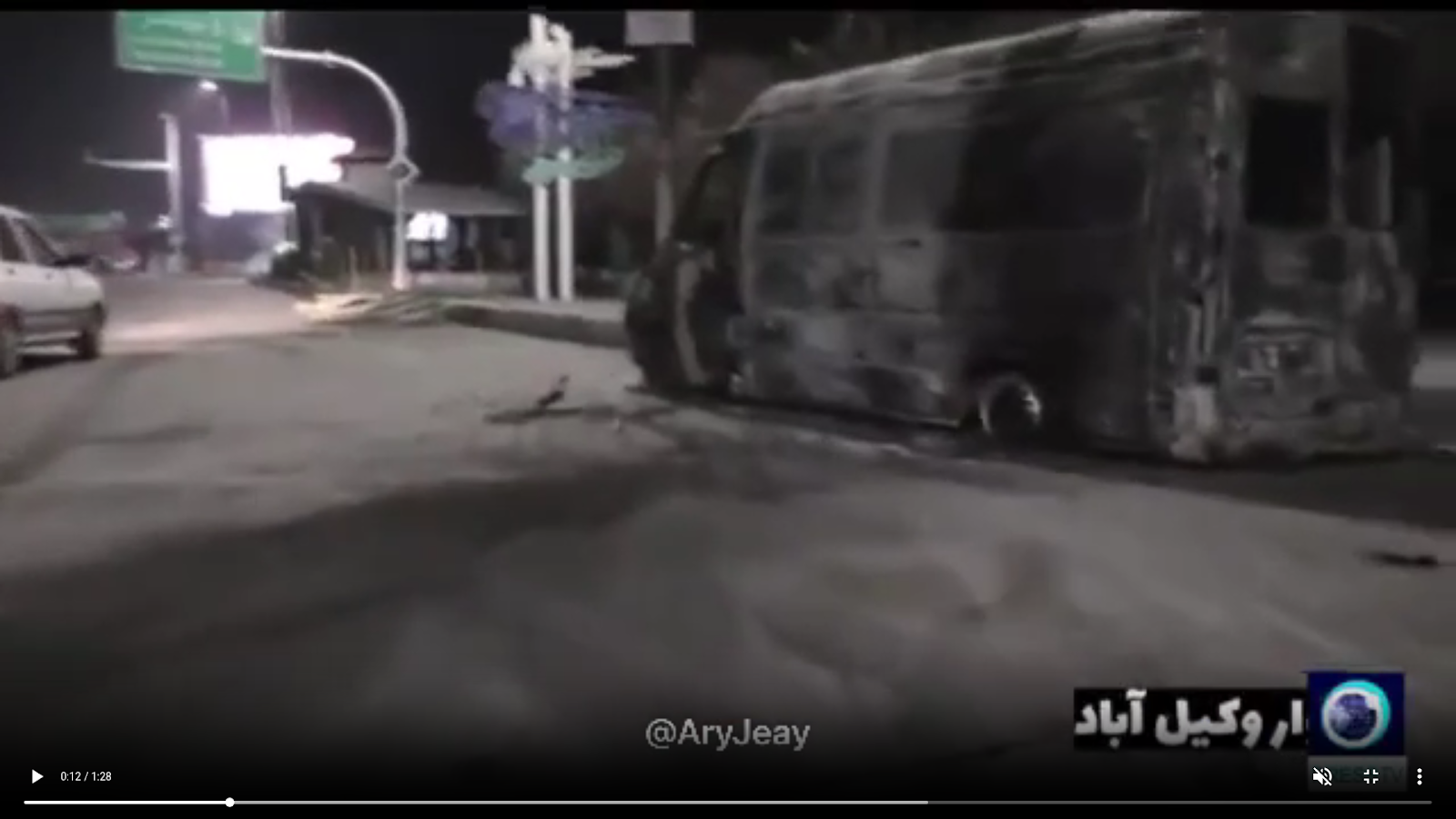
January 9, Mobarakeh, Isfahan. Photo of a torched fire truck.

January 9: authorities report 15 buses burned on January 8-9, 600 signs and railings, and the Metro stormed in Mashhad.

January 9: authorities report 50 fire trucks nationwide – a fire station in Mashhad, 15 vehicle in Isfahan, 5 in Ahvaz, a fire station in Shiraz, and the Red Crescent Building in Izeh, all attacked over Jan 8-9.

January 10, rioters attack and burn a bus in Isfahan. CCTV footage.

January 10. Rioters burn several buses in Mashhad.

  1. Gun battles. A street gun battle between rioters and law enforcement

Kudasht, December 31. 13 officers injured, 20 armed rioters arrested, 1 police officer burned, one Basiji (22 years old Amir Hesam Khodayari-Fard) killed.

January 3, location unspecified. Cell phone footage of a rioter using a flamethrower against a police motorcycle convoy.

January 5. Yasuj. Armed rioter shoots at bypassers and security.

January 5. Koushk. Armed rioters attack a pro-government march.

January 6. Tehran. Clash between police and rioters in front of Sina hospital. Both sides claim the other threw tear gas on the street.

January 7, Charmahal, Bakhtiari. Close up footage of a masked rioter with a keffiyah covering his face and baseball cap shouting Marg Bar Khamenei and shooting off-frame with a shotgun.

January 8, location unspecified. Shooters ambush a police motorcycle convoy, shooting them as they drive by.

January 8, Kermanshah. Nightvision camera / CCTV captures shooters shooting (but not what they’re shooting).

January 8, Hamedan. Rioters kill a police major, Mohammed Javed Bakshian and 6 civilians. A news item on the aftermath shows destroyed buildings and some CCTV footage of the riots.

January 9, Tabarsi Boulevard, Mashhad. Rioting leads to deaths, including security forces’ Mostafa Abufazeli.

January 9, 8:50pm. Shushtar videos of rifle man and shotgun man, and of a female rioter with a machete.

January 10. Police claim to have killed 1 rioter in a firefight in Mashhad.

January 10. Police claim to have killed 1 and arrested 6 rioters in Ilam.

  1. Attacks on buildings or on people. Rioters shoot or throw Molotov Cocktails at public or private buildings or at security personnel or other people

Arak, December 31 night time, cellphone video.

January 3, Zahedan. Masked rioters loot a grocery store. CCTV footage.

January 6. Abdanan. Protesters loot a supermarket, Ofogh Kourosh, dump all the rice in the street, and take selfies (does this remind you of anything?)

January 7. Location unspecified. Rioters burn down a religious bookstore.

January 8, burning of a Basij seminary. Location unspecified.

January 8, Alireza, 17, shot and killed.

January 8, 2-year old Bahareh, shot in Shahid Beheshti street in Nishapur, died January 15.

January 8, 3-year old Melina in Kermanshah, going to a pharmacy with her parents shot by armed rioters.

January 8, location unspecified. CCTV footage of rioters vandalizing a bank.

January 8, rioters burn the shrine of Sabzeqaba, CCTV footage from various cameras.

January 8, rioters burn the Shahid Montazeri mosque in Shushtar.

January 8, 15th Khordad Square in Shushtar, rioters attack a passerby on a truck.

January 8, Ardebil. Phone video of armed masked rioters attacking a grocery store and a Sepah bank.

January 8, Ilam Province, village of Lumar. Rioters attack the Keshavarzi bank. Cellphone footage.

January 9, Mahdieh Mosque in Karaj. Rioters burn the mosque and Qurans in the mosque. Whose operating procedure is that?

January 9, Sabzevar, Khorasan. CCTV footage shows a Molotov attack on a civilian house.

January 9, Mobarakeh, Isfahan. Torched a grocery store, totally burned.

January 9, Sabzevar, Khorasan. CCTV of children running from a Molotov attack.

January 9, Gorgan, Golestan. Several shops and other areas torched.

January 9, location unspecified. Rioter throwing a Molotov at a civilian home.

  1. Attacks on state symbols. Rioters attack a governor’s office or police station.

Fasa City governor’s office December 31. Cellphone video.

Azna, Lorestan, January 1. Several police vehicles set on fire, 3 killed, 7 injured.

January 1, 9am. Lordegan Governor’s office. Masked rioters throw stones and shoot at police.

January 2, Police Station 11 Marvdasht (Fars Province), rioters try to seize the station and are scattered when police fire into the air.

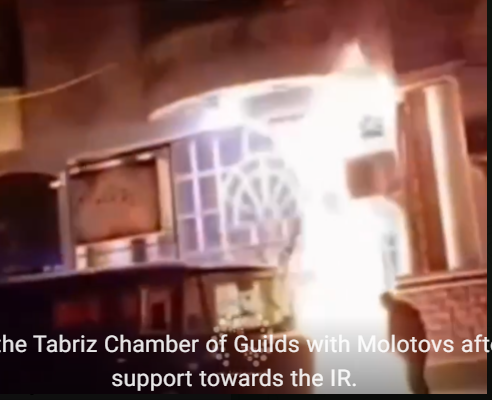
January 3, Tabriz. Rioter uses Molotovs to try to set the Tabriz Chamber of Builds building on fire. Cellphone footage.

January 4. Malekshahi, Ilam Province. Rioters attempt to storm a Basij outpost and are scattered when police fire into the air.

January 8, 200 rioters with molotov cocktails attack the residence of Salam al-Zawawi, the Palestinian Ambassador. Who would want to attack the Palestinian Ambassador in particular?

January 8, attack on police station 126, Tehranpars. Police and Basij were killed.

No politics, organized on the internet

AryJeay commented: “In this year’s riots, we see no prior statements, organized gatherings, formal protests, or specific pre-announced locations. Suddenly, a group pours into the streets and riots in specific locations that are close to sensitive, infrastructural, vital, and security-military sites. They then steer the riot toward these locations in order to gain access to firearms and ammunition.”

Rioters always dressed in black and were masked. They moved around at night with confidence and fluidly knew how to burn motorcycles, take the rods off of street signs, wield machetes and swords, and use shotguns and rifles.

In confessions shown on Iranian TV, arrested rioters say they were recruited based on their online behavior and what kinds of posts they “liked”, then messaged and organized and trained via Telegram and WhatsApp, paid specific rates based on what kinds of attacks they could prove they did (using video evidence), and some were ultimately told they were of no value and shot by their handlers. “They had precise intelligence of coordination with separatists and terrorists on the part of US and Israel. “They even planned for each separated region to draft its own constitution, and they directed arms smuggling, as well as financial & logistical support.” The rates are around $6000 for killing people, $2375 for burning each vehicle, $850 for burning police stations, $175 for any other disruption.”

Other arrested rioters told news agencies that they felt they had been set up to die in fires, sent up into buildings to set fires only to find their planned exit blocked. Iranian authorities called this “project killings”, in which riot organizers killed other rioters with the intent of blaming the state for the deaths.

One arrested rioter said: “The same person who called for the unrest attacked me, and after some time passed, he shot me and said, ‘You’re no longer of any use.’” Team leaders pursued manufacturing deaths and provoking public emotions by killing their own operatives and rioters with close-range shots to the head.”

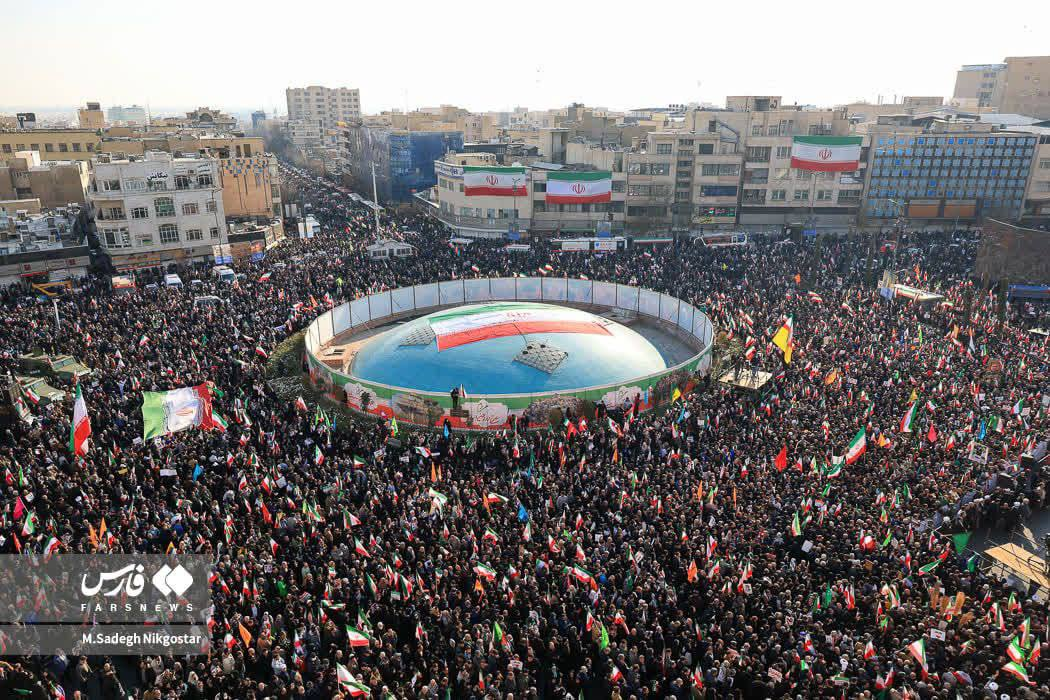
By January 10, likely due to the internet shutdown on the 8-9, the tide had turned and on January 12, there were massive demonstrations in support of the government (there had been these all along, including mass funerals, but this was the largest culmination).

Iran also jammed the Starlink network and reported arrests and unraveling of networks, safe houses, and seizure of massive numbers of weapons over the following days, before finally restoring internet connectivity more than a week later.

The Iranian medical authorities gave the following summary of all damage: 184 ambulances attacked and damaged. 6 completely destroyed and burned. Directly hit with bullets in Teheran. Molotov cocktail attack on an ambulance in Rafsanjan while on active mission. 54 injured. 4 hospitals attacked.

AryJeay gave the following roundup of property damage: 250 mosques damaged. 20 religious centers. Imamanieh mosque in Golestan province. Hundreds of vehicles burned in Teheran. 364 large stores. 419 small stores. Damage reported across 30 provinces. $5.3 million in fire department vehicles. $14 million in bank damages. 317 bank branches destroyed. 4700 bank branches damaged. 1400 ATMs damaged. 250 ATMs permanently out of service. $6.6 million in damages to electricity sector. 265 schools damaged. 3 libraries set on fire. 8 cultural heritage sites damaged. 4 cinemas (Tehran, Nishapur, Boruejd, Shahin Shahr).

Ayatollah Khamenei explained in a speech the state’s theory of how the riots had unfolded: ‘one group of individuals carefully selected, identified, and trained abroad. Others, malicious elements and criminals. And others, naive teenagers: “These are the foot soldiers. Their mission is to go and attack a place, like a police station, a house, an office, a bank, an industrial center, an electricity facility. That is their mission. The ringleaders gather in groups of 10, 20, or 50 people each, guide them, and tell them: You must go here, do this, and commit crimes, and they do.”’

The final Iranian government tally of those killed in the insurgency was over 3,000. AryJeay estimates ⅔ of these were pro-government security forces and civilians, and ⅓ were rioters. This is higher than the 1,000+ Iranians killed in the 12-day war with Israel and the US in 2025.

What was this? A military analysis

The US and Israel were open about Mossad’s support for the rioters and for their goal, the destruction of the Iranian state. Mike Pompeo tweeted “happy new year to the protesters and to Mossad walking beside them.” Mossad told protesters “we are with you, in the field.” Trump posted to protesters that help was on the way, and as the riots unfolded – attacking groceries, emergency responders, government buildings, mosques, and random people on the street to sow insecurity and terror – a US armada approached Iran. As that armada approached, the US-backed regime in Syria made a final push in the Northeast to reach the Iraq border, releasing thousands of Islamic State prisoners.

The riots may have been envisioned to have achieved more than they did – and they might have done, had the state not shut down the internet and starlink – causing the state to approach collapse just in time for a US invasion to finish Iran off.

The state didn’t collapse, but the war may be coming regardless.

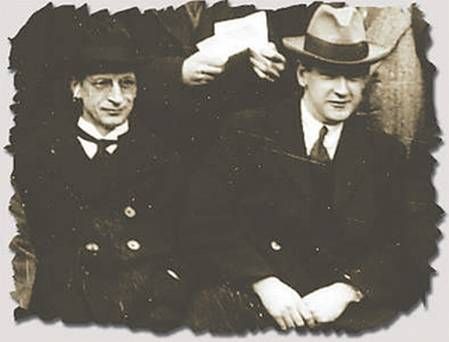
Interwar 5: Ireland from Easter Rising to Partition

In the aftermath of the Easter Rising of 1916, the Irish Revolutionaries regrouped. We trace their path through armed struggle against Britain, negotiation, the formation of the Dail and its role. The larger than life characters including Michael Collins and events like Bloody Sunday. How England’s first colony fought the Empire between the world wars.

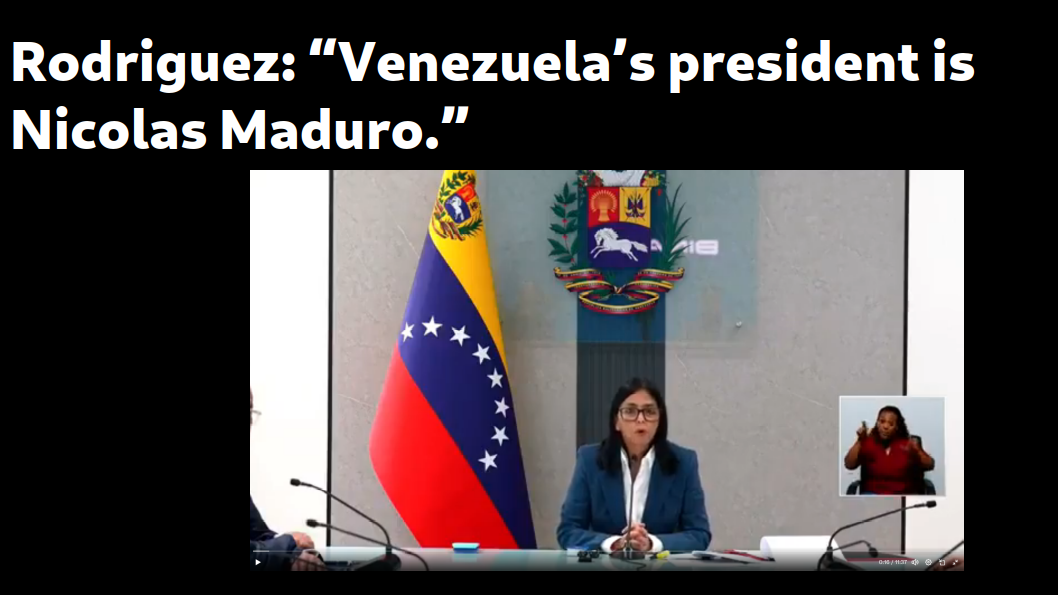
AER 153: Venezuela War Begins with Maduro’s Kidnapping

In the early morning of January 3, 2026, the US bombed Venezuela and kidnapped its president and its first lady. As of Day 1 of the war, Venezuela’s government is intact and popular mobilizations are calling for their president’s return. Trump has said that the US will run Venezuela and take its oil. Some insights from various analysts and some thoughts on the long war (or massacres, in the event of a surrender) that the US has begun.

Interwar 4: The Anglo-Afghan War of 1919: Amanullah wins Independence

Our last episode of 2025. Did you know that Amanullah’s decision to wage war for Afghanistan’s independence from the British Empire had everything to do with Amritsar and the struggle underway in India in 1919? Some details on this war that you may not have heard, including the British besieging Peshawar, displacing whole towns full of people, and claiming victory while accepting a ceasefire on Amanullah’s terms.

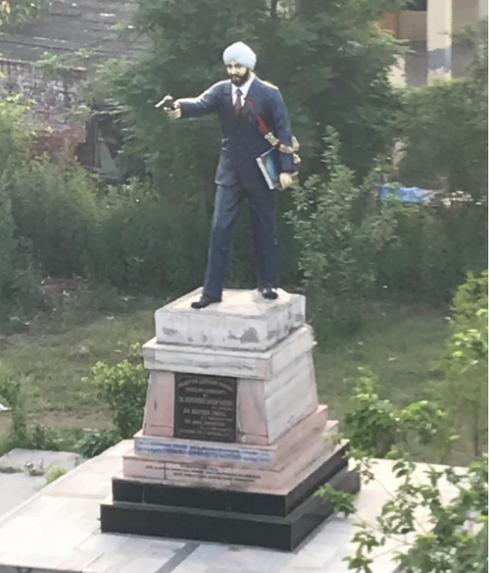
Interwar 3: India 1919: Massacre at Amritsar, Uprising in Malabar…

Using Anita Anand’s book, The Patient Assassin, among other sources, we tell the story of India from 1919 to the 1920s, including the massacre at Amritsar, the Malabar Uprising of 1921, Bhagat Singh, Gandhi, and of course Udham Singh. Ghadar and the Indian revolutionaries. We won’t be back to India again until the 1930s, so enjoy.

Migration from Venezuela

Did 7+ million really leave the country to flee socialism?

Daniel Coronel, a journalist with the US-based television network Univision, recently interviewed Colombian president Gustavo Petro. At about the 55 minute point of the interview, Coronel said to Petro that “the misery and repression that Venezuela has suffered at the hands of Maduro’s dictatorship has caused millions to flee.”

This little quip, this off-hand remark, is actually one of the major remaining regime change talking points about Venezuela.

We’ve addressed most of the others – the elections, the constitution, the notion that Venezuela is an “extraordinary threat” to the US – in our book. In a recent substack, we addressed the newest lie: that Venezuela is a meaningful source of drugs to the US.

In this one we address the idea that Venezuela should be destroyed because supposedly seven million Venezuelans have fled socialism.

We believe that anti-Maduro sources have 1. grossly exaggerated the scale of migration from Venezuela since 2015, 2. ignored that US sanctions have caused such migration as did occur, and 3. also ignored mass migration from U.S. client states like Ecuador.

Is this true though?

Pre-2015 lies about the scale and causes of Venezuelan migration

By the time Chavez died in 2013, Venezuela’s GDP per capita was close to achieving the historical peak it reached in 1977, After reaching that peak in 1977, Venezuela went through decades of ruinous decline. By 1992, the New York Times reported that “only 57% of Venezuelans are able to afford more than one meal a day.” But migration from Venezuela, compared to other Latin American countries, was never very significant despite this disaster. Despite outlandish claims in anti-Chavez media, emigration was still not significant while Chavez was in office, enacting policies to enable Venezuela’s recovery from the post-1977 decline.

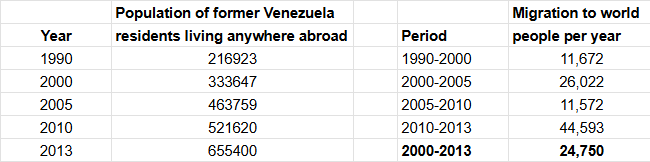
In 2011, the Venezuelan newspaper El Universal erroneously reported a World Bank figure for the total number of Venezuelan-born people living anywhere else in the world as of 2010 (521,000) – a figure that included people who had left Venezuela in any year – as the total number of Venezuelans who left in 2010 alone.

In 2015, Reuters uncritically cited an anti-Chavez academic (Tomas Paez) who claimed that 1.5 million Venezuelans had left Venezuela since Chavez took office in 1999 – in other words that about 100,000 Venezuelans per year had left between 1999 – 2015. World bank figures at the time suggested about 25,000 Venezuelans per year left Venezuela during most of that period, about one quarter the number Reuters had uncritically accepted from Paez, and one twentieth the number El Universal had reported in 2011. [1]

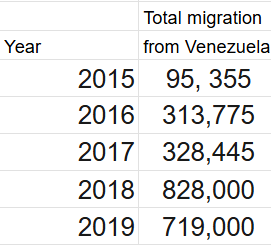
TABLE 1

2015 – 2017 migration from Venezuela begins to take off for real

As a result of US sanctions and an oil price collapse, migration from Venezuela did, indeed, begin to explode in 2015.

A few months before Hugo Chavez died of cancer in 2013, he urged his supporters to vote for Nicolas Maduro as his successor. They did. Maduro won the snap election that was held in April 2013. But Maduro was immediately hit with violent US-backed protests that year – and then again in 2014 and 2017. Adding to Maduro’s difficulties, in the last quarter of 2014, the high oil prices on which Venezuela’s economy depended collapsed by half, and remained very low for years.

Early in 2015, Obama added to the pressure by imposing broad economic sanctions on Venezuela. Obama’s apologists deny the significance of the sanctions by saying they merely outlawed dealing with seven Venezuelan government officials that the US accused of human rights abuses. But this ignores the problem of “over compliance” with US sanctions, built into their design: scaring investors away from dealing with Venezuela at all. In addition to the sanctions, Obama officials successfully pressured banks not to make low risk loans to Venezuela’s government.

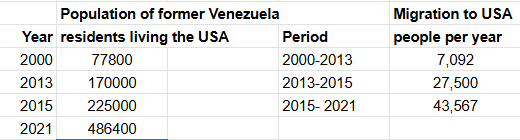
The combined impact of collapsed oil prices and Obama’s malevolence did indeed cause a sharp increase in migration. One way to confirm that migration from Venezuela did indeed begin to take off is to look at the number of Venezuelans arriving only in the US. If the U.S. had some powerful political incentive to do so, it would certainly exaggerate the number of Venezuelan migrants in the United States, but it has no need to do that. Even with the very low numbers of Venezuelan migrants – receiving only 7% of the migration that has been claimed since 2015 – it has treated them in an astoundingly cruel and lawless manner. According to Pew Research, as of 2024, Venezuelans were still only the ninth largest Latino group living in the United States despite the rapid growth in its population in recent years.

According to Pew Research, Venezuelan migration to the USA averaged 7,000 people per year between 2000 to 2013. It increased to 28,000 per year by 2015; then to about 44,000 per year in the 2015-2020 period. [2] Trump caused migration to accelerate when he dramatically intensified US sanctions on Venezuela in August of 2017, and then again in 2018, 2019 and 2020.[3]

TABLE 2:

A suspiciously low level of Venezuelan migration to the US

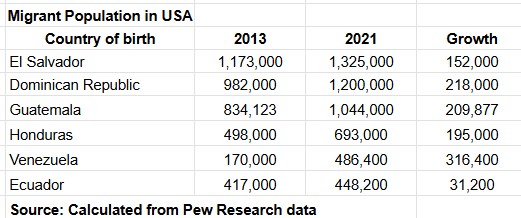
Today, UN Population Division data claims that 7.6 million people have left Venezuela since 2015. If that were accurate then one should expect to see a vastly higher number of Venezuelan migrants in the US. As of 2021, the UN Population Division claimed that over 5 million had left Venezuela since 2015. But as of 2021 (see below) the number of Venezuelan migrants in the US remained lower than from other Latin American countries that have much smaller populations than Venezuela: El Salvador, Guatemala, Dominican Republic, and Honduras.

In the case of Ecuador, which has roughly half Venezuela’s population, its migrant population in the US was very close to Venezuela’s in 2021. During the 1990s and early 2000s, migration from Ecuador to the US skyrocketed. As shown in Table 3, between 2013 – 2021 migration slowed tremendously., But as of 2024, Ecuador, which has been under disastrous pro-US rightwing rule since 2017 (as it was during the 1990s and early 2000s) provides the second largest growing Latino migrant community in the US after Venezuela according to Pew Research.[4]

Table 3

Reliable data collection and collaboration with the Lima Group don’t mix

As of 2020, the UN Population Division had been reporting that just under 2 million Venezuelans had migrated from 2015 – 2019, about half the figure other UN agencies were reporting. The much higher figures were the ones widely amplified by western media. But the UN Population Division dramatically revised its numbers upward around the time of a conference that took place in Ottawa on June 17, 2021. The conference was held to raise money for Venezuelan migrants and refugees. It was hosted by the Canadian government “in collaboration with” the UNHCR, the UN Refugee Agency, and the International Organization for Migration” .

In 2017, the Canadian government spearheaded the formation of the “Lima Group”. Canada recruited rightwing Latin American governments into this group which had the explicit aim of overthrowing Maduro – “reporting democracy in Venezuela” as they put it. After 2019, the Lima Group recognized the US-appointed Juan Guaido as the interim president of Venezuela. The Lima Group was joined by Bolivia in 2020 while the country was run by the US-backed fascist dictator, Jeanine Áñez.

We should not have to explain how damning it is that various UN agencies that provide data on migration from Venezuela were openly collaborating with the Lima Group. Moreover, as Venezuelan researchers with SURES have pointed out, increased estimates of Venezuelan migrants leads to increased budgets for UN agencies and NGOs who work with them. As one of us (Emersberger) observed, other UN agencies, including UNICEF, have made extremely dubious revisions to historical data that appear motivated by a desire to bolster US propaganda.

Ignored Estimates, and trends that would have emptied Venezuela by now

The surveys done by anti-Maduro Venezuelan academics (ENCOVI surveys) suggest about 2.3 million people left Venezuela between 2015 to 2019. (Data in Table 4 below is taken from ENCOVI surveys here and here.) [5] That’s very similar to what the UN Population Division estimated before it drastically revised its data upwards.

Table 4: ENCOVI Estimates

In a February 2019 interview with the BBC, President Maduro gave an estimate of “no more than” 800,000 Venezuelans who had migrated in the previous two years (2017 and 2018).[6] That’s not far off what ENCOVI estimated.

Anti-Maduro Venezuelan economist Francisco Rodriguez noted in a 2024 paper that Venezuela’s economy has been in recovery since 2020 posting four straight years of positive economic growth despite U.S. sanctions. Rodriguez observed that UN agencies have documented a big reduction in the rate of migration from Venezuela since 2020. But their estimates were so high from the 2015-2018 period that they had to come way down regardless of any economic recovery. At the rate the UN Population Division claims Venezuelan migration was accelerating between 2015 to 2018, Venezuela would have been completely empty by 2023 had the trend continued.[7] Despite this, all accounts confirm that there are indeed Venezuelans still in Venezuela.

Despite this, all accounts confirm that there are indeed Venezuelans still in Venezuela.

A Venezuelan researcher explained to us the various problems with double counting that can occur, setting aside deliberate manipulation of the data (which we believe occurred). She told us that a large number of Venezuelans returned during the COVID pandemic – often through uncontrolled points (trochas). People often returned then migrated again creating one possibility for double counting. It is not clear how many people work in border areas near Colombia but actually continue to reside in Venezuela, or get counted as residing in Colombia despite having moved to another country.

We do not deny that there has been a massive and unprecedented amount of migration from Venezuela since 2015, but we do not believe the numbers cited in western media. No one should blindly accept claims made by UN agencies and NGOs that have a track record of serving US imperialism – especially when Washington ramps up the pressure on an official enemy.

NOTES:

[1] The data in Table 1 can be found here, here, here and here.

[2] The data in Table 2 can be found here, here and here

[3] Table 1 of this paper by Venezuelan economist Francisco Rodriguez provides a timeline of US sanctions on Venezuela.

[4] 2021 is the most recent year for which we could find data for Latino groups in the US broken down into “US born” and “foreign born” (migrants).

[5] The 2017 Ecovi study found 815,000 emigrated between 2012 to 2017 of which 11.5%, 38.5% and 40.3% emigrated in 2015, 2016 and 2017 respectively. The figures were then updated to 2019.

[6] See the 3 minute mark of the video

[7] Rodriguez provides annual UN Population Division migration data in his paper. Using this curve fit website, we fit a second order polynomial through the data points for 2016, 2017 and 2018 to establish a trend line. We then projected that trend into future years. By 2023, 29 million Venezuelans would have migrated. The World Bank estimates Venezuela current population as 28.4 million

India 1919 and Gaza 2023

Uncanny colonial patterns

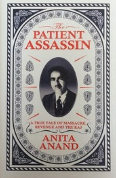
I’ve been doing research for the historical podcast and we’ve reached a moment that I’ve always wanted to know more about, when the British massacred a thousand trapped people in a walled garden over 10 minutes of continuous shooting into an unarmed crowd of tens of thousands of people on April 13, 1919 in Jallianwalla Bagh, Amritsar. There’s a really good 2019 book about it by scholar Anita Anand, called The Patient Assassin: A True Tale of Massacre, Revenge, and the Raj.

Anand includes a lot of details about the massacre itself, about the British genociders who conducted it and the stories they told about their racial superiority and the need to teach the natives a lesson. Even though I’m always reading these colonial histories, I often forget how directly the Israeli genocide playbook is a copy of the Anglo-American genocide playbook.

All these quotes are from Anand’s book.

Psychological disorder: obsession with the colonized

Here’s a silk merchant, Thomas Cope, talking about a British-induced famine in India that killed a million people in 1840:

‘I certainly pity the East Indian labourer, but at the same time I have a greater feeling for my family than for the East Indian labourer’s family. I think it is wrong to sacrifice the comforts of my family for the sake of the East Indian labourer because his condition happens to be worse than mine.’

Indian revolutionaries worked underground in different parts of the world under the obsessive surveillance and control of the British. The psychology of the British – their simultaneous obsession with Indians and their insistence of their own superiority – was striking. Their obsessive pursuit of the Indian revolutionaries and their constant denigration of Indian people, combined with insistence that they keep India forever and that they were making it better, seems uniquely pathological and unhinged – until you notice the Israelis have the exact same mentality today. Look at Michael O’Dwyer, the lieutenant governor who ordered the massacre and who was shot dead 21 years later by an Indian revolutionary named Udham Singh, just after finishing a public lecture justifying the slaughter, exhibiting all these obsessions in a single paragraph op-ed in the Times:

“The British Empire in India is the greatest achievement of our race. It has been built up by the blood, the brains and the energy of our ancestors. During 150 years it has given peace, security, increasing well-being and honest administration of a medley of hostile races, conflicting creeds and jarring casts who had never, but for a few brief periods, known those conditions before. WHAT IS INDIA? Not a Country but a Continent. Not a Nation, but a Noah’s ark of races religions and tongues. INDIA NEVER HAD – Unity, security, peace, justice, communications, public health – until the British came.”

Atrocity propaganda to teach a lesson

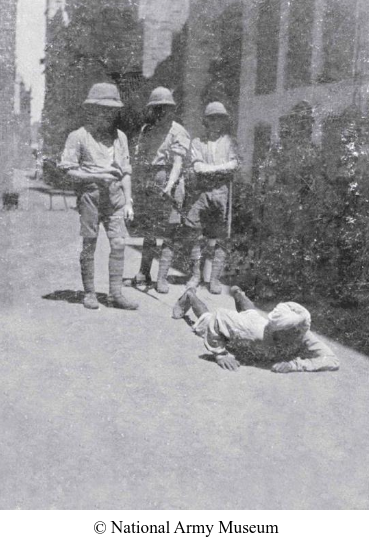
The genocidal British commander Rex Dyer didn’t stop at the massacre. He ordered public floggings of children and aerial massacres of villagers. A story circulated that after the massacre, mobs in Amritsar had assaulted a white woman named “Miss Sherwood”. Dyer said he “visited Miss Sherwood” and then decided to commit these additional atrocities, including the “crawling order”, where any Indian who lived on the street where “Sherwood” had been assaulted, would have to crawl on their bellies the entire way to their house, being kicked and brutalized by white soldiers the whole way.

remind you of anything?

Beastly behavior supposedly justified by the need to punish assaults against white women. The same playbook that the Israelis have used to rationalize the ongoing genocide.

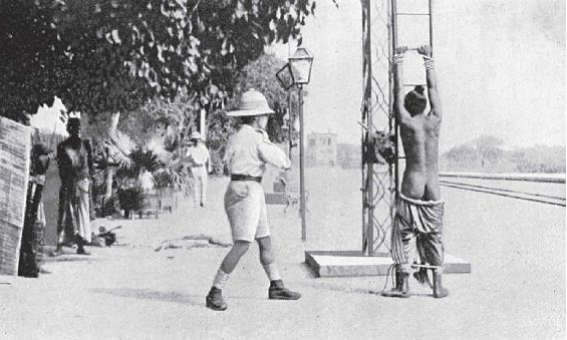
“In Amritsar, Rex Dyer and his men remained busy. They erected large wooden triangles around the city – ‘flogging triangles’, which struck fear into the heart of the civilian population. Though only six people were flogged in public (twenty others were whipped in camera), the incidents were so horrifying that entire neighbourhoods were left traumatised.

“Wrists tied to the apex, legs splayed and fastened to the base, the six young men suspected of taking part in the brutal attack on Miss Sherwood were given summary punishments of thirty lashes. According to one resident of Kucha Kaurianwala, some were no more than boys.”

One woman, Ishwar Kaur, eyewitnessed the floggings:

“Sometimes, I stood up to see the flogging; sometimes I sat down, not being able to bear the sight. The first Sikh boy was whipped with his clothes on, and then his clothes were taken off, and he was flogged naked. Then all the boys were whipped naked. The third boy became senseless three times. Each time, he was unbound, laid flat in the street, and water was poured down his throat. [The flogging resumed when the boy regained consciousness.]”

White Brit publicly flogging an Indian man

British Lt.Col Frank Johnson approved: ‘I would sooner have been deprived of the services of 1,000 rifles than the power of inflicting corporal punishment.’

Rex Dyer was enthusiastic about it: ‘Shooting was, in my opinion, far too mild a punishment and it was for me to show that women must be looked upon as sacred.’

Dyer died in 1927 on a crowdfunded dairy farm – white British people raised thousands of pounds for him to purchase it in gratitude for his commission of the massacre – before any Indian Revolutionary assassins could reach him.

Does this aerial massacre remind you of anything?

“In one incident, 150 peasants, making their way home after a long day in the fields, suddenly felt the shadow of a plane flying low over their heads. One of the planes despatched by Sir Michael made a pass and then wheeled back. Without warning, the pilot opened fire with machine guns. The screaming of the civilians was drowned out by the engines of the plane. Those who could ran for their lives, the others fell onto the road where bullets strafed them in the back. One woman, a child and two men were cut to pieces by automatic fire there on the dirt road… The lucky ones fled into their village, but to their horror found themselves pursued by Major Carberry in his First World War BEX bi-plane. He turned his machine guns on them again, shooting many in the back. Even the ones who managed to reach their homes found no sanctuary. Carberry continued to fire through their roofs and walls, with no idea who was inside.” Carberry also unloaded his bomb bay, dropping 8 twenty-pound bombs on the village.

While most of the press praised these massacres, some journalists at the Bombay Chronicle wrote angrily about it. The English one was deported and Indian ones were sentenced to hard labor, the paper shut down.

The long run loss of the colony after an atrocity

Some of the British imperialist elite didn’t like the 1919 massacre and said so in a parliamentary debate. Churchill, despite loving a good Indian genocide himself, called the massacre “un-British” (in fact it’s hard to imagine anything more British). But it’s Montagu – the Jewish-British secretary of state for India, who had argued against the Balfour Declaration and Zionism a couple of years before because he didn’t think Jewish was an ethnicity – whose intervention was most striking. Montagu argued that these atrocities were, in the long-run, going to lead to the loss of the Indian colony:

“Once you are entitled to have regard neither to the intentions nor to the conduct of a particular gathering, and to shoot and to go on shooting, with all the horrors that were here involved, in order to teach somebody else a lesson, you are embarking upon terrorism, to which there is no end. I say, further, that when you pass an order that all Indians, whoever they may be, must crawl past a particular place, when you pass an order to say that all Indians, whoever they may be, must forcibly or voluntarily salaam any officer of His Majesty the King, you are enforcing racial humiliation. I say, thirdly, that when you take selected schoolboys from a school, guilty or innocent, and whip them publicly, when you put up a triangle, where an outrage which we all deplore and which all India deplores has taken place, and whip people who have not been convicted, when you flog a wedding party, you are indulging in frightfulness, and there is no other adequate word which could describe it.”

Montagu warned of the result of these atrocities:

“The great objection to terrorism, the great objection to the rule of force, is that you pursue it without regard to the people who suffer from it, and that having once tried it you must go on. Every time an incident happens you are confronted with the increasing animosity of the people who suffer, and there is no end to it until the people in whose name we are governing India, the people of this country, and the national pride and sentiment of the Indian people rise together in protest and terminate your rule in India as being impossible on modern ideas of what an Empire means.”

The Indian people did indeed rise together in protest and terminate British rule in India – but it took another 27 years, and another world war, more famines, millions more deaths, after the 1919 atrocity.

The battle is over collaboration

Why did it take so much longer? Why didn’t Montagu’s prediction come about sooner? It has to do with another pattern: collaboration. A certain percentage of collaborators will never be shaken from the practice, no matter how vile the colonizer’s acts.

How did the British continue to have so many Indians killing other Indians for them, taking their bribes, taking their subsidies while the country’s wealth was drained away, maintaining a posture of loyal opposition despite open British race hatred and contempt for them, despite the savagery of British expressed intention and action?

The Butcher of Amritsar himself was presented with a shawl to honor him by one of the British-appointed Sikh religious authorities. How could a leader – even a British-appointed one – with any amount of accountability to his own community, honor a proud genocider?

In 1931, the British killed a number of very important Indian revolutionary leaders: Bhagat Singh, Shivaram Rajguru, Sukhdev Thapar, Chandrasekhar Azad. How could the struggle recover from the loss of these leaders (and many others assassinated or executed by the British)?

Meanwhile Gandhi, whose followers had called the 1919 meeting at Jallianwallah Bagh that had ended with the massacre, called off the campaign at the critical moment. This Independence leader who had recruited Indian soldiers to fight for their British colonizers in WWI advocated strict nonviolence against the genociders. During a five month long peasant rebellion in Malabar in South India (see the short edited book by Narayanan and Prashad The 1921 Uprising in Malabar), Gandhi publicly claimed that the peasant revolt against landlords and the British was actually Muslim violence against Hindus, that Muslims must disavow and Hindus must try to forgive. Gandhian leaders went to the peasants and encouraged them to stand down and surrender to the British. Some who did, were immediately hanged. How could leaders think of collaborating with their colonizers, fall into the colonizer’s narrative traps, sow despair and preach surrender?

It’s hard to believe. And yet all of these patterns are present today.

Conclusion

I have long believed the world worked as Montagu described: that counterinsurgency based on atrocity was ultimately futile because it made the fundamental requirement of colonization – the recruitment of collaborators – impossible. The brazen way the Israelis have behaved, the confident way they have flouted what I thought was an obvious truth about colonialism – that hiding its brutality lengthened its tenure and embracing brutality shortened it – has shaken my belief. Maybe I missed something? Maybe brutality actually works? Maybe we can all be cowed into submission rather than enraged into action.

Probably not. Montagu was probably right, still is right. But reading the history of Indian Independence it’s striking to see how long the process took. From the 1857 genocide (which Western history diminuitively calls a “mutiny”) to Independence took 90 years. From the 1919 atrocity, it took 27 years for matters to unfold as Montagu had predicted they would. Decades of massacres, of collaborators, of co-optation and loyal opposition.

I don’t know where we are in the process of Palestine’s liberation – whether we are closer to 1857, 1919, or 1942-46 when Quit India was declared, the Indian National Army formed, and the sailors mutinied.

Everything moves faster now. But the patterns are striking and point in the long run to the same result.

Science refutes Zionism

Zionism is a mix of corrupted biology and mythic stories

As a holdover of 19th-century colonialism, Zionism is infused with that era’s mix of scientific formulae and classical mythology. Science has moved on from these outdated formulae; history has moved on from the literal interpretation of myth.

The outdated scientific argument underlying Zionism is that today’s Jewish Israeli colonists are the descendants of the ancient kingdoms of Judah and Israel described in biblical texts.

The notion that such descent could confer upon these colonists a right to steal others’ land today is a preposterous notion, but it has nothing to do with science, so science isn’t required to refute it – logic and ethical reasoning are sufficient.

To the scientific question: are today’s Jewish Israeli colonizers the descendents of the ancient kingdoms of Judah and Israel described in biblical texts? Does their claim to the land go back 3000 years?

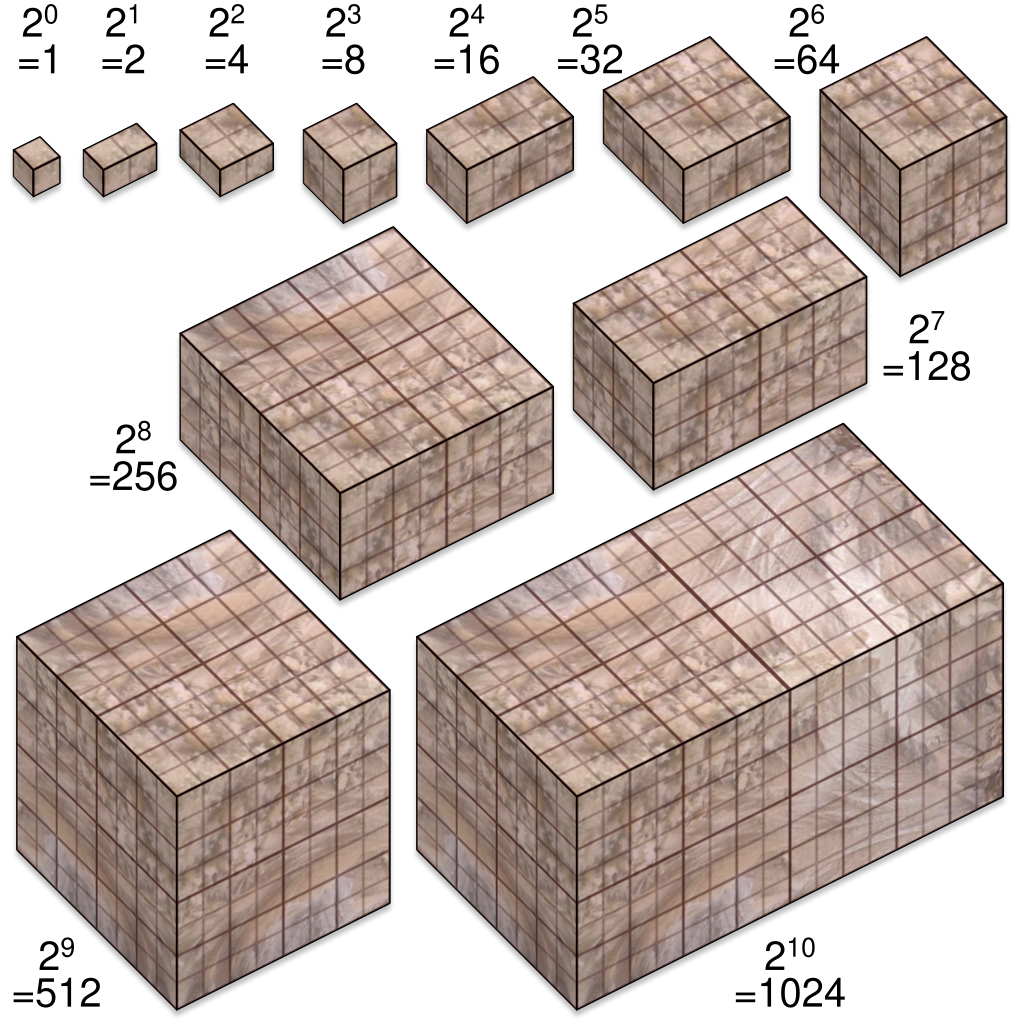
Look at this claim in the light of combinatoric mathematics (specifically, powers-of-2).

undefined
Powers of 2. By Cmglee – Own work, CC BY-SA 4.0, https://commons.wikimedia.org/w/index.php?curid=86587380

Consider a Jewish colonizer living in a West Bank settlement. Can you visualize him assaulting his Palestinian neighbours, burning houses, stealing belongings, etc., as they do with impunity? This settler has two parents, four grandparents, eight great-grandparents, with the numbers of ancestors growing exponentially with each generation.

Going back 12 generations (less than 300 years ago), there were some 4096 people walking around (mostly) Europe, Africa, the Americas, perhaps even the Ottoman Empire, who each contributed 1/4096 (0.002%) to this man’s DNA.

Try it. Going back by powers of two, you fairly quickly reach a number of ancestors that exceeds the total population of planet earth at that time.

Going back 1000 years, we reach – for Europe – what’s called the genetic isopoint: the point when all people alive in that part of the world are related to all people alive from that region in the world today, contributing a tiny portion to each contemporary person from Europe’s DNA. Because today’s Israelis are basically Europeans, they fall into this genetic isopoint.

But suppose you disagree that Israelis are basically Europeans, even though they’re in Eurovision and claim to be a bastion of Western civilization. Suppose you instead believe the contradictory claim that their ancestry in Palestine goes back 3000 years. The global genetic isopoint was around 3400 years ago: if you look at the people today and the people 3400 years ago, every one of us is related to every one of them, with each of them contributing a tiny fraction of each of our DNA.

Leave aside the illogic of a claim that descent should confer a right to steal someone else’s land or commit genocide. The ancient Hebrews were no more related to today’s genocidal Israelis than they were to anyone else on planet earth.

This wasn’t easy for me to understand the first time I read it, so allow me to let Jonathan Marks, author of the book Is Science Racist?, explain it again:

“Let us say, for the sake of argument, that you claimed to be a direct descendant of George Washington, say ten generations ago. The biological question is, “How much of your DNA did you inherit from him?” That question can be answered by knowing how many other lineal ancestors you have ten generations ago. One generation ago, you had two parents, each of whom had two parents, and so on. Ten generations ago, you had 210 ancestors, or more than 1,000 lineal progenitors. While that number is an upper limit, assuming you are perfectly outbred, it nevertheless indicates that whatever DNA you may have inherited from George Washington is at best a minuscule proportion of your genome. Moreover, it is also a miniscule proportion of George Washington’s genome, and consequently the chance that what you happened to inherit actually represents George Washington’s best DNA is quite small. Clearly, then, being George Washington’s lineal descendant is biologically meaningless.”

Marks addresses Zionist claims to ancient rights to the Holy Land fairly explicitly, though he does so by discussing the Da Vinci Code (my emphases added):

“Consider the premise of The Da Vinci Code, that there might be people alive today who are descendants of Jesus. But biologically speaking, how many other people would they also be the descendants of? If we assume 25 years per generation, Jesus would have lived about 80 generations ago. And 280 ancestors in 30 ad works out to about a septillion (a number with 24 zeroes behind it) ancestors in that generation along with Jesus.

“But what a strange calculation – that anyone would have more ancestors than people alive at the time – in this case, by many orders of magnitude. This paradox is known as pedigree collapse, and it reveals the bio-cultural aspect of ancestry, retaining symbolic meaning in the face of effectively infinite genetic dilution, much as devotees of homeopathic medicines believe about their elixirs.

“Of course, you could have received a tiny chunk of DNA from that first-century ancestor, because that is what ancestry is, biologically – the transmission of DNA. But here is the kicker: any ancestor in your bloodline that far back is probably also in mine. Think about it. There are a septillion slots to fill in your first-century pedigree, and perhaps a few tens of millions of people alive back then to fill them. Anyone alive back then, who has anything represented in today’s human gene pool, is as likely to be among my septillion ancestors as to be among your septillion ancestors. There may be quantitative variation in our pedigrees – he may recur more times in my pedigree than in yours – but there isn’t mathematical room for there to be qualitative variation.”

What Marks is saying about pedigrees means that not even huge amounts of inbreeding can defeat this exponential growth. Even if you believe that Jewish Europeans are extremely inbred (they’re not), pedigree collapse still happens after a surprisingly small number of generations:

“There simply weren’t enough people alive, and everybody’s got to have two parents. We are all biological relatives, we are all inbred, and the farther back we go, the less meaning biological differences have, because for every generation that we retreat, the number of our ancestors doubles, yet the size of the human species diminishes. Each of us has a septillion ancestors being drawn from a much smaller pool of people who lived 80 generations ago.”

The biological claims collapse easily.

The archaeological claims are even worse.

Biblical archeology is basically a centuries-long project of Zionists to dig below the lands they occupy to find (or make) evidence to verify the mythic stories of their religious texts. Any dig that took place after the Balfour Declaration of 1917, when the British Empire awarded Palestine to the world Zionist movement, can be assumed to have been corrupted and to have found what imperialist and Zionist scholars were looking for to justify their conquests. A 2001 book like The Bible Unearthed doesn’t even begin to fulfill its promise of “setting apart facts and legend”. For the past century biblical archaeologists have gone and dug around in Occupied Palestine looking for proof of conclusions they had already decided based on their religious texts and their colonial plans. There’s nothing more to this field than the brandishing of ancient objects to fulfill insidious agendas.

With biology and archeology refuted, what’s left is trying to make a claim based on the texts themselves. The logic there is both simple and repugnant: ancient myths state that today’s colonists had ancestors who committed genocide to take that land from its inhabitants thousands of years ago, and today’s Israelis have to re-enact those genocides today. That’s not history, and it’s not science. It’s an evil to be stopped.