
According to a paper published in the Lancet Global Health journal, economic sanctions imposed by the US on other countries have killed about 38 million people since 1970. A key feature of that economic warfare is the deliberate undermining of the currencies of countries singled out for punishment. In February, Trump’s Treasury Secretary boasted about how he brought about a collapse in the value of Iran’s currency. But it is not only sanctioned governments that must manage their currencies under the boot of the U.S. Empire. We’ll review the strategies governments have used to manage their exchange rates and conclude with a note on how economic warfare is inseparable from the real thing.
Basics of monetary policy under U.S. tyranny
Money is the inevitable result of goods and services being exchanged in a modern economy. If too little money circulates in an economy, the exchange of goods and services is restricted and unemployment can rise to excruciating levels. That often happens because central banks try to keep inflation very low by restricting the money supply (often done by raising the central bank interest rate on government bonds, making borrowing more expensive and disincentivizing it, thereby reducing the amount of money banks put into circulation through these loans). Too little money in circulation can cause deflation- a fall in the weighted average of all prices. But too much money printing can result if too much money chases after too few goods and services. It can cause the opposite of deflation, which is inflation. At excessively high levels inflation will prevent most people’s wages from keeping up with rising prices. When people lose purchasing power, they are impoverished. A state’s money policy should align with the real resources – labor, skills, natural resources including energy, infrastructures of various kinds – available in the economy. (Social classes within a country can have very different ideas about what a desirable money policy is).
A huge additional concern is foreign exchange. Unless a country is rich and powerful enough to have its central bank print a “reserve currency” like the U.S. dollar, then it also needs to worry about the international value of its currency. It is a global economy: all countries need imports, and they need foreign currency to pay for them. Today, about 57% of global central bank reserves are in U.S. dollars. The percentage was over 70% in 2000.
Using its dollar reserves to buy or sell its own currency is one way a central bank can impact the value of its currency (the exchange rate), selling dollars they have saved to buy back their own (eg., rials) in order to keep their own currency from depreciating too much, or buying dollars to build reserves when their own currency gets so strong that local industry is harmed by cheap and abundant imports. An alternative tool for protecting local industry, as someone taught Trump half a lesson about this term, is tariffs – but that’s a story for another newsletter.
If the value of a country’s currency drops too low relative to the US dollar, the cost of all imported goods people try to buy inside the country soar, which in turn can drive up all other prices, leading to an inflationary spiral. An overvalued currency, on the other hand, can stifle the development of domestic industry: when no other country can afford to acquire your expensive currency to buy what you’re selling, costumers will look for those goods somewhere cheaper. If you’re in the UK or the USA, you can go shopping on the world market with your strong currency and buy what you like, with no incentive to buy local, depriving your local businesses of the opportunity to sell to the local market. If you can’t sell in the local market the chances of succeeding globally are low. Deindustrialization results. Not a terrible outcome in the metropole, whose role in the global economy is to consume, not produce (even the flagship military industry is basically consumptive: its products are made to be blown up).
Ideally, the value of a country’s currency is stable and at a level that’s compatible with its economic development: not too high or too low relative to the U.S. dollar. (Again, social classes within a country can have very different ideas about what a desirable exchange rate is)
International trade also requires payment systems (ie., SWIFT). Because the U.S. dollar is still the world’s top reserve currency, the U.S. financial system remains the heart of the international payment system. As Andres Arauz, former head of Ecuador’s central bank, explained, when two countries in Latin America trade with each other – seemingly not involving the US at all – money still flows briefly through U.S. banks as part of the transaction. The U.S. Treasury then can claim jurisdiction over businesses in other countries, arresting foreign executives like France’s Robert Pierucci in what he called The American Trap. This is sometimes called “long-arm jurisdiction”, and it is one of many ways the U.S. exerts control over every economy in the world. The U.S. has tremendous coercive economic power that is ultimately backed by its military might.
There are various strategies governments have used to try to manage their currencies.[1]
Floats and pegs: options for the unsanctioned
A 1:1 Peg to the U.S. dollar (Argentina)
From 1991 until 2001, Argentina, under U.S.-backed rightwing governments, pegged its currency to the U.S. dollar. The government guaranteed that it would buy and sell Argentine pesos as if they were equal in value to dollars.
This strategy has been called a close cousin to dollarization. Dollarization is dispensing with your own currency entirely and using the U.S. dollar. What low inflation-obsessed economists like about a dollar peg and dollarization is that they greatly limit and eliminate, respectively, a central bank’s ability to print money.
In Argentina’s case, the dollar peg was credited with ending high inflation. But poverty and unemployment spiked after adopting the dollar peg. Then, in 1998, Argentina entered into the worst recession in its history. It continued for four years. Throughout the crisis IMF economists insisted that the dollar peg was not the problem – that Argentina simply needed to reduce wages and government spending (destroying health, education, human infrastructure, the social safety net…).
Taking IMF orders (and loans) during the crisis led to deflation, but it didn’t end the crisis. It made it worse. The crisis ended shortly after Argentina took three measures: 1. abandoned the peg, 2. let the peso devalue down to 25 cents, and 3. defaulted on $100 billion of government debt.
Argentina’s economy recovered quickly and living conditions improved steadily for over a decade. The key reason: Argentina began stimulating the economy rather than strangling it with austerity to try to save the dollar peg.
Sadly, because of imperial “long-arm jurisdiction”, the default led to Argentina being targeted by vulture funds: A U.S. businessman and funder of Philos Israel and other pro-Israel projects, Paul Singer, purchased Argentina’s debt and years after the default, sued Argentina in a U.S. court and was awarded $832 million of Argentina’s money by that court.
A managed float of the currency (Argentina)
Shortly after default and devaluation of 2001 Argentina imposed foreign exchange controls. High income exporters were forced to turn over dollar earnings to the central bank in exchange for pesos at the greatly devalued rate. That helped Argentina’s central bank build up dollar reserves so that it could implement a managed float of the peso.
If a central bank does nothing to impact where international supply and demand for its currency sets the exchange rate then it is said to allow the currency to “float”. With a managed float, the central bank does intervene to try to keep the exchange rate stable, but does not try to keep the exchange rate very far from where the international market would set it. A fixed exchange rate regime (a peg) is characterized by much more intervention by the state and a greater distance between the fixed exchange rate and the rate that would exist if the currency were allowed to float.
Argentina’s recovery happened mainly under the leftwing governments of Nestor Kirchner and later his wife Cristina Fernandez de Kirchner. The “Kirchner period” lasted from 2003-2015.
Thanks to Western democracy, Argentinian voters in 2023 were able to return economic madness and extreme Zionism to the presidency in the form of Javier Milei, who talks to his dogs that he named after right-wing economists like Milton Friedman and Murray Rothbard, bringing Argentina down to historic economic disaster, eating donkey meat and tree bark.
A reasonable peg to the dollar (Bolivia)
Under the leftwing Evo Morales government in Bolivia (2006 – 2019) the country greatly improved living conditions while maintaining a very stable exchange rate and low inflation.The poverty rate was cut in half, and extreme poverty by 60%. Bolivia’s currency (Boliviano) traded at about 6.8 for one U.S. dollar (about 15 cents) throughout this period The central bank intervened in the market to keep it remarkably stable.
To achieve that stability Bolivia built up massive central bank reserves that reached 48% of GDP by 2013, one of the highest in the world. The key to building huge reserves while also paying for public investment and social programs was a sevenfold increase in the government’s hydrocarbons export revenues. Morales ended loan agreements with the IMF whose economists had always opposed the nationalization of hydrocarbons.
Bolivia probably got carried away building reserves and should have plowed even more money into reducing poverty. A small reduction (say 10%) in its reserves would have gone a long way towards additional poverty reduction without sacrificing a stable currency. Could that have translated into additional public support – perhaps enough to have prevented the 2019 US-backed coup that ousted Morales? Possibly. Regardless, Bolivia’s approach to maintaining a stable and appropriately valued currency, while successful overall, was still very expensive both politically and economically. It illustrates the difficulty of operating within the US imperial system even when not subjected to crushing U.S. sanctions.
Dollarize your economy (Ecuador)
Decades of closely following IMF orders led Ecuador to disaster that drove unprecedented mass migration during the 1990s. Throughout the 1990s the central bank tried to keep the value of the sucre stable at a reasonable rate relative to the dollar but failed miserably. Constant devaluations were a feature of the catastrophic 1990s. In 1999 the banking system collapsed and in 2000 the government decided to adopt the U.S. dollar as its official currency.
President Jamil Mahuad, who made the decision to dollarize, remains despised in Ecuador, but dollarization is popular. More precisely, there is widespread fear that abandoning dollarization would mean a return to 1990s chaos and financial collapse.
Under the leftwing government of Rafael Correa in Ecuador (2007’-2017) it was shown that dollarization isn’t the policy straitjacket that both proponents and detractors assumed it was. Correa’s government defaulted on government bonds owed to foreigners then repurchased them at greatly discounted rates. It took advantage of the benefits dollarization can bring (low inflation, low interest rates, a minimal need to hold dollar reserves) to help pay for public investment and social spending. It used banking regulations and tariffs to work around the limitations dollarization imposes. The government actually created a very significant amount of money during its last years in office – not by printing US dollars of course- but through the banking system.
All that said, dollarization was, overall, a burden that the Correa government had to bear. Assessing Correa’s achievements it must be stressed that Ecuador was not under U.S. sanctions while he was in office. The U.S. was focused on undermining Venezuela. In a post-Gaza genocide world, it is impossible to believe Correa’s government would have gone un-sanctioned.
Use a gold standard (USA, UK, Zimbabwe)
A gold standard has been fiercely advocated by right wing extremists like Ayn Rand, Ron Paul and Alan Greenspan. If a currency must be backed by gold, then the government cannot print what gold standard advocates call “fiat money”. But note (as discussed above regarding Ecuador) that even if the government cannot print money (even if it used gold coins as its currency) it could still create money through the banking system. That’s why goldsmiths ended up becoming powerful bankers in seventeenth century England. Also, a gold standard exists by a government fiat (decree) just like money that’s printed when there is no gold standard.
Contradictions aside, there is no doubt that a gold standard imposes extremely tight restrictions on the government’s monetary policy. As economist Bill Mitchell has explained, the gold standard was used in the United States from 1873 to 1933. It made the Great Depression much worse than it would otherwise have been, and even its narrow record on keeping inflation low and prices stable was not good. Price stability improved in the U.S. after the gold standard was abandoned.
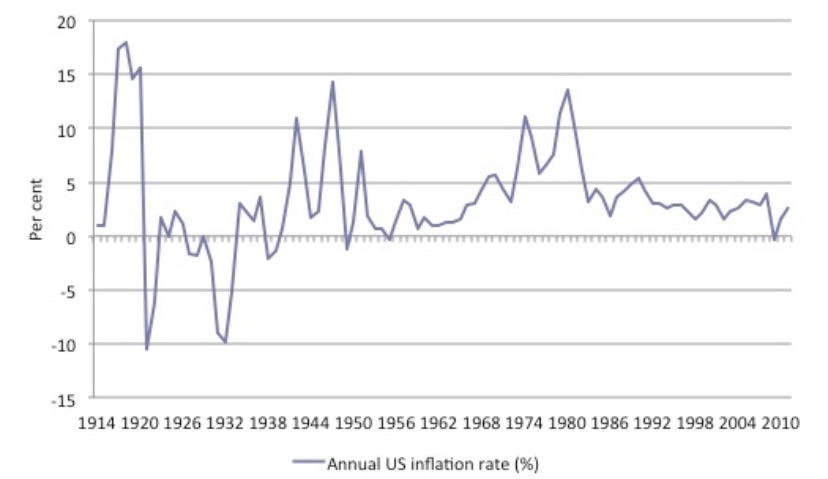
When there is hyperinflation (an inflation rate of over 50% per month), it is the main problem hurting an economy, so resorting to a gold-backed currency – to trigger deflation – may appear justified- as in Zimbabwe recently. But the government must eventually find ways to increase the money supply as Ecuador did under the constraints of dollarization. It has been about a century since the leading capitalist states subjected themselves to a pure gold standard – 55 years if you count the Bretton Woods system, a modified gold standard for international trade after WWII that the U.S. dismantled in 1971. That alone speaks volumes about the problems with a gold standard.
Cuba resists sanctions through multiple modes
Reserve currency rationing, multiple fixed exchange rates and barter (Cuba)
Almost immediately after taking power in 1959, Cuba’s government was subjected to economic warfare and other acts of war perpetrated by Washington. While Che Guevara ran the central bank (1959-61), all Cuban pesos were replaced with new ones printed in Czechoslovakia. The new pesos arrived in Cuba disguised as arms shipments. The old pesos, held in large quantities by the revolutionary government’s enemies in the U.S., were suddenly made worthless by Che’s surprise maneuver. Additionally, anticipating the US blockade, Che quickly ordered Cuba’s gold reserves moved out of the US.[2]
During the Cold War, Cuba’s socialist government used a fixed exchange rate relative to the Soviet ruble and the US dollar, but also tightly controlled foreign currency to ensure that its use was compatible with the government’s economic plan. By 1979 possession of US dollars was legal only for the government and tourists. The Cuban government set pesos equal to US dollars for the purposes of setting some prices. That was very different from the 1:1 peg to the dollar in Argentina which had a freely convertible currency and consumer prices set by markets.
Another huge difference was Cuba’s barter-type trade with the USSR which was deliberately set up to be favourable to Cuba. This offset not only the harm done by U.S. sanctions but also the harm US imperialism did (and still does) to unsanctioned countries through normal trade. In fact, passively accepting unequal exchange is the requirement for remaining un-sanctioned.
One of the most valuable products Cuba received from the USSR in exchange for Cuban exports, largely sugar, was oil. By the mid 1980s, Cuba’s re-export of Soviet oil became its largest source of foreign currency.
Post Soviet sellout: two currencies, one pegged 1:1 with the dollar (Cuba)
The USSR was formally dissolved in 1991. Cuba was cast into the infamous “special period”. Smelling blood, the U.S. intensified its sanctions.
Cuba quickly turned to tourism to get foreign currency it could no longer get through its trade with the defunct USSR. It legalized the circulation of the U.S. dollar in Cuba in 1993, but still carefully regulated and taxed its use. Legalization reduced the size of the black market for dollars which had grown as Cubans living in the U.S. sent increasingly large amounts of dollars to family members in Cuba.
In 1994 Cuba introduced the CUC, a peso that Cubans and tourists could exchange at par with the dollar. The CUC reduced the need to have as many dollars circulating in Cuba. The CUC circulated alongside the dollar in Cuba until 2004. Cuba’s regular peso, known as the CUP, exchanged for dollars at a very different fixed rate. In 1996 the rate was 1 dollar for 18 CUP.
Cuba also defaulted on foreign debt which was also key to it surviving the special period. By 1994 Cuba had not only survived the special period, in defiance of IMF predictions, but also returned to growth.
Beginning in 2000 barter-type trade with Venezuela helped reduce the pressure on Cuba to get dollars. Cuba doctors and other professionals worked in Venezuela in exchange for Venezuelan oil.
In 2004, the government concluded that the influx of dollars in a decentralized manner was not doing enough to alleviate Cuba’s dollar shortage. Cuba again centralized its control of U.S. dollars and other foreign currency. With rare exceptions, only the CUC and CUP were allowed to circulate in Cuba.
The CUC exchanged at 1 CUC to 24 CUP for Cuban consumers and 1 CUC to 1 CUP for state enterprises.
Slow transition towards currency and exchange rate unification (Cuba)
Cuba’s post-1993 reforms allowed rapid growth of the tourist industry which by the early 2000s became Cuba’s major source of foreign of currency. But it also caused problems and resentment. It created a two tier system where workers in industries like tourism who had ready access to CUCs had much higher incomes than those without. The system incentivized highly educated professionals to abandon their professions to work in the tourism industry if they could.
To some extent that problem was offset by the health care sector. The medical services provided by Cuban doctors working abroad became a very important source of foreign currency.
Beginning in 2013, the government stopped allowing some state enterprises to exchange CUC and CUP at a rate of 1:1. The 1:1 rate meant the enterprise was treating revenues and costs as the same whether in pesos or dollars – a massive cost to the government that often discouraged efficiency. So in 2013 some state enterprises were required to exchange at a rate of 1 CUC for 10 CUP.
As former Minister of the Economy, José Luis Rodríguez, explained, the goal was to gradually shift to one currency whose exchange rate was set through a managed float (discussed above).[3] Helen Yaffe, in her book “We are Cuba” described the extensive public consultations and debates that are always ongoing about public policy in Cuba. Cuban leaders were extremely careful to prepare the public for currency and exchange rate unification. The CUC was eliminated in 2021, eight years after the process was initiated, but multiple fixed exchange rates are still used for the CUP.
The long economic war on Venezuela
After suffering two U.S.-backed coup attempts in 2002-2003 Venezuela abandoned a floating exchange rate system in favor of foreign currency controls and a fixed exchange rate. By 2010 it began using multiple official exchange rates. It worked well enough until 2013 when it suddenly ran into problems with an inflation-devaluation spiral that was driven by a black market for dollars. This problem became vastly worse after the U.S. and its proxies deliberately crashed oil prices in 2014 to hurt Venezuela, Iran and Russia. The U.S began imposing broad economic sanctions in 2015, under Obama, which were intensified repeatedly through Trump’s first term.
Starting in 2019, Venezuela began to significantly relax foreign currency controls – to give Venezuelans many more legal ways to get dollars. In 2020, Venezuela also shifted away from indiscriminate fuel subsidies to a system that was far more targeted – and that recycled dollars back to the government. The economy has been growing since 2021 despite crushing US sanctions.
Contrary to western media lies about political repression, necessary economic reforms in Venezuela were delayed by the government’s remarkable tolerance for U.S.-backed subversives as we argued in our book “Extraordinary Threat”.
If a country has a market economy – which is the case for all the cases we reviewed except for Cuba – then it would appear that a managed float and single exchange rate appears to be best – if it is a realistic option politically. (It wasn’t realistic in Ecuador during Correa’s decade in office as we explained). However, even Cuba, which has a socialist planned economy, has a managed float and a single exchange rate as a long term goal. But extreme U.S. malevolence has obstructed Cuba’s efforts. That said, a one-size-fits-all conclusion about the best exchange rate system for all countries in all circumstances would be unwise.
China’s inimitable methods
Currency options are not a menu that a government can choose from, but historical choices arising from contingency and improvisation. Cuba has survived through so many crises because of its revolutionary trajectory and its ability to mobilize its people. China, on the other hand, was the largest economy in the world for most of history, passed through a century of humiliation, and is returning to its historical role. China has also had a revolution and shares with Cuba the ability to mobilize people for major undertakings. Its size and resources mean that it has passed from defending itself from US sanctions, to working around them, and is now reaching the point of challenging them directly.
Under U.S. economic sanction from 1949-1979, China used barter trade within the socialist bloc as well as with the capitalist bloc. The terms of the barter trade with the Soviet Union were a source of resentment and one of the causes of the Sino-Soviet split (documented in Shu Guang Zhang, Economic Cold War). For a long time, Hong Kong served as a bridge between China and the capitalist bloc. As China builds out the Belt and Road Initiative, they made specific deals, including infrastructure-for-resources deals, avoiding the U.S. dollar and its long-arm jurisdiction.
China’s socialist economy has successfully used a fixed exchange rate system – and China is far less vulnerable than Cuba to U.S. aggression. Even the IMF has conceded that China’s control over foreign currency flows allowed it to grow during the Asian financial crisis of the late 1990s when other Asian economies were devastated. In fact, China did well because it did the exact opposite of what the IMF coerced other Asian countries to do. After the Asian financial crisis, many countries built up massive dollar reserves to avoid ever having to go to the IMF for help. Standard capitalist economics textbooks don’t tell developing countries to build up reserves to defend against the kind of predators who teach economics at Harvard.
Since 2005 China’s exchange rate has gradually become more flexible – similar to a managed float.
In 2018, Canada under PM Trudeau was convinced to arrest the CFO of the flagship Chinese tech company Huawei, Meng Wanzhou, on behalf of the US, who wanted to prosecute her, alleging that Huawei was not complying with US sanctions on Iran. The analogy to Pierucci and the American Trap, which ended with the US-based General Electric acquiring the cutting edge part of the French giant Alstom, was obvious. But China did not hand Huawei over to the Americans. Instead, Canada ended up handing Mme. Meng back to China. This was one turning point in China’s history of being sanctioned.
Next, in 2022, the US and Europe scolded China for providing an economic lifeline to Russia, whose economy was supposed to collapse when the West stopped supplying it with Western goods. China expanded its trade with Russia, unfazed.
In 2026, with the Strait of Hormuz closed to the US and its allies in aggression and genocide, the US demanded that China stop trading with Iran lest its refineries face secondary sanctions. China employed a 2021 law called the “blocking mechanism”, declaring that any company complying with US sanctions would face severe legal consequences in China. This is another turning point in China’s history as it constitutes the most direct challenge yet to the US sanctions weapon.
Iran, Russia, and the other inimitable method: war
In 2026 Iran has discovered a unique and probably unrepeatable option for defeating a U.S. sanctions regime. When the U.S. and Israel initiated a unilateral war of aggression by assassinating Iran’s supreme leader and killing 180 schoolchildren in Minab, Iran responded by closing the Strait of Hormuz, charging a toll for ships passing through, and conducting both tolls and trade for its own oil in currencies other than the dollar. As a result of these war conditions, Iran has broken out of the sanctions regime that had been destroying its economy and is now selling more oil at higher prices than before the war, as well as exerting control over a significant portion of the economy of its enemies. Oil in West Asia was referred to in 1944 by the US State department as a “stupendous source of strategic power” and “the greatest material prize in world history”. Deployed since 1979 against Iran by the US, that stupendous power is now in Iran’s hands.
This option cannot be generalized because no other country has the capacity and the confidence to go to direct war against the U.S. To do so, a country would need a vast underground military-industrial complex, a huge, dispersed, and motivated leadership class that can recover from the assassinations of key figures, deterrent-level air defense, the ability to threaten to destroy a large amount of the world economy, physical control over one of a handful of key global logistical chokepoints, and the ability to fight a standoff war with the U.S. air force, navy, and all of its allies.
Or some similarly potent set of attributes – like Russia has.
Russia was supposed to collapse under the weight of sanctions in 2022. Biden boasted that the ruble was goint to turn into rubble. Instead, Russia has defeated the sanctions and used them to develop local industries including their own military-industrial complex. As with Iran, Russia’s success in defeating the sanctions was inseparable from their success on the battlefield. Russia chose a slow, casualty-averse attrition strategy knowing that NATO and the US could continue adding resources to match Russia, but knowing also that Russia’s military industrial production was a match for the West in a long war of attrition. Russia also had its own “stupendous source of strategic power” as a major oil and gas producer. When the US cut Russian gas out of European markets, Russia found markets for their energy in the east (as did Iran). With resources to sell, markets to sell them to, and currencies other than the dollar to trade in, there was no way the ruble was going to turn into rubble.
We conclude this newsletter with real war because economic warfare is inseparable from kinetic war and cannot be conducted without its threat. This year, the Trump dictatorship has bombed Venezuela, imposed a sadistic fuel blockade on Cuba, and launched a disastrous war on Iran. Trump has also threatened that Cuba will be invaded next. Economic wars on Russia and Iran were followed by the real thing; the US makes clear every day that it intends the same for China. Eventually, targeted countries (which eventually, will be everyone) will have to defend their economies on the battlefield.
NOTES
[1] The overview we provide for Argentina, Bolivia and Ecuador comes primarily from Mark Weisbrot’s 2015 book “Failed: What the “experts” got wrong about the global economy”
[2] Our sources on Cuba were two of the books Helen Yaffe wrote about Cuba: “We are Cuba” and “Che Guevara: The Economics of Revolution”. This article of Yaffe’s was also very informative.
[3] See page 42 of Cuban Economists on the Cuban Economy